
12 Fish Curry Recipes From India's Coasts and Beyond
Updated July 15, 2026 · Curated by Chefadora
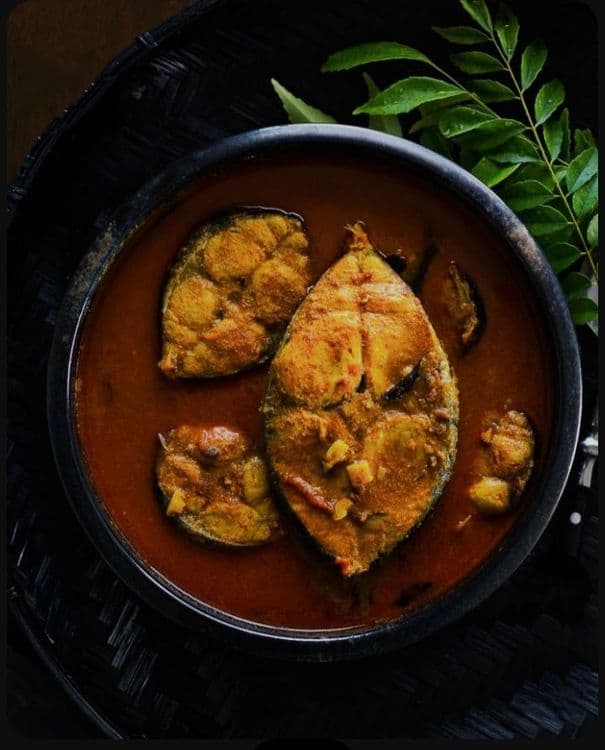
The first time I cooked a proper fish curry recipes lineup for a Sunday lunch, I made every mistake at once: I bought a delicate white fillet, cut it into small cubes, stirred it like a beef stew, and served a pot of gravy with pale shreds floating in it. The gravy tasted wonderful. The fish had simply vanished. That one lunch taught me more than a year of reading had.
This collection pulls together twelve dishes the Chefadora community actually cooks, and they cover a wide arc. There is coconut-milk gentleness from Kerala, the sour red heat of Goa, mustard-sharp Bengal, a slow-simmered Punjabi salan that earns every one of its seventy minutes, a bright Thai bowl, and two Parsi entries including a paste you can make once and keep for months.
I have grouped them by base and by region rather than by difficulty, because that is honestly how you decide what to cook on a given night. Pick the flavour you want, then read the guides below for the fish, the timing and the ratios that keep everything intact.
Coconut-Rich Coastal Classics From Kerala and Mangalore
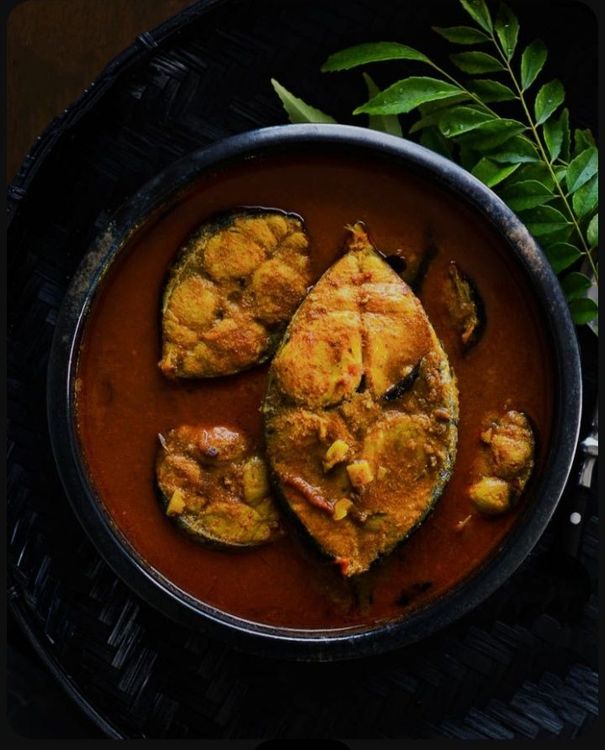
Along the Malabar and Konkan coasts, coconut is not a garnish; it is the body of the gravy itself. These four lean on it differently. Kerala cooks grind fresh coconut into a wet paste, temper mustard seeds and curry leaves in coconut oil, then loosen everything with thin coconut milk. Mangalorean kitchens toast dried red chillies and coconut together until the mix smells nutty, which gives a darker, rounder heat. What unites them is restraint at the end: once the coconut milk goes in, keep the pot at a lazy shiver and never a boil, or the milk splits into oily threads and the gravy turns grainy. A coconut fish curry rewards patience more than technique.
- Indian
- Pescatarian
- Lunch


- Pescatarian
- Lunch

- Indian
- Pescatarian
- Lunch
- Indian
- Pescatarian
- Lunch
Goan and Parsi Fish Curry Recipes Worth a Weekend
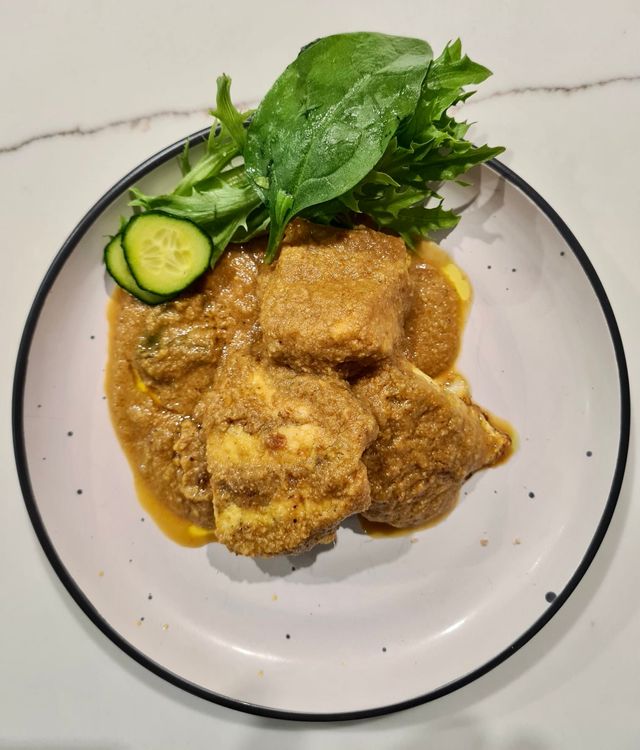
Both of these traditions build flavour on a wet ground paste, and both use sourness as structure rather than as decoration. In Goa that means kokum or tamarind set against Kashmiri chillies, giving the red glow without punishing heat. Parsi cooking leans on cane vinegar, coriander, cumin and a whisper of jaggery, so the finish lands tangy and faintly sweet at the same time. Set aside a weekend afternoon for these three. The grinding is the real work; the cooking is barely twenty minutes. And once you understand how a goan fish curry paste is balanced, you can freeze it in ice-cube trays and pull a weeknight dinner together in the time it takes rice to steam.

- Parsi
- Pescatarian
- Sauce & Condiment

- Parsi
- Pescatarian
- Dinner

- Indian
- Pescatarian
- Lunch
Everyday Masala Gravies From Punjab and Bengal
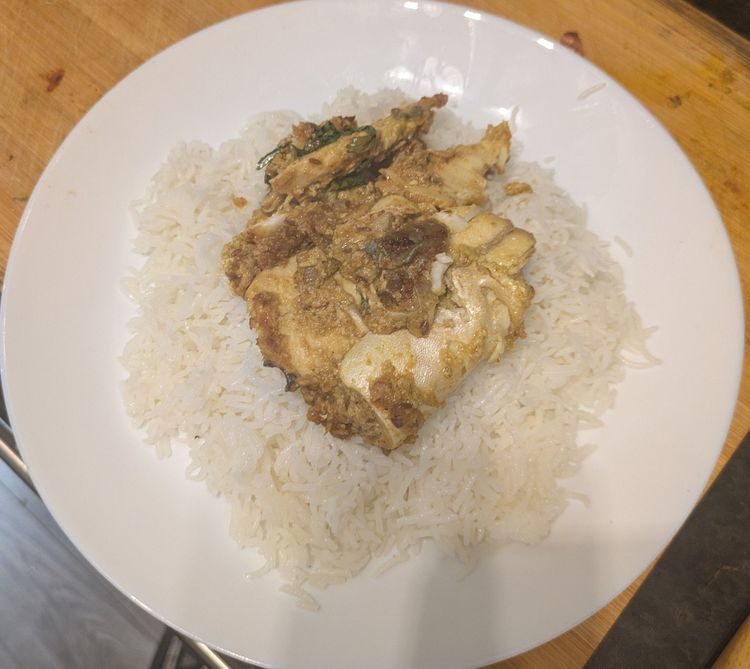
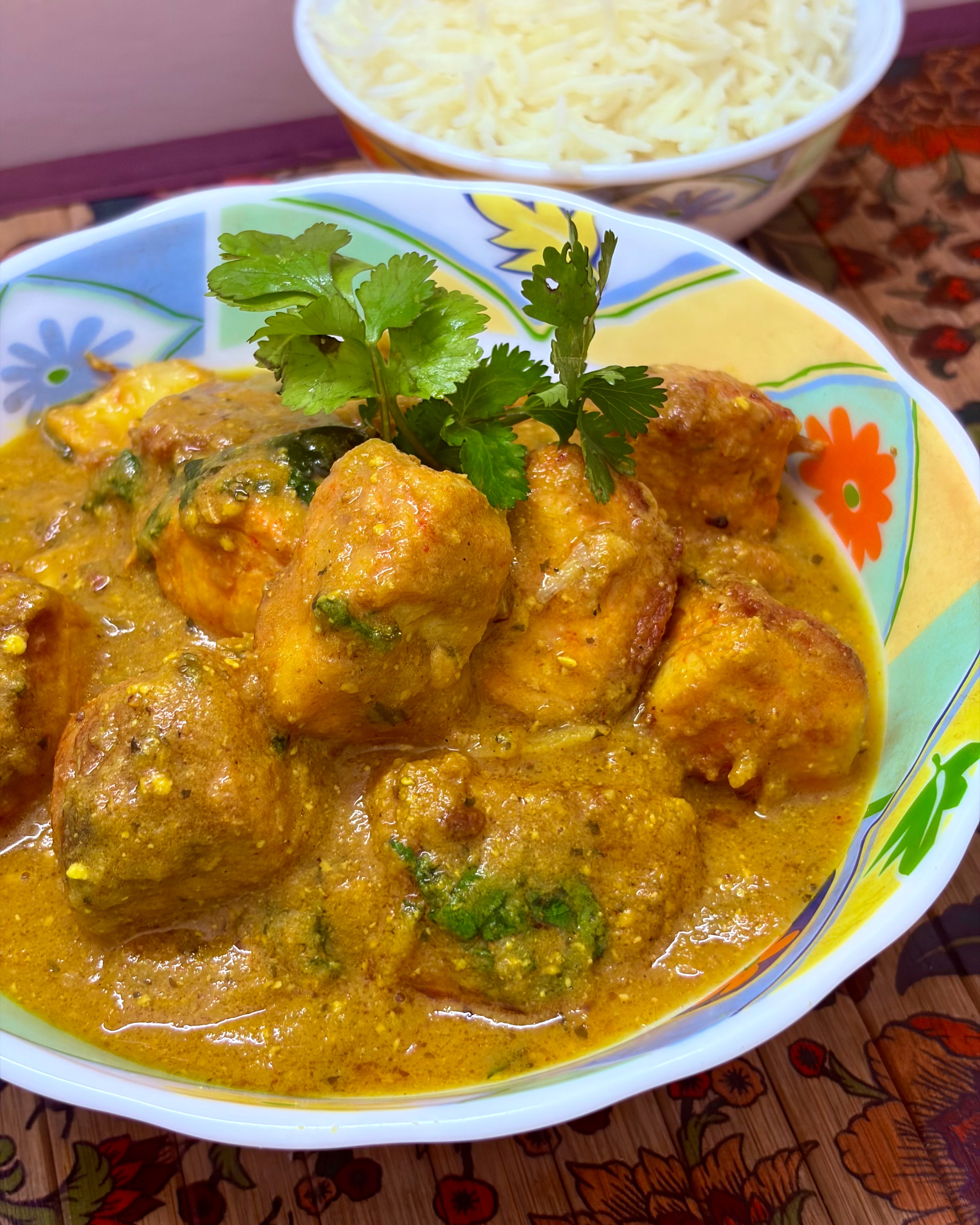
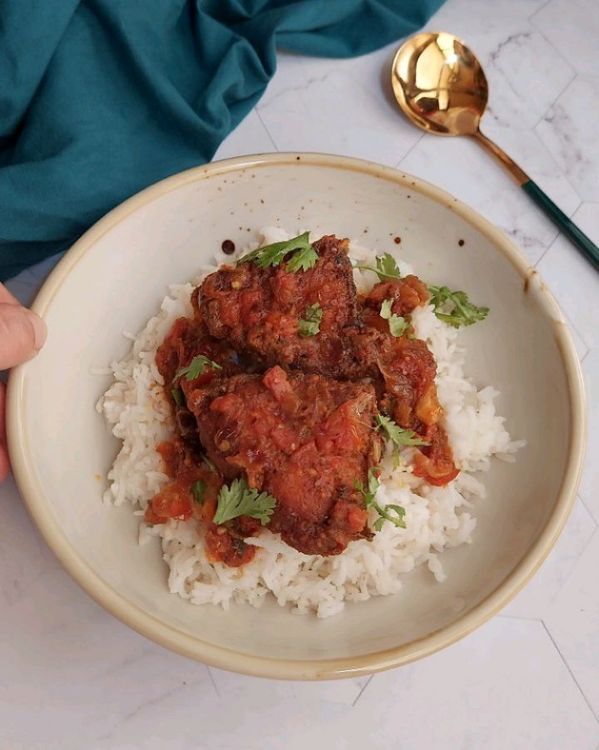
Move inland and the coconut disappears entirely. Punjabi and Pakistani kitchens brown their onions properly, cook the tomatoes until the oil separates and floats to the edges, then build a fish masala with turmeric, red chilli and garam masala. Bengal goes another way altogether: pungent mustard oil heated to smoking, nigella seeds, slit green chillies, and a gravy thin enough to eat with a spoon over rice. These three are the ones I make on a Tuesday, because they forgive you. The onion-tomato base can sit in the fridge for three days, and the fish itself needs only eight to ten minutes at the very end, no more than that.
- Pakistani
- Pescatarian
- Lunch
- Indian
- Pescatarian
- Dinner

- Indian
- Pescatarian
- Dinner
Fast Bowls for a Tuesday Night
Some nights you have thirty-five minutes and absolutely no ambition. These two are built for exactly that. The mackerel one skips the grinding entirely and uses ready-ground powders, which works because oily fish carries spice on its own without needing a wet paste behind it. The Thai bowl is a different genre altogether, swapping garam masala for lemongrass, galangal and lime, and it comes together fast because the paste does all the heavy lifting for you. Both are one-pot, both reheat well the next day, and both prove that a good weeknight dinner is less about clever shortcuts than about choosing a dish that was never slow to begin with.

- Gluten-Free
- Main Course
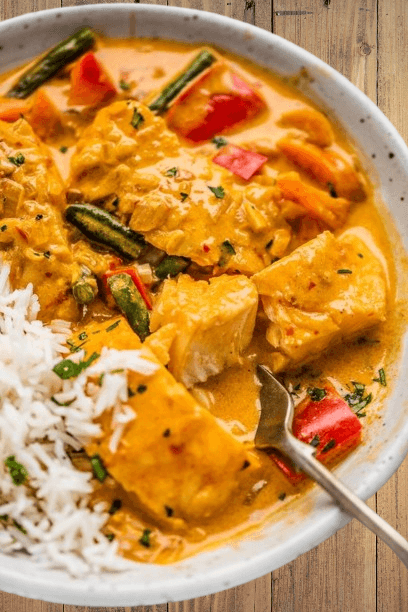
- Thai
- Pescatarian
- Dinner
Choosing Fish That Won't Fall Apart
This is the decision that makes or breaks the pot, and almost everyone gets it wrong the first time. Firm, oily, small-boned varieties are your friends here: kingfish, seer, mackerel, sardine, pomfret, and thick-cut swordfish or salmon. They carry connective tissue and fat that hold together through a simmer. Delicate flakers such as sole, basa, plaice or thinly cut tilapia loin will disintegrate the moment the gravy moves, which is exactly why my first attempt ended up as soup.
Bones and skin help far more than people expect. A steak cut straight across the bone holds its shape under heat, and the collagen leaching out of that bone thickens the gravy and adds a savoury depth that no powder can fake. If you can only find fillets, cut them into generous two-inch pieces rather than neat small cubes, because surface area is what falls apart first.
Freshness matters in a way you can check with your own hands. The flesh should spring back when pressed, the eyes should look domed rather than sunken, and the gills should be wet and red rather than brown. If it smells of ammonia, walk away, because no amount of tamarind will rescue it. Frozen-at-sea fish is very often better than the tired chilled tray at the back of a supermarket counter.
Salt and turmeric your pieces about fifteen minutes ahead, then pat them properly dry. This firms the surface proteins slightly and seasons the flesh itself rather than just the gravy around it. Then, whatever else you do, stop stirring. Slide the fish in, swirl the pan by its handles, and let it poach quietly. Eight to ten minutes for two-inch pieces is plenty.
Coconut vs Tomato vs Tamarind Bases
Almost every dish here is a variation on one of three bases, and once you can name them you can start improvising. Coconut, whether as milk or freshly ground paste, gives sweetness, body, and a fat that carries chilli heat gently. It is the Kerala and Mangalore signature. Its one rule is temperature: hold the pot below a boil once the milk is in, because rolling heat splits the emulsion and leaves grease floating on top and grit underneath. Add thick coconut milk in the last five minutes, off the heat if you can.
Tomato gives you acidity plus a glossy, clinging texture, and it is the workhorse of the north. The technique that separates a good pot from a flat one is the bhuna: cook the onion, tomato, ginger and garlic mixture over medium heat, stirring often, until the oil visibly separates and pools at the edges. That takes a full twelve minutes and it is not optional. Skip it and your fish masala tastes raw and faintly metallic no matter how much garam masala you add afterwards.
Tamarind, kokum and vinegar are the sour bases, and they do what the other two cannot: cut the oiliness of the fish and keep the flesh firm. Goa and the Konkan coast use them heavily, and Parsi cooking reaches for cane vinegar. Add sour ingredients early enough to cook out their rawness, but not so early that they tighten the protein for twenty minutes.
The best pots layer two of the three. Goa marries coconut and tamarind. Bengal marries mustard and tomato. Nothing stops you from doing the same at home once you understand what each element is actually contributing to the finished bowl.
Regional Fish Curry Styles (Goan, Bengali, Kerala)
Kerala cooks in coconut oil and finishes with curry leaves and mustard seeds crackled in more of it. The souring agent is kudampuli, a smoked black fruit that tastes of nothing else on earth, though tamarind stands in perfectly well. The gravy is thin, the heat is moderate rather than fierce, and it is traditionally cooked in an unglazed clay pot that lends a faint earthiness. Ask anyone how to make fish curry in Kerala and they will tell you, before anything else, to cook it a day early.
Goa is Portuguese-inflected and unashamedly red. Kashmiri chillies for colour rather than fire, coconut for body, tamarind or kokum for sour, and often a splash of vinegar at the end. It is the loudest of the three, and it wants plain rice underneath to give all that sourness somewhere to land. The paste freezes brilliantly, which is the real reason to make it in bulk.
Bengal does something almost nobody else does: it makes the cooking fat itself the flavour. Mustard oil, heated until it stops smelling raw and sharp, plus nigella seeds, turmeric and slit green chillies. Sometimes ground mustard seed goes in too, giving that unmistakable sinus-clearing edge. The gravy is thin and pale yellow, the pieces are usually rohu or hilsa cut across the bone, and the whole thing is done in twenty-five minutes.
Beyond these three, Punjab browns its onions and slows everything down, Parsi kitchens grind coriander and vinegar into a tangy paste, and Thailand replaces the Indian spice cabinet with lemongrass, galangal, lime leaf and fish sauce. Different vocabularies, one shared grammar: aromatic fat, a base, a souring agent, and the fish added last.
Serving and Storing
Rice, almost always. Plain steamed short-grain in Bengal, matta or red parboiled rice in Kerala, and long-grain basmati up north. The reason is structural rather than merely traditional: these gravies are thin and sour, and rice absorbs them in a way that bread simply cannot manage. If you want bread anyway, a soft appam or a lacy neer dosa suits the coconut-based pots far better than a dense whole-wheat roti ever will.
Sides should stay simple, because the pot is already doing plenty of talking. A dry stir-fried vegetable, a spoonful of lime pickle, some sliced raw onion with lemon squeezed over it, and plain yoghurt on the side if the chilli got away from you. Resist the urge to serve two gravies at the same meal; they blur into each other and you taste neither properly.
Storage is where these dishes really shine. Nearly every one of them tastes better the next day, because the ground spices hydrate fully and the sourness settles into the flesh instead of sitting on top of it. Cool the pot to room temperature within an hour, then refrigerate for up to three days in a glass or steel container, never aluminium, which reacts with tamarind and leaves a metallic edge.
Reheat gently on the stovetop over low heat, covered, and add a splash of water because the gravy always tightens overnight. Do not microwave on full power; the fish turns rubbery and the coconut splits. Freezing works well for the ground pastes and for tomato-based gravies, up to three months, but coconut milk gravies separate on thawing. Freeze the base, cook the fish fresh, and you get the best of both worlds.
Pro Tips From My Kitchen
- Salt and turmeric the pieces fifteen minutes before they go into the pot, then pat them dry with a towel. You are seasoning the flesh itself, not just the gravy around it, and dry surfaces hold their shape.
- Never stir once the fish is in. Hold the pan by its handles and swirl it instead, which moves the gravy around every piece without shearing the flakes apart. This single habit fixes most broken pots.
- Toast whole spices and dried chillies before you grind them, in a dry pan over medium heat until they smell nutty rather than sharp. It takes ninety seconds and it changes the finished gravy completely.
- Keep the pot below a boil once coconut milk goes in. A lazy shiver at the surface is exactly right; rolling bubbles will split the emulsion and leave a slick of grease sitting on top of the bowl.
- Cook the onion and tomato base until the oil visibly pools at the edges of the pan, which usually takes about twelve minutes. That separation is the signal to move on, not the clock or the timer.
- Make your ground pastes in double batches and freeze them in an ice-cube tray, then bag the cubes. Two cubes plus fish plus twenty minutes equals dinner on the worst kind of Wednesday evening.
- Cook it a day ahead whenever you can plan that far. These gravies genuinely improve overnight as the spices hydrate and the sour notes soften and settle down into the fish itself.
Frequently Asked Questions
Which fish curry recipes should a complete beginner start with?
Start with the Bengali one at twenty-five minutes and twelve ingredients, or the quick mackerel version at thirty-five. Both use robust, oily fish that resists falling apart, and neither asks you to grind a wet paste from scratch. Once you are comfortable with the basic sequence of hot fat, aromatics, base and then fish, the Goan and Parsi pastes stop looking intimidating and start looking like a Saturday project.
Why does my fish always break into pieces in the gravy?
Almost always one of three things, and usually all three at once: you chose a delicate flaker like sole or basa, you cut the pieces too small, or you stirred the pot. Use firm, oily varieties in two-inch chunks or bone-in steaks, slide them into a gravy that is already fully seasoned, then swirl the pan rather than stirring it. Eight to ten minutes is genuinely enough time.
Can I use frozen fish instead of fresh?
Yes, and frozen-at-sea fish often beats a tired chilled tray at the supermarket counter. Thaw it slowly in the fridge overnight rather than under running water, then pat it thoroughly dry and salt it fifteen minutes ahead of cooking. Wet fish waters down the gravy and refuses to hold its seasoning properly. Never refreeze it once thawed, and use it within a day of defrosting for the best texture.
How do I stop coconut milk from splitting?
Heat is the culprit, essentially always. Once the milk goes in, drop the flame so the surface barely shivers, and never let it reach a rolling boil. Add the thick milk in the final five minutes, ideally with the heat switched off entirely. If it does split on you, a spoonful of cold coconut milk whisked in off the heat will sometimes bring the emulsion back together again.
What makes an indian fish curry different from a Thai one?
Mostly the aromatic vocabulary rather than the method. Indian versions build on ginger, garlic, turmeric, coriander and chilli, with tamarind or kokum bringing the sourness. Thai versions use lemongrass, galangal, lime leaf and fish sauce, with fresh lime for acidity at the end. The underlying grammar is identical, though: aromatic fat first, then a base, then something sour, and the fish always added last.
How long does it keep, and can I freeze it?
Three days in the fridge in glass or steel, never aluminium, which reacts with the tamarind and gives everything a metallic edge. Most of these taste noticeably better on day two. Freezing is trickier: tomato-based gravies and ground pastes freeze well for up to three months, but coconut milk separates badly on thawing. Freeze the base instead, then poach fresh fish in it when you reheat, and nobody will know the difference.
How much chilli should I actually use?
It depends entirely on which chilli you have. Kashmiri chillies give deep colour with only modest heat, so a Goan paste can happily use ten of them and still land mild. Byadgi behaves much the same way. Guntur or bird's eye chillies are several times hotter, so start with two and taste as you go. You can always add heat at the end of cooking; you cannot take it back out.
Can I make these without any coconut at all?
Absolutely, and several here already are. The Punjabi, Pakistani and Bengali dishes use no coconut whatsoever, relying instead on onion-tomato bases or pungent mustard oil for their character. If you want to convert one of the coastal recipes, cashew paste gives you similar body and richness, and full-fat yoghurt whisked in off the heat works too, though it needs exactly the same gentle-heat treatment to avoid splitting.
Twelve pots, four bases, one shared lesson: choose fish that can take the heat, build all your flavour before it ever goes in, then leave the pan alone and let it poach. Whichever of these fish curry recipes you start with tonight, cook it once by the book and then once by instinct. The second pot is always the one people ask you about later.
Related
- seafood
- coconut milk
- one pot
- weeknight dinner
- South Indian
- high protein
Popular Searches
- Best fish curry recipes
- Easy fish curry recipes
- Quick fish curry recipes
- Healthy fish curry recipes
- Simple fish curry recipes
- Homemade fish curry recipes
- Delicious fish curry recipes
- Popular fish curry recipes
- indian fish curry
- coconut fish curry
- how to make fish curry
- goan fish curry
Marnirni-apinthi Building, Lot Fourteen,
North Terrace, Adelaide, South Australia, 5000
Australia
