We use cookies on this website to ensure its proper functioning and to improve the quality of our services. Cookie Policy

Tags and nutritional info are auto-generated and may be inaccurate. Always check the full ingredient list before cooking.


1. Rinse rice clean, soak it in water with vegetable oil for 30 minutes. Shred ginger, chop green onions, cut pork into thin strips, dice century eggs or peel shrimps for later use.
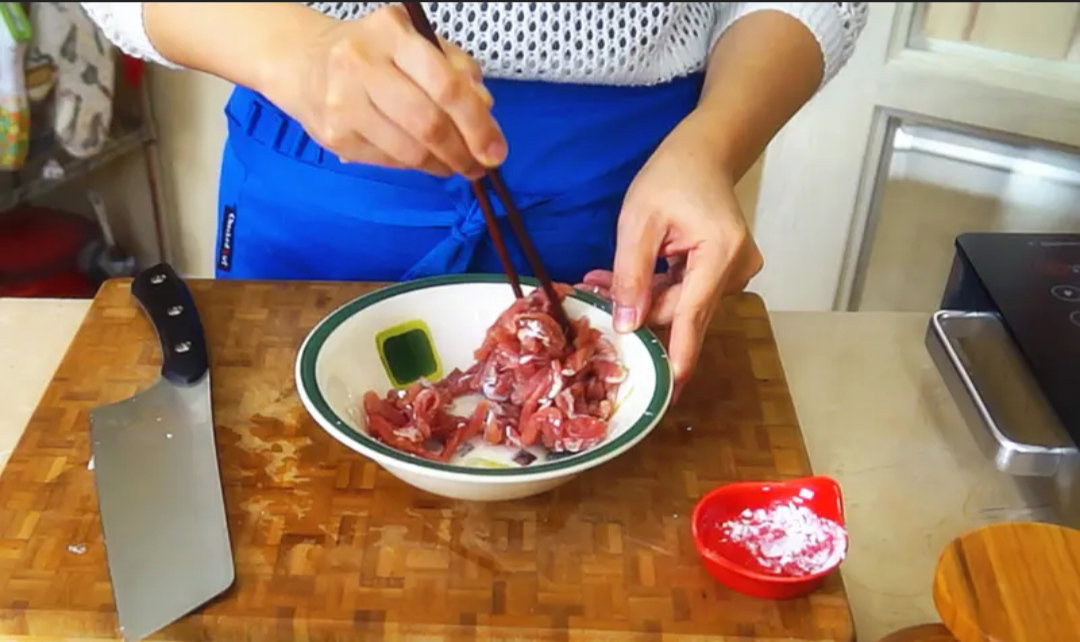
Shred the pork tenderloin into thin strips.

2. Put shredded pork into a bowl, add salt, cornstarch and one whole egg, stir well. Add a little water if the mixture is too dry.
Marinate the shredded pork with cornstarch and one whole egg for 10 minutes to make the meat tender and juicy.

3. Put soaked rice into a soup pot, pour in 1.5 liters of water. Bring to a boil over high heat, then turn to low heat and simmer for 20 minutes.
Wash the rice thoroughly and soak it in clean water for 15 minutes to shorten cooking time.
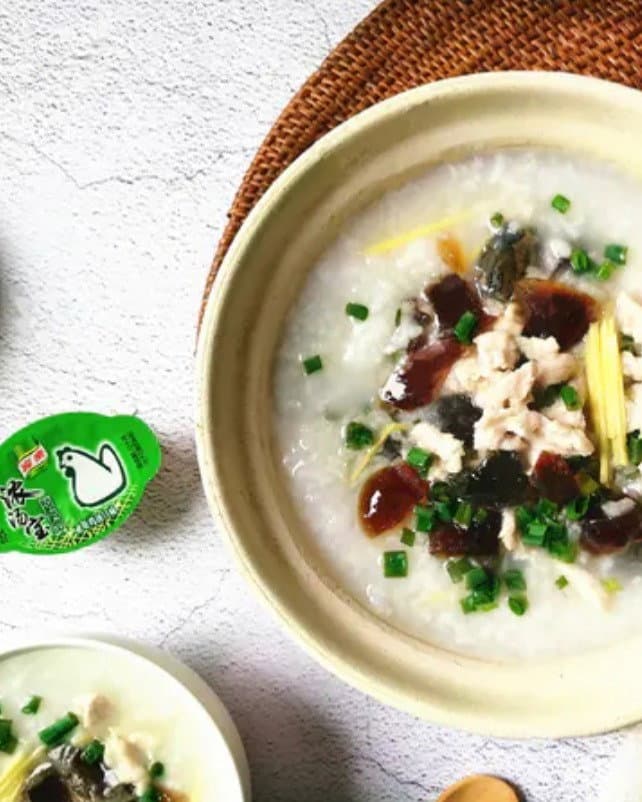
4. After 20 minutes, the porridge will become thick and creamy. Add marinated pork strips, shredded ginger, white pepper, salt and diced century eggs (or shrimps). Stir well and cook for another 5 to 6 minutes.

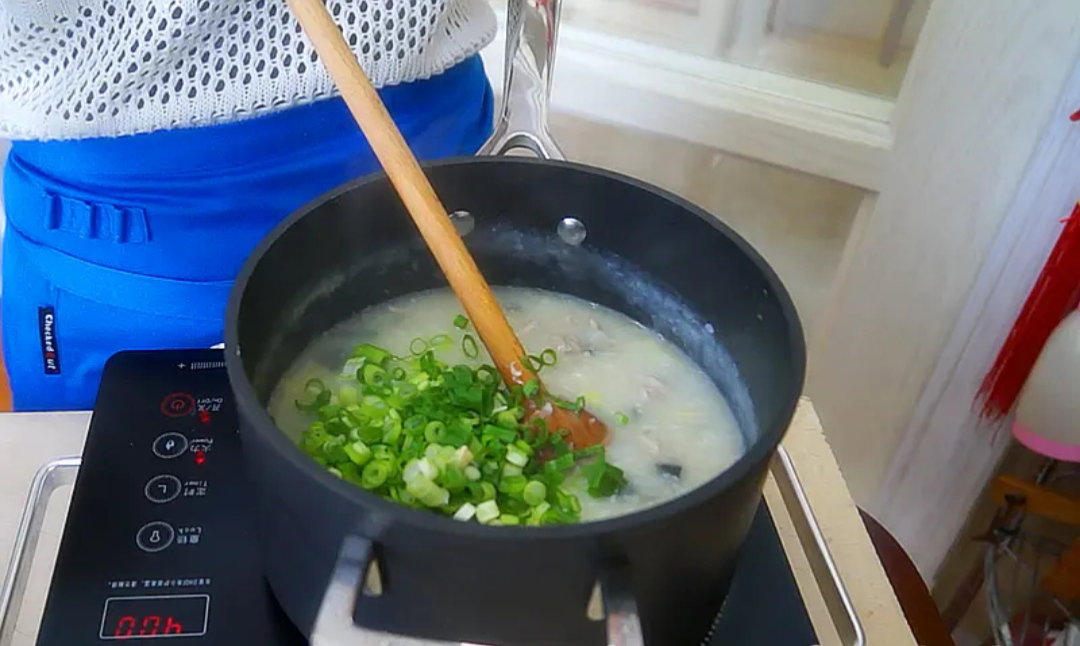
5. Sprinkle chopped green onions into the porridge, stir evenly and cook for 1 more minute, then serve.

6. Peel the century eggs and cut them into small dices, then add the diced century eggs into the congee.
7. Season with salt and white pepper, keep simmering for another 5 minutes to blend all flavors well.
8. Sprinkle chopped green onion on top, stir evenly and serve hot.
Tips
1. Soaking rice with a little oil in advance makes the porridge softer and creamier.
2. You can adjust the ingredients and portions according to personal taste.
3. Century eggs can be replaced with fresh shrimps, fried eggs or soft poached eggs.
Feel free to DIY and adjust ingredients to your taste.
If you are allergic to nuts, you may skip them. No need to force ingredients, mix and match freely.

Heat vegetable oil in a deep pot, add sliced ginger and stir-fry until aromatic.
Add the marinated pork shreds and stir quickly until the meat turns pale white.
Pour 1.5 liters of water into the pot and bring it to a full boil, then add the soaked rice.
Turn to low heat and simmer for 35 to 40 minutes, stirring the congee occasionally to prevent the rice from sticking to the bottom of the pot.
Peel the century eggs and cut them into small dices, then add the diced century eggs into the congee.
Season with salt and white pepper, keep simmering for another 5 minutes to blend all flavors well.
Sprinkle chopped green onion on top, stir evenly and serve hot.
Want to keep this recipe for later? We can email it to you!
Soaking the rice before cooking helps it break down faster and creates a creamier texture.
Marinating the pork with egg and cornstarch ensures the meat stays tender during cooking.
Stir the congee occasionally while simmering to prevent it from sticking to the pot.
Can I use a different type of rice?
Yes, you can use short-grain rice or jasmine rice, but the texture may vary slightly.
What can I substitute for century eggs?
You can use regular boiled eggs or skip them entirely if you prefer.
How do I store leftovers?
Store the congee in an airtight container in the refrigerator for up to 3 days. Reheat with a splash of water to restore its creamy texture.
Can I add other ingredients?
Yes, you can add mushrooms, shredded chicken, or other vegetables to customize the congee.
Is it necessary to marinate the pork?
Marinating the pork helps keep it tender, but you can skip this step if you're short on time.