We use cookies on this website to ensure its proper functioning and to improve the quality of our services. Cookie Policy


Tags and nutritional info are auto-generated and may be inaccurate. Always check the full ingredient list before cooking.


Slice each chicken breast horizontally or pound it to about 1/2-inch thick.
Whisk together the buttermilk and egg in a shallow bowl.
Combine the flour, salt, black pepper, garlic powder, onion powder, paprika, and cayenne in another dish.
Dip each piece into the buttermilk mixture, then press firmly into the seasoned flour.
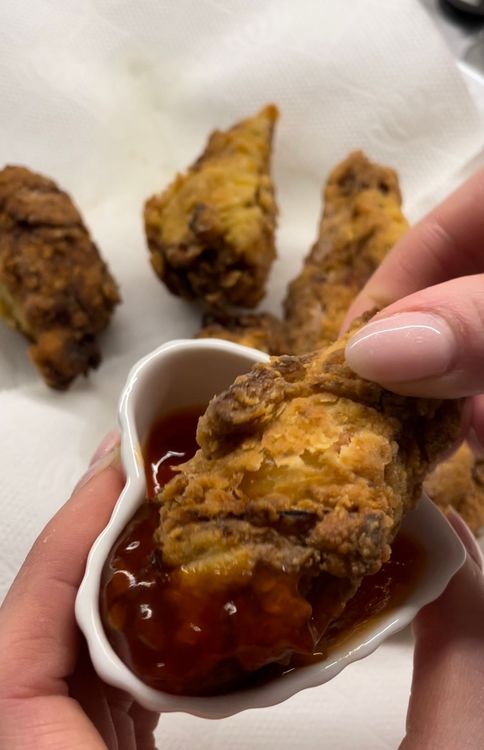
Drizzle a couple tablespoons of the buttermilk mixture into the flour and work those little clumps onto the chicken for an extra craggy crust.
Heat about 1/2 inch of oil in a cast-iron skillet to 350°F.
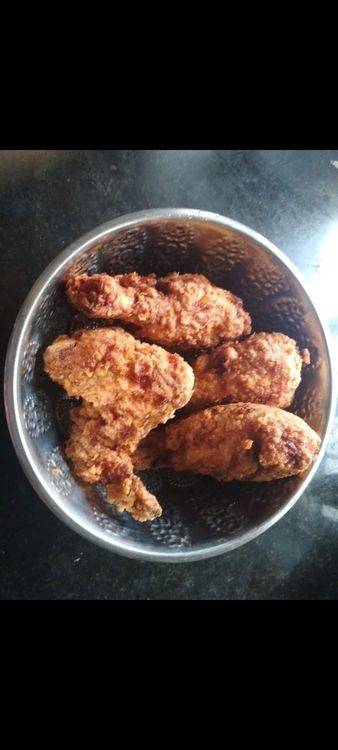
Fry the chicken in batches for about 3–5 minutes per side, until deeply golden and the internal temperature reaches 165°F.
Transfer the chicken to a wire rack while you make the gravy.
Carefully pour off the frying oil, leaving 1/4 cup oil plus some browned bits in the skillet.
Whisk in 1/4 cup flour and cook for about 1–2 minutes.
Slowly whisk in the milk. Bring to a gentle simmer and cook for 3–5 minutes, stirring frequently, until thick and creamy.
Season generously with salt and coarse black pepper. Add garlic powder if desired.
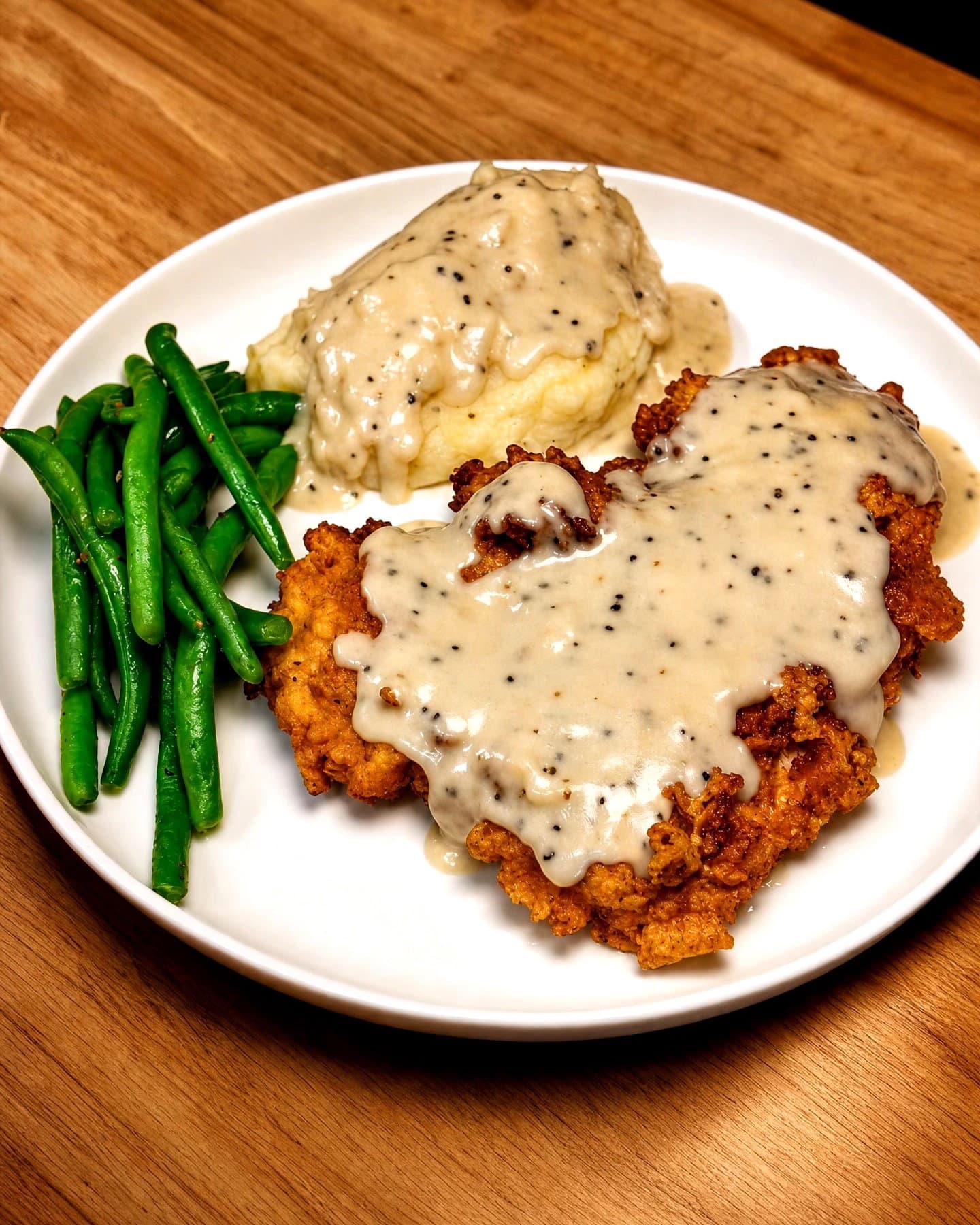
Serve immediately with the peppered gravy spooned over the crispy chicken.
Want to keep this recipe for later? We can email it to you!
For an extra craggy crust, drizzle a couple tablespoons of the buttermilk mixture into the flour and work those little clumps onto the chicken.
Can I use a different type of milk for the gravy?
Yes, you can use any milk, but whole milk gives the creamiest texture.
What oil is best for frying?
Use a neutral oil with a high smoke point, like canola or vegetable oil.
How do I know when the chicken is cooked?
The chicken is done when it reaches an internal temperature of 165°F.
Can I make the gravy ahead of time?
It's best to make the gravy fresh, but you can reheat it gently if needed.
Is the cayenne pepper necessary?
No, it's optional and can be omitted if you prefer less heat.