
Top 30 French Recipes: Braises, Soups, Pastries and Desserts
Updated June 29, 2026 · Curated by Chefadora
French recipes are less a single cuisine than a grammar of technique — a handful of foundational moves, repeated and refined, that turn modest ingredients into something memorable. The dishes below were chosen to show that range: wine-rich braises that simmer for hours, deeply caramelized soups, laminated pastries that shatter into buttery flakes, and the patisserie classics that make French dessert famous. Master a few core skills and the whole repertoire opens up to you at home.
What ties French cooking together is respect for the building blocks. A proper braise starts with a good sear and a well-built base of aromatics; a great soup with onions cooked far longer than you think; a croissant with cold butter and patient lamination. The French call this mise en place and méthode — getting your foundations right before you reach for the showy finish. Skip those steps and the dish falls flat, however good the recipe reads.
You will find four clusters here: mains and braises, soups and sides, pastries and breads, and the classic desserts. They share more than a flag — the same care with butter, wine, eggs and gentle heat runs through all of them. Once you can build a braise or fold a pastry dough, the next dish in the same family is a variation rather than a brand-new skill to learn.
Treat this as a working reference rather than a coffee-table read. Every recipe links to full ingredients and steps on Chefadora, and the guides below cover the decisions that decide whether a dish sings or sinks — how to build a braise with depth, how to laminate dough without melting the butter, how to set a custard without scrambling it, and how to coax real sweetness from a pan of onions.
French Mains & Braises
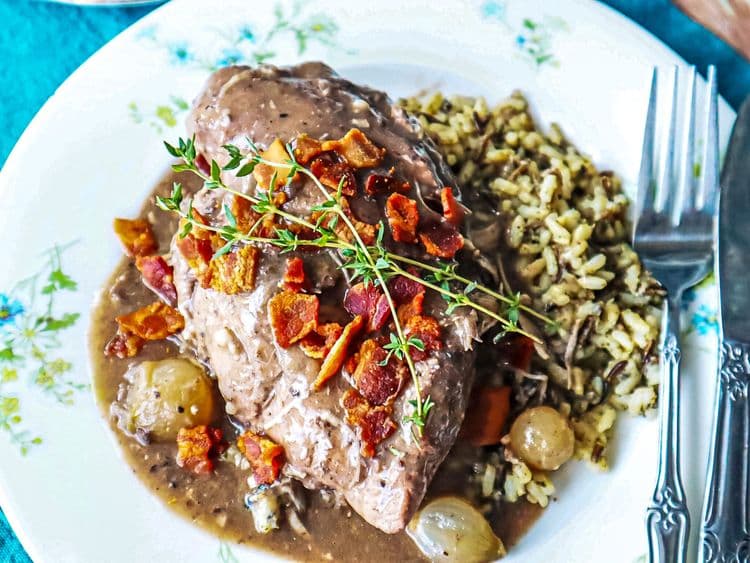
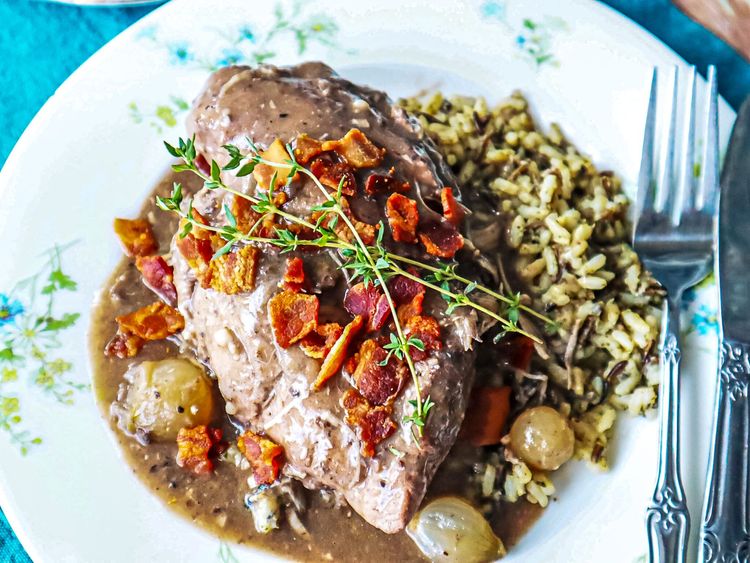
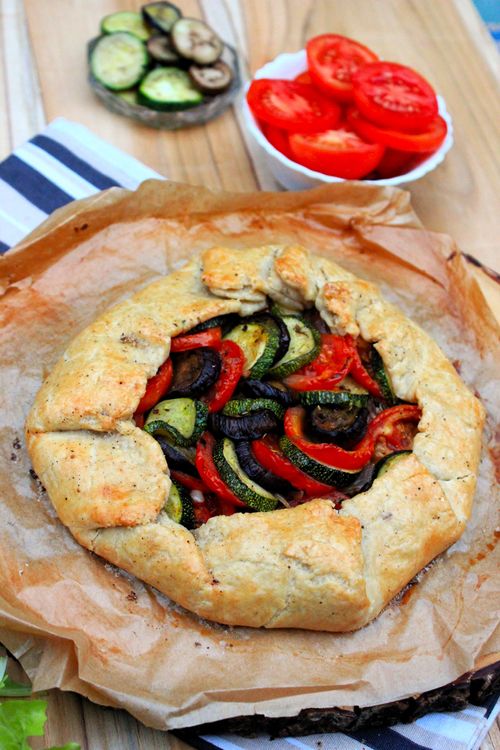
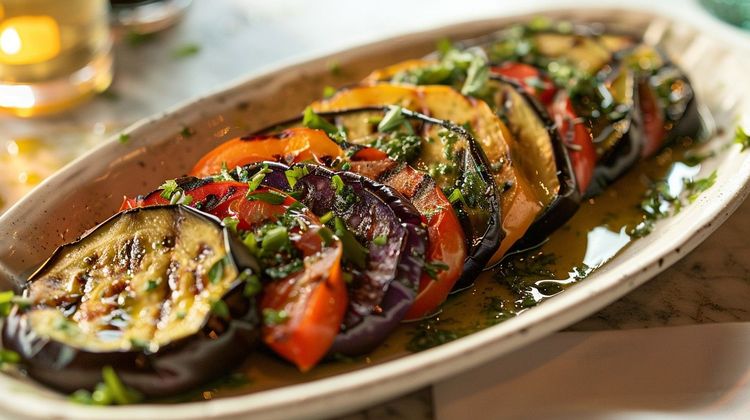
The braised dishes at the heart of French cooking are an exercise in patience rewarded. Coq au vin, beef bourguignon, a long daube of the south — they all begin the same way, with meat patted bone-dry and browned hard in a heavy pot until a dark, sticky fond builds on the base. That crust is not a step to rush; it is the backbone of the entire sauce, and crowding the pan steams the meat grey instead of searing it. Render lardons first and brown in that fat for an extra layer of savor. Once the meat is out, soften your aromatics, deglaze with a wine you would actually drink, and scrape up every browned scrap before the stock and a bouquet garni go in. Then comes the easy stretch: a low, barely-trembling simmer for as long as the cut needs, never a hard boil, which toughens the meat and clouds the liquid. Ratatouille works the same way with vegetables, each cooked until sweet. Finish by reducing the sauce until it coats a spoon and mounting it with cold butter for gloss. Standouts here include Coq au Vin and Ratatouille Galette, plus French Ratatouille.

- French
- Non-Vegetarian
- Dinner

- French
- Vegetarian
- Appetiser
- French
- Vegan
- Lunch
French Soups & Sides
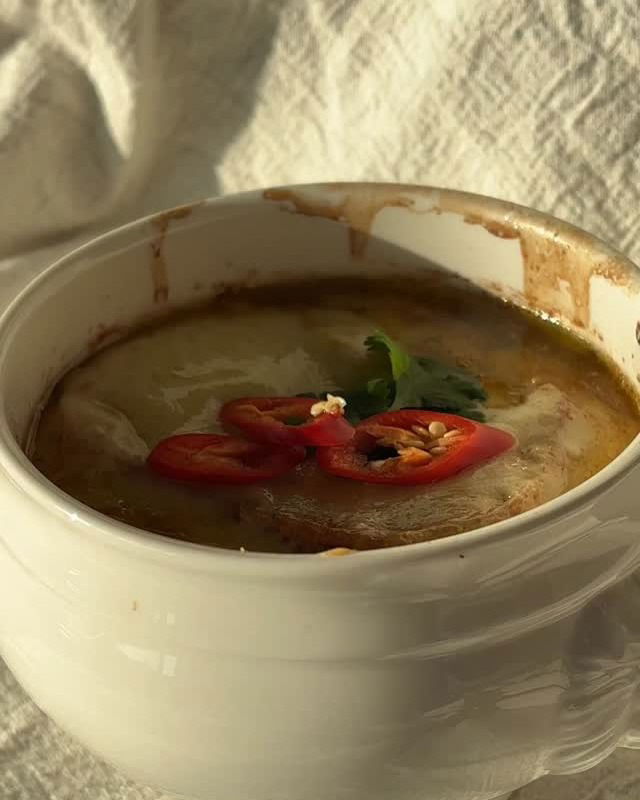
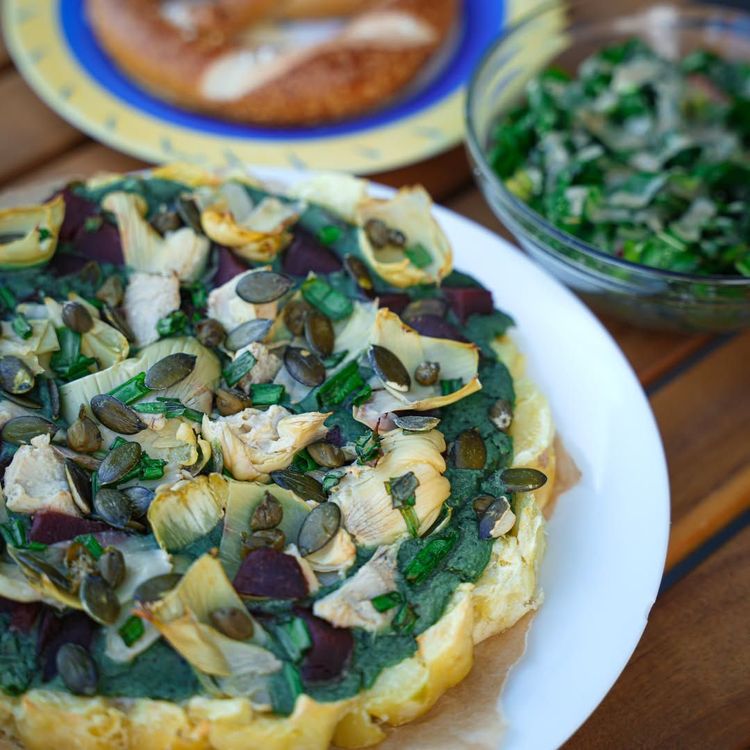
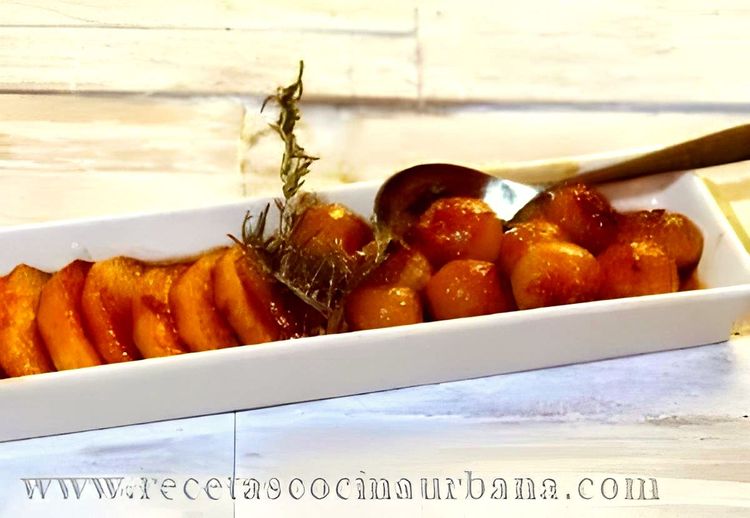
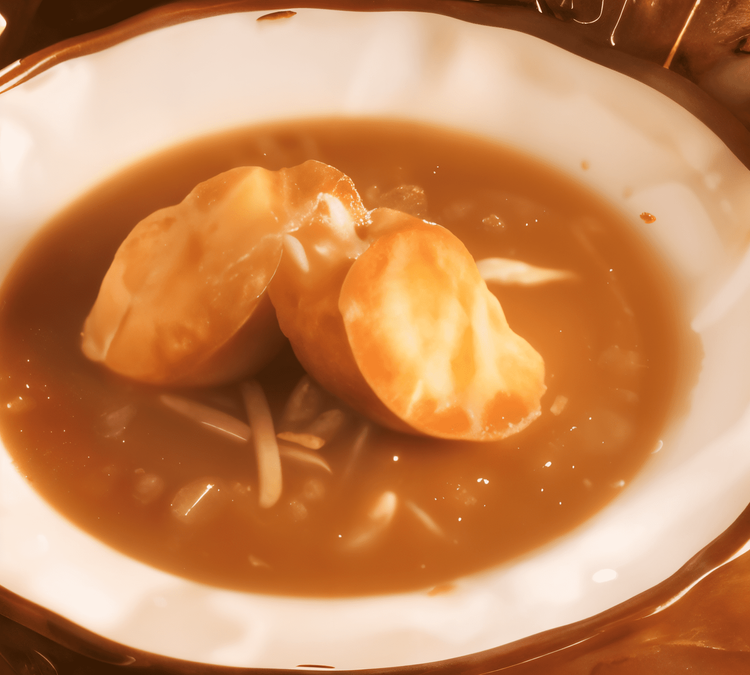
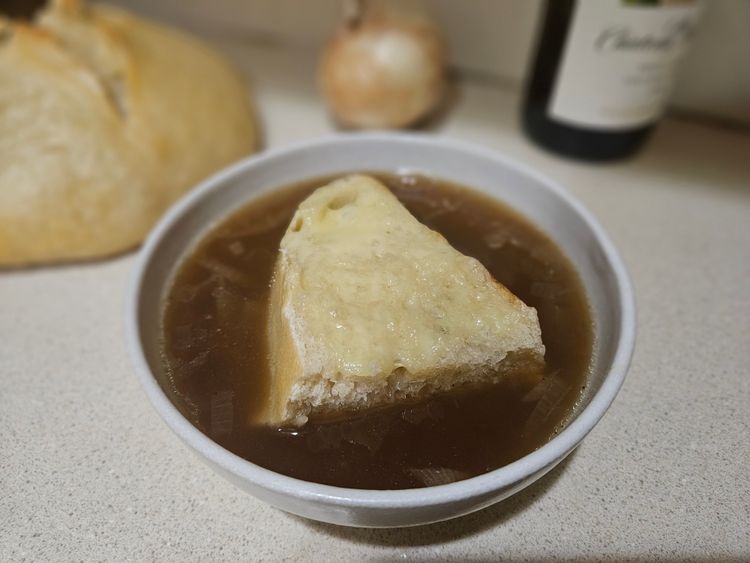
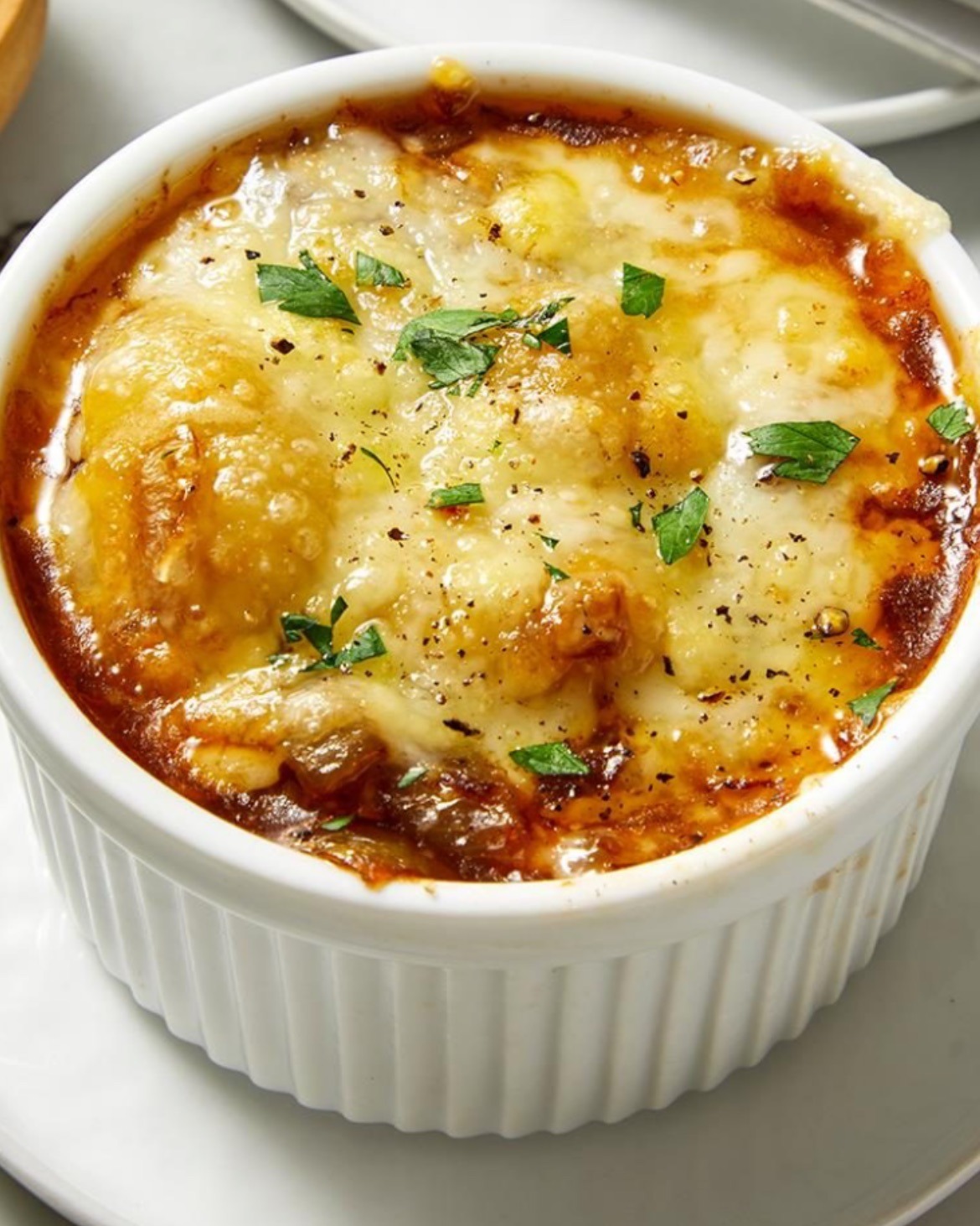
A French onion soup tastes the way it does for one reason: the onions are cooked far longer than feels reasonable, 45 minutes to well over an hour, low and slow until they collapse into a sweet, mahogany jam. There is no shortcut that gets you there — high heat scorches the edges before the centres soften and just tastes burnt. Use a wide, heavy pan and a generous knob of butter, salt the onions early to draw out moisture, and stir only enough to keep them from catching. If they threaten to stick, splash in a little water and scrape up the sweet fond. Once deeply browned, deglaze with wine or sherry, add good stock, and finish the classic way under a raft of toasted bread and melted Gruyère. The cream-based sides follow a different logic: a gratin dauphinois wants thinly sliced potatoes layered with garlicky, nutmeg-scented cream, seasoned at every layer and baked slow and moderate so the cream clings and reduces rather than splitting into a greasy curdle. Patience and gentle heat carry both. Standouts here include Fusion French Onion Soup and French Onion Soup, plus Potato Quiche « Crust ».

- French
- Pescatarian
- Dinner


- French
- Non-Vegetarian
- Dinner
- French
- Vegan
- Lunch
- French
- Vegetarian
- Snack
- French
- Vegetarian
- Lunch
- French
- Non-Vegetarian
- Lunch
- French
- Non-Vegetarian
- Appetiser
- French
- Non-Vegetarian
- Dinner
French Pastries & Breads
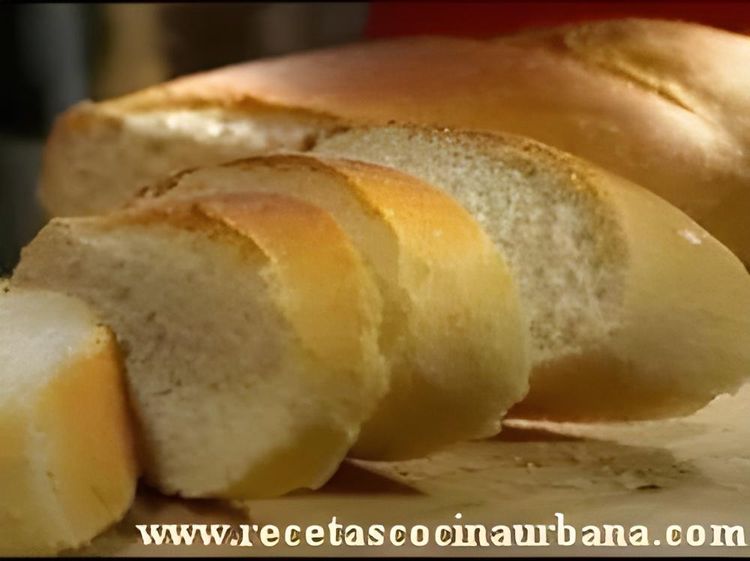
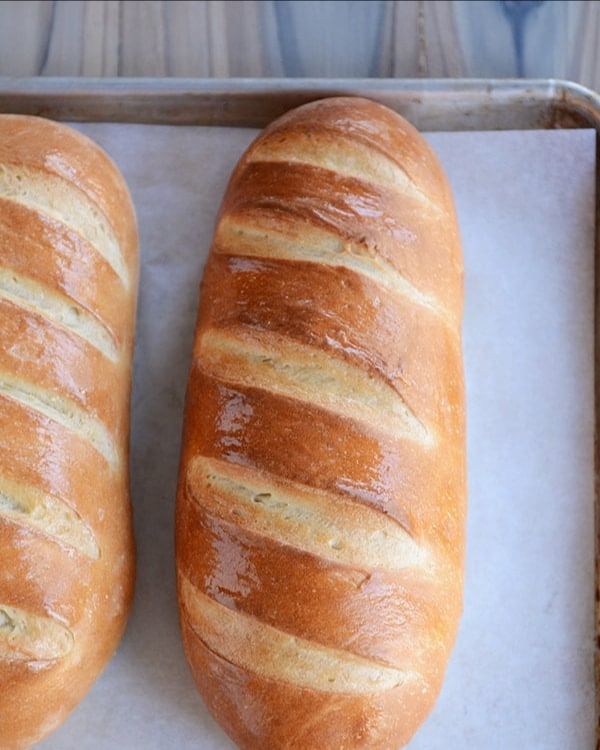
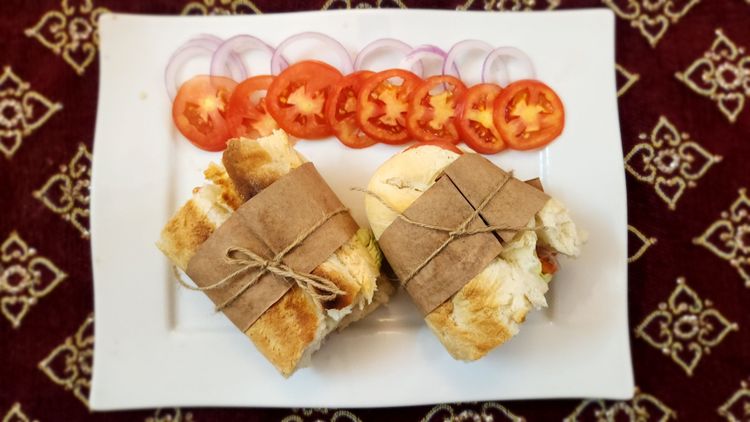
French pastry is where technique becomes almost meditative. Croissants, puff pastry and palmiers all rest on lamination — trapping thin sheets of cold butter between layers of dough so they steam apart into hundreds of flaky leaves. The one rule that governs everything is temperature: the butter must stay cold and pliable, never melting in or cracking into shards. Beat your butter block to the same firm-but-bendable consistency as the chilled dough, encase it, then roll and fold in a series of turns, chilling 30 minutes between each so the gluten relaxes and the butter re-firms. If butter starts to ooze, stop and chill; pushing on warm dough tears the layers and kills the rise. Baguettes and breads ask for a different patience — a long, slow ferment for flavor, a wet dough handled gently, and a properly hot oven with steam to set that crackling, blistered crust. Pâte à choux, the base of éclairs and profiteroles, is cooked twice: dried on the stove, then bound with eggs and puffed hollow in the oven. Each builds on a single principle done carefully. Standouts here include Economical French Bread and Classic French Baguette, plus French Baguette Sandwiches.
- French
- Dairy-Free
- Breakfast
- French
- Vegan
- Breakfast
- French
- Non-Vegetarian
- Lunch
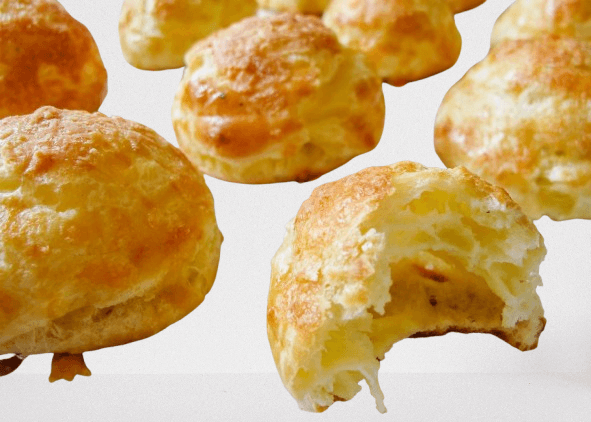
- French
- Eggetarian
- Appetiser
Classic French Desserts
Half the French dessert canon is, at heart, a custard — crème brûlée, crème caramel, the pastry cream inside an éclair — and they all live or die on gentle heat. Eggs thicken a liquid as they cook, but push them too hot and they scramble into sweet, grainy curds. So you temper, whisking hot cream into the yolks in a thin stream, bake in a water bath to buffer the heat, and pull the custards while the centre still wobbles like loose jelly, because it firms as it chills. Strain everything through a fine sieve before setting for that signature silky texture. The tarts lean on a different skill — a crisp, well-rested pastry shell blind-baked so it stays shatteringly short under its fruit or frangipane filling. Chocolate mousse is about folding air in gently so it stays light rather than dense. And the macaron, the famously finicky one, demands precision at every step: weighed ingredients, a batter mixed to exactly the right ribbon, shells rested until a skin forms, and a steady, moderate oven. Temperature control and a patient, gentle hand carry every one of them. Standouts here include Classic French Crème Brûlée and French Blueberry Lemon Tart, plus French Silk Mousse Tarts.
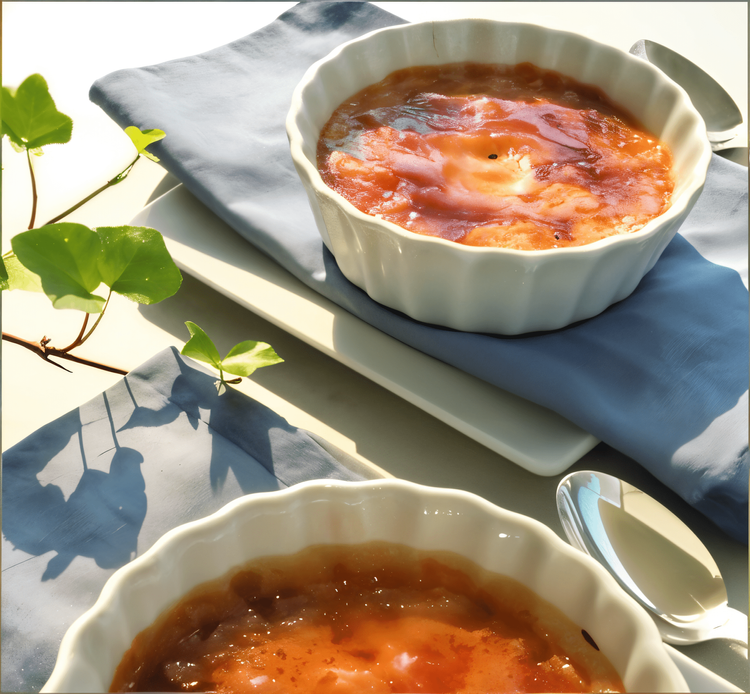
- French
- Eggetarian
- Dessert
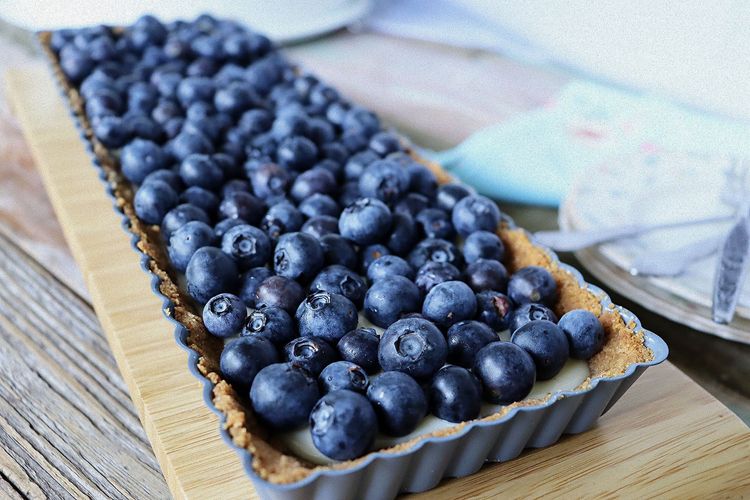
- French
- Vegetarian
- Snack
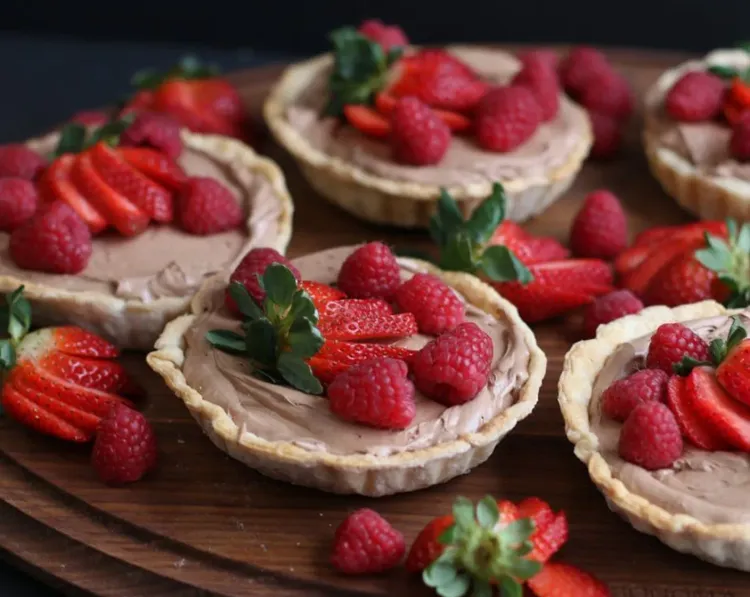
- French
- Eggetarian
- Dessert
More French Favourites
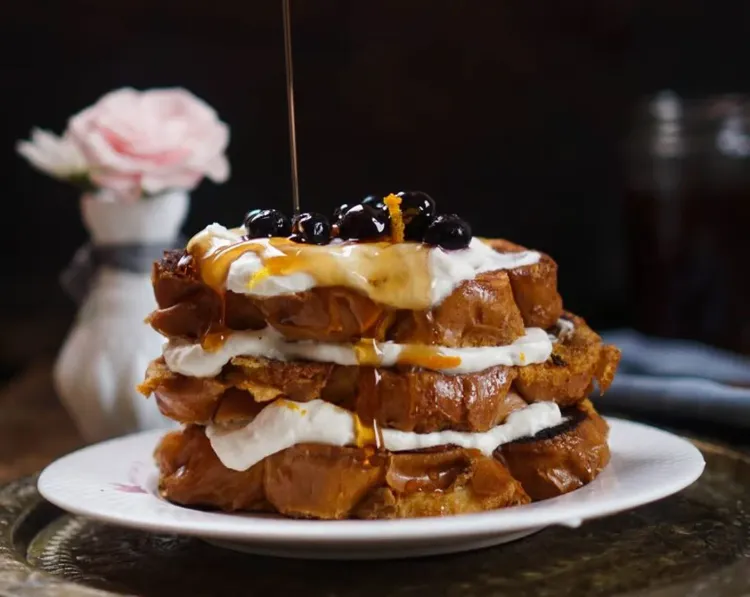
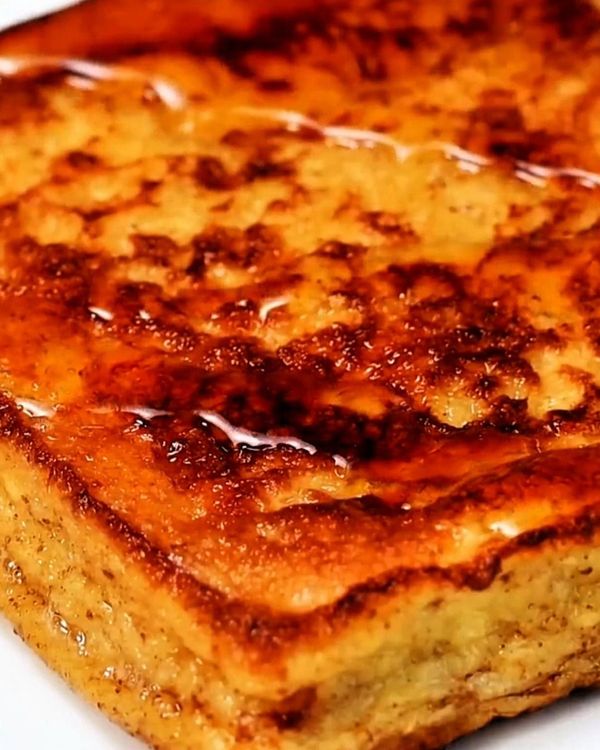
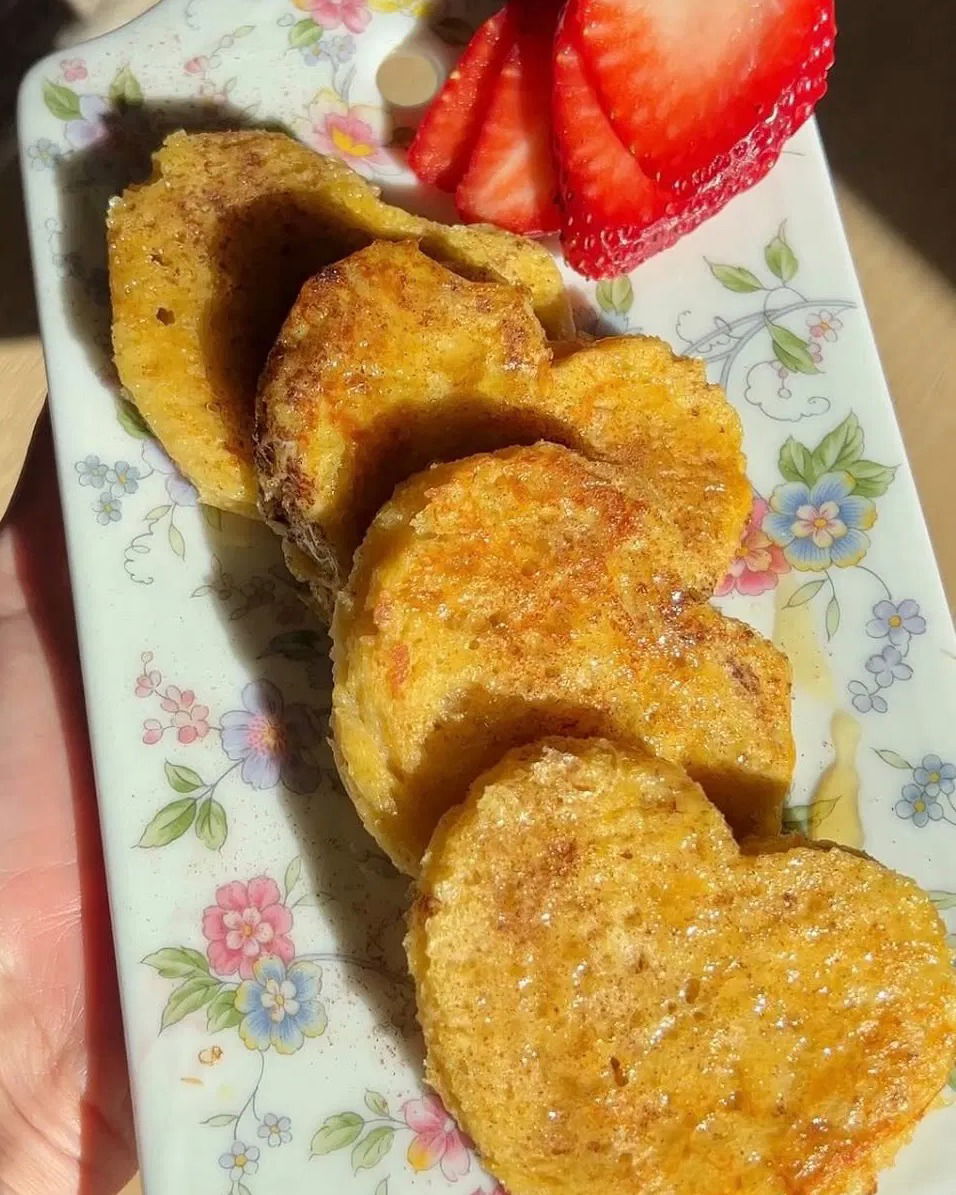
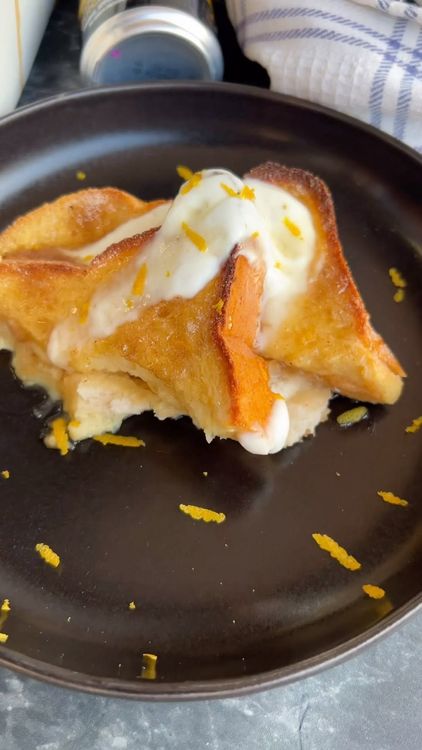
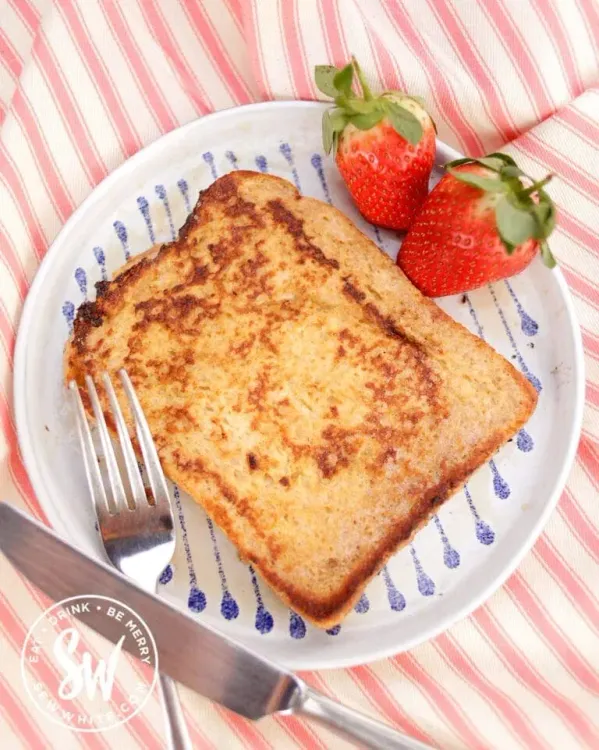
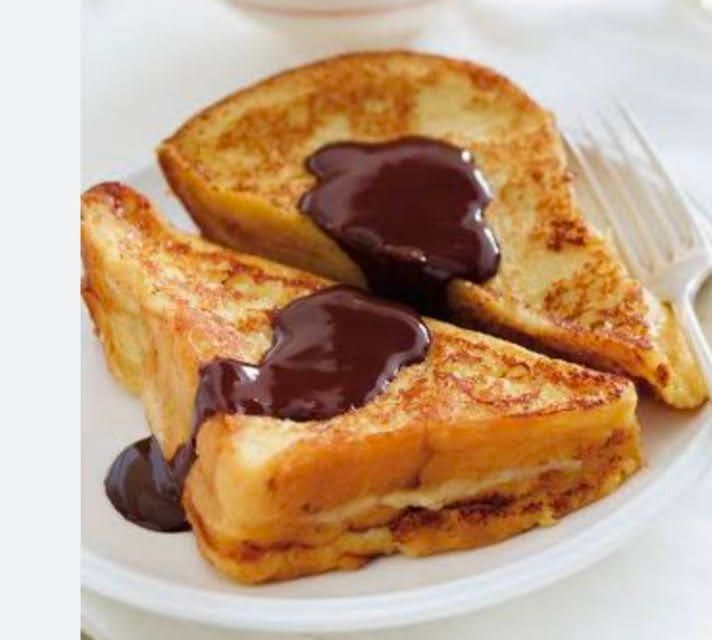
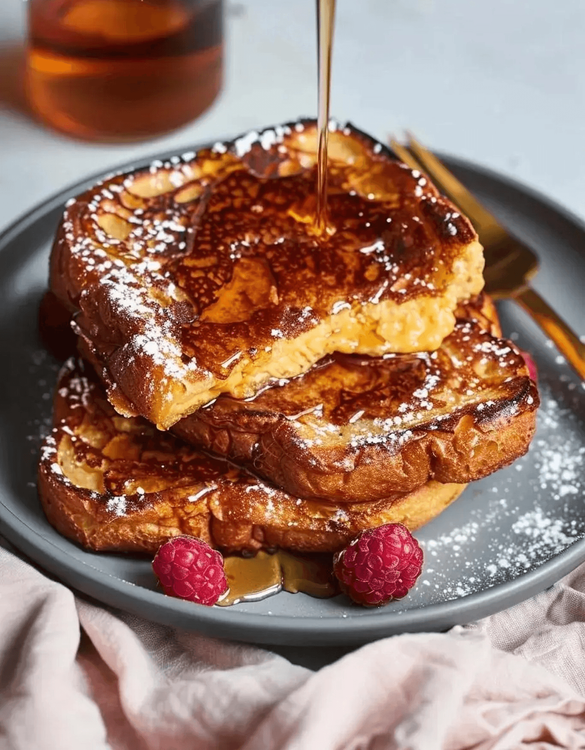
A handful of French dishes never quite settle into one neat category, and these are the ones worth keeping in your back pocket once the classics feel routine. They lean on the same core moves you have already practiced — a confident sear, a slow-built braise, a tempered custard, a laminated dough — but steer them toward different flavors and textures, so French cooking never feels like the same three dishes on repeat. Picking your next one is mostly about matching effort to mood and time. Reach for a quick pan-fried fish meunière or a simple omelette on a busy evening when you want something elegant in fifteen minutes, and save the slow daubes, the multi-day laminated bakes and the fussy macarons for a weekend when you can give the technique the attention it asks for. Pay attention to the small things that separate good from great here: the temperature of your butter, the depth of your sear, the patience you bring to a pan of onions or a gently setting custard. Think of this group as the natural next step after the headline recipes — the dishes that quietly earn a permanent spot in your rotation once you have cooked them through. Standouts here include French Toast with Orange Marmalade Whipped Cream and Fluffy French Toast, plus Golden French Toast.
- French
- Eggetarian
- Breakfast
- French
- Eggetarian
- Breakfast
- French
- Eggetarian
- Breakfast


- French
- Eggetarian
- Breakfast
- French
- Eggetarian
- Dessert
- French
- Eggetarian
- Lunch
- French
- Eggetarian
- Dessert
- French
- Eggetarian
- Breakfast

- French
- Eggetarian
- Appetiser
- French
- Eggetarian
- Breakfast
- French
- Eggetarian
- Breakfast
- French
- Eggetarian
- Breakfast
Building a French Braise with Depth
A great braise — coq au vin, beef bourguignon, a daube — starts long before the wine goes in. Pat the meat bone-dry and brown it hard in batches in a heavy pot; the dark, crusty fond left behind is pure flavor and the backbone of the whole dish. Crowding the pan steams the meat grey instead, so give each piece room and take your time. Render the lardons first and brown the meat in that fat for an extra layer of savor.
Once the meat is out, soften your aromatics — onion, carrot, garlic — in the fond, then deglaze with wine, scraping up every browned scrap from the base. Use a wine you would actually drink; it reduces and concentrates, so its flaws concentrate too. Reduce it briefly to cook off the raw alcohol edge before the stock and a bouquet garni go in. This is the moment the dish gains its backbone.
Then comes the easy part: a low, barely-trembling simmer, lid ajar, for as long as the cut needs — often two to three hours for beef, less for chicken. The liquid should never boil hard, which toughens meat and clouds the sauce. Finish by reducing the braising liquid until it coats a spoon, mounting it with a knob of cold butter for gloss, and balancing with salt and a splash of vinegar or wine if it needs lift.
Laminating Dough: Croissants and Puff
Lamination — the technique behind croissants, puff pastry and palmiers — is the art of trapping thin sheets of butter between layers of dough so they steam apart into hundreds of flaky leaves in the oven. The single rule that governs all of it is temperature: the butter must stay cold and pliable, never melting into the dough and never cracking into shards. Work in a cool kitchen, chill between every turn, and do not rush it.
Start with a butter block (beurrage) beaten to the same firm-but-bendable consistency as your chilled dough (détrempe). Encase the butter, then roll and fold — a series of "turns," resting the dough in the fridge for 30 minutes between each so the gluten relaxes and the butter re-firms. If butter starts to ooze or the dough fights back, stop and chill; pushing on warm or tight dough is how you tear the layers and lose the rise.
Roll cleanly and evenly, keeping corners square so the layers stay uniform, and use a sharp knife or pizza cutter to cut — a dull edge crushes the laminated edges shut. Prove shaped croissants somewhere warm but below the butter's melting point until visibly jiggly and almost doubled, then bake in a hot oven so the trapped water flashes to steam and lifts the layers before the butter renders out. An egg wash gives the lacquered, deep-gold finish.
Custards and Crèmes Without Scrambling
Half the French dessert canon is a custard in disguise — crème brûlée, crème caramel, the pastry cream inside an éclair, the base of an ice cream. They all hinge on the same fragile chemistry: eggs thicken a liquid as they cook, but push them too hot and they scramble into sweet, grainy curds. The defenses are gentle heat and constant attention. Low and slow always beats fast and hopeful with anything egg-bound.
Temper, always. When you add hot cream or milk to beaten yolks, pour it in slowly in a thin stream while whisking, so the eggs warm gradually instead of cooking on contact. For a stovetop crème pâtissière, cook over medium heat, stirring constantly and reaching into the corners of the pan, and pull it the moment it thickens and the first lazy bubble breaks the surface. For baked custards like crème brûlée, use a water bath (bain-marie) to buffer the heat and bake only until the centre still wobbles.
Doneness is a texture, not a clock. A baked custard is set when the edges are firm but the middle jiggles like loose jelly — it firms further as it chills, so pull it early. Strain every custard through a fine sieve before setting or chilling to catch any stray cooked bits and the chalazae, which guarantees the silky, unbroken texture that defines a good French crème. For brûlée, chill fully, then torch a thin, even layer of sugar to a hard amber glass just before serving.
Caramelizing Onions and Building Soups
A real French onion soup tastes the way it does because the onions are cooked far longer than most home cooks have patience for — 45 minutes to over an hour, low and slow, until they collapse into a sweet, mahogany jam. There is no shortcut that gets you there; high heat browns the edges before the centres soften and just tastes scorched. Use a wide, heavy pan, a generous knob of butter, and stir only enough to keep them from catching as they caramelize.
Coax, do not force. A pinch of salt early draws out moisture and helps them soften; if they threaten to stick and burn, add a splash of water or stock and scrape up the sticky fond, which is concentrated sweetness. Once they are deeply browned, deglaze with a little wine or sherry, then add good beef or vegetable stock and simmer to marry the flavors. The depth comes entirely from that long, patient cook at the start.
For gratins and cream-based sides like a gratin dauphinois, the logic shifts to dairy and gentle heat: layer thinly sliced potatoes with cream infused with garlic and a little nutmeg, season every layer, and bake slow and covered until tender before uncovering to brown the top. Keep the heat moderate so the cream reduces and clings rather than splitting into a greasy curdle. Finish the onion soup the classic way — a raft of toasted bread and Gruyère, grilled until bubbling and bronzed.
Pro Tips from the Test Kitchen
- Pat meat bone-dry and brown it hard in batches before braising — the dark fond is the backbone of the sauce.
- Cook with a wine you would actually drink; it reduces and concentrates, so its flaws concentrate too.
- Keep braises at a bare, trembling simmer — a hard boil toughens the meat and clouds the sauce.
- For lamination, keep the butter cold and pliable; chill the dough 30 minutes between every turn.
- Roll laminated dough with square corners and cut with a sharp blade so the layers stay open and rise.
- Temper eggs by whisking in hot cream in a thin stream so they warm instead of scrambling.
- Bake custards in a water bath and pull them while the centre still wobbles — they set as they chill.
- Strain every custard through a fine sieve before setting for that signature silky texture.
- Caramelize onions for French onion soup low and slow for 45+ minutes — there is no real shortcut.
- Torch the sugar on crème brûlée only just before serving so the crust stays glassy and crisp.
Frequently Asked Questions
What are the most famous French recipes to start with?
For a confident first run at French home cooking, start with coq au vin or beef bourguignon (forgiving braises that teach the core technique), French onion soup, and a simple crème brûlée or chocolate mousse for dessert. These cover braising, caramelizing and custard-making — the three skills most other French dishes build on. Once those feel natural, croissants and tarts are the rewarding next step.
Why is French food considered difficult?
It is less about difficult dishes and more about exacting technique. French cooking prizes foundations — a properly built braise base, cold butter laminated into dough, a custard cooked gently enough not to scramble — and rewards patience over speed. Nothing is truly hard once you understand the why behind each step. The reputation comes from the precision and the long, unrushed cooking times, not from secret skill.
What wine should I use for coq au vin or beef bourguignon?
A dry red you would happily drink — traditionally a Burgundy (Pinot Noir) for both, though any sound, dry red works. Avoid anything labelled "cooking wine," which is salted and harsh, and skip bottles too oaky or sweet. Because the wine reduces and concentrates over hours of braising, its character intensifies, so a clean, fruit-forward red gives the best result. You do not need an expensive bottle, just a decent one.
How do you keep a custard like crème brûlée from curdling?
Cook it gently and watch the texture, not the clock. Temper the eggs by whisking in the hot cream slowly, bake in a water bath to buffer the heat, and pull the custards while the centre still wobbles like loose jelly — they firm as they chill. Straining the mix through a fine sieve before baking catches any stray cooked bits and guarantees a silky, unbroken set.
Can I make croissants at home, and is it worth it?
Yes, though it takes time and patience rather than special skill. The key is lamination: keeping the butter cold and pliable while you roll and fold the dough, chilling between turns so the layers stay distinct. Spread over two days it is very manageable. The reward is a shatteringly flaky, honeycombed croissant far better than most you can buy — and once you understand the method, puff pastry and palmiers follow easily.
What is the difference between French onion soup and other onion soups?
French onion soup is defined by deeply caramelized onions — cooked low and slow for 45 minutes to over an hour until they collapse into a sweet, mahogany jam — simmered in good beef or vegetable stock and finished with a raft of toasted bread and melted Gruyère under the grill. That long, patient caramelization is the whole point; rush it and you get a thin, sharp broth rather than the rich, sweet-savory classic.
What is a bouquet garni and do I need one?
A bouquet garni is a small bundle of herbs — classically thyme, parsley stems and a bay leaf, tied with string or wrapped in leek — added to braises, stocks and soups to perfume them, then fished out before serving. It is not essential but it adds a clean, aromatic depth that loose herbs cannot match, and tying it means no stray stems in the finished dish. A few sprigs dropped in loose work in a pinch.
How do I make a gratin dauphinois that does not split or go greasy?
Keep the heat moderate and the dairy gentle. Layer thinly sliced potatoes with cream infused with garlic and a little nutmeg, season every layer, and bake slow and covered until the potatoes are tender, then uncover to brown the top. Cooking too hot makes the cream split into a greasy curdle, so resist the urge to crank the oven. The starch from the potatoes helps thicken the cream into a clinging, silky sauce.
Why are my macarons cracking or hollow?
Macarons are notoriously sensitive to detail. Cracking usually means the shells were under-rested before baking (skip the skin that forms and trapped steam blows out the top) or the oven was too hot. Hollows often come from over-mixing the batter or an oven that is too cool. Rest piped shells until they no longer feel tacky, bake at a steady moderate temperature, and weigh ingredients precisely — macarons are unforgiving of guesswork.
What basic French techniques are worth learning first?
Four carry most of the cuisine: building a braise (sear, deglaze, slow simmer), caramelizing onions for depth, making and tempering custards, and laminating dough. Add a couple of mother sauces — a béchamel and a simple pan sauce mounted with butter — and you can cook through a huge share of the classic repertoire. French cooking is modular: learn the technique once and apply it across dozens of dishes.
The thread through every French recipe here is the same: foundations cooked properly and a refusal to rush. Brown the meat hard, caramelize the onions all the way, keep the butter cold, set the custard gently. Master those handful of moves in the guides and the braises, soups, pastries and desserts all start to feel like variations on a shared method rather than separate challenges.
Pick a few to cook over the coming weeks — a weekend braise, a soup, and one pastry or dessert to stretch yourself — and save your favorites to a Chefadora cookbook. Then work through the rest at your own pace; this page is built to be the French cooking reference you keep coming back to.
Related
- French
- Braise
- Pastry
- Dessert
- Comfort Food
- Baking
- Dinner
- Classic
Popular Searches
- Best french recipes
- Easy french recipes
- Quick french recipes
- Healthy french recipes
- Simple french recipes
- Homemade french recipes
- Delicious french recipes
- Popular french recipes
- coq au vin
- french onion soup
- crème brûlée
Marnirni-apinthi Building, Lot Fourteen,
North Terrace, Adelaide, South Australia, 5000
Australia
