We use cookies on this website to ensure its proper functioning and to improve the quality of our services. Cookie Policy

Tags and nutritional info are auto-generated and may be inaccurate. Always check the full ingredient list before cooking.


Mix the vinegar with the milk and set aside to create quick buttermilk.
Combine all the dry ingredients in a bowl.
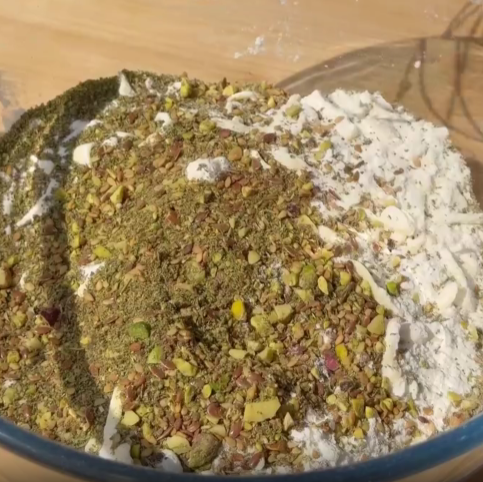
Grate the cold butter into the dry ingredients and gently rub it in until you achieve a crumbly texture. Avoid kneading.
Add the zaatar mix to the bowl.
Pour in the buttermilk and bring everything together into a soft dough.
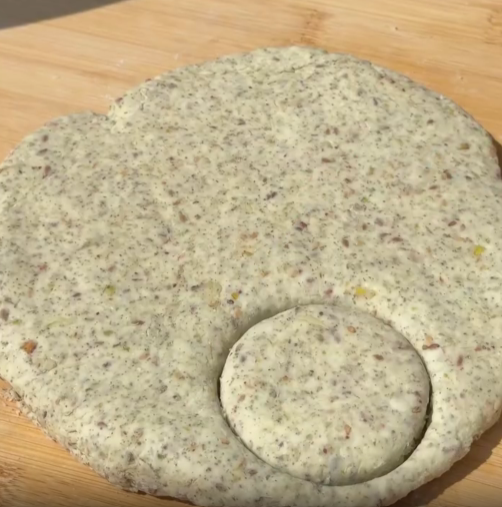
Transfer the dough to a floured surface, flatten it to about 2 cm thickness, and cut into circles.
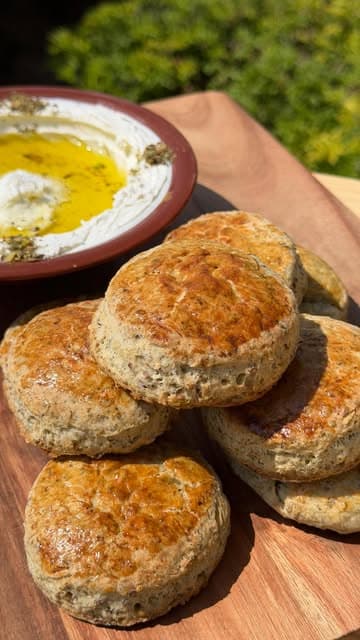
Place the scones on a lined tray, brush with egg wash (egg yolk mixed with a little milk), and bake at 220°C for 15–20 minutes until golden.

Want to keep this recipe for later? We can email it to you!
For a richer flavor, you can drizzle olive oil over the scones before serving.
Serve warm with labneh on the side for an authentic Lebanese touch.
Avoid overworking the dough to keep the scones tender and flaky.
Can I use a different zaatar mix?
Yes, you can use any zaatar mix, but the Tomillo zaatar mix from South Lebanon adds a unique flavor.
What can I substitute for white vinegar?
You can use lemon juice as a substitute for white vinegar to make the buttermilk.
Can I make these scones ahead of time?
Yes, you can bake them ahead and reheat them briefly in the oven before serving.
What is the best way to store leftover scones?
Store leftover scones in an airtight container at room temperature for up to 2 days or freeze them for longer storage.
Can I use whole wheat flour instead of all-purpose flour?
You can substitute whole wheat flour, but the texture may be denser. Consider using half whole wheat and half all-purpose flour for better results.