We use cookies on this website to ensure its proper functioning and to improve the quality of our services. Cookie Policy

Tags and nutritional info are auto-generated and may be inaccurate. Always check the full ingredient list before cooking.


Pass the blended mango pulp through a fine mesh sieve into a bowl to remove any fibrous strands.


Pour the smooth mango puree, sugar, and salt into a heavy-bottomed pan or kadhai. Place it over medium heat.

Stir continuously with a spatula to prevent the mixture from sticking or burning at the bottom. As it begins to bubble, reduce the heat slightly if it splatters.
Once the sugar completely dissolves, stir in the fresh lemon juice.
Continue cooking until the mixture thickens, turns glossy, and looks beautifully translucent. It should reach a thick, one-string consistency or coat the back of a spoon heavily.

Turn off the heat and immediately pour half of this hot mango mix into a separate bowl so you have two equal portions.
Rub 1 tsp of ghee evenly across the surface of the first steel plate.

Pour the plain, sweet portion of the hot mango mix directly into the centre of the greased plate.

Gently tilt the plate in circular motions to allow the mixture to spread evenly into a thin, smooth sheet. Set aside.

Place the remaining half of the mango mix back on the stove over low heat.
Quickly add the black salt, Kashmiri red chilli powder, chilli flakes (if using), chaat masala, and roasted cumin powder.
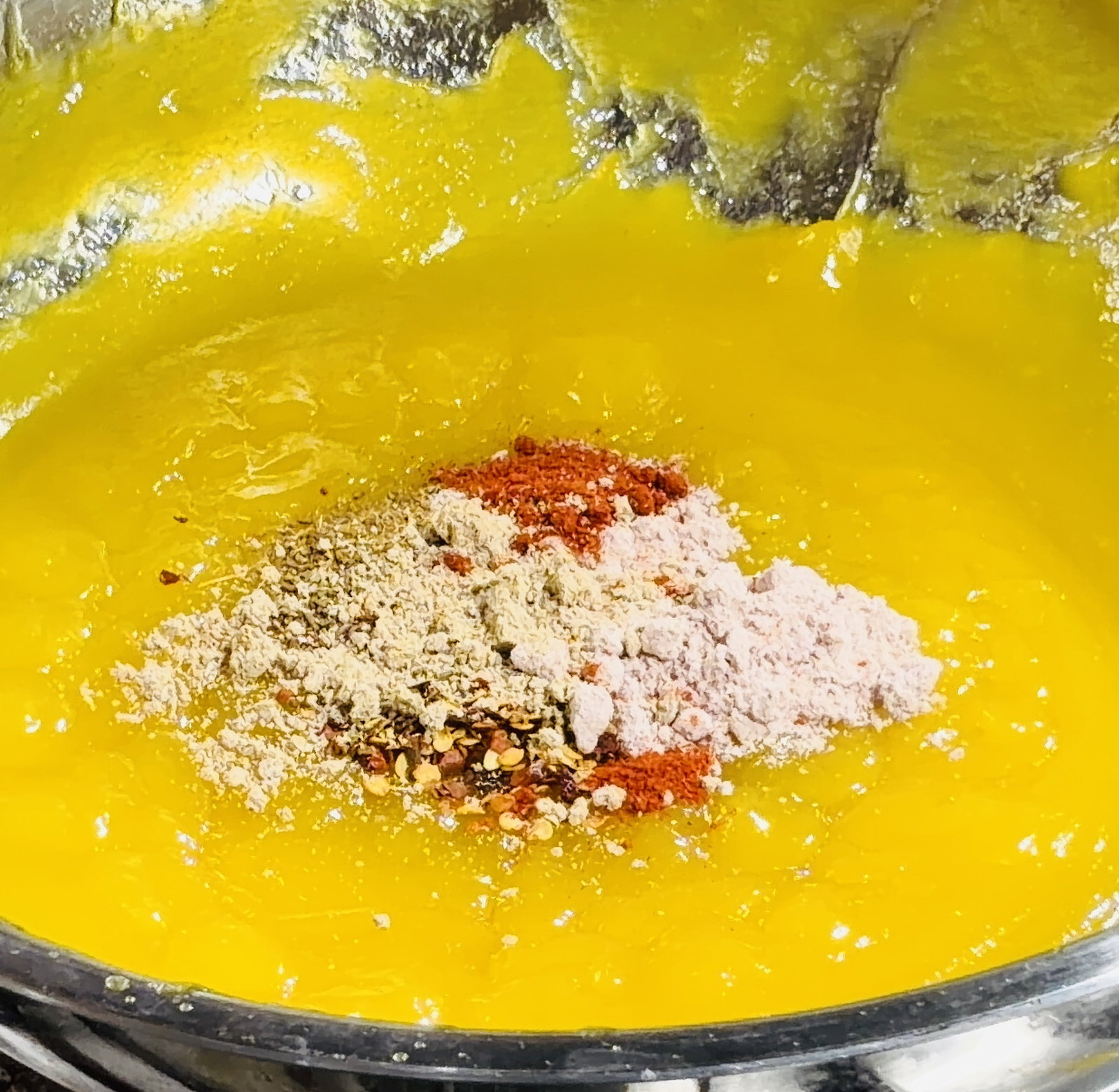
Stir for just 1 minute until the spices are fully incorporated, then turn off the heat.
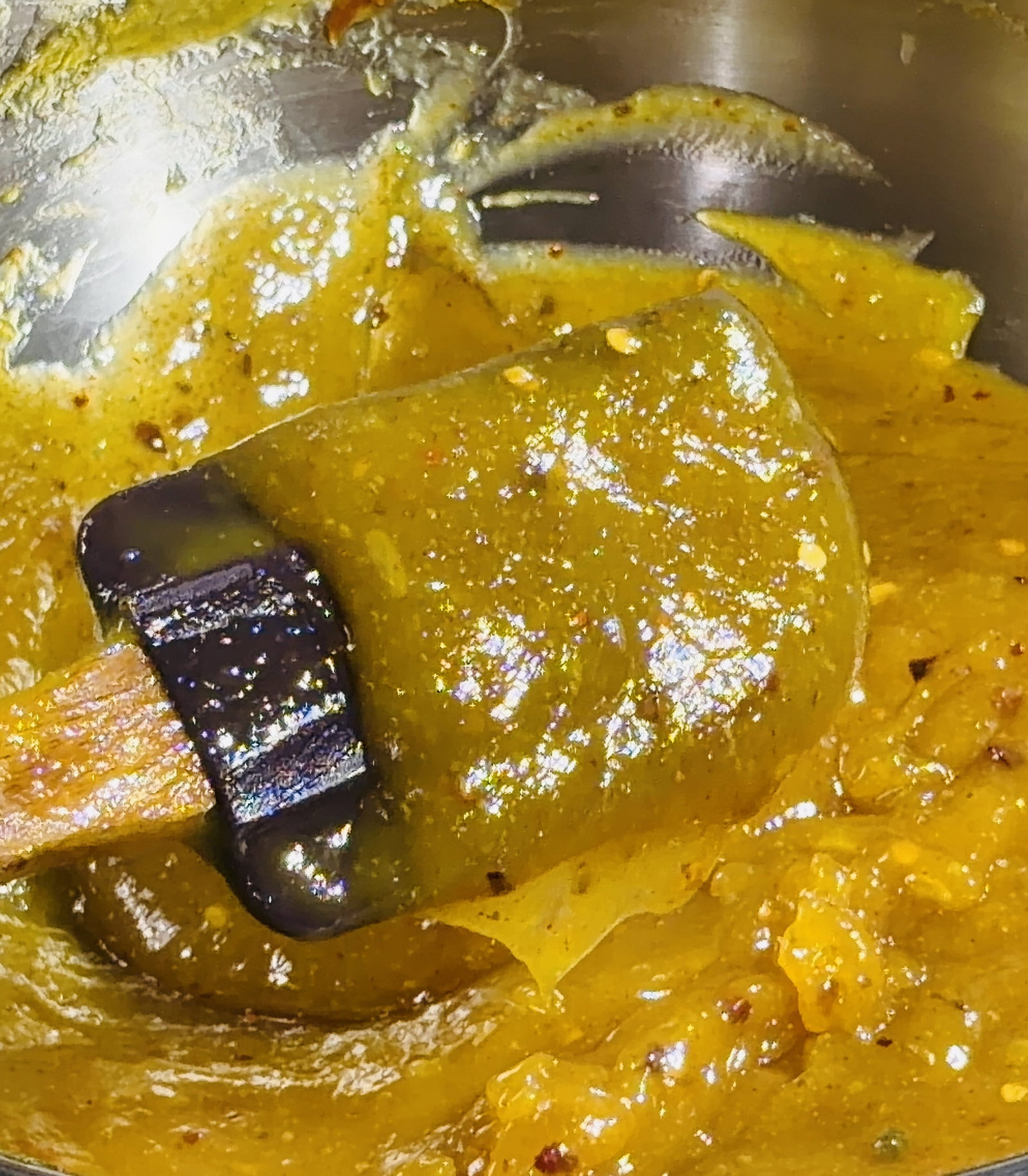
Rub the remaining ghee onto the second steel plate, pour the spiced mixture into the centre, and tilt to spread it into an even layer.

Place the prepared plates in direct, bright sunlight for 1 to 2 days. Cover them with a thin muslin cloth or mesh netting to protect them from dust and insects.
If the weather is humid, cloudy, or sun drying isn't an option, place the plates indoors directly under a high-speed ceiling fan in a clean, dust-free room. Let them set for 2 to 3 days.
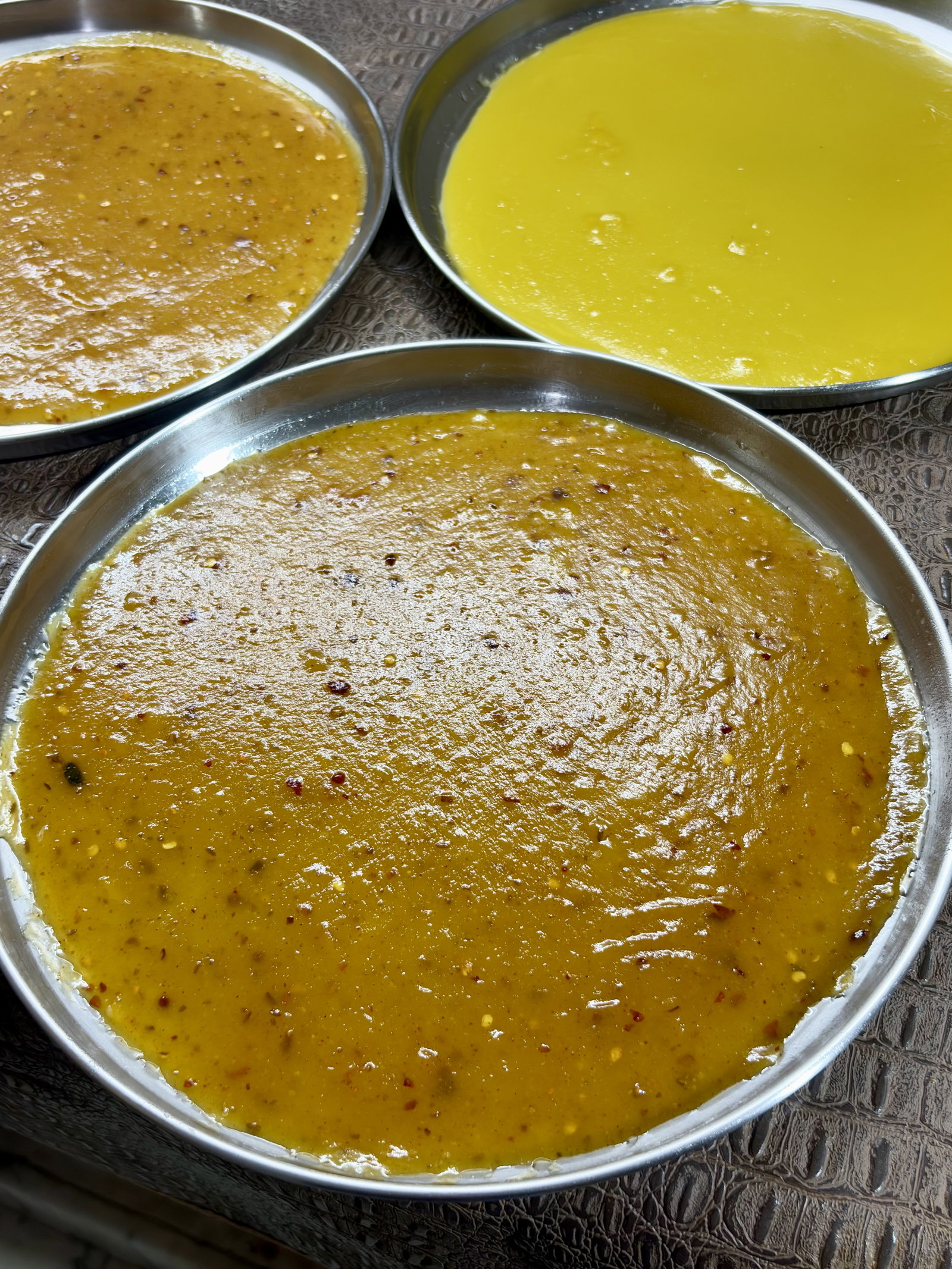
The aam papad is fully ready when the surface feels smooth, shiny, and completely non-sticky to a gentle touch.
Run a sharp knife carefully around the rim of the plate to loosen the edges.
Gently lift the sheet from one corner—if dried correctly, it will peel away effortlessly in one clean piece.

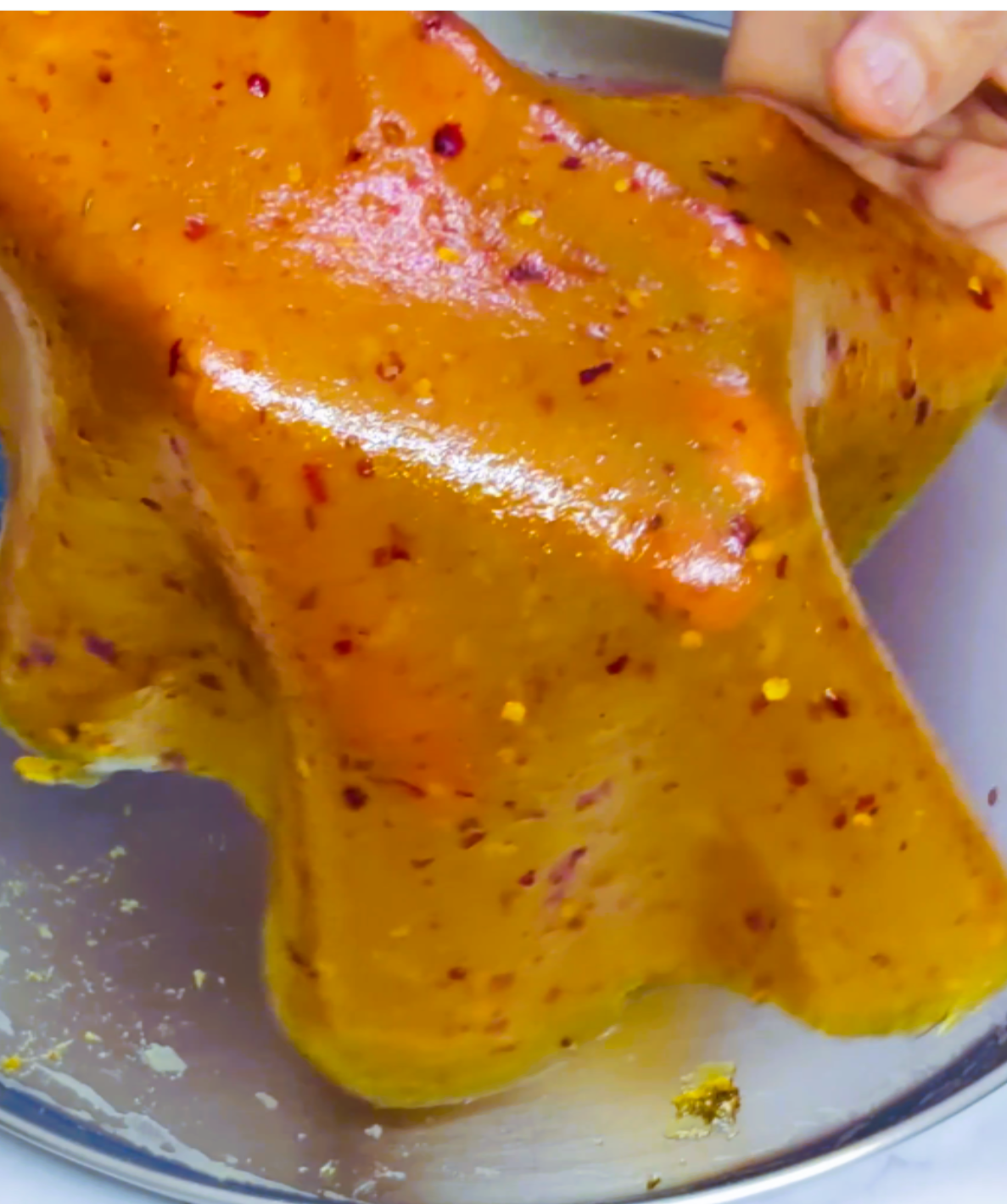

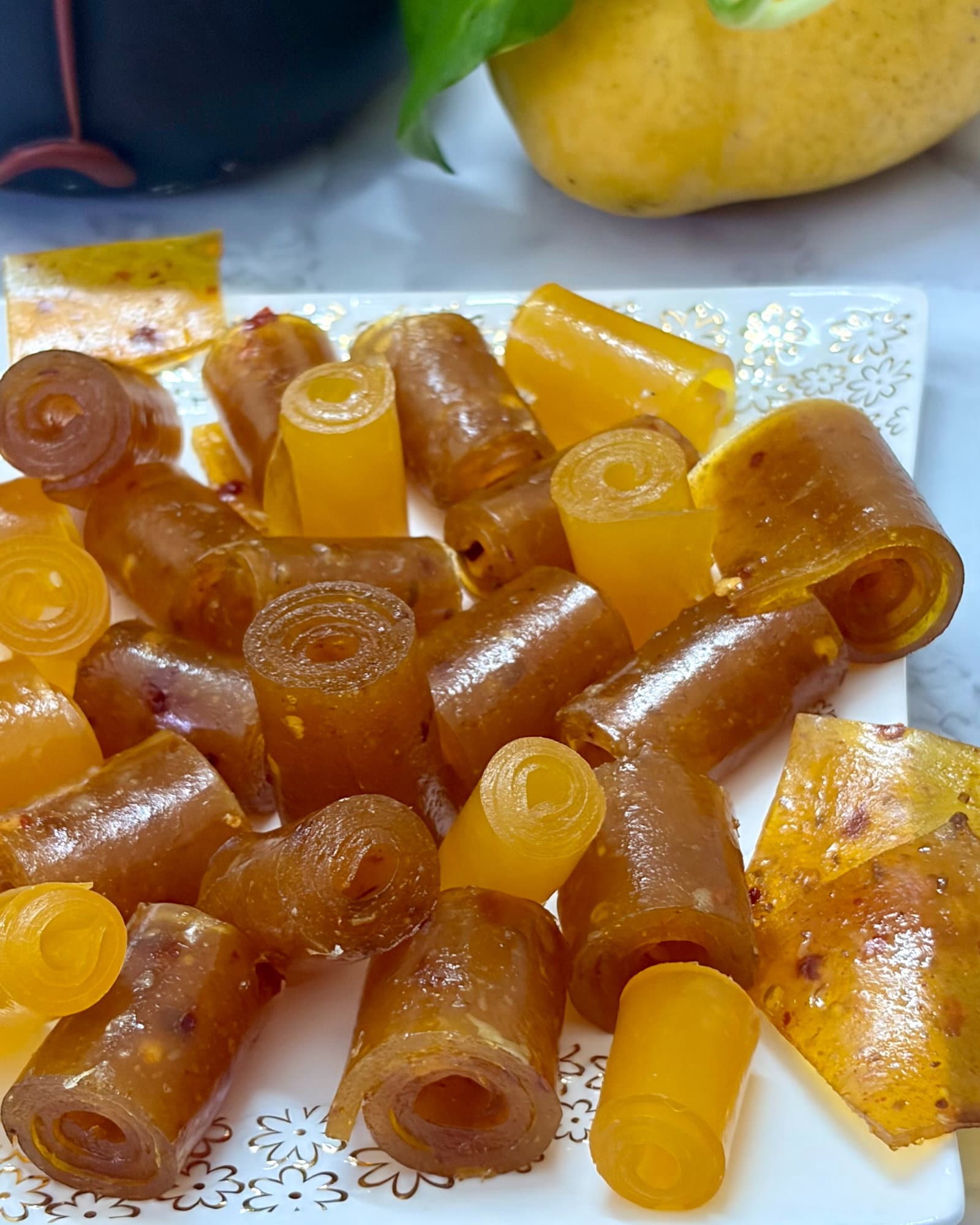
Transfer the mango sheet onto a clean board or to the back of the thali. Cut into squares, long strips, or roll them tightly into classic pinwheels.
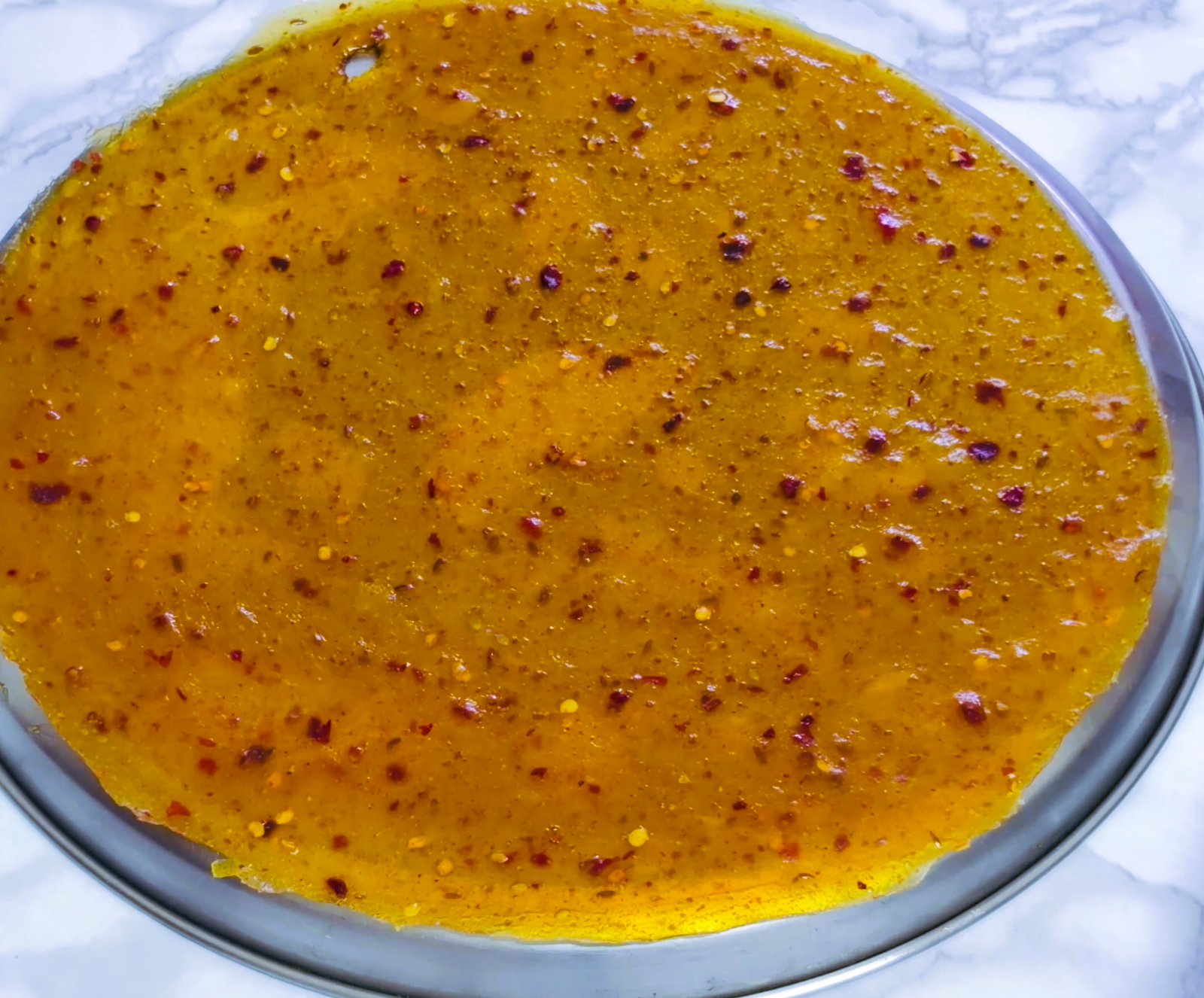
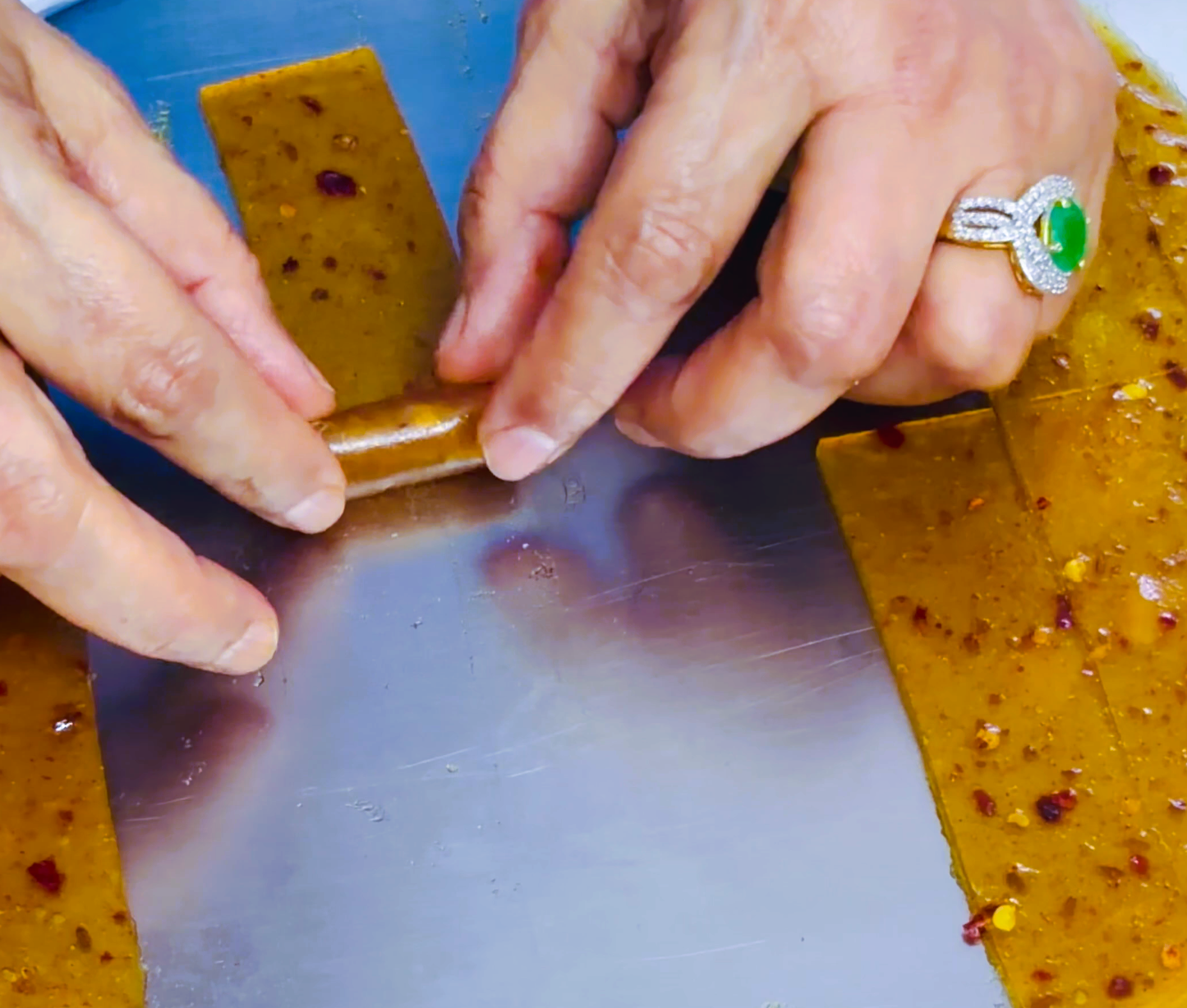
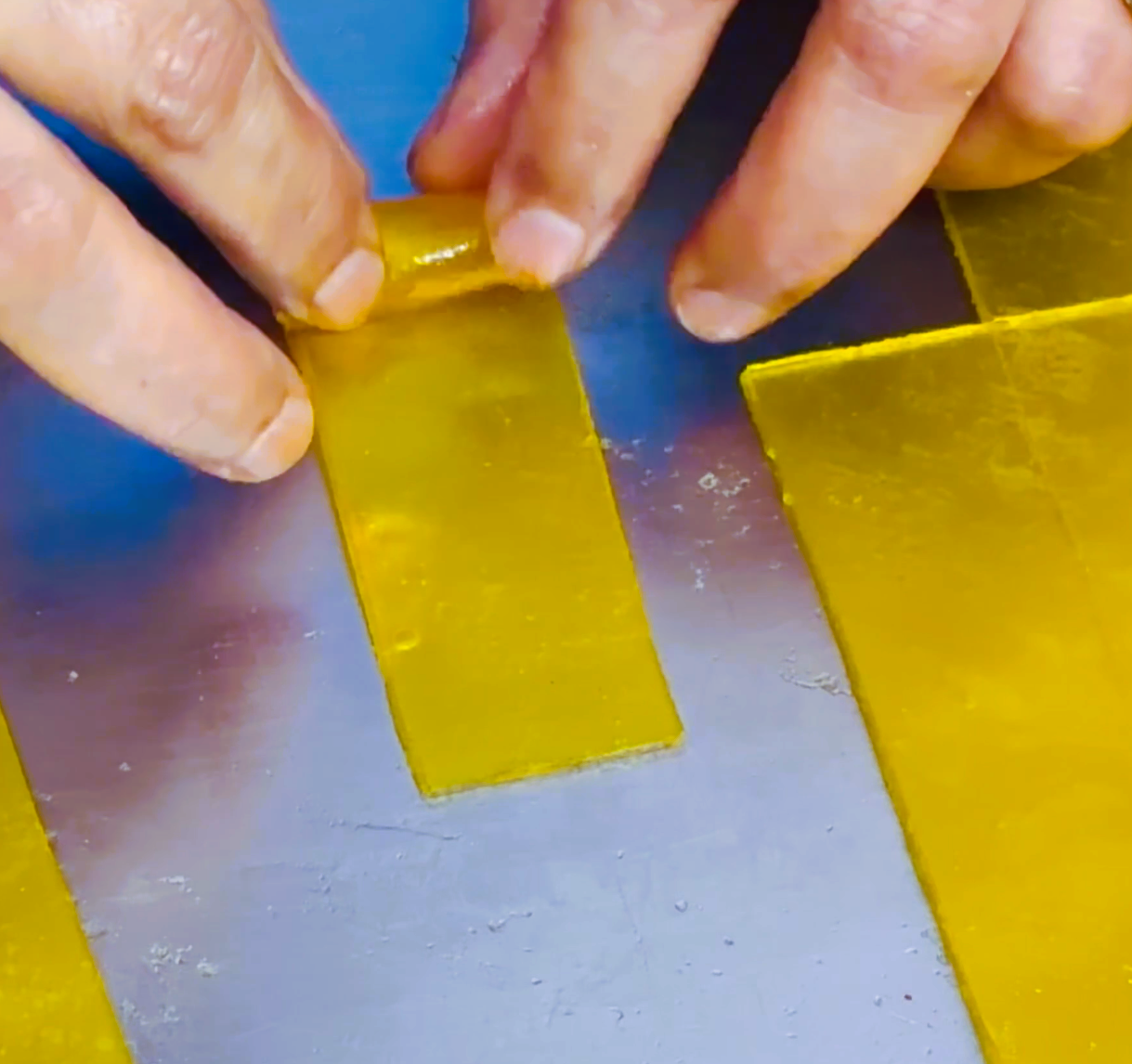

Layer the pieces between sheets of parchment paper to prevent them from sticking together, and place them in an airtight container. Kept in a cool, dry place, they will last for months.
Want to keep this recipe for later? We can email it to you!
Can I use canned mango pulp for this recipe?
Yes, provided it's unsweetened and low-fibre. Reduce the sugar slightly, as canned pulp is often sweeter than fresh.
What if I don't have steel plates?
A greased baking tray or a silicone mat works. Plates with a rim are easier because you spread by tilting rather than pouring flat.
How can I speed up the drying process?
A food dehydrator cuts it to around 8–12 hours. A ceiling fan on high is the next best thing. There's no oven shortcut worth using — the heat cooks rather than dries.
How long does homemade aam papad last?
Several months in an airtight container, layered with parchment, kept cool and dry.
Can I skip the spices in the masala version?
Yes — pour the whole batch plain and you have sweet aam papad only. Or dial the spices down and keep some tang.
Is aam papad vegan?
Almost. The only non-vegan ingredient is the 2 tsp of ghee greasing the plates, easily swapped for oil. Everything else is fruit, sugar, salt, lemon and spice.
How long does this recipe really take?
Under an hour of active work, then 1–3 days of drying. The 45 minutes on the card covers cooking only. Start when you'll have clear weather or a free room.
How far ahead can I make this?
Making it far ahead is the point — it's a preservation recipe. Make it at peak mango season when fruit is cheapest and best.
Why is my aam papad still sticky after three days?
The mixture wasn't cooked down far enough, or you poured it too thick. Humidity extends drying too. Genuinely undercooked mixture can be scraped back into a pan and reduced further.
Can I use a sugar substitute?
Jaggery works one-for-one and gives a darker leather. Stevia and erythritol don't — sugar provides the bulk and the preservation here, and without it the sheet usually won't set at all.