We use cookies on this website to ensure its proper functioning and to improve the quality of our services. Cookie Policy

Tags and nutritional info are auto-generated and may be inaccurate. Always check the full ingredient list before cooking.


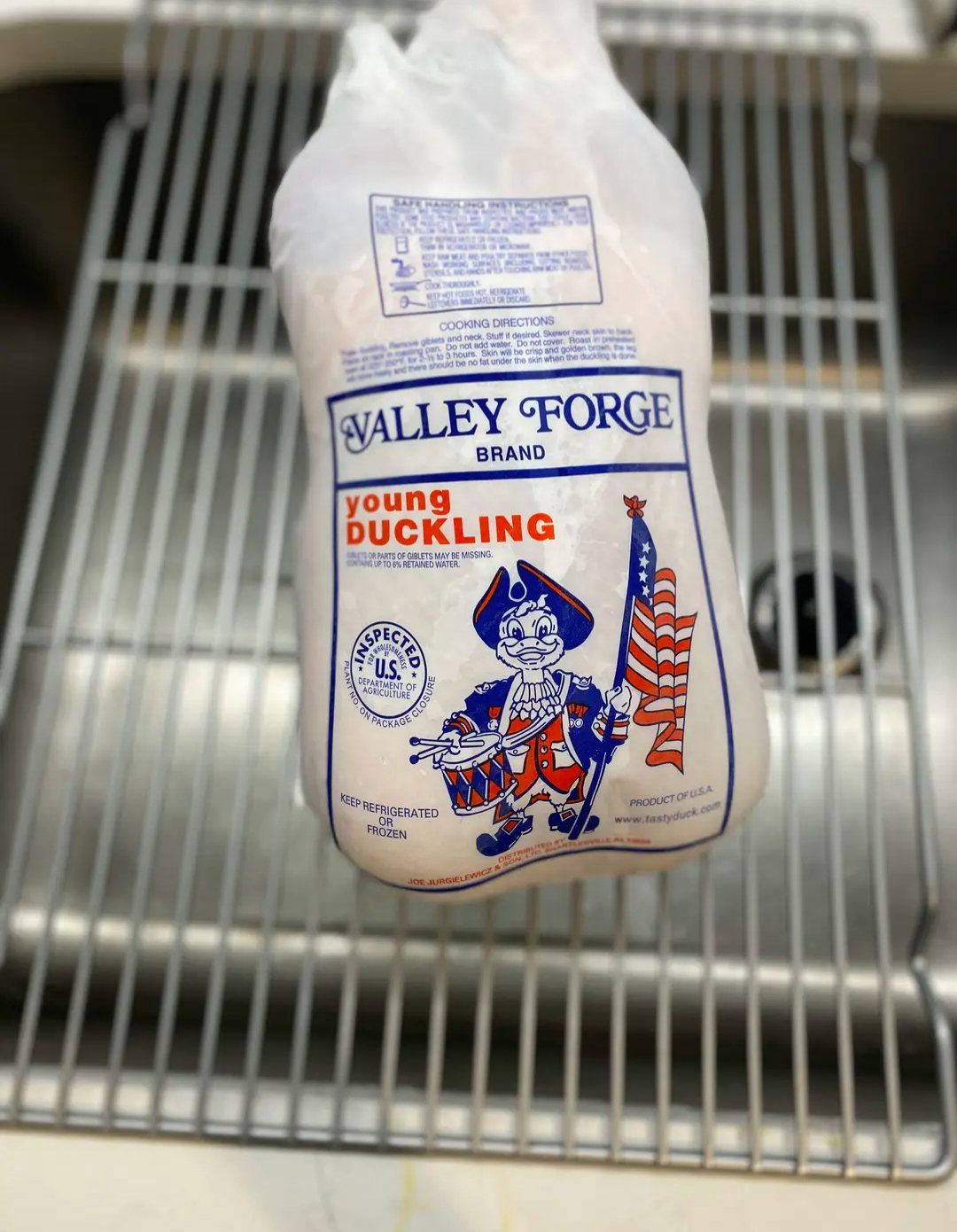
1. Thaw the frozen duck at room temperature. Clean the duck thoroughly inside and out. Pour boiling hot water all over the duck body, front and back, repeat 4 times to tighten the duck skin. Move the duck to a cool and well-ventilated area to air-dry. Use an electric fan to blow air continuously to speed up drying and avoid flies.
Clean the whole duck thoroughly and remove excess fat from the neck and belly. Tie the duck legs tightly with string.

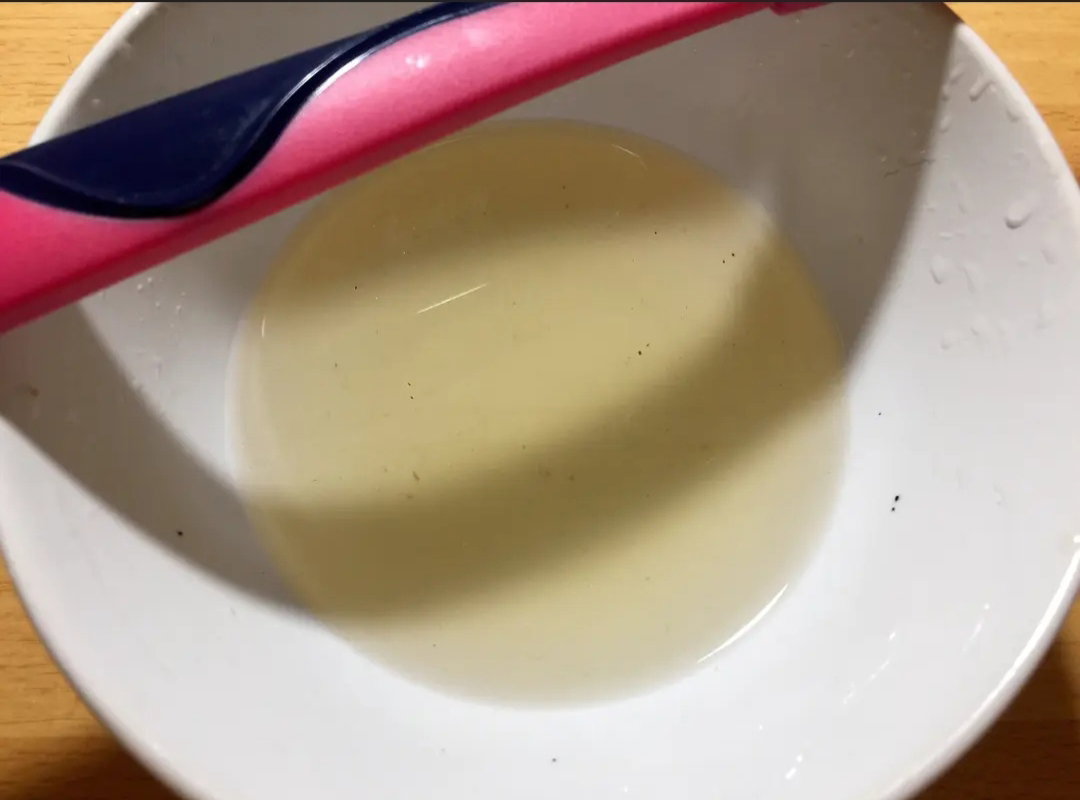
2. Prepare the crispy glaze liquid: mix honey, cooking wine, white vinegar and water evenly in a bowl. Rub salt and pepper all over the inside cavity of the duck for seasoning.
Boil a pot of hot water and pour boiling water all over the duck surface repeatedly to shrink the duck skin. Drain off all water.
3. Prop the duck upright on a water-filled wine bottle, or hang it up with string. Brush the crispy glaze all over the entire duck skin evenly. Re-brush the glaze every 1 hour while air-drying, and keep the fan blowing to dry the surface.
Mix honey, cooking wine, and white vinegar to make a glaze sauce. Brush the whole duck evenly with the glaze.

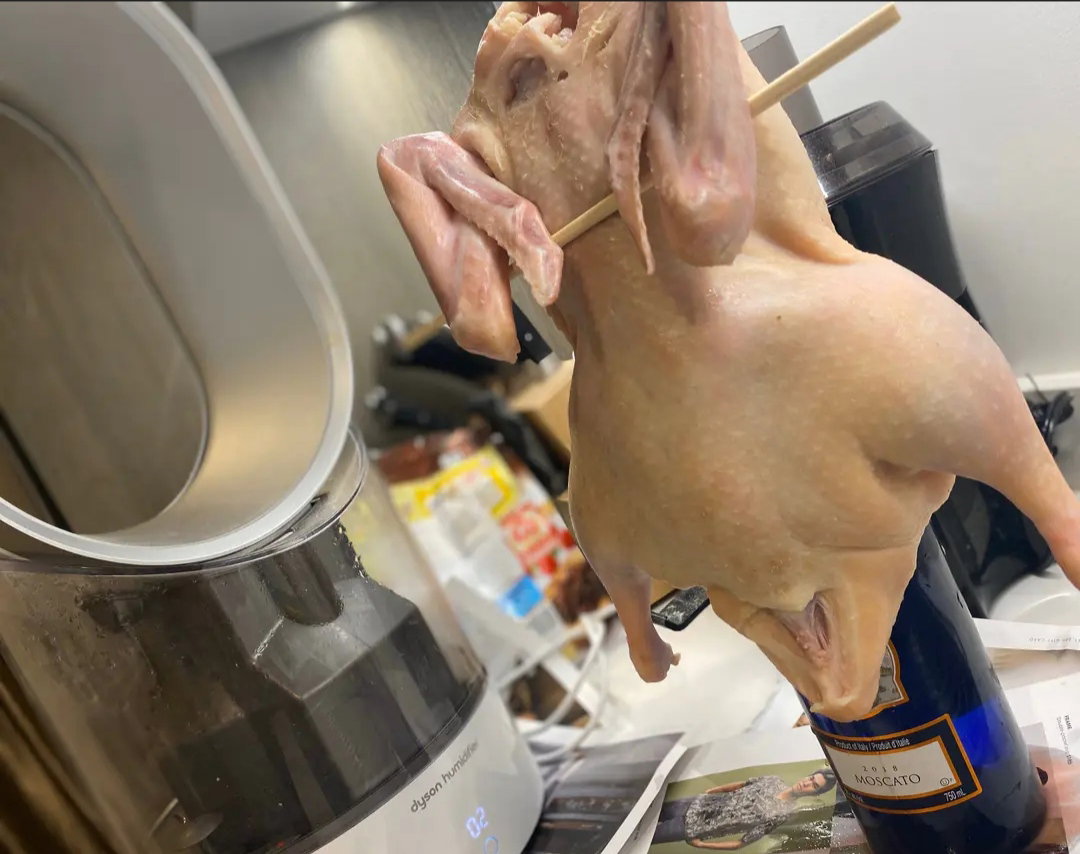
4. Repeat brushing the glaze for 5 to 7 times until the duck skin turns reddish and tight. Continue air-drying the duck for a full day until the skin is completely dry and slightly separated from the meat.
Stuff the duck belly with apple chunks, ginger, green onions, star anise, and bread to keep the meat tender and absorb fishy smell. Seal the belly opening tightly.


5. Prepare the stuffing for the duck cavity: cut the apple into wedges, slice ginger, and prepare green onions and star anise. Soak the bread slice fully in clean water.
Hang the duck in a cool, well-ventilated place for 4–8 hours to fully air-dry the skin until it becomes tight and dry.


6. Stuff the apple wedges, ginger slices, green onions, star anise and soaked bread into the duck belly. Seal the opening of the duck cavity tightly with toothpicks or kitchen thread.

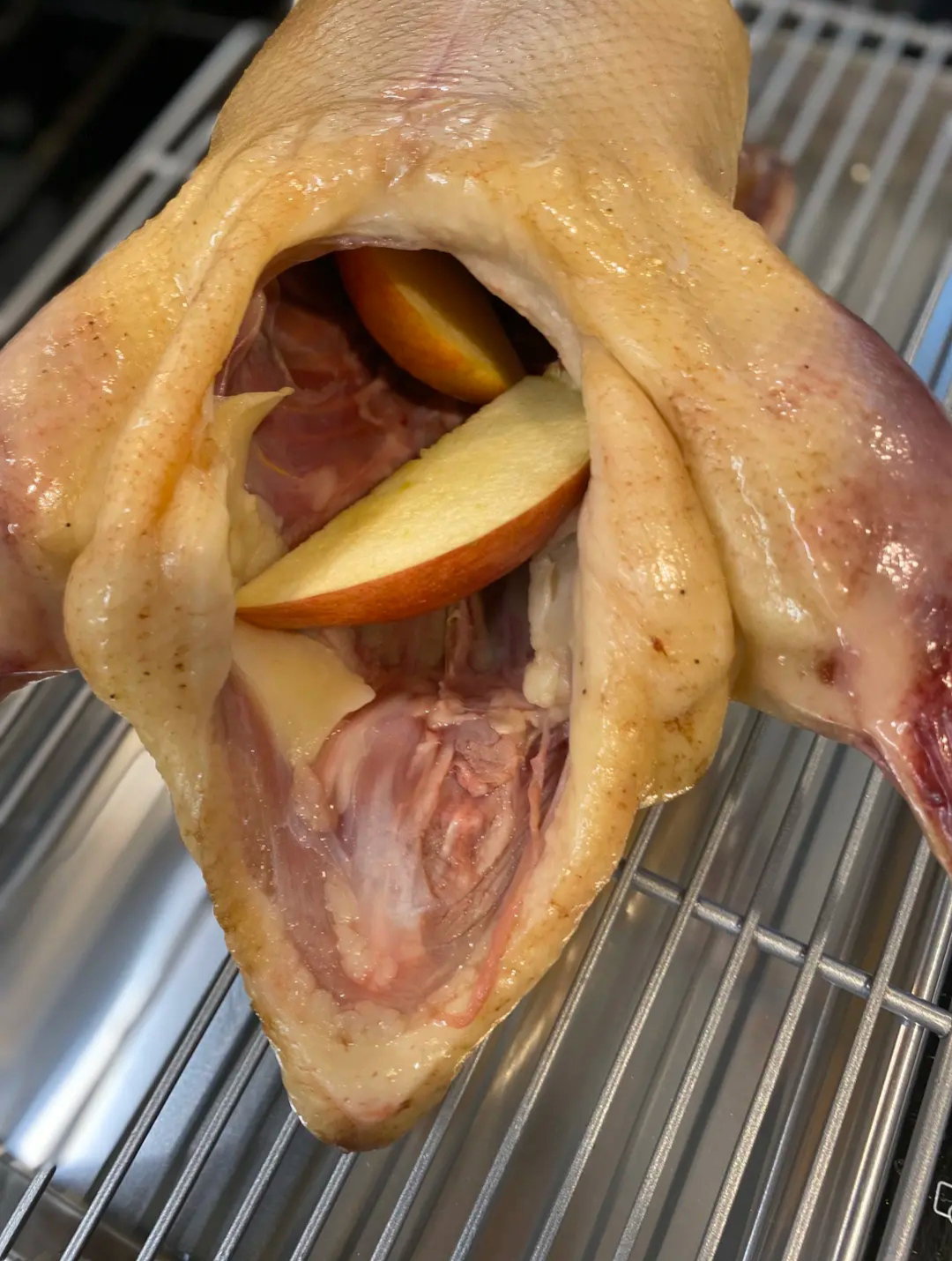
7. Wrap the duck legs and wing tips with aluminum foil to prevent them from burning during roasting. Brush one more layer of crispy glaze on the duck skin. Place the duck on an oven rack with a baking tray underneath to catch dripping oil.

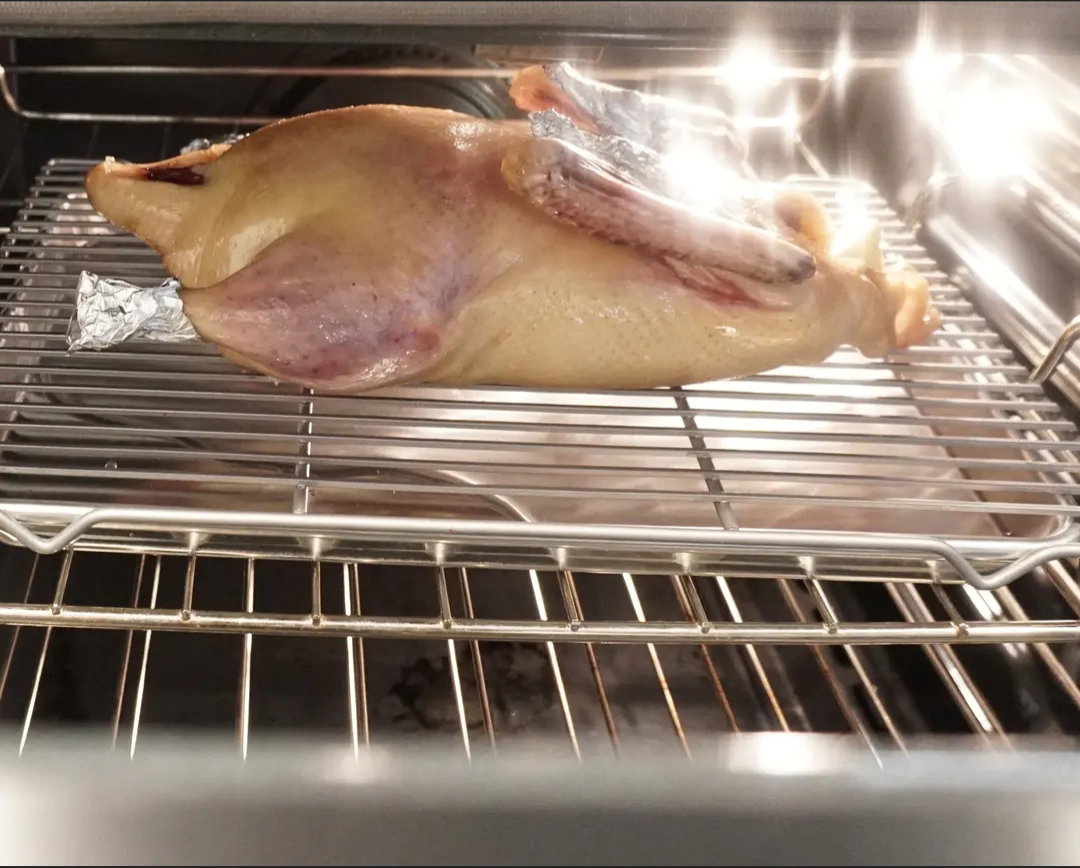
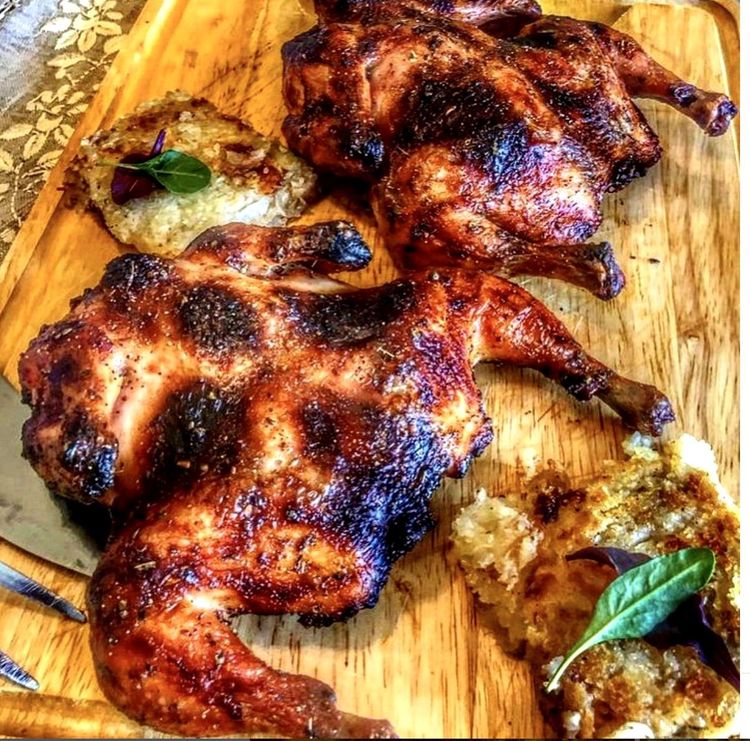
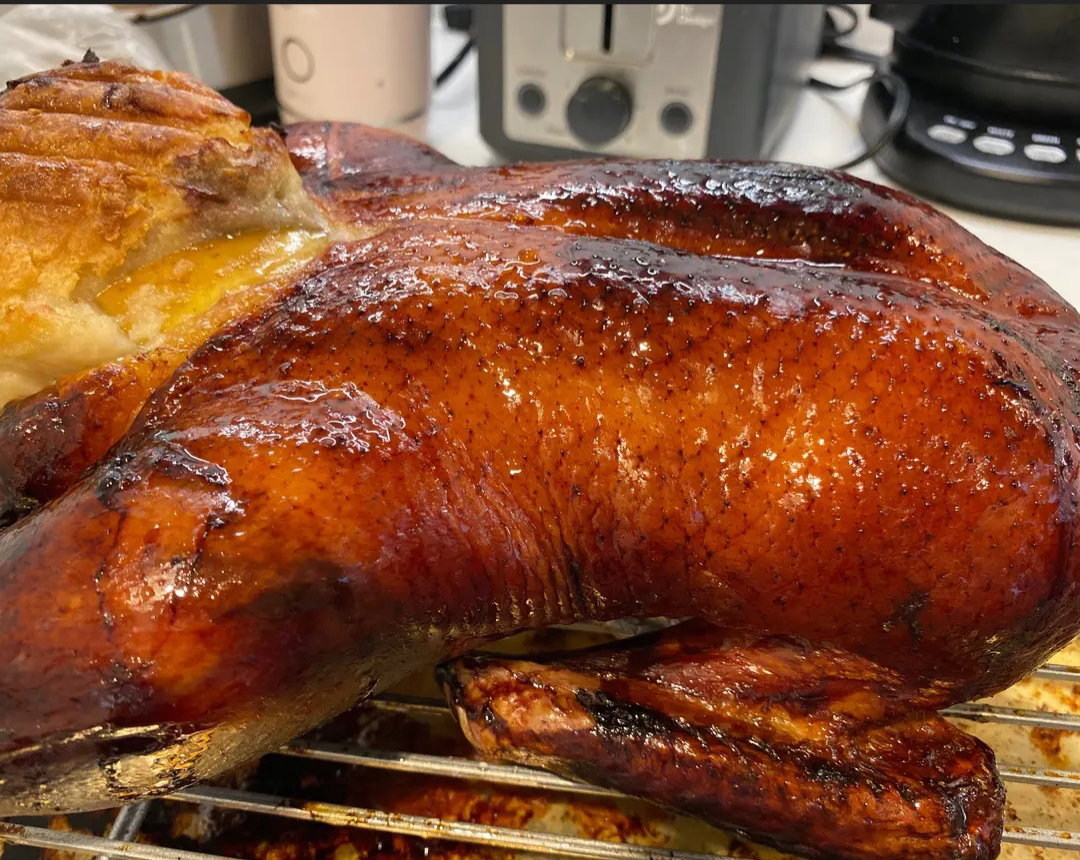
8. Preheat the oven to 400°F (200°C). Put the duck breast side down on the rack, roast for 45 minutes. Flip the duck over and roast for another 15 minutes. Then lower the oven temperature to 340°F (170°C) and roast for 15 more minutes. After that, turn down to 160°C and continue roasting for about 2 hours total until the duck skin becomes golden amber and crispy. Adjust roasting time according to the duck size and color.

9. If you need pancakes for wrapping duck, you can buy pre-made Mandarin Pancakes directly at Chinatown Asian grocery stores. Simply steam them for a few minutes before serving.
10. Professional Crispy Duck Glaze Recipe
For one whole duck:
500ml water, 30g maltose syrup, 25g red Chinese vinegar, 6g crispy powder.
Stir all ingredients together until fully dissolved.
Place a basin under the duck while brushing the glaze. Brush the glaze all over the duck repeatedly. Collect the excess glaze liquid that drips down, then reuse it to brush the duck again until the whole surface is evenly coated.
After brushing, air-dry the duck completely until the skin is tight and non-sticky.
The sweet bean sauce for wrapping Peking duck is available for purchase in Chinatown and Asian
supermarkets.
Improved Duck Cavity Stuffing Method
Putting chunks of whole apple inside the duck is not the best choice for home oven baking. Apple wedges will collapse quickly under high heat, release very little moisture, and the fruity flavor cannot spread evenly throughout the duck meat.
Here is a better upgraded method:
Blend fresh fruits such as apples, pineapples, pears or oranges into pure fruit juice. Soak a slice of bread or a steamed bun in the fruit juice until it fully absorbs the liquid. Stuff the juice-soaked bread deep into the duck cavity, then seal the belly opening tightly with toothpicks before roasting.
During baking, the fruit juice inside the bread will slowly evaporate into steam. The steam circulates continuously inside the sealed duck body, which locks moisture inside the meat and prevents the duck from drying out and turning tough. Meanwhile, the natural fruity aroma will penetrate evenly into every part of the duck meat, bringing a mild and pleasant fruit fragrance.
You can freely DIY different fruit juices to create your favorite flavors.
Tips: Do not use too much juice, just enough to soak the bread. Pineapple juice has strong acidity, so do not soak the bread for more than 1 minute. You may also add a slice of ginger and a little star anise into the juice to remove the fishy smell of duck.

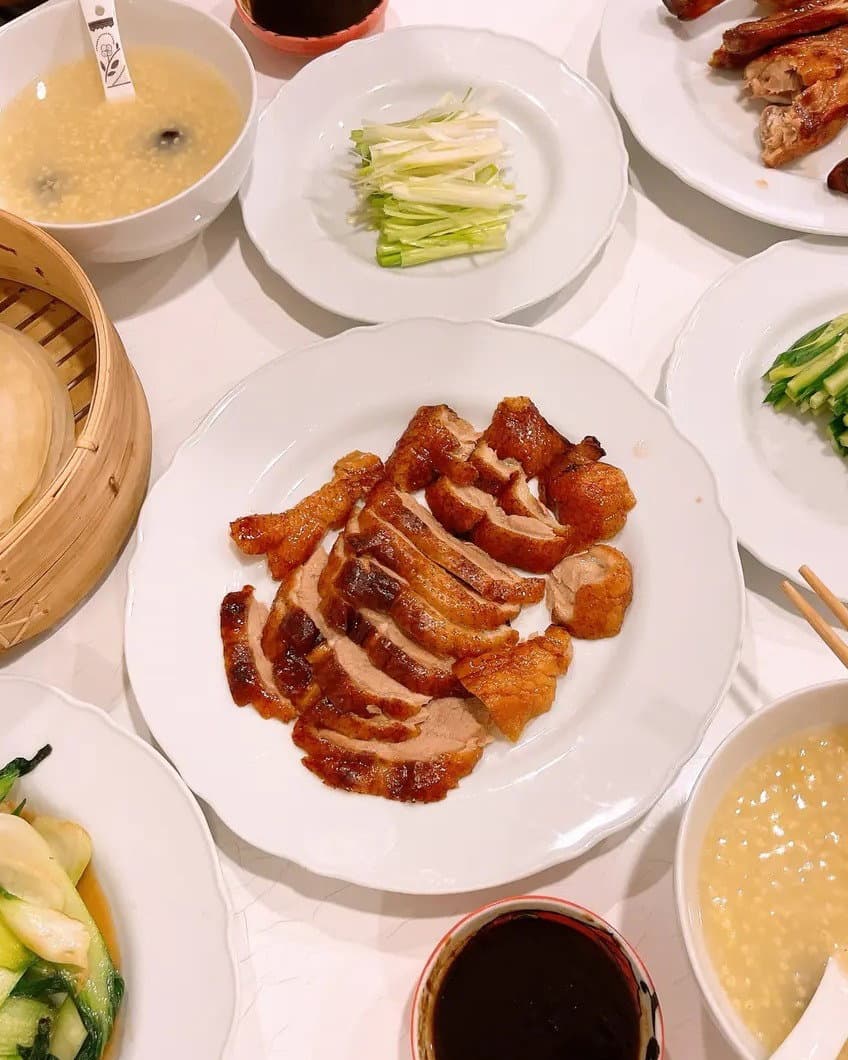
11. Take the fully roasted duck out of the oven and let it cool for a short while before carving. Slice the crispy duck skin and meat into thin pieces. Shred cucumber and green onion strips.


12. Serve the sliced Peking duck with homemade pancakes, sweet bean sauce, cucumber and green onion strips. The leftover duck frame can be boiled with green onions to make delicious soup.
Cooking Tips
The roasting time varies depending on the size of the duck. Observe the skin color frequently while baking. Once the skin turns golden brown and glossy, lower the temperature to finish cooking the meat thoroughly.


Mix flour, salt, and boiling water to form a smooth dough. Knead the dough and let it rest for 30 minutes.
Roll out the dough into thin pancakes and cook them for later use.
Preheat the oven to 160°C. Place the duck on a baking tray, cover with foil, and bake for 60 minutes.
Remove the foil, brush another layer of honey glaze, and turn up the oven temperature to 190°C. Bake for another 30–40 minutes until the skin turns golden and crispy.
Slice the roasted duck thinly. Shred cucumber and green onion.
Serve the duck with homemade pancakes and sweet bean sauce.
Want to keep this recipe for later? We can email it to you!
Ensure the duck skin is completely dry before roasting to achieve a crispy texture.
Use a well-ventilated area for air-drying the duck to prevent spoilage.
If sweet bean sauce is unavailable, hoisin sauce can be used as a substitute.
Can I use a different type of duck?
Yes, you can use any type of duck, but ensure it is cleaned thoroughly and prepared as instructed.
What can I use instead of sweet bean sauce?
Hoisin sauce is a good substitute for sweet bean sauce.
How do I ensure the duck skin is crispy?
Make sure to air-dry the duck skin completely and brush it with honey glaze before roasting at a higher temperature.
Can I make the pancakes ahead of time?
Yes, you can prepare the pancakes ahead and store them in an airtight container to keep them fresh.
What is the purpose of stuffing the duck cavity?
Stuffing the cavity helps keep the meat tender and absorbs any fishy smell from the duck.