We use cookies on this website to ensure its proper functioning and to improve the quality of our services. Cookie Policy

Tags and nutritional info are auto-generated and may be inaccurate. Always check the full ingredient list before cooking.


Wash the raw mangoes thoroughly and wipe them with a kitchen towel until completely dry.

Peel the mangoes and grate them using the thick side of the grater box.

Transfer the grated mango strands into a large, completely dry mixing bowl.
Add the salt, turmeric powder, Kashmiri red chilli powder, fennel powder, and yellow mustard powder directly to the grated mangoes.


Toss and mix everything well until the mango strands are evenly coated with the spices.

Heat mustard oil in a pan until it reaches the smoking point, and you see light smoke rising.
Switch off the heat and let the oil cool down until it is warm, not piping hot.
Add the small mustard seeds and let them crackle.

Stir in the fenugreek seeds, fennel seeds, carom seeds, and asafoetida. Let the spices bloom in the warm oil for a few seconds to release their flavours.

Pour the warm, spiced oil directly over the seasoned mango mixture.

Mix well so the oil coats all the grated mangoes.

Pour in the vinegar and give the pickle one final, thorough stir. Let the mixture cool down completely to room temperature.
Transfer the pickle into a clean, sterilised, and bone-dry glass jar or ceramic container.

Cover the jar tightly and store it in a cool, dry place for 2-3 days to let the flavours mature.
Stir the pickle once or twice a day using a clean, dry spoon.
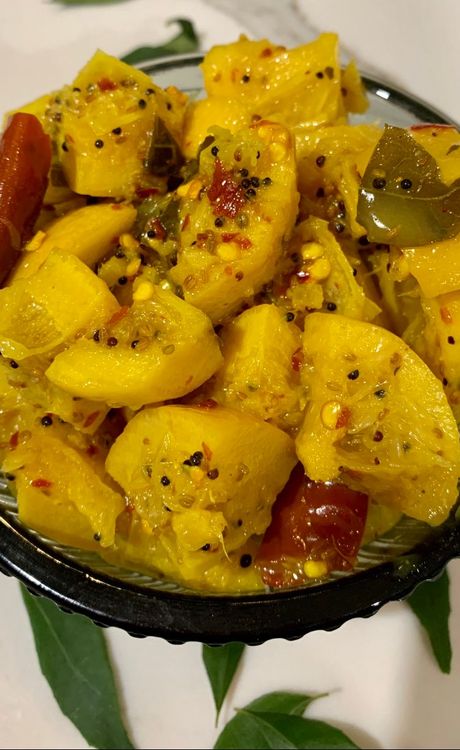
Once the mangoes soften slightly and absorb the spices, the Lachhedar Achar is ready to eat.

Want to keep this recipe for later? We can email it to you!
How long does this mango pickle last?
Several months to a year in a sterilised airtight jar with a layer of oil on top, handled only with dry spoons.
Can I skip vinegar?
Yes. The salt and oil preserve it on their own. You'll lose some shelf life and the clean tartness that balances the spice.
Why is my pickle turning soft?
Water contamination — undried mangoes, a damp jar, or a wet serving spoon. Slightly ripe mangoes will also soften regardless of technique.
Can I reduce the chilli powder?
Yes, freely. Five tablespoons of Kashmiri chilli is mostly there for colour, so cutting it will pale the pickle more than it will mild it.
Which mangoes are best for this pickle?
Firm, very sour, low-fibre raw mangoes. Ramkela and Rajapuri are the standard Indian choices.
Is this pickle vegan and suitable for restricted diets?
Yes. No animal products, gluten, dairy, nuts or soy, and no onion or garlic, so it suits Jain and satvik cooking. Check your asafoetida, as many commercial brands are cut with wheat flour.
What if I don't have a box grater?
A food processor with a coarse grating disc is faster for a kilogram. Avoid the chopping blade, which pulps the fruit. Everything must still be bone dry.
How far ahead should I make this for gifting?
Three to four days, allowing the full maturing period plus a day. Pack into small sterilised jars with oil on top and a note about dry spoons.
Why has my pickle gone watery or mouldy?
Water contamination, every time. Mould means the batch has to go — there's no safe way to salvage it. A watery but unspoiled pickle can sometimes be rescued with more warm cooled mustard oil and salt.
Can I use this method with other vegetables?
Grated raw papaya, carrot, or carrot and radish all work with the same spice ratio. None is as sour as raw mango, so add extra lemon juice or amchur to compensate.