We use cookies on this website to ensure its proper functioning and to improve the quality of our services. Cookie Policy

Tags and nutritional info are auto-generated and may be inaccurate. Always check the full ingredient list before cooking.


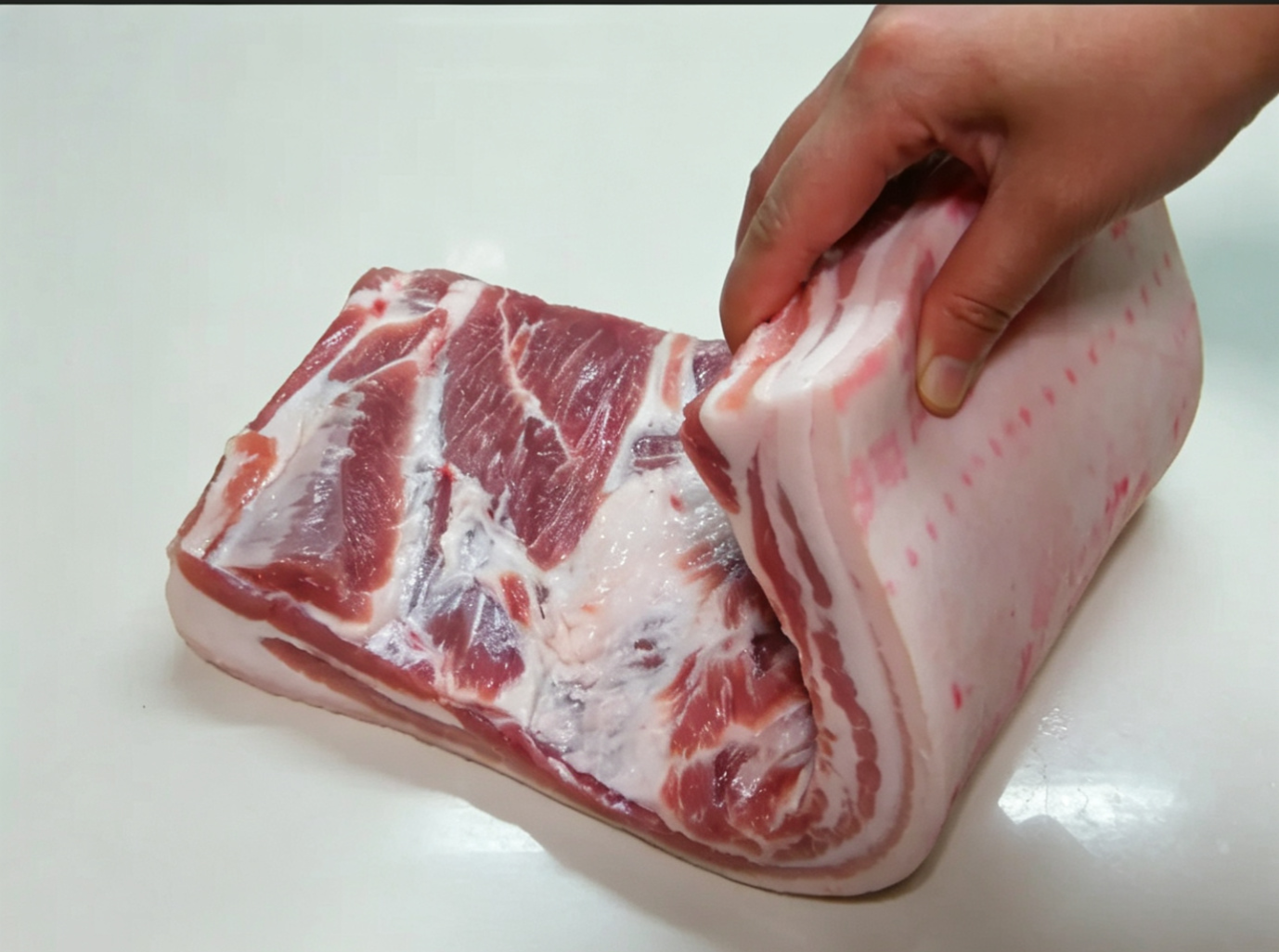
1. Select and prepare pork belly
Choose firm, thick layered pork belly with tight fat and lean layers. Use a torch to singe off fine hairs on the pork skin, then scrape and wash thoroughly.
Alternative Rice Cooker Quick Version Steps
1. Prepare and clean pork belly, tie with straw rope or cotton string.
Blanch the whole pork belly in boiling water until half-cooked, then cut into neat square chunks and tie each chunk with cotton string for shaping.


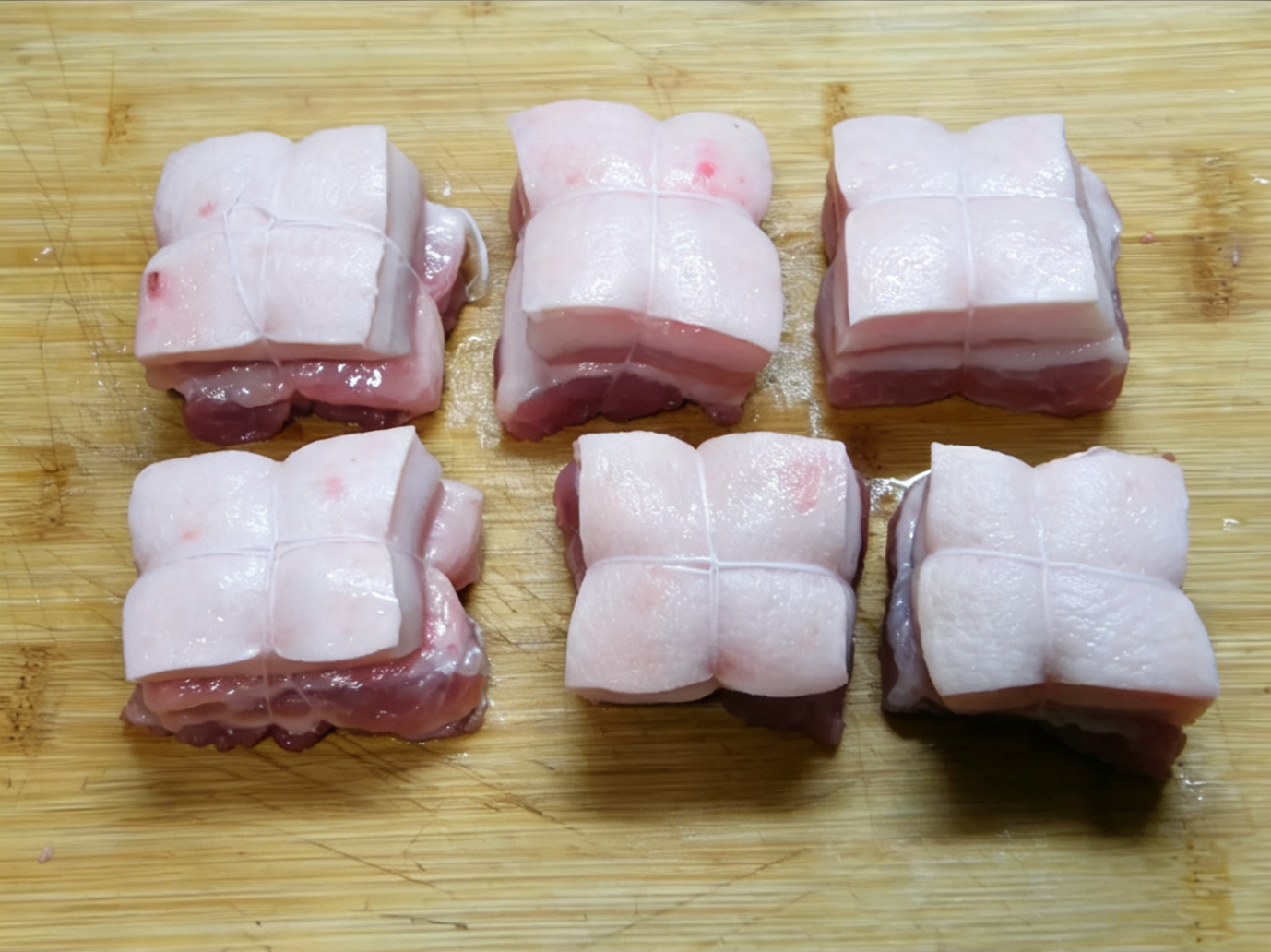
2. Cut and tie the pork
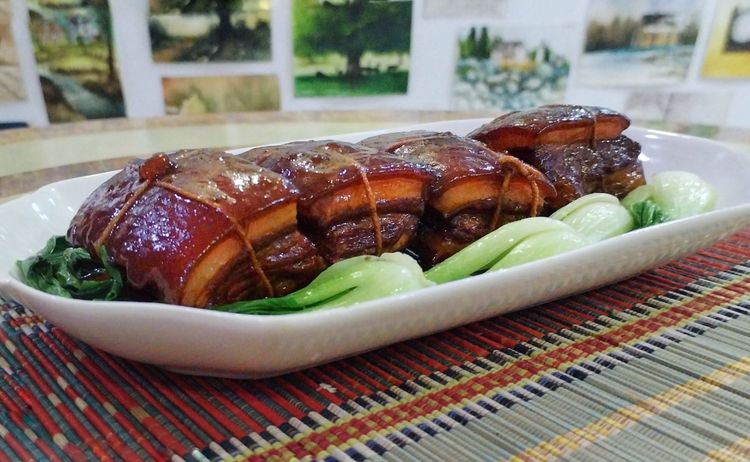
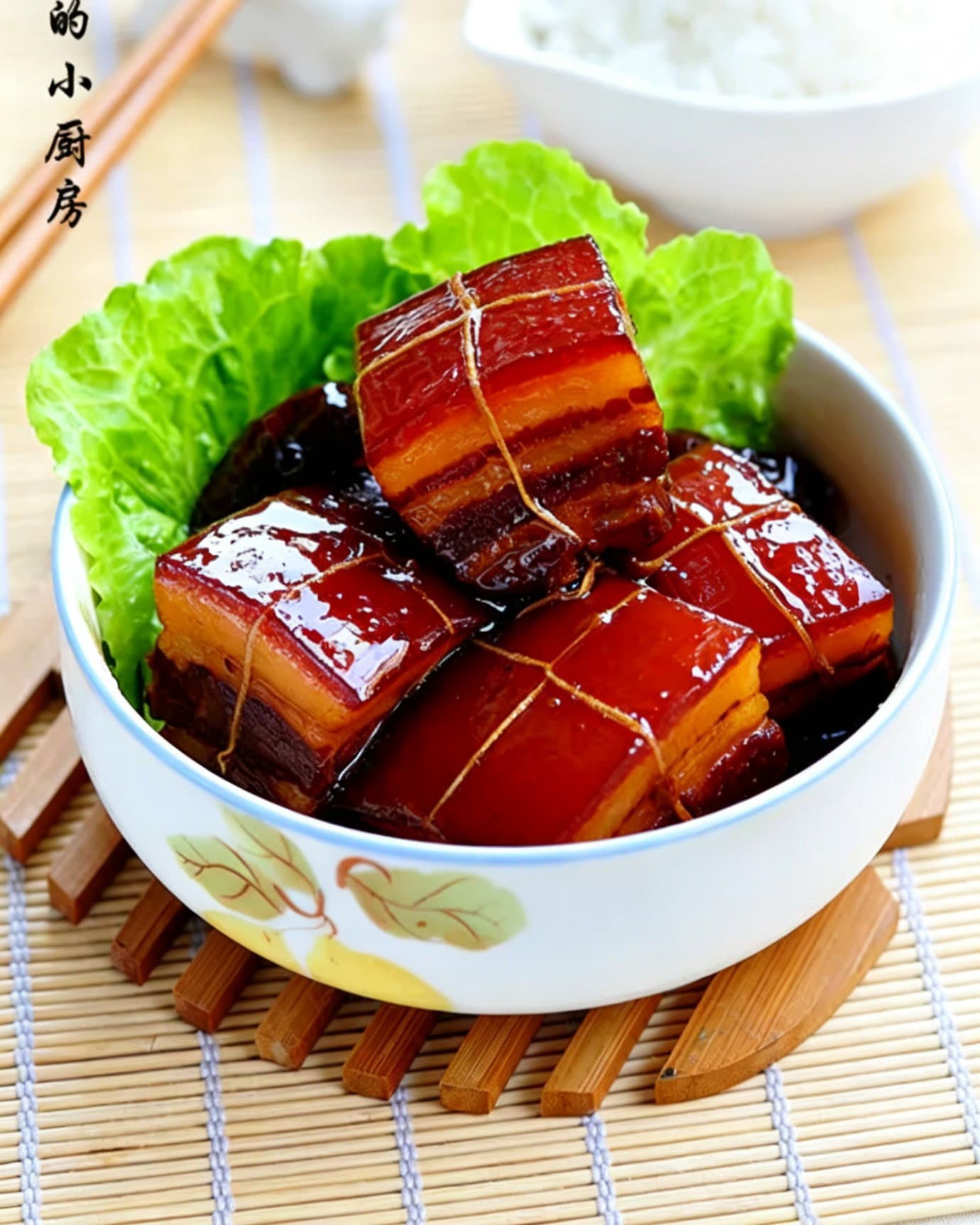
Cut pork belly into uniform 40mm×40mm square chunks. Tie each piece tightly with cotton string in a cross knot to prevent the meat from falling apart during long cooking.
2. Place scallions and ginger slices at the bottom of the rice cooker inner pot, arrange pork skin-side down.
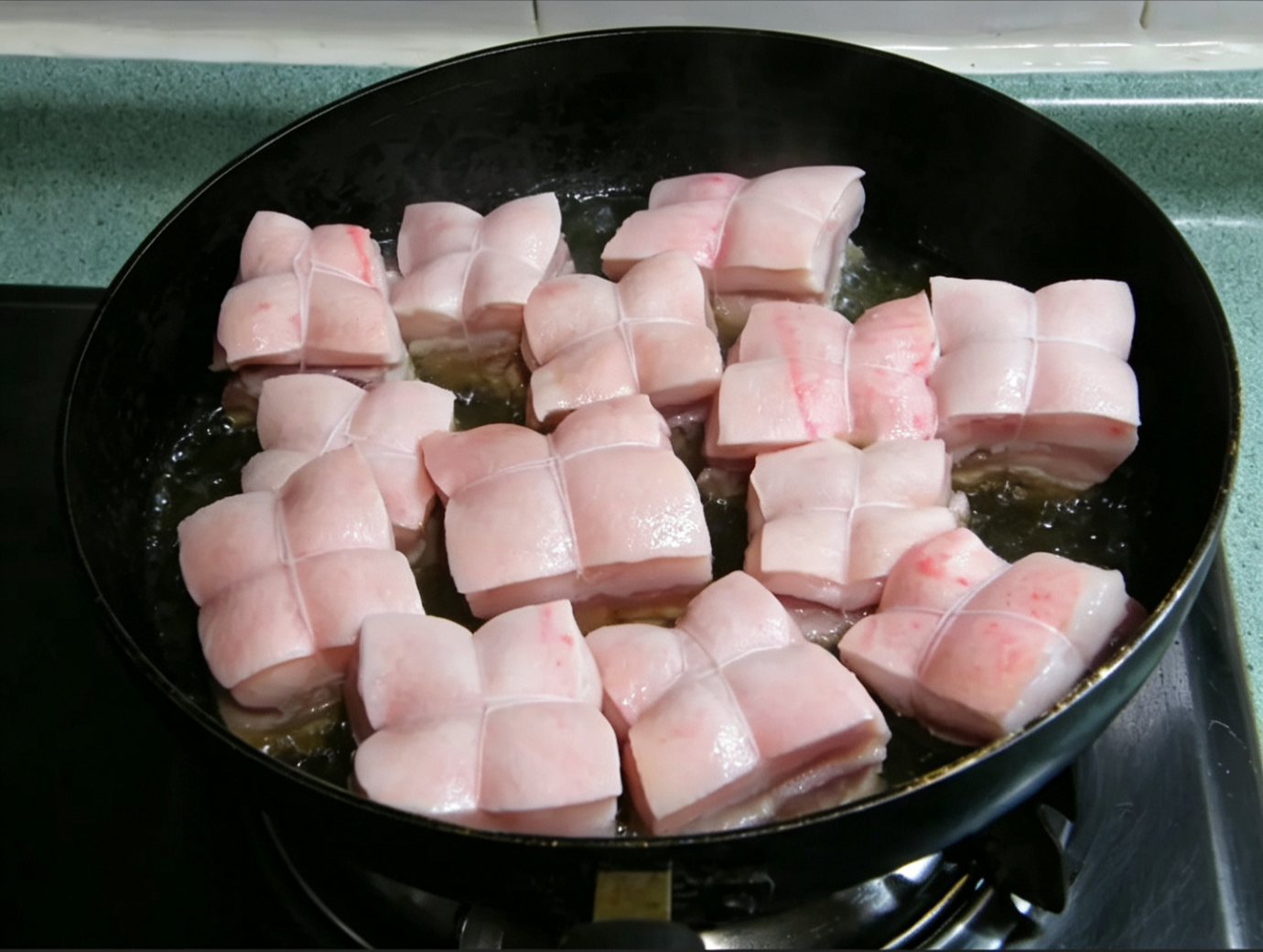
Pat dry the pork, fry the fat side in a pan over low heat to render out excess oil, avoiding frying the pork skin.

3. Render excess fat (restaurant method for less greasiness)
Pour half a bowl of oil into a frying pan, place pork chunks skin-side up. Fry over medium-low heat to release excess fat from the meat, then take out and set aside. Do not fry the pork skin.
3. Add star anise, rock sugar, braised soy sauce, light soy sauce, dark soy sauce, 50ml Hua Diao wine, and water leveled with the pork.
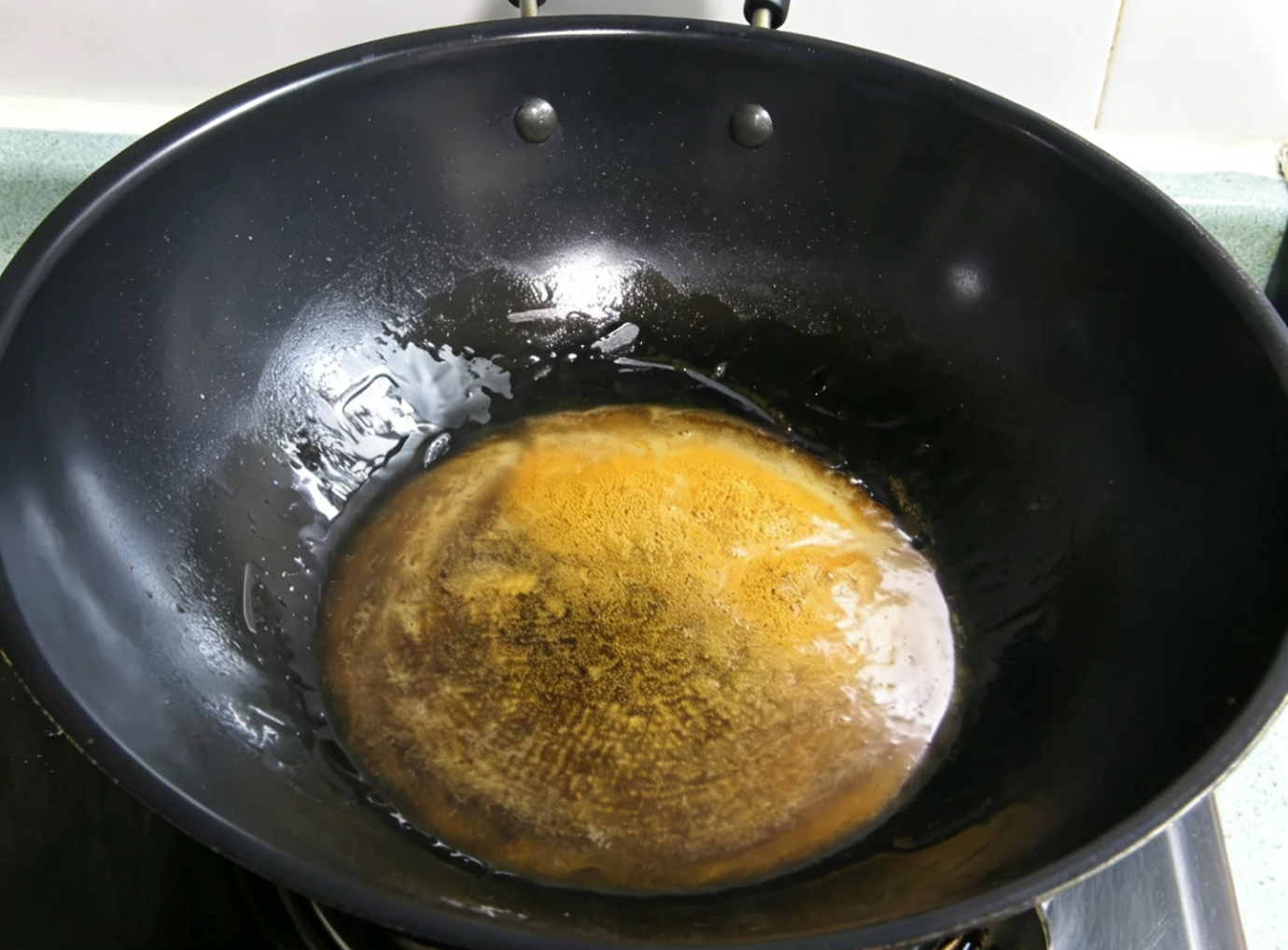
Melt yellow rock sugar with a small amount of cold water, heat slowly until the syrup turns amber brown, then turn off heat and cool slightly.

4. Prepare the casserole base
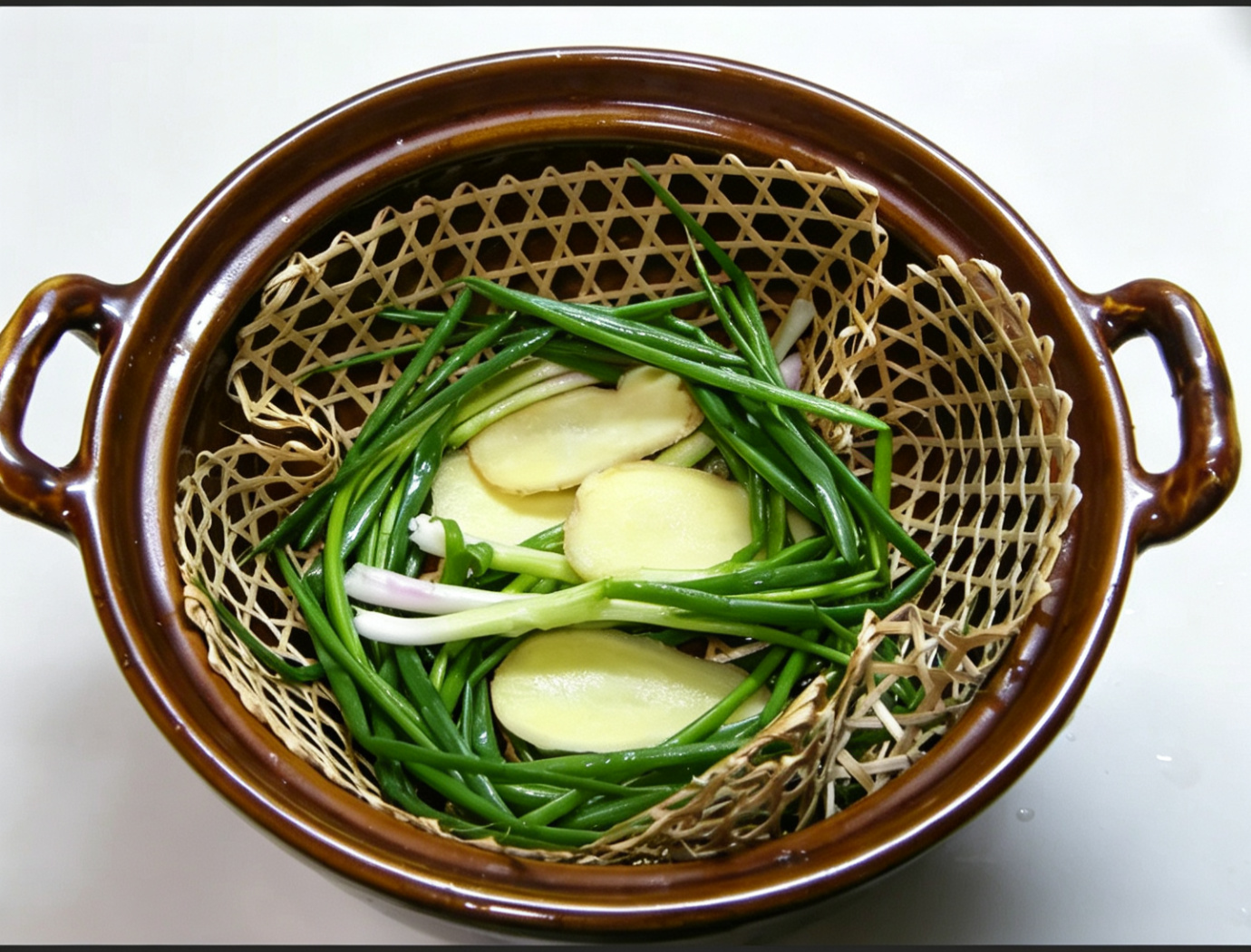
Line the bottom of the clay casserole with a bamboo mat to prevent the pork from scorching. Lay whole scallions and ginger slices evenly on top of the bamboo mat.
4. Close the lid, connect the Mijia mobile App, select the preset Dongpo Pork recipe, set cooking time to 2 hours and start the program.

5. Arrange pork in the pot
Place the fried pork chunks neatly on the scallions and ginger inside the casserole.
5. After 1 hour of cooking, open the lid, flip the pork gently and add the leftover 60ml Hua Diao wine. Close the lid and finish the remaining cooking time.


6. Make caramel sugar color
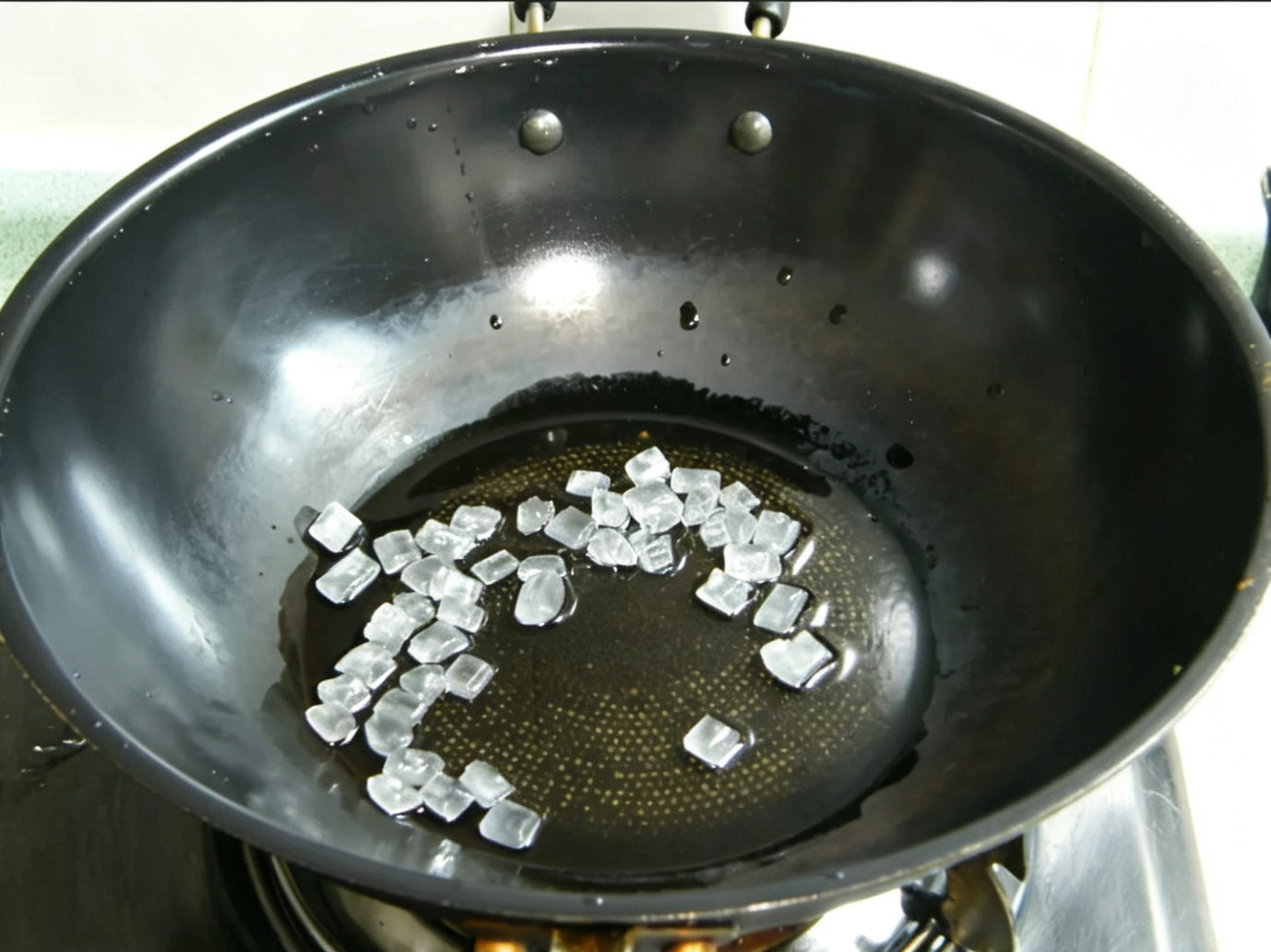
Add 80g yellow rock sugar and 50ml cold water into a wok. Heat on low heat until the sugar melts, turns amber brown and smokes slightly. Turn off heat, let the caramel cool down, then add another 50ml cold water and reheat to make brown sugar syrup.
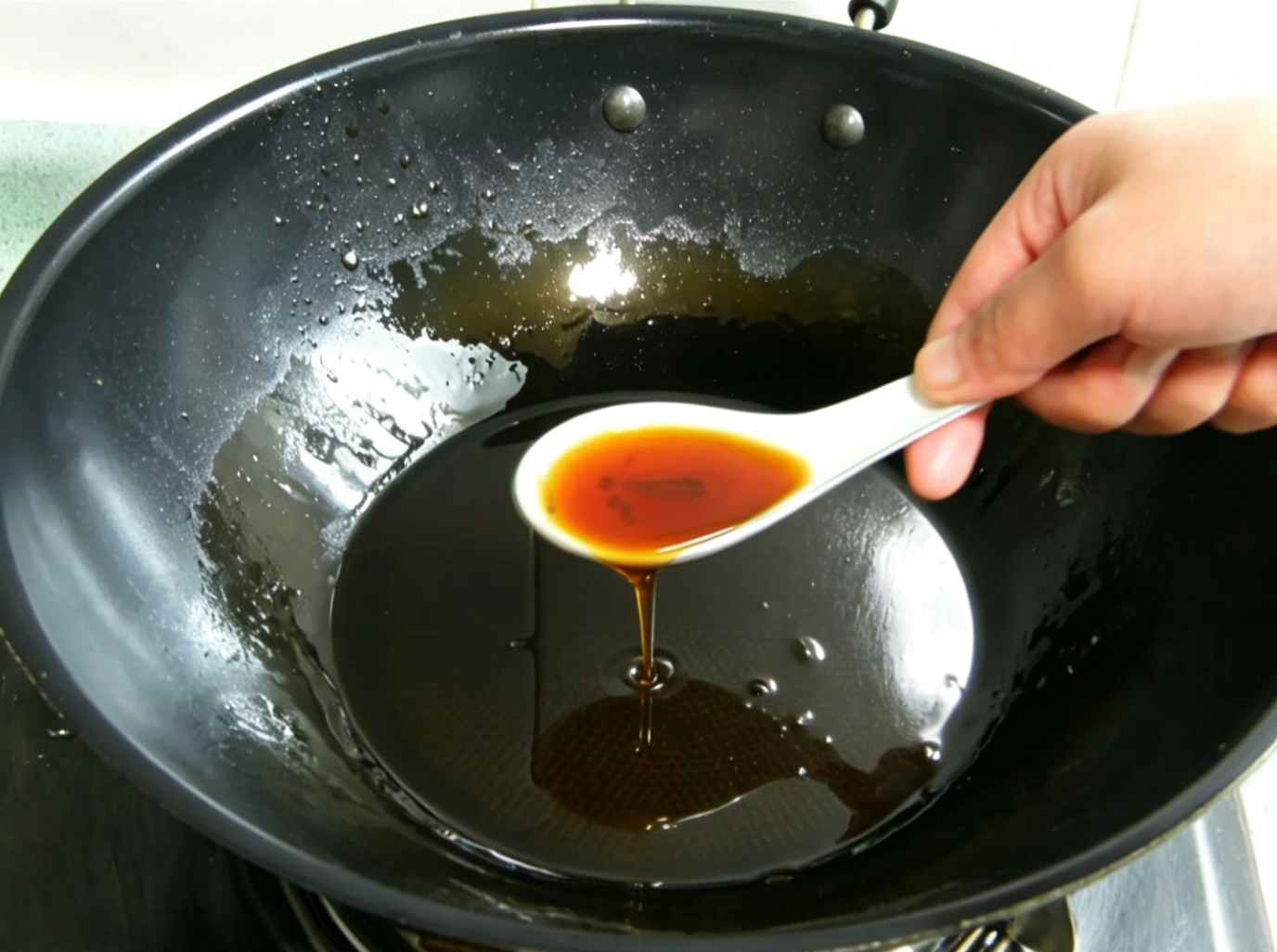
7. Add seasonings to the casserole
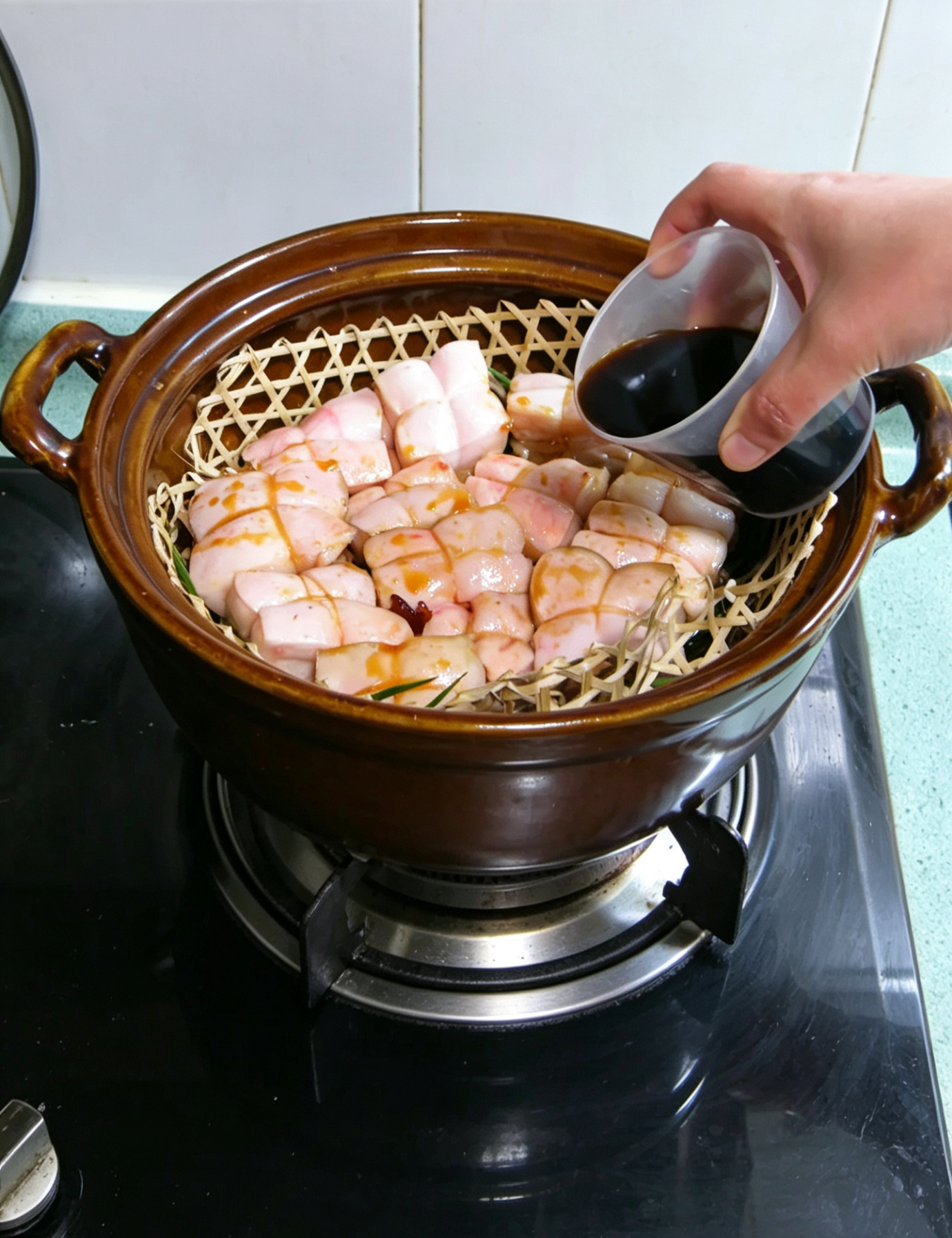
Pour the prepared sugar syrup, light soy sauce, braised soy sauce, dark soy sauce, and the first portion of 50ml Hua Diao wine over the pork.
6. When the 2-hour braising cycle completes, the cooker will switch to warm mode. Open the lid and flip the pork again.
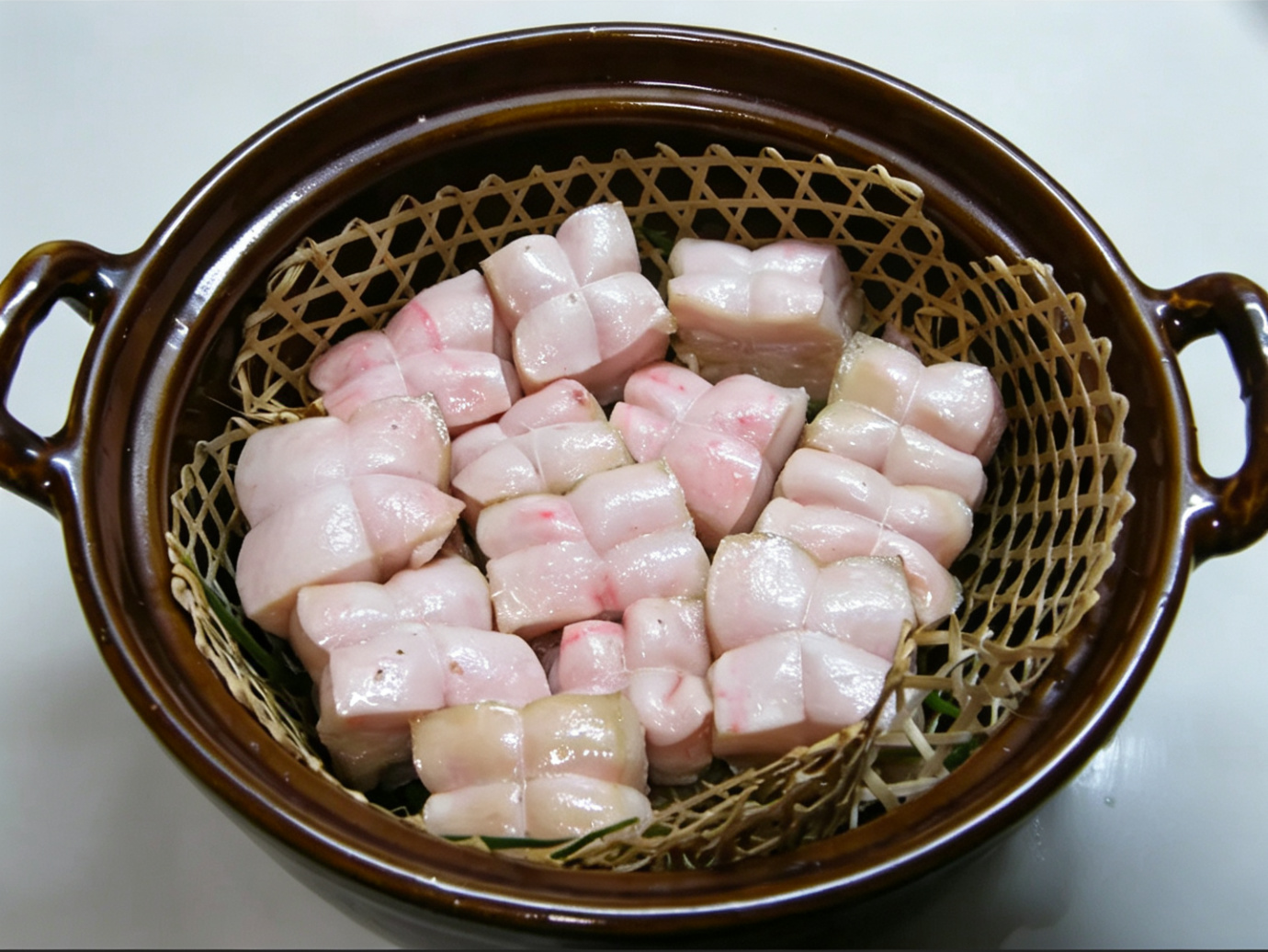


8. Start initial braising
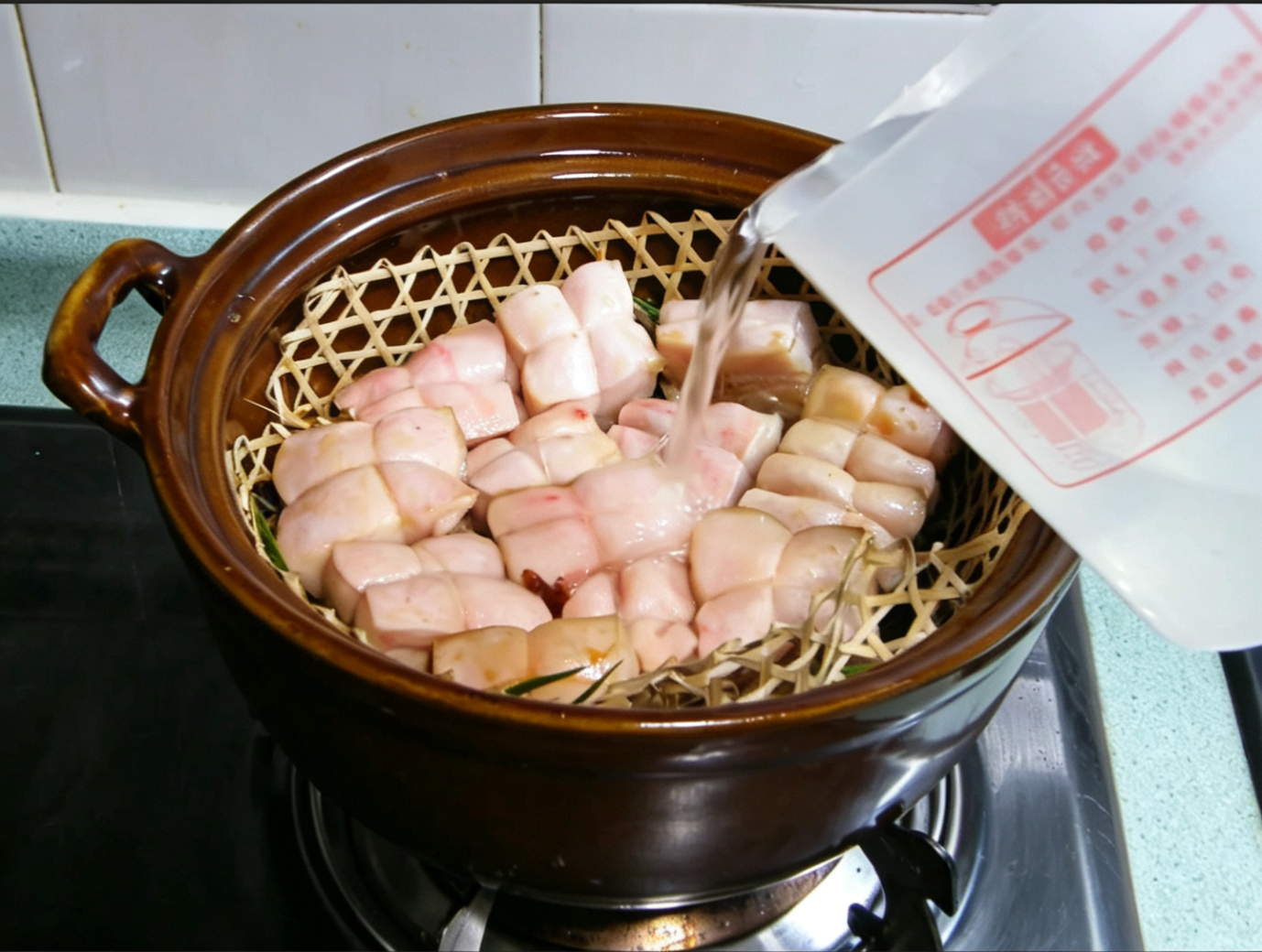
Pour 600ml clean water into the casserole until the water level reaches two-thirds of the pork height. Cover the lid, bring to a rolling boil over high heat, then turn to low heat and simmer for 60 minutes.
- Flip the pork skin-side down at the 30-minute mark.
- Flip the pork back to original position at the 45-minute mark.
Continue simmering until the soup reduces to a thin layer at the bottom of the pot.
7. Select the soup program on the App, set 20 minutes for sauce reduction, leave the lid open to simmer until the sauce thickens and turns glossy.

9. Transfer for steaming
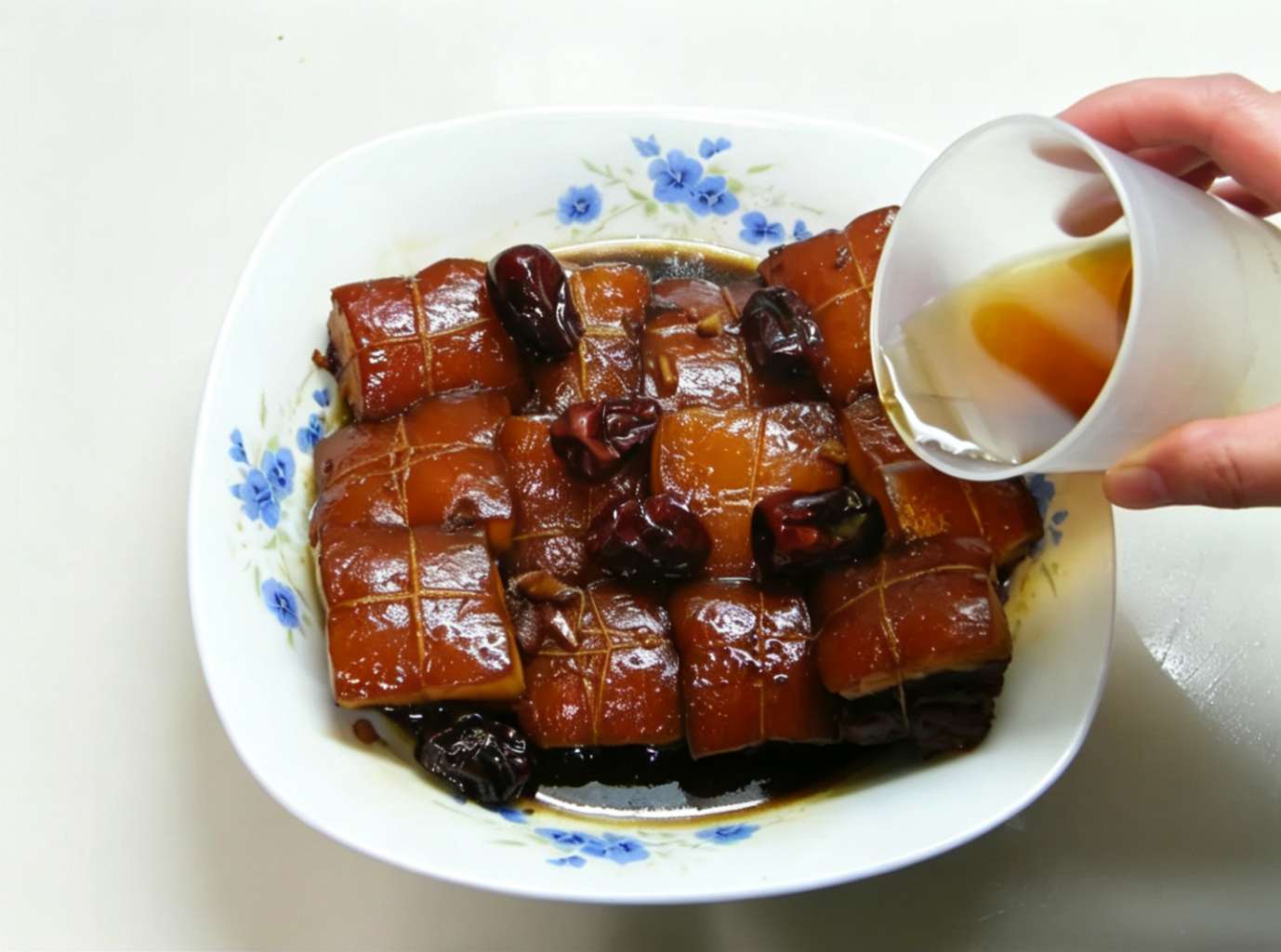
Move the braised pork chunks into a large bowl. Pour in the remaining braising soup, add red dates with small cuts for better flavor, then pour in the remaining 60ml Hua Diao wine.
8. Blanch broccoli in boiling water for 2–4 minutes, then drain for garnish.


10. Steam the pork to finish
Place the bowl into a steamer with boiling water. Cover and steam over high heat for 60 minutes until the meat becomes ultra-tender.
9. Plate the Dongpo pork, arrange broccoli around the dish, drizzle thickened sauce on top and serve.


Cooking Tips
1. A bamboo mat under the pork prevents scorching during long simmering, which cannot be avoided by stirring while cooking.
2. Making caramel syrup with cold water after cooling can prevent hot sugar from splashing and burning hands, safer for beginners.
3. Rendering fat out by frying reduces greasiness significantly, making the texture closer to restaurant-style Dongpo Pork.
4. Hua Diao wine (Shaoxing rice wine) is the key ingredient for authentic flavor. Add wine in two batches to maintain a lasting mellow wine scent without overpowering alcohol taste.
5. Cut small openings on red dates before cooking to help their sweetness infuse into the meat.
6. Blanch whole pork belly first if you want neater square chunks.
7. Always buy firm pork belly from formal supermarkets; loose-textured pork will turn mushy easily and taste greasy.
8. Final sauce reduction is critical to achieve the bright, glossy surface of classic Dongpo Pork.
Dongpo Pork (Integrated Complete Recipe)
Ingredients
Main Ingredient
Pork belly with skin: 1000g
Seasonings
Yellow rock sugar: 80g
Light soy sauce: 70ml
Braised soy sauce: 2 tablespoons
Dark soy sauce: 1/4 teaspoon
Aged Hua Diao rice wine: 110ml
Clean water: 600ml
Star anise: 1 piece
Ginger slices: 4 pieces
Scallions: 50g
Red dates: 6 pieces
Garnish for Plating
Broccoli, lettuce leaves, white sesame seeds, chopped green onion, black sesame seeds (optional)
Two Cooking Methods for Choice
Method 1: Authentic Restaurant Version (Render fat → make caramel color → simmer in clay pot → steam, less greasy)
1. Choose firm pork belly with neat layers of fat and lean meat. Use a kitchen torch to singe off fine hairs on the pork skin, then scrub and clean thoroughly.
2. Cut the pork belly into 4cm×4cm square chunks. Tie each chunk tightly with cotton string in a cross shape to prevent the meat from falling apart during cooking.
3. Pour a little oil into a frying pan, place the pork chunks skin side up. Fry over medium-low heat to render out excess fat from the meat (do not fry the pork skin), then take out and set aside.
4. Line the bottom of a clay casserole with a bamboo mat, lay scallions and ginger slices on top, then arrange the fried pork chunks neatly inside the pot.
5. There are 3 ways to make caramel color for browning:
✅ Option A (Traditional way): Simmer rock sugar with a small amount of water over low heat until it turns chestnut red and smokes slightly. Turn off heat, let it cool down, then add water to dissolve it into syrup. (Not recommended for beginners, easy to burn and splash hot syrup)
✅ Option B (Easy way): Buy ready-made caramel coloring from Asian supermarkets (Chinatown grocery stores), time-saving and safe.
✅ Option C (Simple substitute): Use cola, orange juice or orange soda as a replacement for caramel coloring for gentle, easy coloring.
6. Pour the caramel syrup, light soy sauce, braised soy sauce, dark soy sauce and the first 50ml of Hua Diao wine into the casserole. Add clean water until the water level reaches two-thirds of the pork chunks.
7. Bring to a full boil over high heat, then turn to low heat and simmer for 60 minutes. Flip the pork chunks skin side down at the 30-minute mark, flip again at the 45-minute mark. Continue simmering until only a small amount of soup remains.
8. Transfer the pork chunks into a large bowl, pour in the leftover soup, add red dates with small cuts, then pour in the remaining 60ml of Hua Diao wine.
9. Place the bowl into a steamer with boiling water, cover and steam over high heat for 60 minutes until the pork becomes tender and fully flavored.
Method 2: Rice Cooker Home Version (No caramel needed, one-button cooking, beginner-friendly)
1. Singe and scrub the pork belly clean. You may keep the pork skin, or peel it off to make pork jelly for other dishes.
2. Cut the pork into square chunks and tie with straw rope or cotton string. Place the pork skin side down into the inner pot of the IH rice cooker, lay scallions and ginger slices on the bottom first.
3. Add star anise, rock sugar, all types of soy sauce and the first 50ml of Hua Diao wine. Pour in water until it reaches the same level as the pork. You can add a little cola or orange juice for easy coloring.
4. Open the Mijia App on your phone, select the preset Dongpo Pork recipe and set a 2-hour cooking cycle to start.
5. After 1 hour of cooking, open the lid, flip the pork gently and pour in the remaining 60ml of Hua Diao wine, then close the lid to finish the rest of the cooking time.
6. When the 2-hour cycle finishes, open the lid, switch to the soup mode and simmer uncovered for 20 minutes to reduce the sauce until thick and glossy.
Plating & Decoration Steps
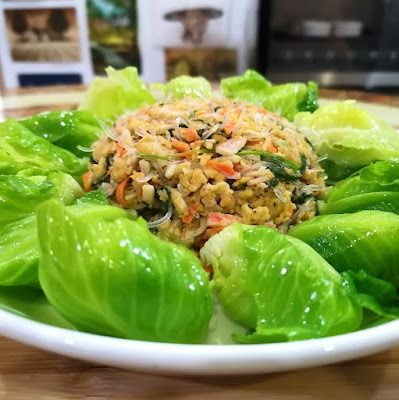
1. Line the plate with lettuce leaves, place Dongpo Pork on top, and arrange blanched broccoli around the edges.
2. Sprinkle white and black sesame seeds and chopped green onion on the surface, then drizzle the thickened sauce over the meat.
3. If you peeled off the pork skin, you can cut homemade pork jelly into small cubes and arrange them on the plate for a richer presentation.
Cooking Tips
1. A bamboo mat at the bottom of the clay pot prevents the pork from burning during long simmering.
2. Add Hua Diao wine in two separate batches to preserve the rich wine aroma without the alcohol flavor evaporating completely.
3. Always buy firm pork belly from formal supermarkets. Loose-textured pork will turn mushy and taste overly greasy after cooking.
4. Reducing the sauce at the final stage is the key to getting a bright, glossy reddish-brown finish for classic Dongpo Pork.
Soup Dumplings/Xiao Long Bao
You may keep the pork skin or peel it off. The trimmed pork skin can be used to make pork jelly, which is also the key filling for soup dumplings. Check out my other recipe for pork jelly to learn the full production method.
Lay scallions and ginger slices on the bottom of the cooker liner, place a bamboo mat on top to prevent pork from scorching. Arrange pork chunks neatly on the mat with skin facing down.
Pour the prepared sugar syrup, light soy sauce, braised soy sauce, dark soy sauce, 50ml Hua Diao wine, and 600ml clean water into the cooker. Add star anise and cut-open red dates.
Close the lid and start the braising mode of the IH rice cooker, simmer for 90 minutes.
After the first round of braising, pour another 60ml Hua Diao wine into the pot to replenish the evaporated wine aroma.
Continue steaming for another 60 minutes until the pork is tender enough that fat melts in the mouth and lean meat stays juicy.
Take out the pork, arrange on a plate, blanch broccoli for decoration, thicken the remaining sauce and drizzle over the pork before serving.
Want to keep this recipe for later? We can email it to you!
Use a bamboo mat under the pork to prevent sticking and burning during long-time braising.
Making sugar color with cold water is safer for beginners, preventing hot syrup splashing everywhere.
Hua Diao wine (or Shaoxing rice wine) is essential for authentic Dongpo Pork. Add wine in two batches to maintain a lasting mellow fragrance without overwhelming alcohol taste.
Choose firm pork belly from formal supermarkets to avoid mushy texture and greasy taste.
Cut red dates open before cooking to allow their sweetness to fully infuse into the meat.
Blanch the whole pork first before cutting into cubes to keep the pork chunks neat and tidy.
Can I use Shaoxing wine instead of Hua Diao wine?
Yes, Shaoxing wine is a suitable substitute for Hua Diao wine in this recipe.
Why is a bamboo mat necessary?
The bamboo mat prevents the pork from sticking and burning on the bottom during long braising.
How do I make sugar color safely?
Use cold water to melt the yellow rock sugar first, then heat slowly to avoid splashing hot syrup.
What should I look for when choosing pork belly?
Select pork belly with a tight texture and firm combination of fat and lean meat for the best results.
Can I skip tying the pork chunks with cotton string?
Tying the pork chunks helps maintain their shape during cooking, but it can be skipped if preferred.