
14 Egg Curry Recipes for Fast, Filling Dinners
Updated July 15, 2026 · Curated by Chefadora
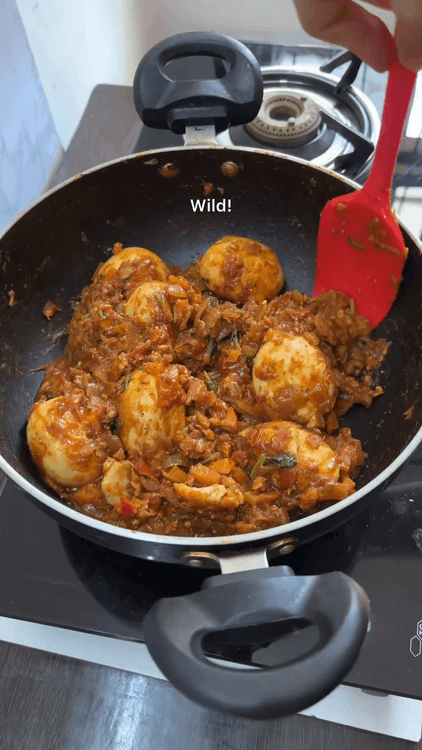
Eggs are the ingredient I fall back on when the fridge is close to empty and dinner is still forty minutes away. That is exactly why these egg curry recipes earn their place: a dozen eggs, an onion, a tomato and whatever ground spice you keep near the stove will get you a gravy worth mopping up. No marinating, no thawing, no butcher.
What surprised me while pulling this list together was the range. A Kerala kitchen simmers halved eggs in coconut milk until the sauce goes silky and faintly sweet. A Punjabi dhaba browns onions almost to collapse and finishes with cream. A Surat street cart mashes everything into a scoopable pile. Kolhapur throws in roasted coconut and enough chilli to make you sweat through the second helping.
So the fourteen dishes below are grouped by how they cook rather than by cuisine label alone — the quick weeknight ones first, then coconut gravies, then the rich party-worthy masalas, then the street-style outliers. Every dish gets a note on what it actually tastes like and how long it takes.
Weeknight Egg Curry Recipes Ready in Well Under an Hour
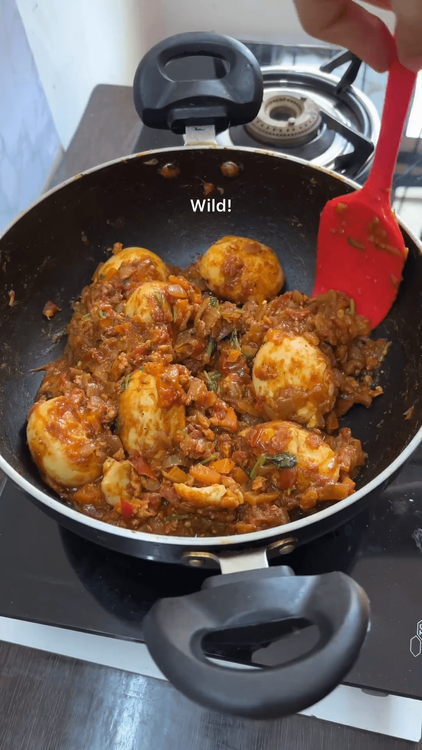
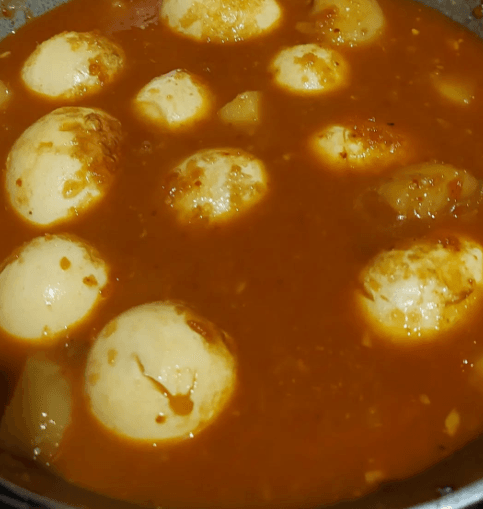
These are the ones I cook on a Tuesday with no plan. Everything here lands between thirty and forty-five minutes, and most of that is unattended simmering while the rice steams. Two of them are genuinely beginner territory: brown an onion, add tomato, cook until the oil pulls away at the edges, slide in boiled eggs. The aloo versions stretch further because the potato soaks up gravy and turns one pan into a real meal for four. Keep a dozen eggs and a couple of potatoes around and you have dinner on standby all week. Batch the base on Sunday and any of these drops to fifteen minutes flat.
- Indian
- Eggetarian
- Dinner
- Indian
- Eggetarian
- Dinner


- Indian
- Eggetarian
- Dinner
- Pakistani
- Eggetarian
- Lunch
Coconut-Led Gravies From Kerala Kitchens
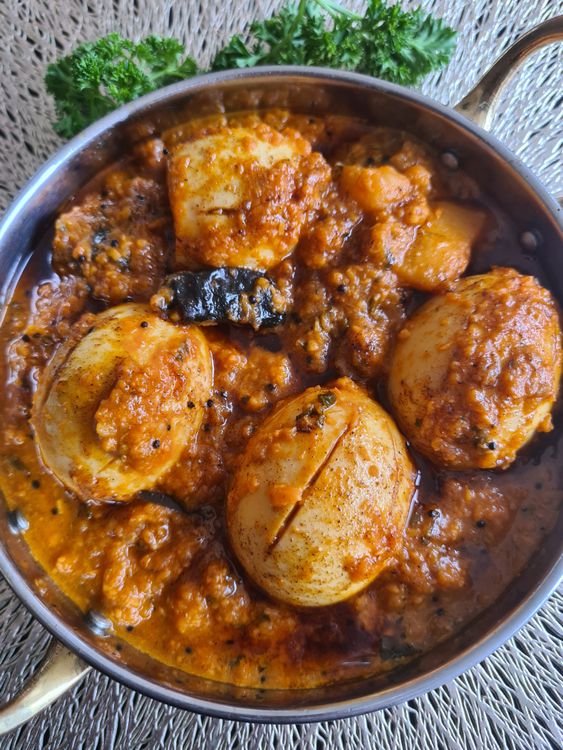
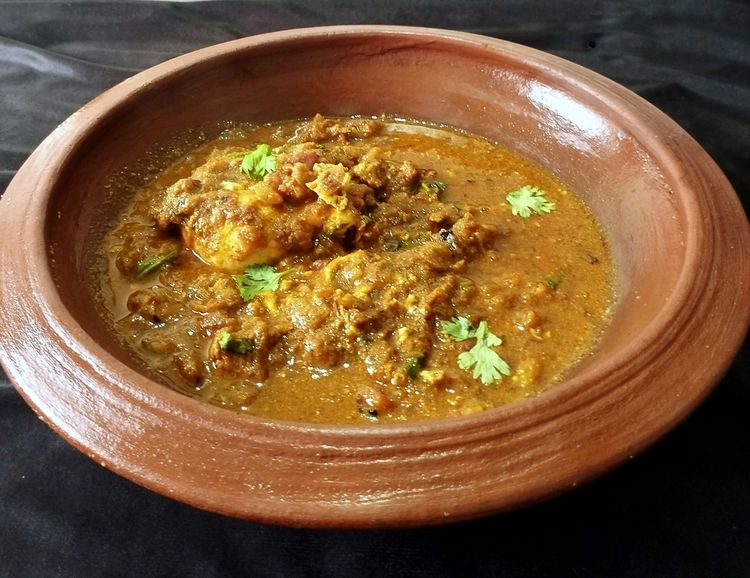
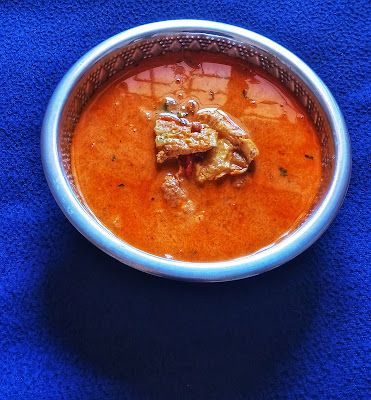
Coconut changes the whole character of the sauce. Down the Malabar coast the gravy leans mild, glossy and just tart enough from tamarind or raw mango, and it clings to appam and idiyappam better than any tomato-heavy base will. Two approaches show up here. The first pours in thick coconut milk near the end, off a hard boil, so it stays creamy instead of splitting. The second roasts grated coconut in a dry pan until it turns the colour of dark toffee, then grinds it to a paste — that one tastes deep and faintly smoky, worth the extra fifteen minutes of standing at the stove. Curry leaves and a coconut-oil tempering are non-negotiable in both.
- Indian
- Eggetarian
- Lunch
- Indian
- Eggetarian
- Lunch
- Indian
- Eggetarian
- Main Course
Rich, Restaurant-Style Anda Masala Gravies
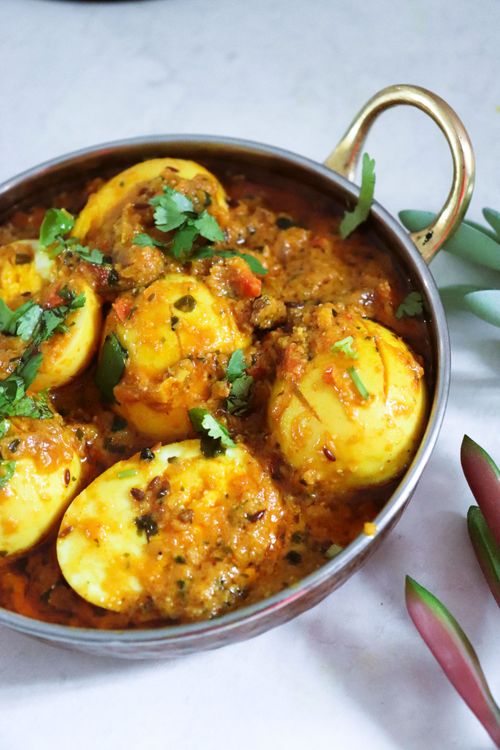
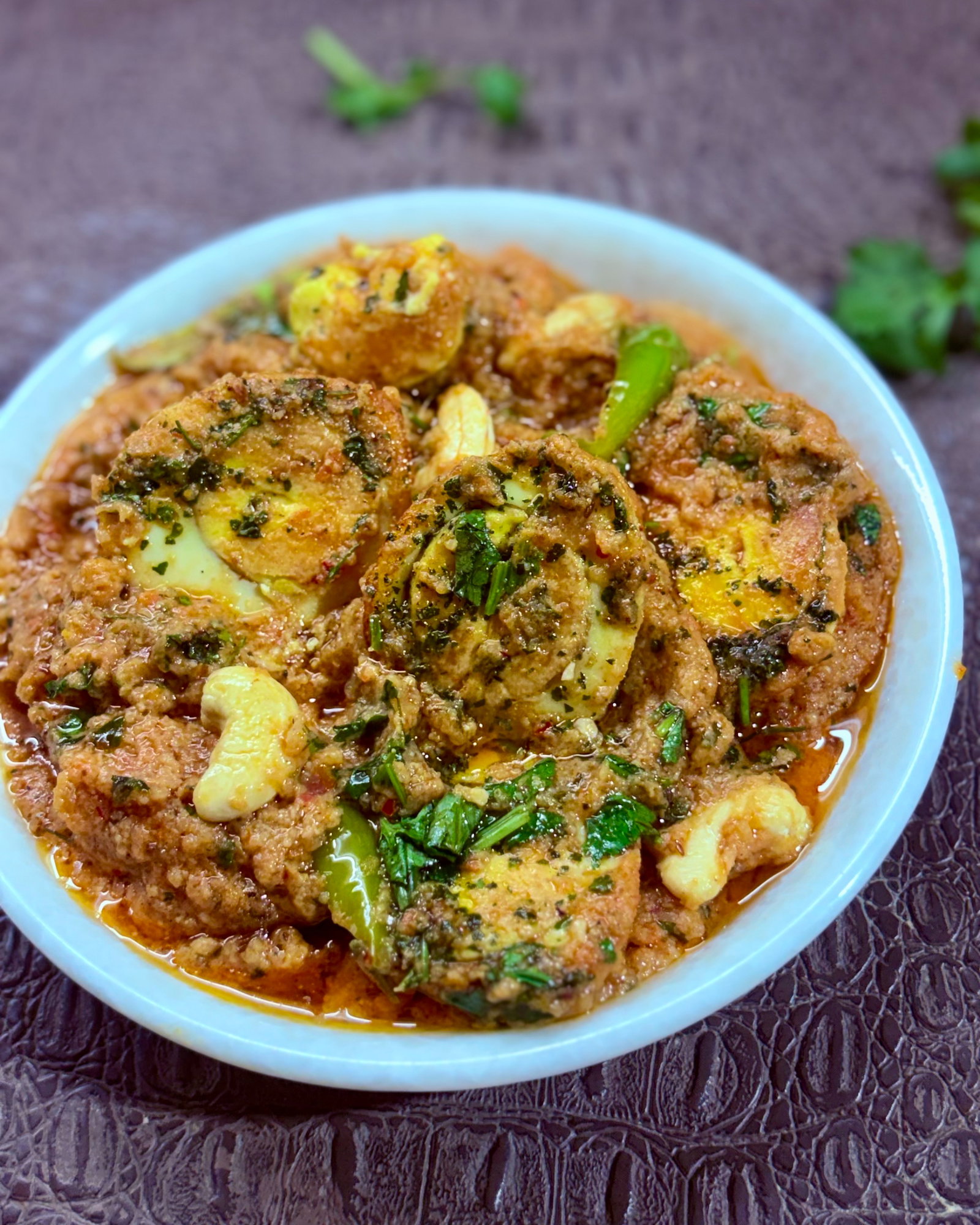
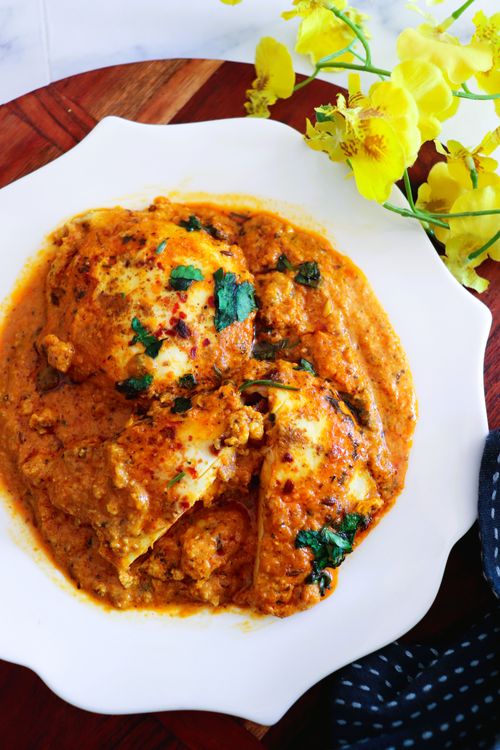
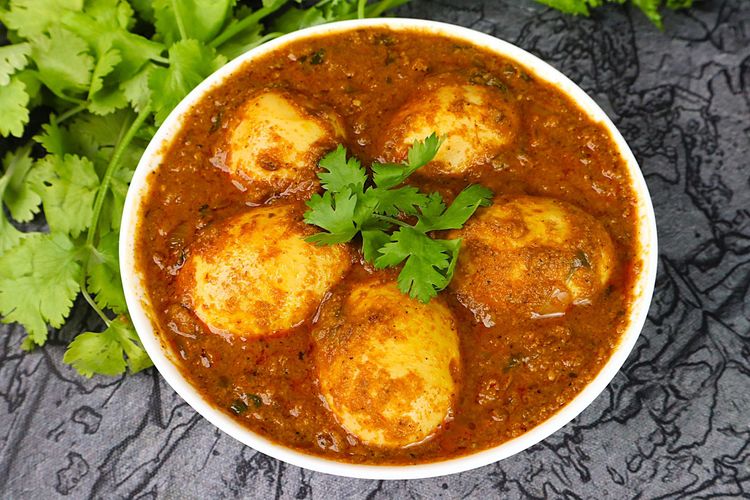
This is the group I make when people are coming over. They take an hour rather than thirty minutes, and the time goes into the base: onions browned slowly and properly, whole spices bloomed in ghee, cashew or cream stirred in, sometimes a ground masala of roasted coconut and sesame. The gravies here run from mild and princely to genuinely fierce. One poaches the eggs directly in the sauce so the whites take on colour from the masala. Another comes straight from the roadside dhaba playbook — smoky, tomato-forward, heavy on kasuri methi crushed in at the end. Serve any of them with naan, thin sliced onion and a wedge of lemon.
- Indian
- Eggetarian
- Main Course
- Indian
- Eggetarian
- Dinner
- Indian
- Eggetarian
- Lunch

- Indian
- Eggetarian
- Lunch
Street-Style Plates and One-Pot Twists
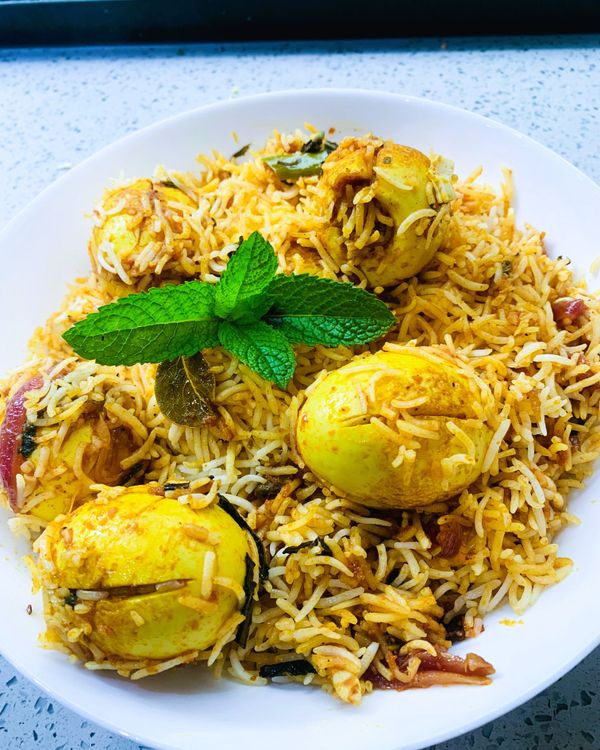
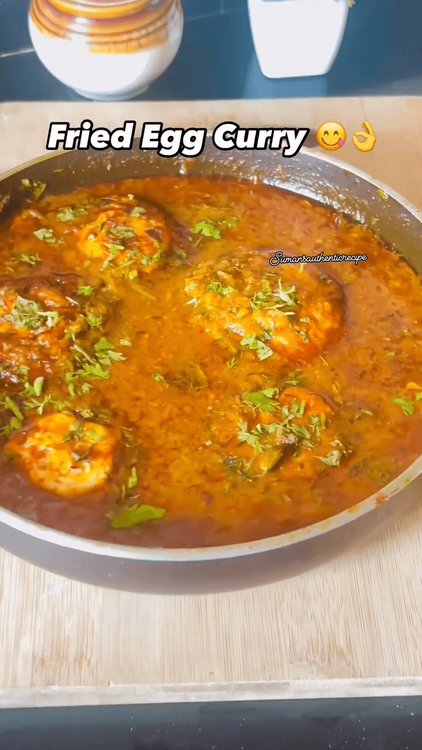
Not everything with eggs and masala arrives as a bowl of gravy with whole eggs bobbing in it. These three bend the format. One is a Surat cart classic where eggs get scrambled into a spiced potato mash and eaten with buttered pav — chaotic, garlicky, absolutely worth it. One layers boiled eggs and saffron rice into a biryani, which is the longest cook on this page at seventy minutes but feeds a crowd for very little money. The third fries the eggs first so the edges frill and crisp before they meet the sauce, giving you texture that a boiled egg never delivers. Good places to start if the standard version feels too familiar.


- Eggetarian
- Street Food
- Indian
- Eggetarian
- Lunch
- Indian
- Eggetarian
- Dinner
Boiling & Frying the Eggs Right
Start the eggs in cold water, bring it to a bare simmer, then hold them there for eight to nine minutes for a yolk that is set but still golden rather than chalky. A rolling boil is what gives you that grey-green ring and a rubbery white. The second the timer goes, move them into iced water for five minutes — the shock shrinks the white away from the shell and peeling stops being a battle. Older eggs peel far more easily than fresh ones.
Once peeled, do not drop them straight into the sauce. Prick each egg four or five times with a fork, or score two shallow slits down the sides. Those cuts are the difference between a dish that tastes of masala and one where the egg is just a bland lump sitting in an otherwise good gravy. Salt and turmeric go on next, rubbed over the surface with your fingers.
Then fry them. Two tablespoons of oil in a wide pan, medium heat, and roll the eggs around for two to three minutes until the outsides turn blistered and pale gold. Keep the heat moderate and stand back a little — trapped moisture under the skin will pop and spit. This step is optional in a mild coconut sauce, where you want the whites soft and pale, but it is what gives dhaba-style egg masala its chew and colour. For anything sold as a fried version, take them further, right to a crisp lacy edge, and add them at the very end so they do not soften back into the egg gravy.
Building the Masala Base
Almost every dish on this page stands on the same foundation, and almost every failure I have tasted comes from rushing it. Onions first, sliced thin, in hot oil or ghee with a pinch of salt to draw out water. Give them eight to ten minutes over medium heat until they go past translucent into properly golden brown. Pale onions make a thin, raw-tasting sauce that no amount of garam masala at the end will rescue.
Ginger-garlic paste goes in next and needs only a minute — it burns fast and turns bitter. Then tomatoes, chopped or pureed, and this is where patience pays again. Cook them until they collapse completely and the oil visibly separates and pools at the edges of the pan. That is the bhuna stage, and it is the single visual cue worth learning; before it, the base tastes sharp and unfinished, after it, everything rounds out.
Ground spices go in after the tomatoes have broken down, not before. Turmeric, chilli, coriander, a little cumin, and a splash of water so the powders bloom rather than scorch. Cook another two minutes. Now you can push in whatever the dish calls for: coconut milk, cashew paste, whisked yoghurt off the heat so it does not split, or just hot water for a thinner egg gravy. Taste for salt before the eggs go in — once they are in, stirring hard enough to dissolve seasoning will break them apart. Garam masala and crushed kasuri methi belong in the last two minutes, off the heat, where their aromatics survive instead of cooking away into nothing.
Regional Egg Curry Styles
The dish shifts character every few hundred kilometres, and knowing the map helps you pick the right one for the night. Punjab and the truck-stop dhabas of the north give you the version most people picture: deep brown onion-tomato base, plenty of ghee, cream or cashew for body, kasuri methi crumbled over the top. It is heavy, smoky and built for naan. This is the anda curry of highway roadside kitchens, and it is unapologetically rich.
Head south and the tomato recedes. Kerala works with coconut in two directions — thick milk stirred in late for something pale and silky, or grated coconut dry-roasted to a dark paste for the varutharacha style, which tastes smoky and almost nutty. Tamarind or raw mango brings sourness instead of tomato acidity, curry leaves and mustard seeds crackle in coconut oil, and the result is thinner and made to be soaked up by appam or red rice rather than mopped with bread.
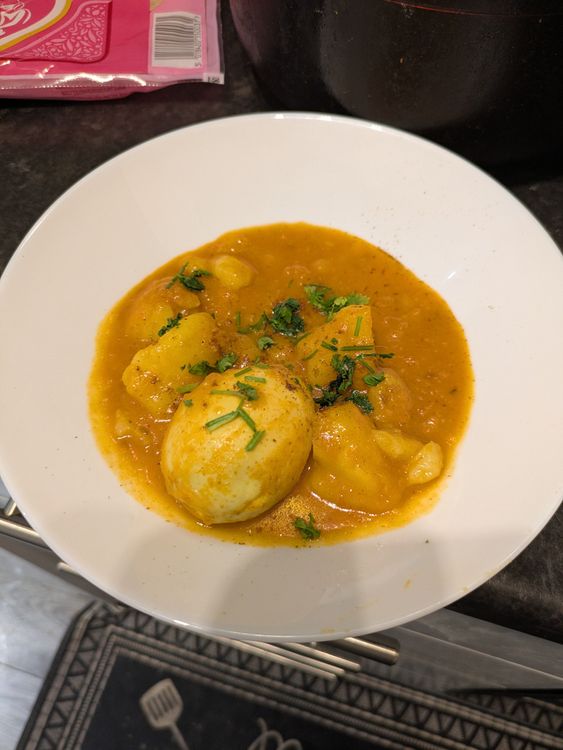
Maharashtra's Kolhapuri school is the fierce one: a ground masala of roasted coconut, sesame and dried red chillies that carries genuine heat, not just warmth. Mughlai kitchens go the opposite way with cashews, cream and whole spices for a mild, almost sweet gravy. Across the border, Pakistani aaloo anday keeps things spare and potato-heavy. Bengal simmers eggs with potato in a light, ginger-scented dalna. What every good Indian egg curry shares is that bhuna stage — brown the base properly and the region takes care of itself. Pick by what you are serving it alongside and how much chilli you can honestly take on a weeknight.
Serving & Storing
Match the bread to the thickness. A rich, clinging masala wants naan, tandoori roti or a laccha paratha — something sturdy enough to scoop without tearing. Thin coconut-based gravies want rice, appam or idiyappam, which soak rather than scoop. Plain jeera rice suits almost everything, and a plate of raw onion rings with lemon and a spoonful of thick yoghurt cuts the fat on the heavier ones. If you are serving the Kolhapuri version to guests, the yoghurt is insurance, not garnish.
Leftovers are where eggs get tricky. The gravy improves overnight — the spices settle and the whole thing tastes rounder on day two. The eggs do not improve. Whites turn tough and slightly rubbery after a day or so in the fridge, and the yolks go dry. My fix is to store the gravy and the eggs separately, keep the sauce three to four days, and boil fresh eggs when you reheat. It takes ten extra minutes and the difference is obvious.
For freezing, the same rule applies but harder. Freeze the base alone, up to three months, in a flat bag so it thaws quickly. Never freeze cooked eggs in sauce — the whites go spongy and weep water when they defrost, and no amount of reheating brings them back. When you warm anything up, do it gently on the stove with a splash of water; a microwave on full power will make the yolks steam from the inside and crack the eggs open. That is also why batch-cooking works so well here: make double the base on the weekend and you are twenty minutes from dinner.
Pro Tips
- Prick or slit every peeled egg before it meets the sauce. Four or five fork holes let the masala get inside the white, and it is the single biggest difference between a flat dish and one people ask you about afterwards. Skip it and the sauce simply slides off a sealed, slippery surface and pools uselessly at the bottom of the bowl.
- Watch for the oil separating from the tomato base and pooling at the edge of the pan. That is your cue that the bhuna is done. Adding water or eggs before it happens locks in a raw, sharp taste you cannot fix later, no matter how long you simmer afterwards or how much cream you stir through at the end. Give it the full ten minutes it asks for.
- Whisk yoghurt smooth and stir it in off the heat, then return the pan to a low flame and keep it moving. Straight from the fridge into a hot pan and it will curdle into grainy threads every time. A spoonful of the warm base whisked into the yoghurt first tempers it and buys you insurance.
- Buy older eggs on purpose for boiling. A carton that has sat two weeks peels cleanly; a farm-fresh one will take half the white off with the shell and leave you with craters. If all you have is fresh, add a teaspoon of baking soda to the boiling water and the shells release far more willingly once they hit the ice bath.
- Add coconut milk at the end and never let it hit a rolling boil. Thirty seconds too long and the fat splits out into an oily film across the surface of the gravy. Thin coconut milk can simmer freely, so use it to build body early on and save the thick milk for the final two minutes with the flame right down.
- Crush kasuri methi between your palms over the pan in the last minute, off the heat. Dropped in early it turns bitter and its whole point — that dry, savoury perfume — cooks straight off. The same goes for garam masala, which is a finishing spice here and not something to fry off at the start alongside the onions.
- Salt the sauce to taste before the eggs go in. Once they are floating there you cannot stir hard enough to dissolve seasoning without breaking whites into ragged pieces through the pan. Then let the finished pot rest off the heat for ten minutes so the eggs pull flavour inward before you serve.
Frequently Asked Questions
How to make egg curry if I have never cooked Indian food before?
Start with the thirty-minute twelve-ingredient version. Brown a sliced onion properly, add ginger-garlic for a minute, then tomato, and cook until the oil separates at the pan's edge. Stir in turmeric, chilli and coriander powder, add hot water, then slide in boiled eggs you have pricked with a fork. Simmer five minutes and finish with garam masala. That is the whole technique, and every other dish here is a variation on it.
Which of these egg curry recipes is fastest on a weeknight?
The plain thirty-minute version wins outright — twelve ingredients, beginner-friendly, no grinding and no whole spices to bloom. The Shahi anda curry runs thirty-five minutes despite tasting far more elaborate, because the cashew-cream base needs no long browning. Both aloo versions land around forty to forty-five minutes, and the pressure-cooker one does most of that work unattended while you get the rice on.
Why do my eggs stay bland even when the gravy tastes good?
Because nothing got inside them. A smooth boiled egg is a sealed unit and sauce slides straight off the surface. Prick each one four or five times, rub salt and turmeric over it, and ideally shallow-fry them for two minutes before they go in. Then let the whole pot sit off the heat for ten minutes so the egg masala soaks inward instead of just coating the outside.
What is the difference between anda curry and egg masala?
In practice, very little — anda simply means egg in Hindi and Urdu, so anda curry is the same dish under its home name. When people say egg masala they usually mean a drier, thicker version with less liquid, closer to a semi-dry stir-fry than a pourable sauce you would ladle over rice. Both start from the same browned onion and tomato base, and the difference is mostly how much water goes in.
How do I stop coconut milk from splitting in Kerala-style gravies?
Heat is the culprit. Add thick coconut milk only in the last two or three minutes, keep the flame low, and pull the pan off the moment you see the first lazy bubble. A rolling boil breaks the emulsion and the fat rises as an oily slick. If you are using thin and thick milk separately, the thin can simmer freely; only the thick needs protecting, so build the body early and finish gently.
Can I make the gravy ahead and store it?
Yes, and it genuinely tastes better on day two once the spices settle. Store the base without the eggs — three to four days in the fridge, or up to three months frozen flat in a bag. Boil fresh eggs when you reheat. Cooked eggs left sitting in sauce turn rubbery within a day, and frozen ones go spongy and weep water as they defrost. The ten extra minutes are worth it.
How much heat should I expect from each style?
The Kolhapuri version is the fierce one, built on roasted dried red chillies, and it keeps building well after the first bite. Dhaba-style and the Punjabi bases sit at a solid medium. Shahi is almost mild, leaning on cashew and cream rather than chilli. Kerala coconut gravies are gentle with a tang from tamarind. Scale the chilli powder down and leave the green chillies out to soften any of them considerably.
What should I serve with a thin versus a thick sauce?
Thick, clinging masalas want naan, tandoori roti or paratha — bread sturdy enough to scoop without tearing halfway to your mouth. Thinner coconut or tamarind gravies want rice, appam or idiyappam, which absorb rather than scoop. Jeera rice works with almost anything on this page. Add sliced raw onion, a lemon wedge and a bowl of thick yoghurt on the side for the richer, hotter dishes.
Fourteen dishes, one dozen eggs, and no shopping trip worth complaining about. What ties these egg curry recipes together is that browned onion-tomato base — learn to read when the oil separates and every regional variation here opens up to you. Start with the thirty-minute one tonight, then work south toward the coconut gravies when you have a spare hour and someone worth feeding properly.
Related
- Indian
- Kerala
- Punjabi
- weeknight dinner
- budget friendly
- comfort food
Popular Searches
- Best egg curry recipes
- Easy egg curry recipes
- Quick egg curry recipes
- Healthy egg curry recipes
- Simple egg curry recipes
- Homemade egg curry recipes
- Delicious egg curry recipes
- Popular egg curry recipes
- anda curry
- indian egg curry
- how to make egg curry
- egg masala
Marnirni-apinthi Building, Lot Fourteen,
North Terrace, Adelaide, South Australia, 5000
Australia
