We use cookies on this website to ensure its proper functioning and to improve the quality of our services. Cookie Policy

Tags and nutritional info are auto-generated and may be inaccurate. Always check the full ingredient list before cooking.


Dry roast the fennel seeds, peppercorns, cardamom, cloves, cinnamon, and star anise in a pan until fragrant.

Once cooled, grind into a fine powder. Set aside.

Heat coconut oil in a heavy-bottomed kadhai. Add the fennel seeds and pepper corns; let them crackle.
Add the sliced onions and sauté until they turn golden brown.


Add the ginger-garlic paste and one sprig of curry leaves. Sauté for a minute until the raw aroma disappears.


Lower the heat and add the Kashmiri chilli powder, coriander powder, black pepper powder, turmeric, and salt.

Pour in ¼ cup of hot water to prevent the spices from burning and cook for 1 minute until fragrant.

Add the chicken pieces. Increase the heat to medium-high and sear for 3-4 minutes until the chicken turns white and is well coated in the masala.


Stir in the chopped tomatoes and cook until they soften.
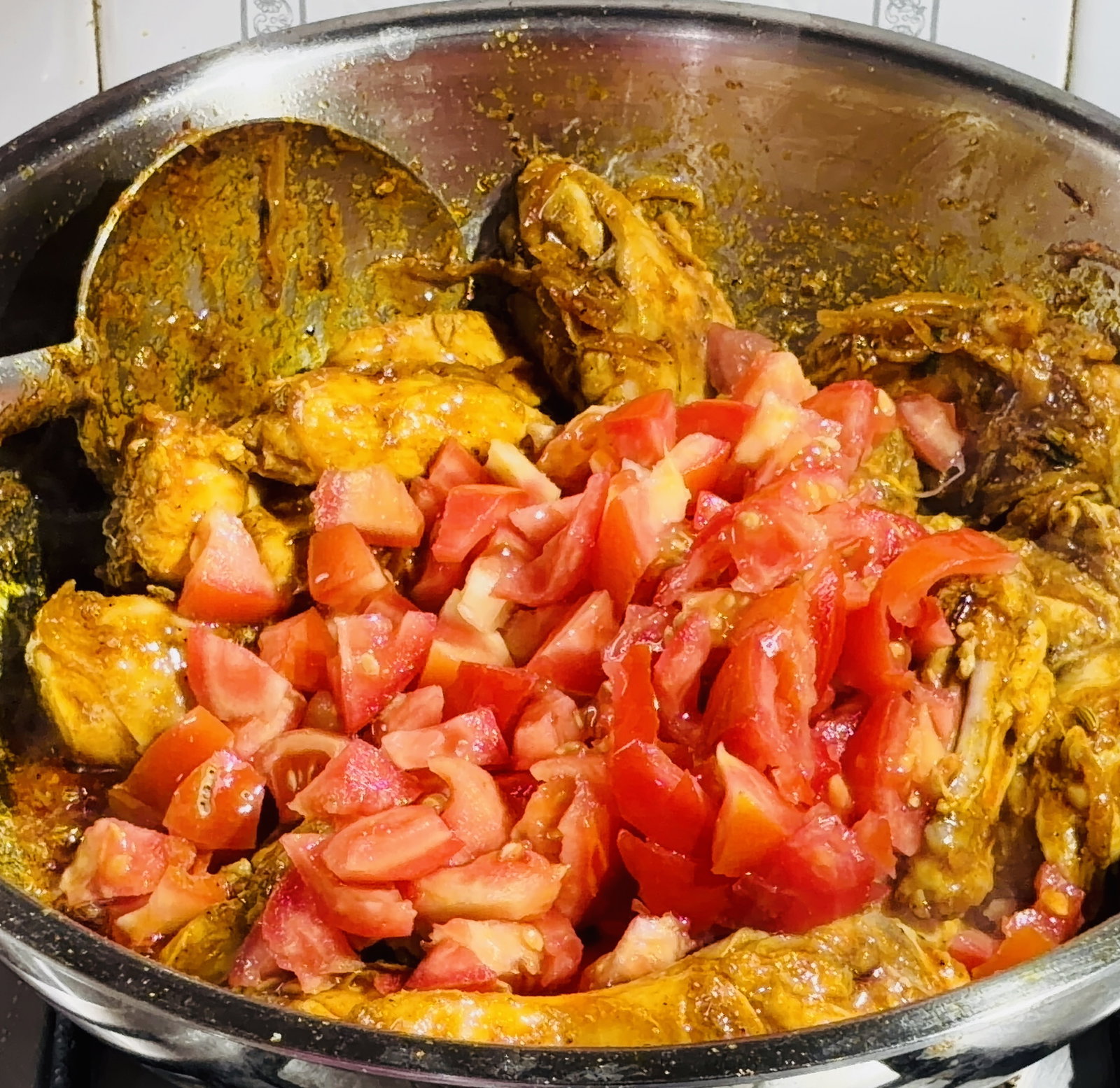

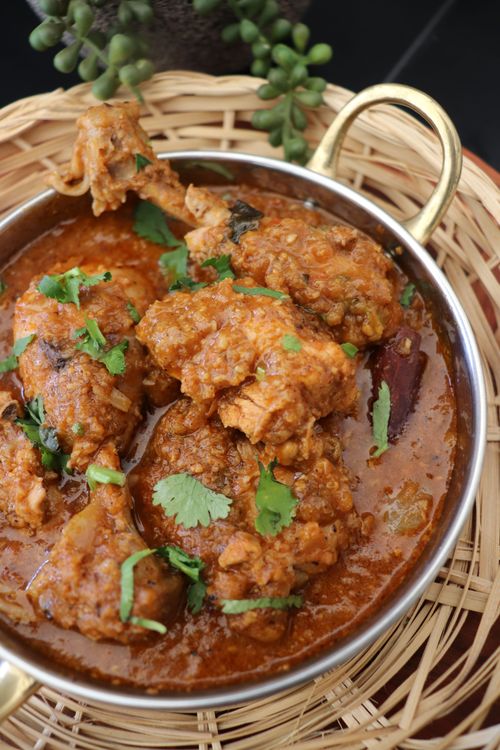
Cover the lid and cook on low-medium heat for 15-20 minutes or until the chicken is tender. If the gravy looks too dry, add a splash of hot water.

Stir in the freshly ground spice powder.
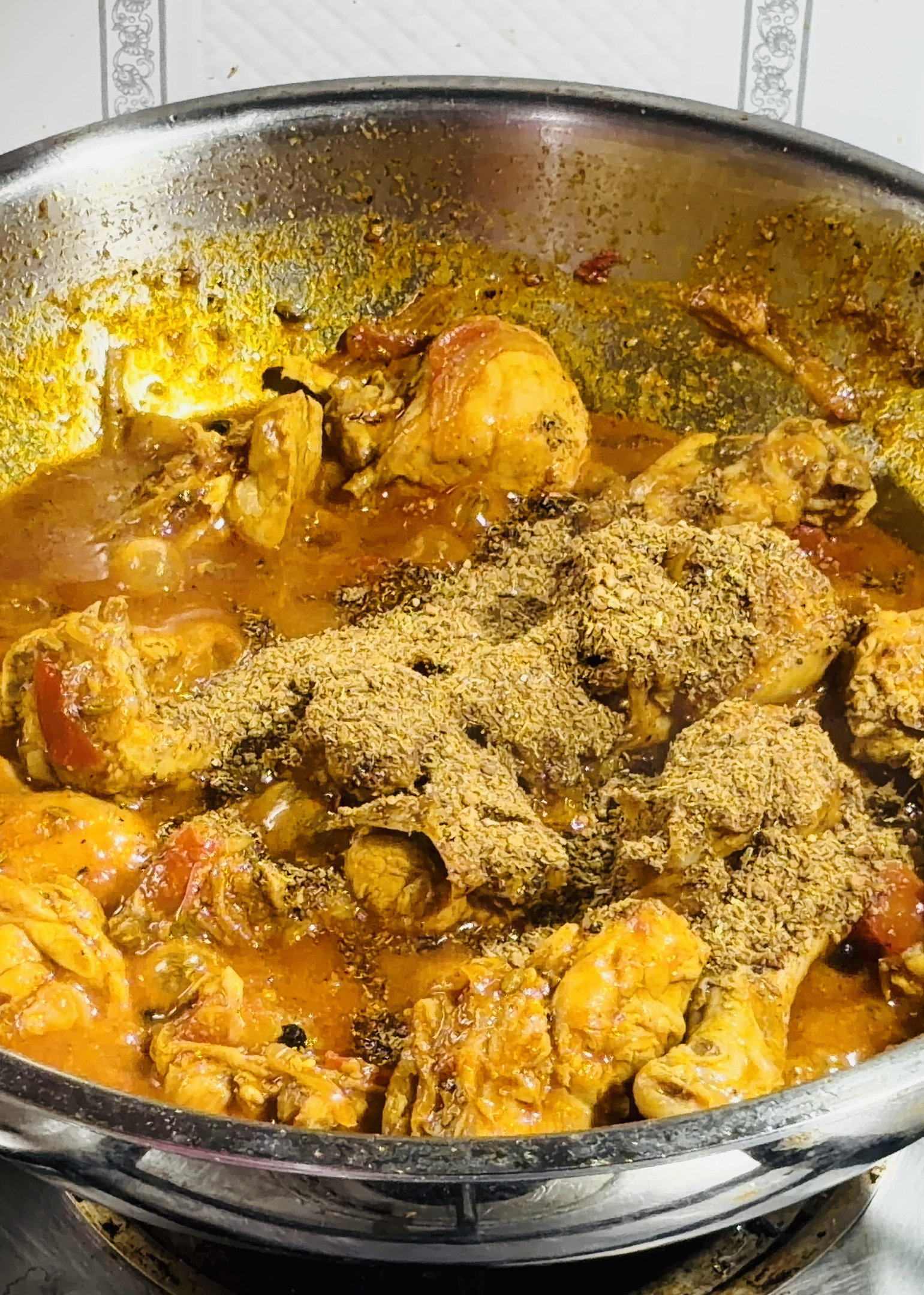

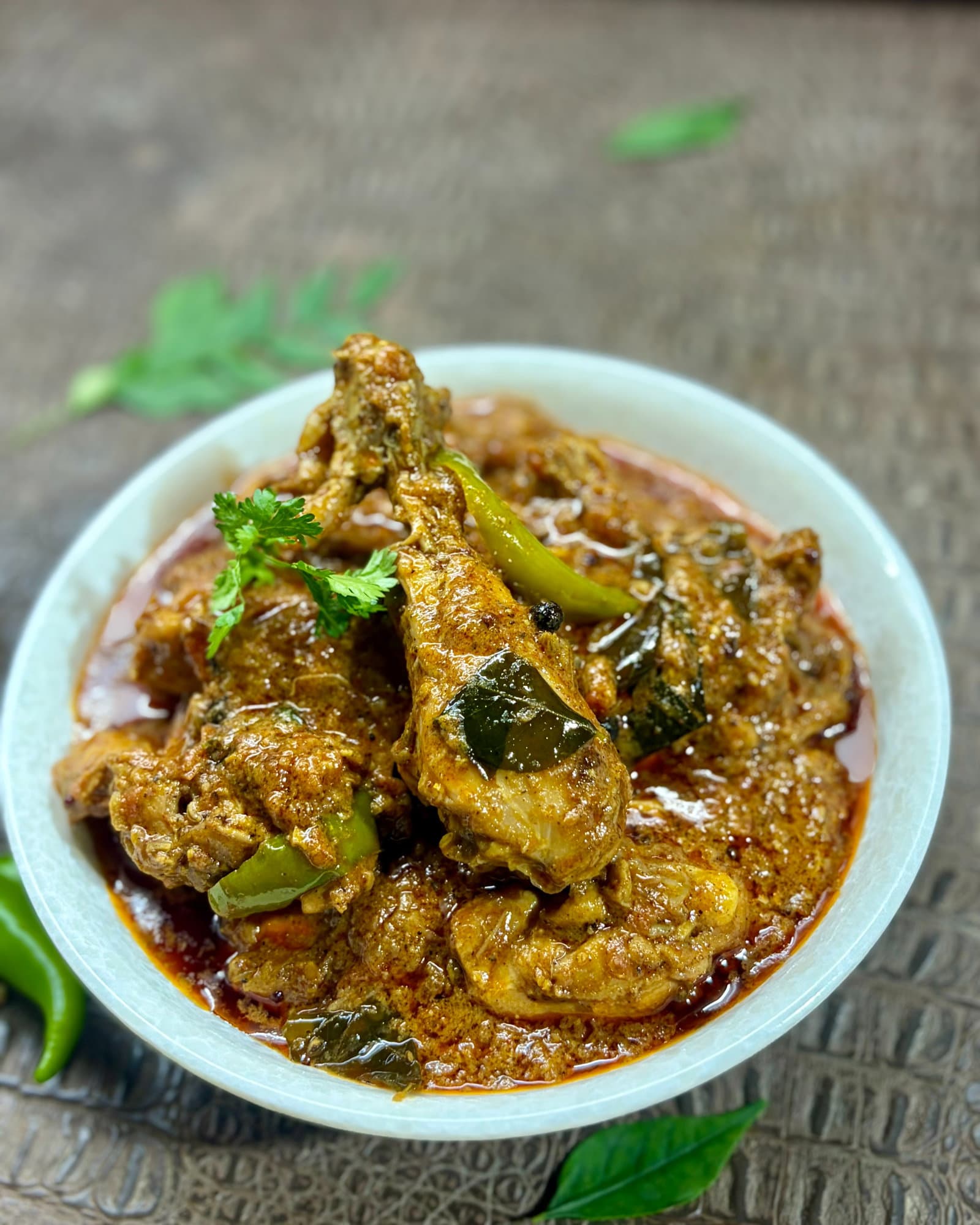
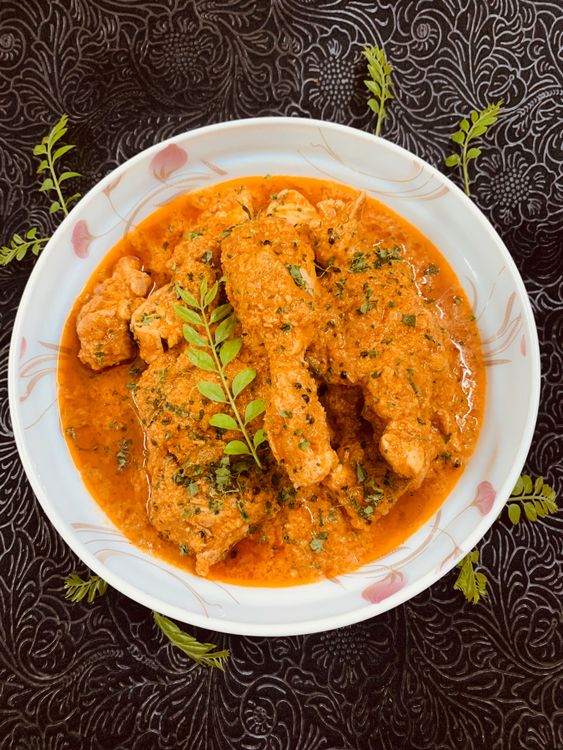
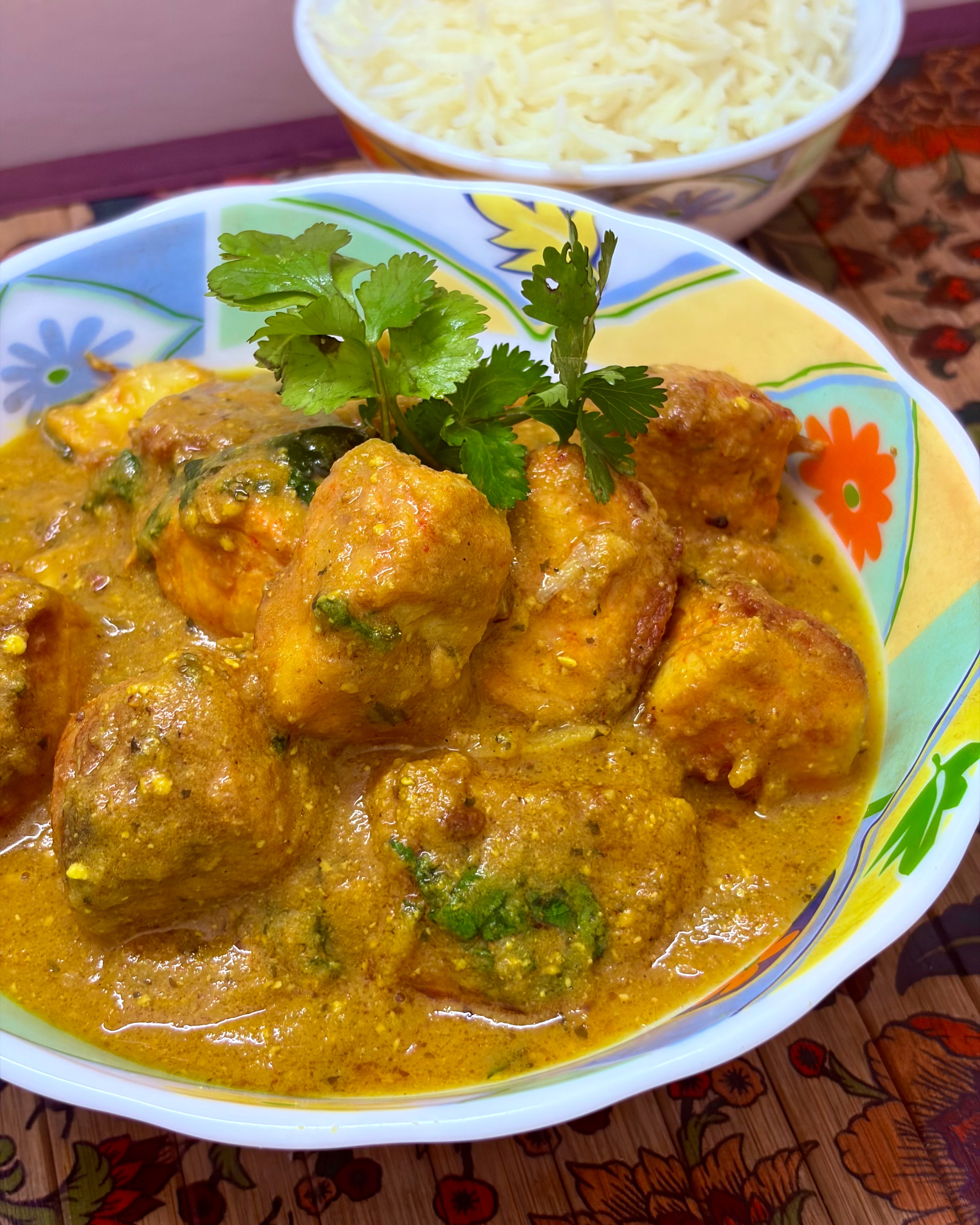
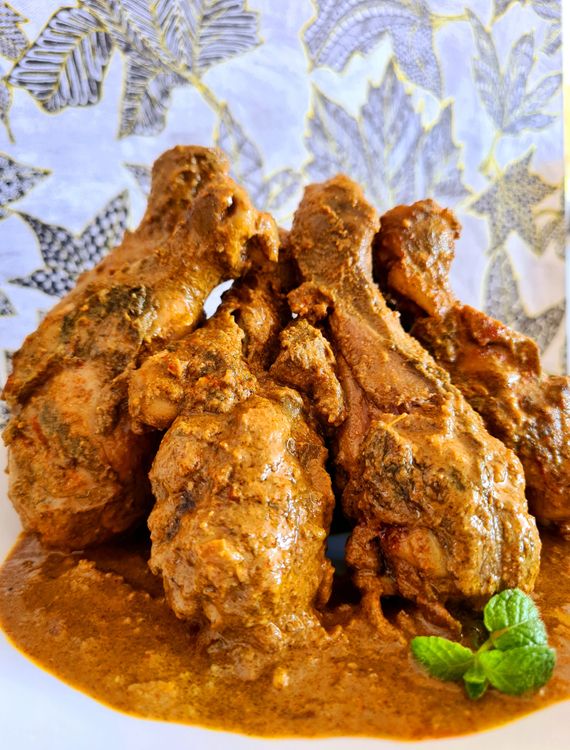
Pour in the coconut milk, adjust the salt, and simmer uncovered for 4-5 minutes until the curry thickens slightly.


In a small pan, heat oil. Add mustard seeds and let them splutter.
Add dry red chillies and curry leaves; fry until crisp.

Pour the tempering directly over the curry.
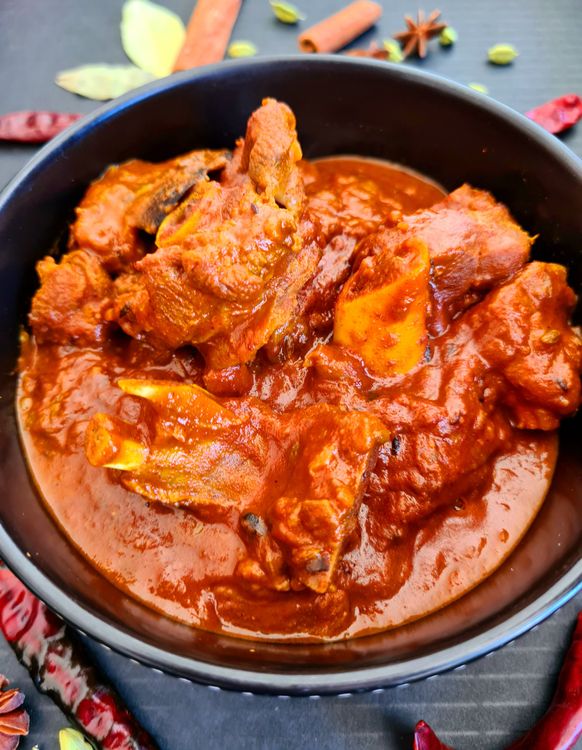
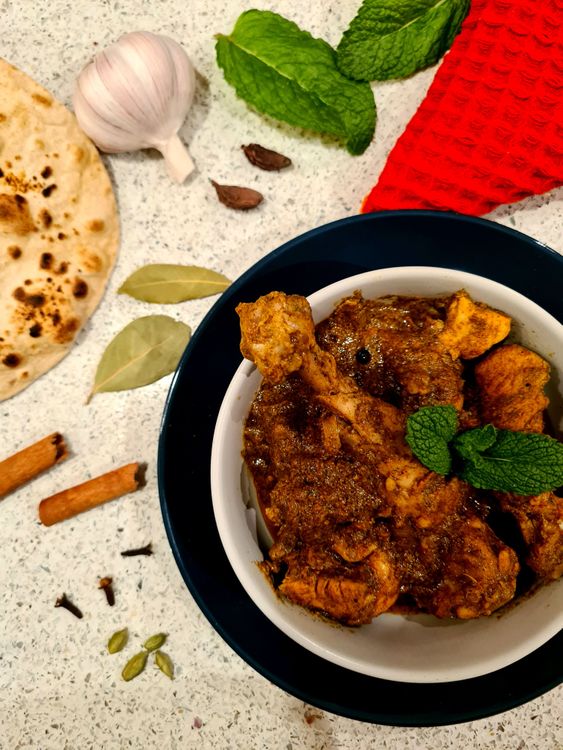
Serve hot with steamed rice, coconut rice, paratha, or roti.
Want to keep this recipe for later? We can email it to you!
Can I use vegetable oil instead of coconut oil?
Mechanically yes, but you lose what makes it Keralan. Coconut oil's sweetness runs right through the dish. If you must swap, it's still a good curry — just a different one.
What can I pair this curry with?
Appams, Malabar parottas, steamed rice or coconut rice. Anything that takes a thin coconut gravy well.
Can I make this curry spicier?
Increase the crushed black pepper or add more dry red chillies to the tempering. The pepper is the more authentic route.
Can I use store-bought spice mix instead of freshly ground spices?
You can, but the whole point of this recipe is the freshly roasted blend added at the end. Packet garam masala has been ground for months and tastes flat by comparison.
How do I prevent coconut milk from curdling?
Never let it boil after the milk goes in. A bare simmer for 4–5 minutes is all it needs.
Is this curry dairy-free and paleo?
Yes to both. All the creaminess is coconut milk and all the fat is coconut oil. Also gluten-free, grain-free and free of nuts and soy. Serve with cauliflower rice to keep it fully compliant.
What if I don't have a spice grinder?
A mortar and pestle works, though the cinnamon and star anise take effort — break them first. As a fallback, 1.5 tsp good garam masala plus 1 tsp crushed fennel, accepting a less aromatic result.
How far ahead can I make this?
The spice blend keeps a week airtight. The full curry can be made a day ahead and improves overnight. Make a fresh tempering before serving to bring the aroma back.
Why has my coconut milk split?
It boiled. Coconut milk is an emulsion and high heat breaks it. If it happens, blend a few spoonfuls smoothly and stir them back in to help it come together.
Can I use coconut cream or powder instead of coconut milk?
Both work. Dilute coconut cream roughly half and half with hot water; reconstitute the powder per the packet to make 1 cup. Both split just as easily, so the no-boiling rule still applies.