We use cookies on this website to ensure its proper functioning and to improve the quality of our services. Cookie Policy

Tags and nutritional info are auto-generated and may be inaccurate. Always check the full ingredient list before cooking.


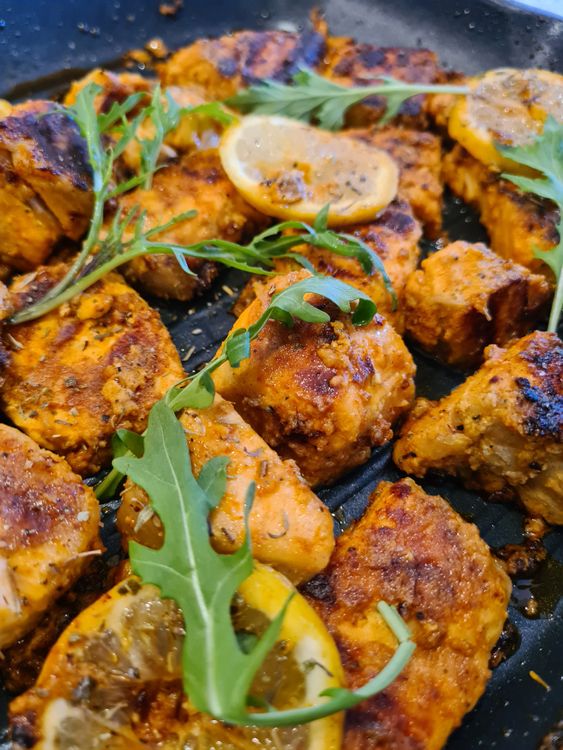
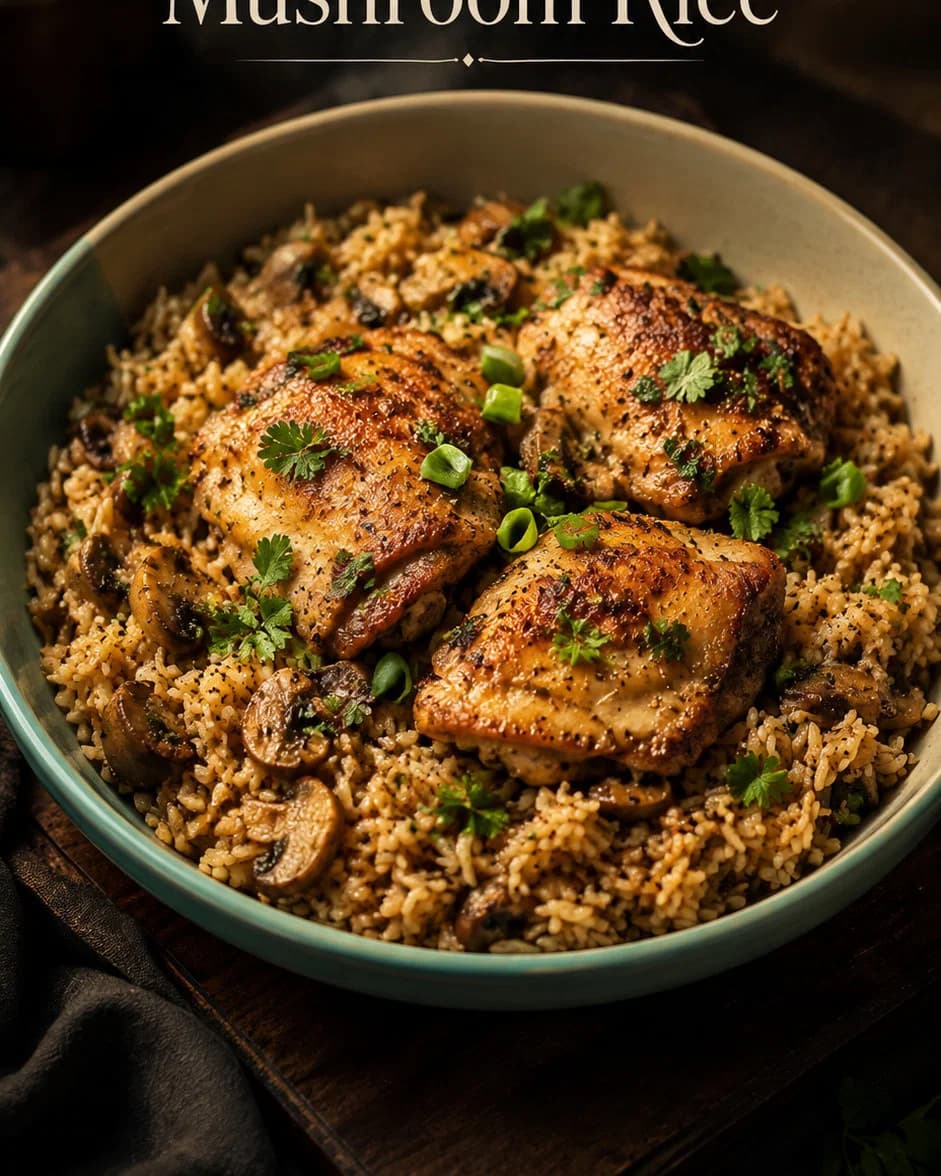
Mix yogurt, ginger-garlic paste, black pepper, herbs, salt, oil, and lemon juice. Coat the chicken thighs and marinate for 20–30 minutes.
Heat oil or oil + butter in a wide pan. Sear the chicken on both sides until nicely golden and around 60–70% cooked. Remove from the pan.
Add the mushrooms to the same pan and let them brown properly. Once they have good colour, add the onion and chopped garlic. Sauté until soft and fragrant.
Lower the heat and add any leftover yogurt marinade from the chicken. Cook for 1–2 minutes, scraping all those browned bits from the bottom of the pan.
Add the soaked and drained basmati rice. Mix gently with the mushroom-garlic base. Season with extra black pepper and salt if required.
Pour in the chicken stock or water and stir once. Place the seared chicken thighs back on top.
Cover and cook on low heat for 12–15 minutes, until the rice is cooked and the chicken is done.
Switch off the heat and leave it covered for another 5–10 minutes.
Finish with coriander or parsley, spring onions, lots of freshly cracked black pepper and a little lemon juice.
Want to keep this recipe for later? We can email it to you!
Brown the mushrooms well before adding the onion to give the rice a much deeper savoury flavour instead of making the mushrooms soft and watery.
Can I use chicken breast instead of thighs?
Yes, but adjust the cooking time as chicken breasts cook faster than thighs.
What can I use instead of chicken stock?
You can use water or vegetable stock as an alternative.
How do I know when the chicken is cooked?
The chicken is done when it reaches an internal temperature of 165°F (74°C) and is no longer pink inside.
Can I make this dish ahead of time?
Yes, you can prepare the dish and reheat it before serving. Add a little extra stock or water to prevent it from drying out.
What if I don't have fresh herbs?
You can use dried herbs, but use them sparingly as they are more concentrated in flavor.
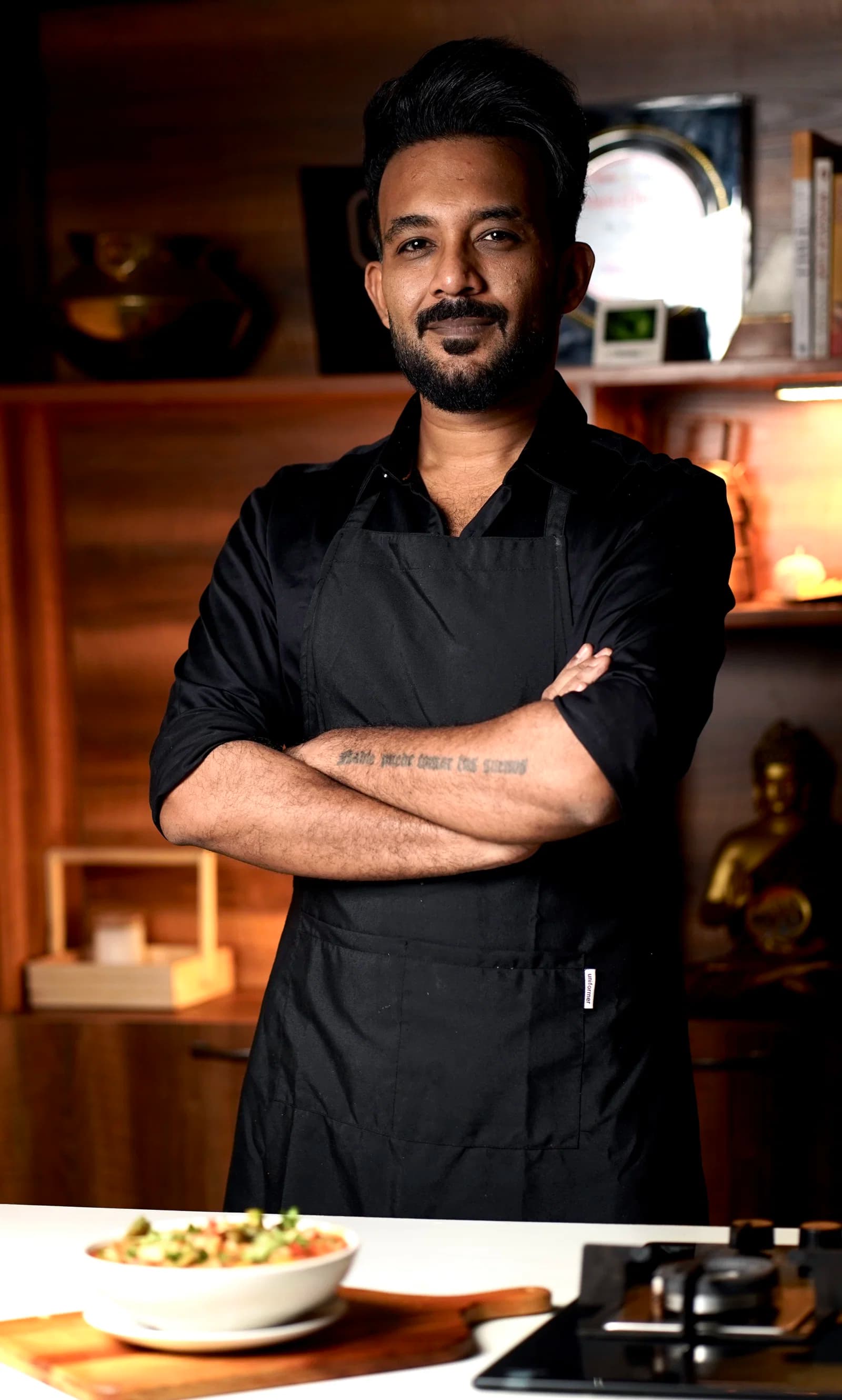
I’m Parichay, a food creator, recipe developer and the person behind Bhukkad in Town. For me, food has always been more than just a recipe. I grew up around Nepal and later made Chandigarh home, so a lot of the way I cook comes from memories, places I’ve travelled to, food I’ve eaten and the people I’ve shared it with. My cooking moves between comforting Indian food, regional recipes, street-food nostalgia and the occasional experiment that starts with, “What if we did this instead?” I love understanding why a dish tastes the way it does, simplifying it for a home kitchen, and then telling the story that made me want to cook it in the first place. Because eventually, the recipe tells you how to make the food. The story tells you why you might want to.
...