We use cookies on this website to ensure its proper functioning and to improve the quality of our services. Cookie Policy

Tags and nutritional info are auto-generated and may be inaccurate. Always check the full ingredient list before cooking.


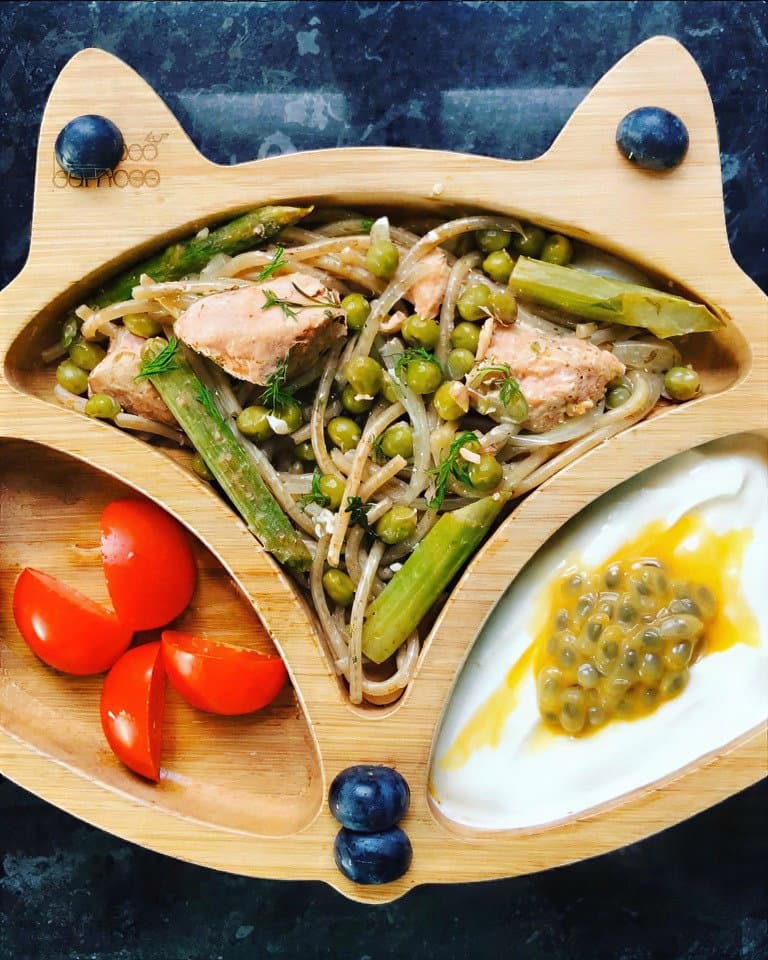
Place salmon fillets on a baking tray and cover with tin foil.
Bake at 200 degrees Celsius for roughly 20 minutes.
Meanwhile, heat 3 tbsp of olive oil over medium heat.
Add the flour and stir to combine.
Slowly add the almond milk, a little at a time, stirring constantly until a thick sauce is formed. Set aside.
Remove woody ends of asparagus and cut each spear into 3, keeping the ends intact.
In a separate pan, heat the remaining olive oil over medium heat.
Add onion and garlic and fry for a few minutes until softened.
Add the asparagus and lemon juice, reduce heat, cover and leave to cook for 5 minutes until the asparagus has softened.
Stir in the white sauce and frozen peas, increase heat and cook uncovered for 5-10 minutes.
In a separate pan, cook the pasta according to packet instructions.
Meanwhile, remove salmon from the oven and flake into bite-size pieces.
Add the salmon to the sauce, stir and remove from heat.
When the pasta has finished cooking, drain, add to sauce and toss to combine.
Add black pepper, serve and enjoy.
Want to keep this recipe for later? We can email it to you!
You can substitute almond milk with regular milk or any plant-based milk of your choice.
For a gluten-free version, use gluten-free pasta and flour.
Can I use a different type of fish?
Yes, you can substitute salmon with trout or any firm white fish.
What can I use instead of dill?
You can use parsley or basil as an alternative to dill.
Is it necessary to use almond milk?
No, you can use any milk of your choice, including dairy milk.
Can I prepare this dish in advance?
Yes, you can prepare the sauce and salmon in advance, but cook the pasta fresh before serving.
How do I store leftovers?
Store leftovers in an airtight container in the refrigerator for up to 2 days.