We use cookies on this website to ensure its proper functioning and to improve the quality of our services. Cookie Policy

Tags and nutritional info are auto-generated and may be inaccurate. Always check the full ingredient list before cooking.


Heat a large, heavy-bottomed pan or kadhai over low heat.
Add the thin poha and dry-roast for 5-6 minutes, stirring gently and continuously to avoid breakage.

Once the poha becomes crisp and slightly curls up at the edges, transfer it to a large mixing bowl and set aside.


Heat the cooking oil over medium-low heat in the same pan.
Add the peanuts and fry until they turn golden and begin to crackle, about 3-4 minutes.

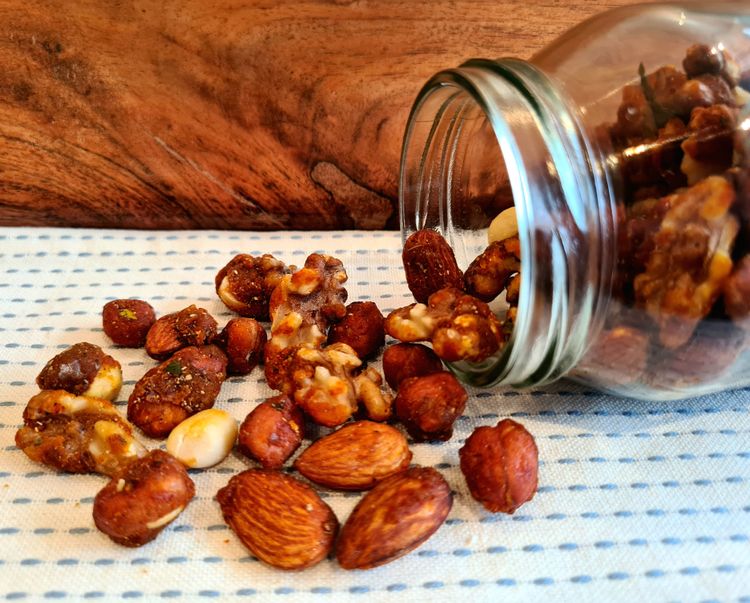
Add the sliced almonds and cashews, frying for another 1-2 minutes until lightly golden.

Stir in the roasted chana and fry for a minute.


Toss in the broken dry red chillies and fresh curry leaves. Fry until the leaves turn completely crisp.

Add the raisins and stir quickly for a few seconds just until they puff up.

Turn the heat to the lowest setting to prevent the spices from burning.
Add turmeric powder, red chilli powder, amchur powder, chaat masala, black salt, salt, and powdered sugar to the oil.

Mix quickly so the spices blend evenly into the warm oil and coat the nut mixture.

Immediately add the roasted poha back into the pan.

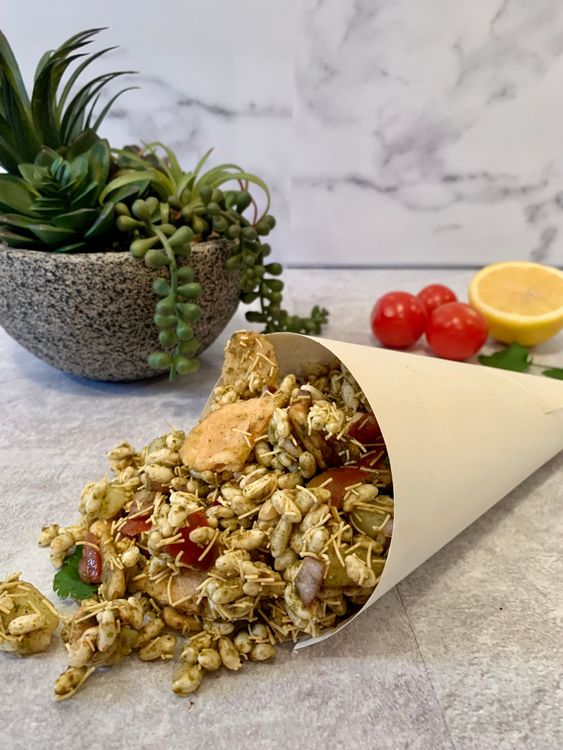
Using two spatulas, gently toss everything together from the bottom up until the yellow turmeric hue coats the poha evenly.

Taste a spoonful and adjust salt, spice, or sugar to your liking.
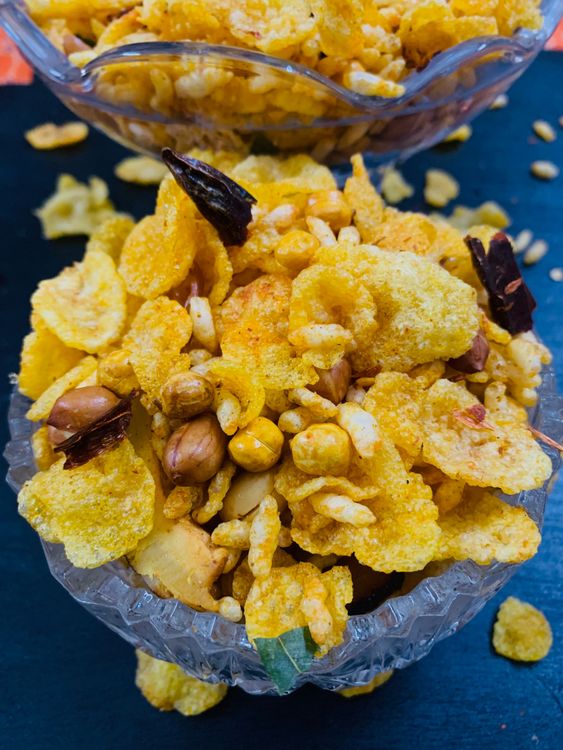
Turn off the heat and transfer the Chivda to a large, wide tray to cool down to room temperature.

Once fully cooled, transfer it to a clean, airtight container.
Want to keep this recipe for later? We can email it to you!
Can I use thick poha instead of thin poha?
Not with this method. Thick poha needs deep frying to crisp; dry-roasted it stays leathery. Thin poha is the only version that works here.
How long can I store Chivda?
Two to three weeks in an airtight container away from moisture. Smaller jars last better than one large one, since every opening lets damp in.
Can I skip any of the nuts or add more of one type?
Yes, freely. Keep the total volume roughly the same so the spice quantities still cover everything.
Is powdered sugar necessary?
Not strictly, but it balances the salt, chilli and amchur. Without it the chivda tastes sharper and flatter. Two tablespoons across eight servings isn't sweet.
Can I make this recipe oil-free?
No. The oil fries the nuts and carries the ground spices onto the poha. Without it the spices sit as loose powder and won't stick to anything, but you can reduce the quantity if desired.
Is chivda vegan and gluten-free?
Yes to both — poha is flattened rice and the recipe uses oil, not ghee. It is not nut-free. For that, swap all nuts for extra roasted chana and puffed rice.
What if I don't have a heavy-bottomed kadhai?
Any wide thick-based pan. Four cups of poha need room to move, so a small pan means batches. Avoid thin pans, which scorch.
How far ahead can I make this for Diwali or travel?
Two to three weeks, and the flavour settles after a day or two. Portion into smaller jars for gifting.
Can I add other ingredients?
Fried sev, cornflakes, puffed rice, dried coconut slices and roasted chana dal all work. Fry anything raw at the right point in the nut sequence; add anything already crisp at the final toss.