We use cookies on this website to ensure its proper functioning and to improve the quality of our services. Cookie Policy

Tags and nutritional info are auto-generated and may be inaccurate. Always check the full ingredient list before cooking.


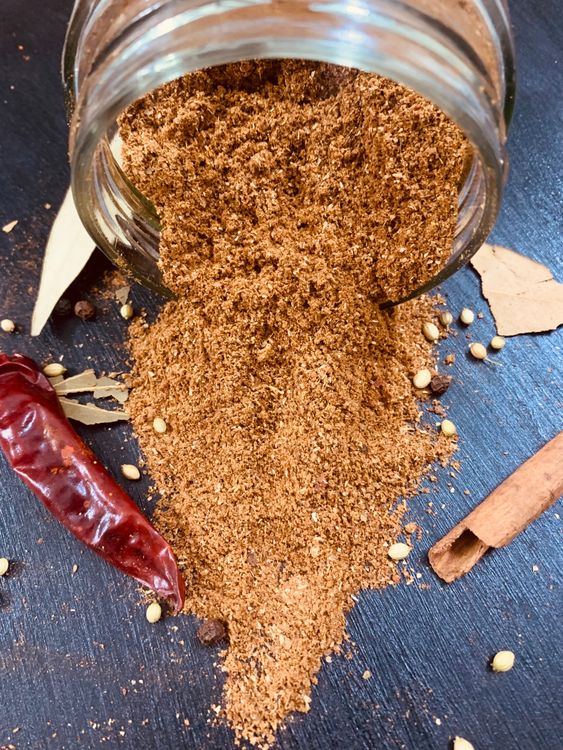
Roast coriander seeds, cumin seeds, black pepper, black cardamoms, green cardamoms, nutmeg, javitri, cloves, and cinnamon stick over a low flame until fragrant.

Grind the roasted spices into a fine powder to make the korma masala.

Fry thinly sliced onions till crispy to make birista. Fry cashew nuts till brown.

Blend the fried onions, fried cashews, and curd into a fine paste once cooled.
Heat the same oil used for making the birista in a kadhai. Add whole spices: cardamom, cinnamon, bay leaf, and black cardamom.

Add chopped ginger and garlic and fry until aromatic.
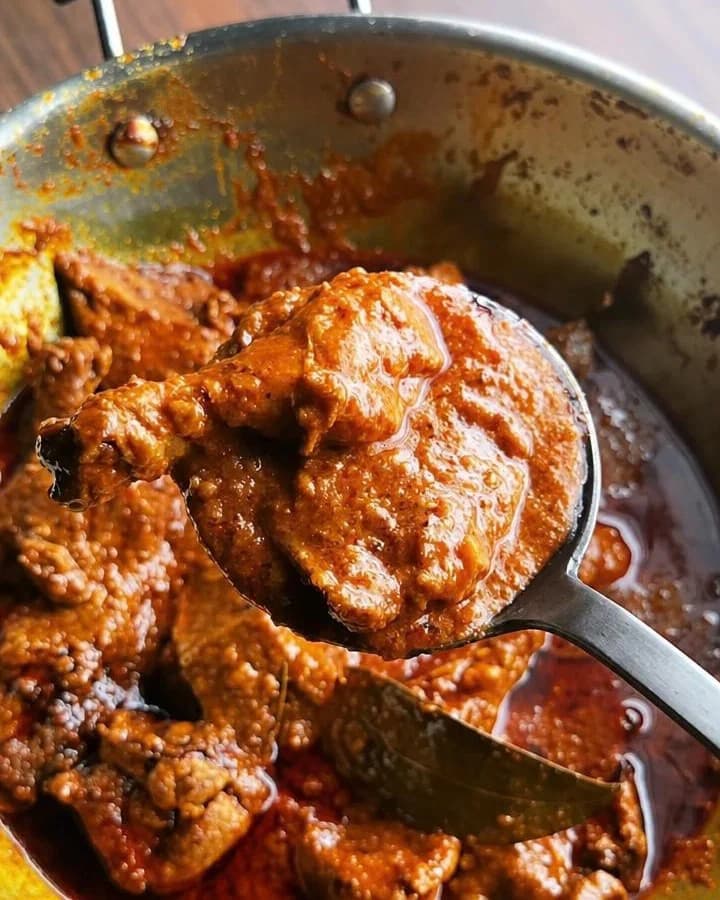
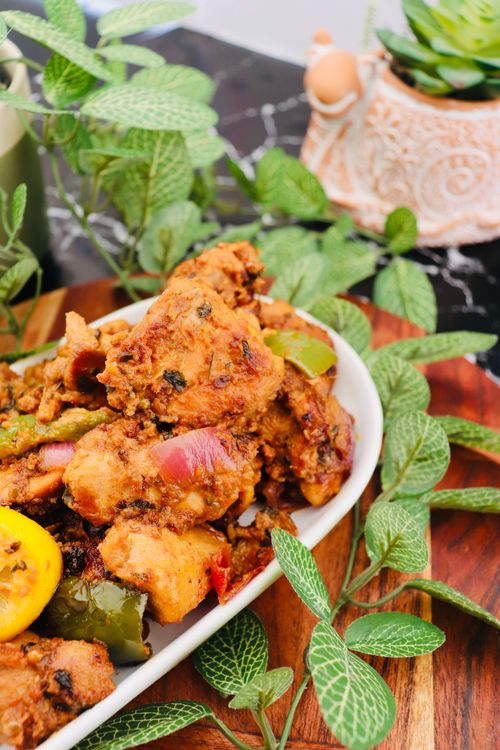
Add bone-in chicken and roast everything well together until the chicken is 75% cooked.

Add coriander powder, red chilli powder, and turmeric powder. Mix well.

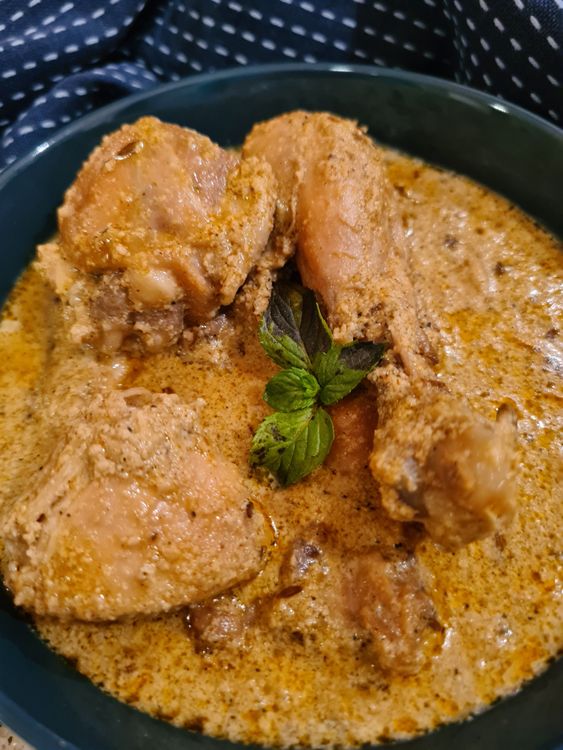
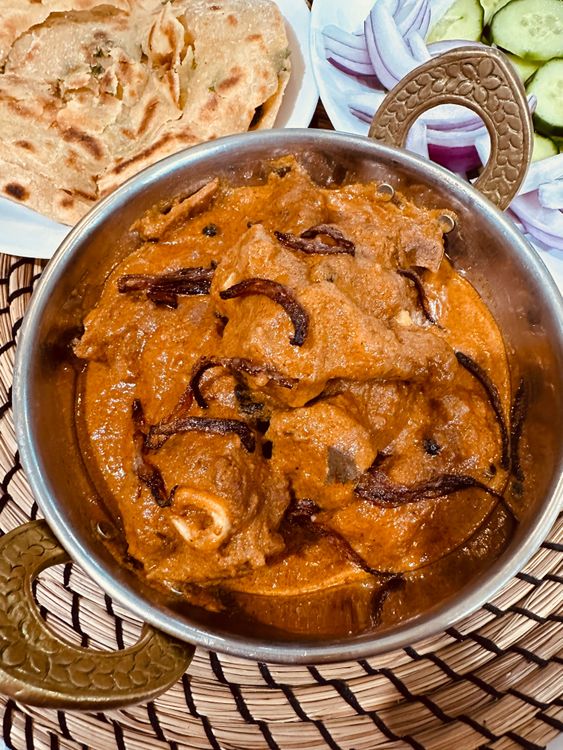
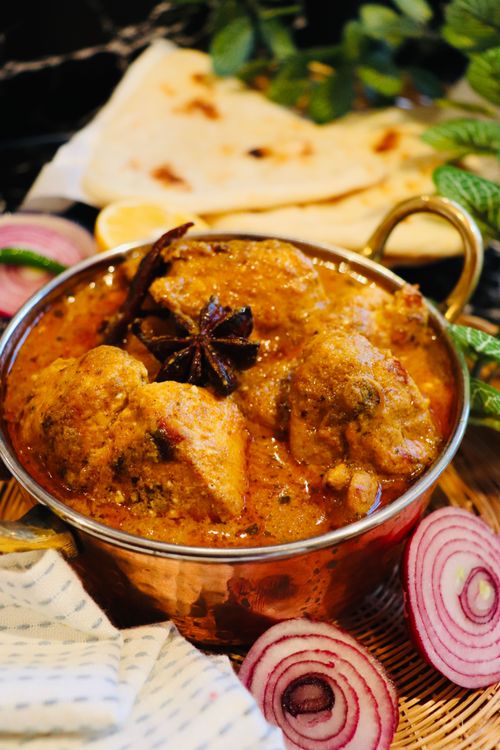
Add prepared korma paste, mix well, and cook until the oil starts to separate.

Adjust consistency by adding hot water and let it simmer until the oil separates.

Season with salt and add 2 tbsp of korma masala.
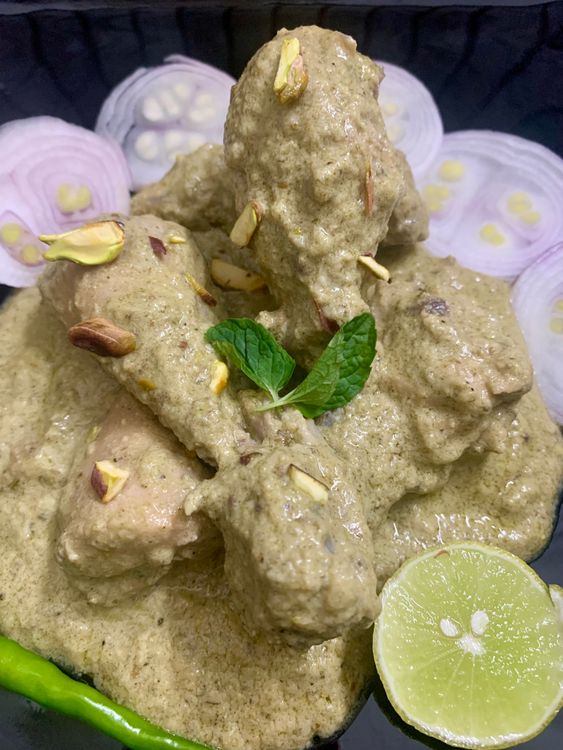
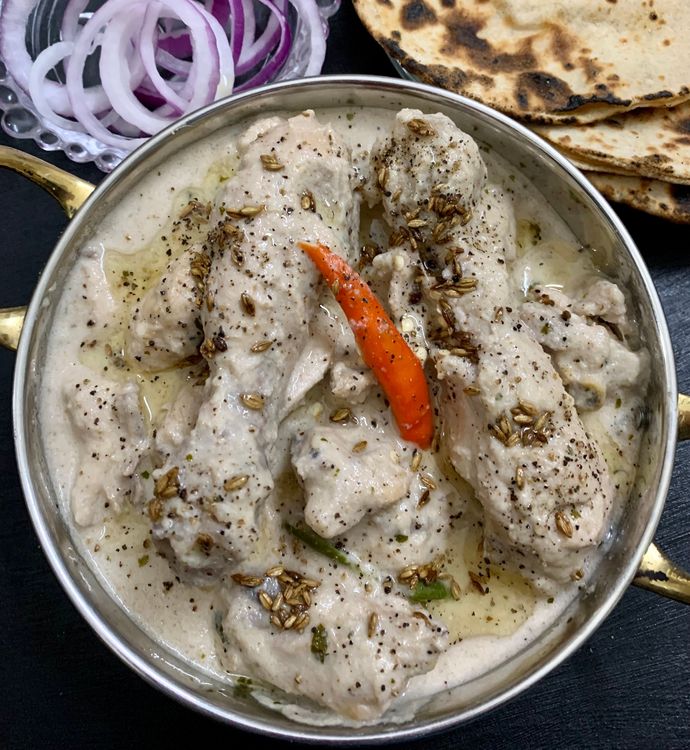
Add a few drops of gulab jal and serve hot with tandoori roti, rice, or any preferred side dish.

Want to keep this recipe for later? We can email it to you!
Use the same oil for frying onions and cashew nuts to enhance flavor.
Can I use boneless chicken for this recipe?
Yes, you can use boneless chicken, but bone-in pieces add more flavor.
What can I substitute for gulab jal?
You can use a few drops of kewra water as a substitute for gulab jal.
How can I make the korma less spicy?
Reduce the amount of red chilli powder to make the korma less spicy.
Can I prepare the korma masala in advance?
Yes, you can prepare the korma masala in advance and store it in an airtight container.
What is birista?
Birista refers to thinly sliced onions that are fried until crispy and golden brown.
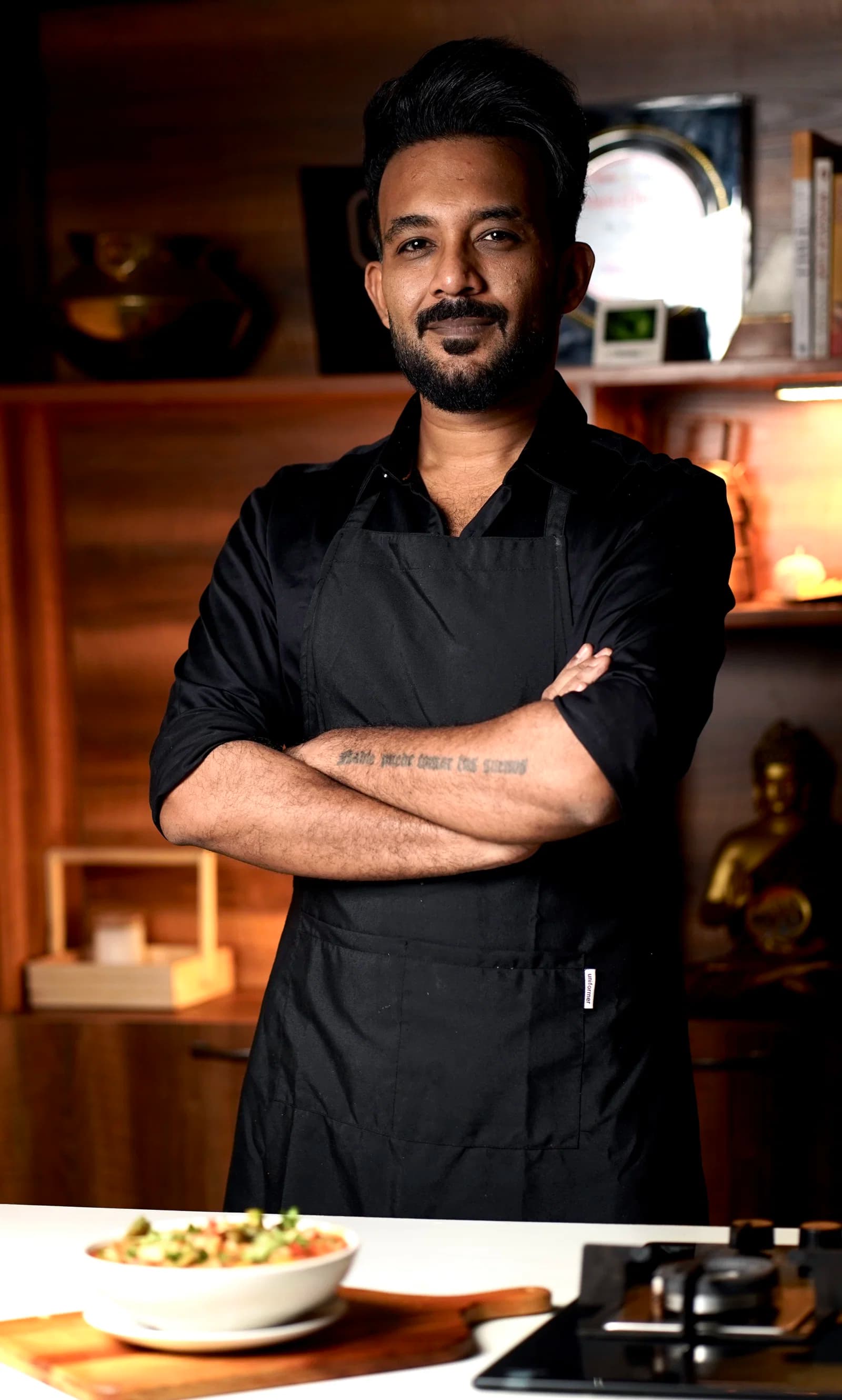
I’m Parichay, a food creator, recipe developer and the person behind Bhukkad in Town. For me, food has always been more than just a recipe. I grew up around Nepal and later made Chandigarh home, so a lot of the way I cook comes from memories, places I’ve travelled to, food I’ve eaten and the people I’ve shared it with. My cooking moves between comforting Indian food, regional recipes, street-food nostalgia and the occasional experiment that starts with, “What if we did this instead?” I love understanding why a dish tastes the way it does, simplifying it for a home kitchen, and then telling the story that made me want to cook it in the first place. Because eventually, the recipe tells you how to make the food. The story tells you why you might want to.
...