We use cookies on this website to ensure its proper functioning and to improve the quality of our services. Cookie Policy

Tags and nutritional info are auto-generated and may be inaccurate. Always check the full ingredient list before cooking.


Blend the fresh coriander, green chillies, ginger, and garlic with a little water into a smooth green paste.
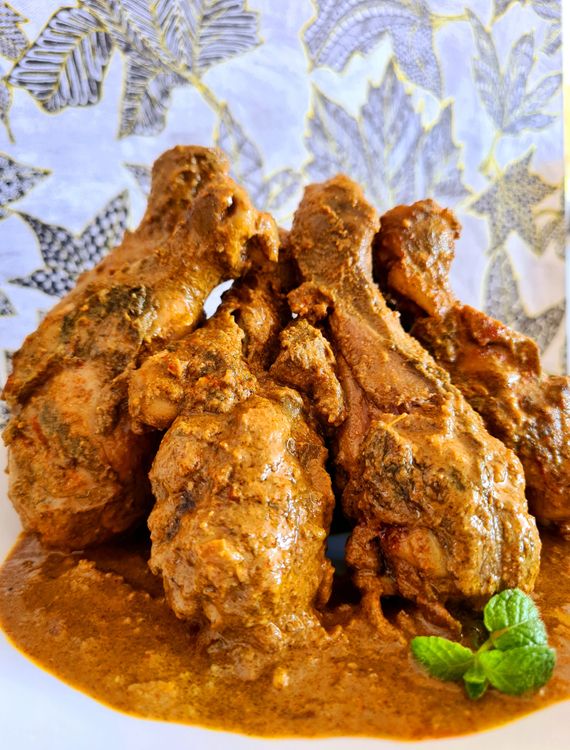
Marinate the chicken with salt, turmeric powder, Malvani masala, the hirva vaatan, and lemon juice. Set aside.

Heat oil in a pan and fry the sliced onions until golden.

Add the coriander seeds, black peppercorns, cloves, cinnamon, garlic, and ginger and roast until aromatic.

Add the grated coconut and roast until deep brown. Cool and grind with water into a smooth paste.

Heat oil in a pot and sauté the chopped onions until golden.
Add the Kashmiri red chilli powder and Malvani masala and cook briefly.

Add the marinated chicken and roast well.

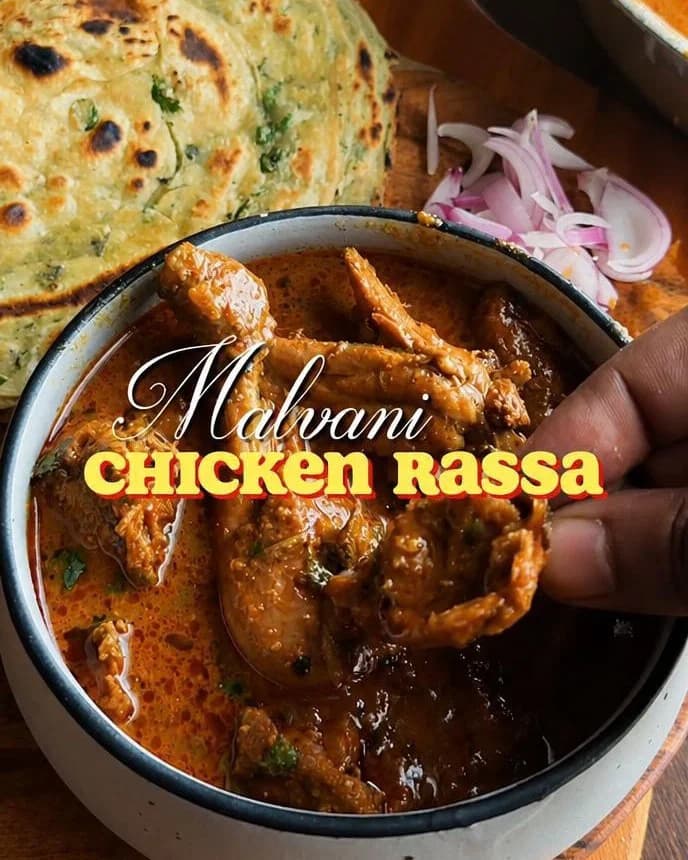
Add the wet vaatan, hot water as required, and salt. Cover and simmer until the chicken is cooked through.

Finish with a large handful of fresh coriander and serve hot.

Want to keep this recipe for later? We can email it to you!
For a more intense flavor, let the chicken marinate overnight.
Adjust the spice level by varying the amount of green chillies and Malvani masala.
Can I use store-bought Malvani masala?
Yes, store-bought Malvani masala can be used if homemade is not available.
What can I substitute for desi chicken?
You can use regular chicken if desi chicken is not available.
How can I make the curry less spicy?
Reduce the amount of green chillies and Kashmiri red chilli powder to make it less spicy.
Can I prepare the pastes in advance?
Yes, both the Hirva Vaatan and Wet Vaatan can be prepared a day in advance and stored in the refrigerator.
Is there a vegetarian version of this curry?
You can substitute the chicken with vegetables like potatoes or paneer for a vegetarian version.
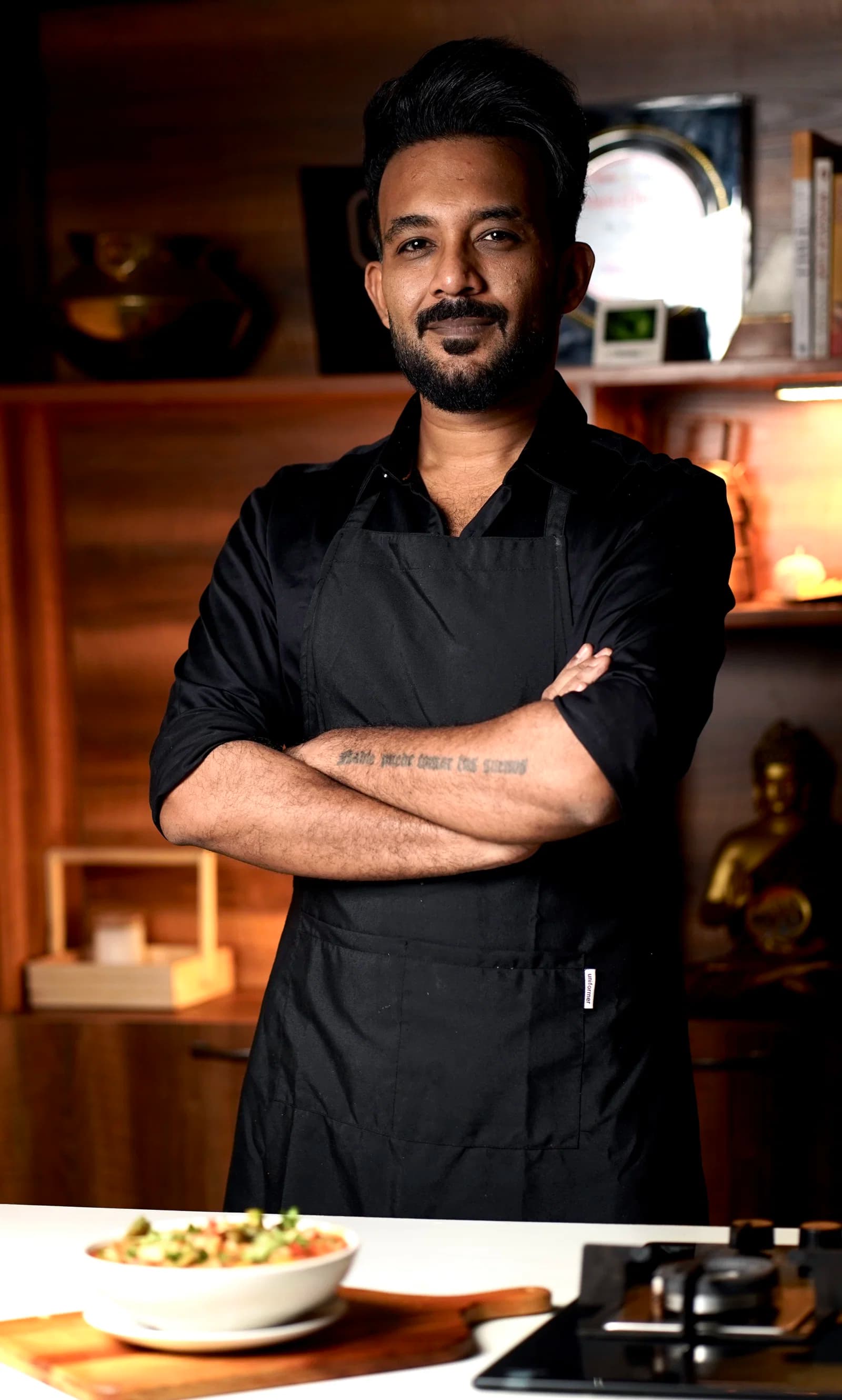
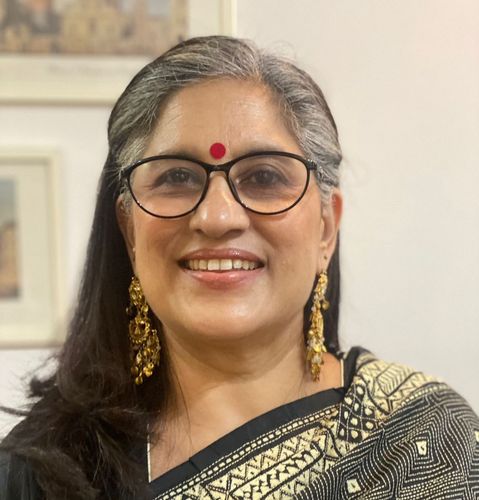
I’m Parichay, a food creator, recipe developer and the person behind Bhukkad in Town. For me, food has always been more than just a recipe. I grew up around Nepal and later made Chandigarh home, so a lot of the way I cook comes from memories, places I’ve travelled to, food I’ve eaten and the people I’ve shared it with. My cooking moves between comforting Indian food, regional recipes, street-food nostalgia and the occasional experiment that starts with, “What if we did this instead?” I love understanding why a dish tastes the way it does, simplifying it for a home kitchen, and then telling the story that made me want to cook it in the first place. Because eventually, the recipe tells you how to make the food. The story tells you why you might want to.
...