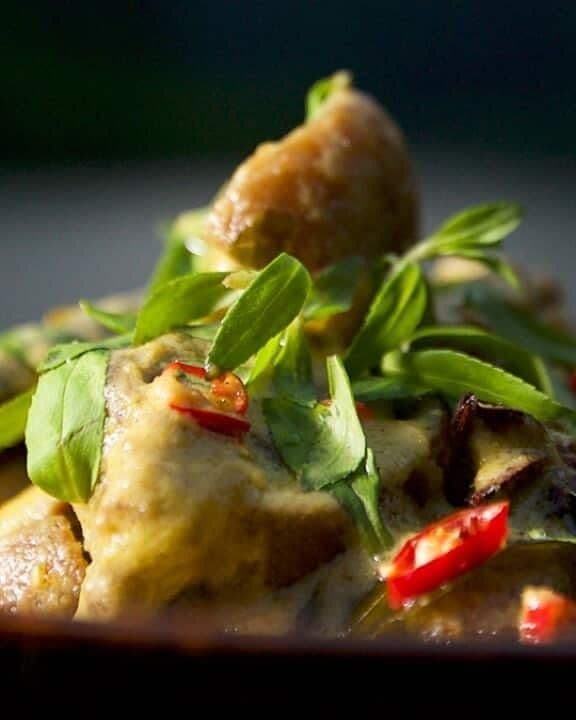
This Vietnamese goat curry is a rich and aromatic dish that combines tender goat meat with a flavorful curry paste made from fresh herbs and spices. The recipe includes coconut cream, yoghurt, and milk for a creamy texture, and is best served with steamed jasmine rice or baguette. It's a hearty and satisfying meal that showcases the bold flavors of Vietnamese cuisine.
Chefadora AI has the answer - timers, swaps, step-by-step help.


Cut the galangal, turmeric, and lemongrass into 1 cm pieces. Dry fry the galangal, turmeric, lemongrass, onion, coriander root, and garlic in a wok over high heat until softened, well browned, and aromatic. Add water if needed to prevent over-browning. Remove and cool.
Transfer the cooled ingredients to a mortar, add the soaked and drained chilies, and pound into a paste.
Wet the coriander seeds, cumin seeds, cinnamon, and peppercorns slightly with water. Dry fry them in a wok over medium-high heat until toasted and fragrant. Grind them into a fine powder using a spice grinder, then mix the powder with the wet paste. Set aside.
Place the goat pieces in a large saucepan with galangal powder, 1 teaspoon each of salt and sugar, and cover with water. Bring to a boil over high heat, skimming the surface as needed. Reduce heat to low, cover, and simmer gently for 45 minutes. Strain and set the meat aside.
Heat oil and butter in a large saucepan over low-medium heat. Fry the curry paste and curry leaves until fragrant, then stir in the yoghurt.
Add the goat meat, chicken stock, milk, coconut cream, remaining salt, and sugar. Bring to a boil, then reduce to a very low simmer and cook for 40-45 minutes or until the goat is very tender.
Serve with rice paddy herb and steamed jasmine rice or baguette.
Use fresh curry leaves for the best flavor.
If goat meat is unavailable, you can substitute with lamb or beef.
Adjust the level of salt and sugar to suit your taste preferences.
Pounding the curry paste in a mortar enhances the flavor compared to using a blender.
Can I use a blender instead of a mortar for the curry paste?
Yes, you can use a blender, but pounding the paste in a mortar gives a more authentic texture and flavor.
What can I substitute for goat meat?
You can substitute goat meat with lamb or beef for similar results.
How do I store leftover curry?
Store leftover curry in an airtight container in the refrigerator for up to 3 days. Reheat gently before serving.
Can I make this curry less spicy?
Yes, reduce the number of dried chilies in the curry paste to make it less spicy.
What is rice paddy herb?
Rice paddy herb is a fragrant herb commonly used in Vietnamese cuisine. If unavailable, you can omit it or substitute with fresh cilantro.
Chef Miška Tolj-Turkić is a Croatian/Australian dual citizen, born in Western Australia, who's families migrated from Croatia in the 1920s. Originally raised in the lush wine growing district of The Swan Valley in Western Australia, he developed his love of cooking while watching his beloved grandmothers (Baba) working their cuisine magic. After a successful career as one of Australia's leading performers in the musical theatre, he retired from acting in 2012 to concentrate on his chosen new career as a chef. He also holds qualifications in Asian Cusine from TAFE NSW.
...