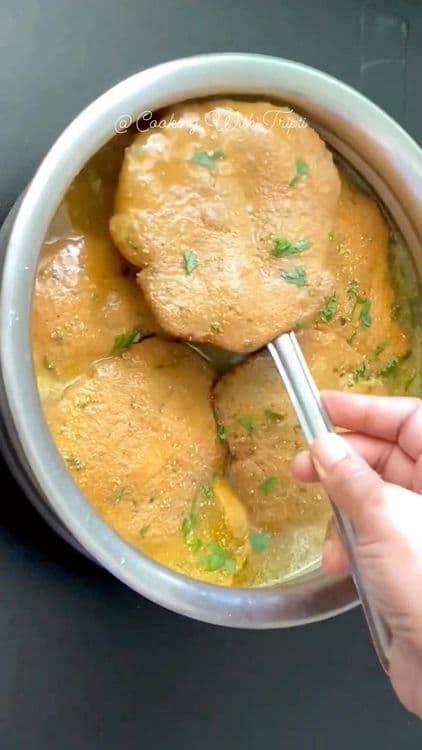
Kanji Vada is a traditional Indian dish, often made during festivals like Holi. This recipe is a delightful combination of tangy and spicy flavors, with soft and crispy moong dal vadas soaked in a flavorful mustard-infused water. It's a dish that brings back nostalgic memories of family gatherings and celebrations. You can watch the detailed recipe on my YouTube channel, Tripti Home Kitchen, for step-by-step instructions.
Chefadora AI has the answer - timers, swaps, step-by-step help.


Grind yellow mustard seeds, mustard seeds, carom seeds, asafoetida, black salt, red chili powder, and salt together.
Boil water and let it cool down. Add the ground spices to the cooled water.
Add mustard oil to the mixture and stir well. Cover the container and let it sit in the sun for two days to ferment.
Soak the moong dal for 2 hours, then drain the water and grind it into a smooth paste.
Add crushed fennel seeds, crushed coriander seeds, red chili powder, crushed green chilies and ginger, chopped coriander leaves, mustard oil, asafoetida, wheat flour, and salt to the ground moong dal. Mix everything well.
Heat mustard oil in a pan. Wet your hands with water, take a small portion of the mixture, shape it into a vada, and fry it in hot oil until golden brown.
After the kanji has fermented for two days, add the fried vadas to the prepared kanji.
Let the vadas soak in the kanji for at least half an hour before serving.
Ensure the water used for kanji is completely cooled before adding the ground spices to avoid altering the fermentation process.
Fry the vadas on medium heat to ensure they cook evenly and become crispy without burning.
Allow the vadas to soak in the kanji for a sufficient amount of time to absorb the flavors completely.
Can I use any other type of dal for the vadas?
Moong dal is traditionally used for this recipe, but you can experiment with other dals like urad dal. However, the texture and taste may vary.
How long should I let the kanji ferment?
The kanji should ideally be left to ferment in the sun for two days to develop its tangy flavor.
Can I store leftover kanji vada?
Yes, you can store the kanji vada in the refrigerator for up to 2-3 days. Make sure to keep it in an airtight container.
Can I make the vadas in advance?
Yes, you can prepare and fry the vadas in advance. Store them in an airtight container and add them to the kanji when ready to serve.
Is it necessary to use mustard oil?
Mustard oil is traditionally used for its distinct flavor, but you can substitute it with another oil if needed. However, the taste may differ slightly.
Welcome to my Chefadora Page — where flavors meet comfort! I’m Tripti, your culinary guide sharing simple, soulful recipes from savory bites to sweet indulgences. Each dish is crafted to bring joy and warmth to your home cooking. Join me as we cook, learn, and create delicious memories together. 🍳✨ Follow me for more recipes and kitchen stories! #CookingWithTripti | #TriptiHomeKitchen | Open to collaborations & partnerships
...