We use cookies on this website to ensure its proper functioning and to improve the quality of our services. Cookie Policy

Tags and nutritional info are auto-generated and may be inaccurate. Always check the full ingredient list before cooking.


Boil the milk. Once it comes to a boil, switch off the flame.
Add bread slices, butter, sugar, and milk masala to the milk.
Mix well until the bread softens completely.
Let the mixture cool slightly, then add eggs and whisk well.
Add a little sugar to the base of the mold and heat until it caramelizes.
Let the caramel cool slightly.
Pour the pudding mixture into the mold.
Steam in a cooker (without whistle) for 20 minutes on low flame once steam starts rising.
Switch off the flame and let the pudding cool slightly.
Run a knife along the edges of the mold.
Place a plate on top of the mold and invert carefully.
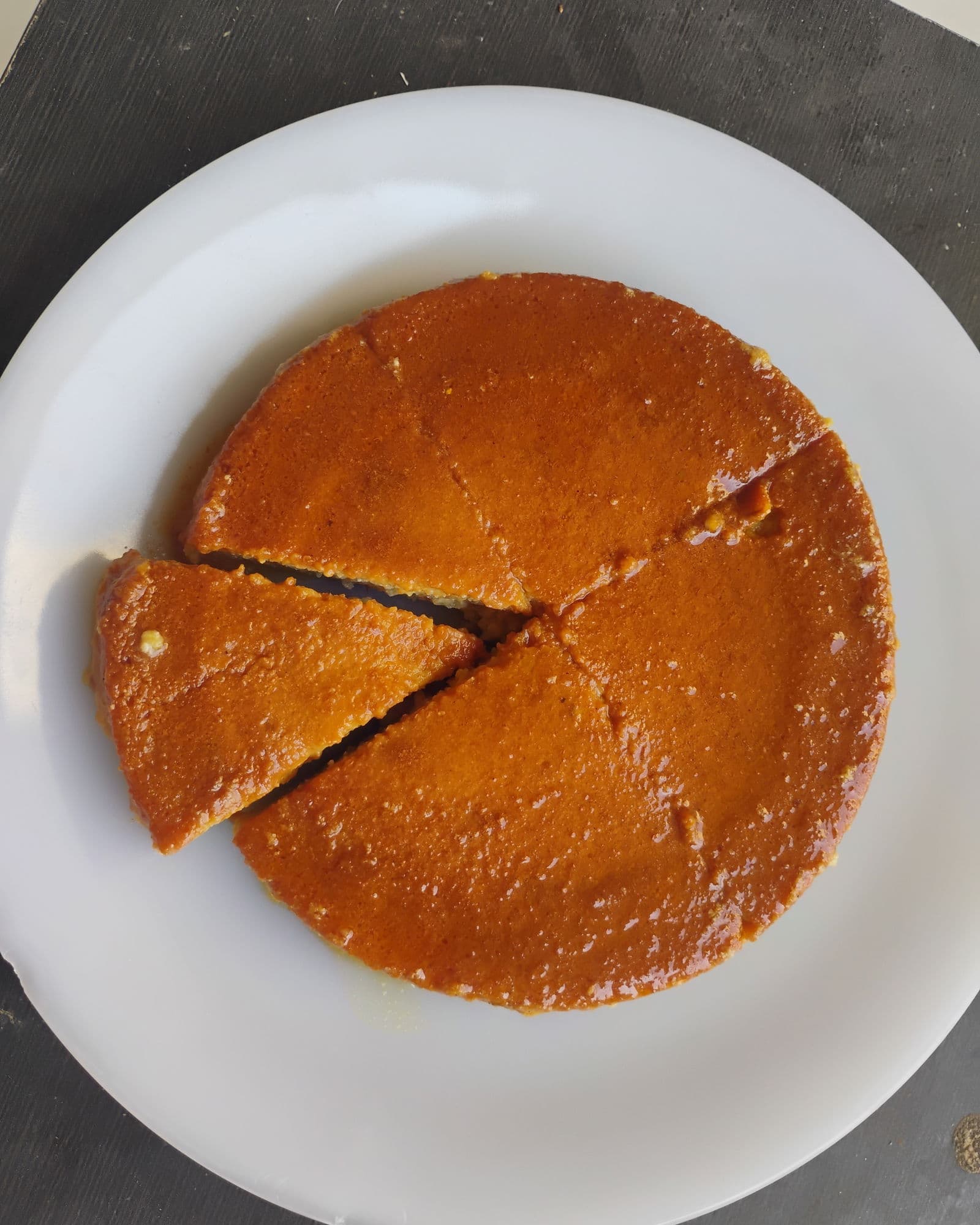
The pudding will come out with caramel on top.
Want to keep this recipe for later? We can email it to you!
Let the milk mixture cool slightly before adding eggs to prevent curdling.
Do not over-caramelize the sugar to avoid bitterness.
Steam on low flame for an even texture.
Can I use any type of bread for this recipe?
Yes, you can use any type of bread, but softer bread varieties like white bread work best for a smooth texture.
What is milk masala, and can I substitute it?
Milk masala is a blend of spices often used in Indian desserts. You can substitute it with a pinch of cardamom powder or nutmeg for a similar flavor. And also add finely chopped almonds and pistachios and quarter tsp of saffron.
Can I make this pudding without eggs?
Yes, you can substitute eggs with a mixture of cornstarch and water or condensed milk for a similar binding effect.But it will not taste the same as with eggs.
How do I prevent the pudding from sticking to the mold?
Grease the mold lightly with butter before pouring the caramel and pudding mixture.
Can I bake this pudding instead of steaming it?
Yes, you can bake it in a preheated oven at 180°C for about 25-30 minutes. Use a water bath to maintain moisture.
Cooking has been my passion since childhood, when I began helping my mother in the kitchen—my first and most important teacher. I grew up learning her traditional recipes, full of simplicity, care, and flavor. Over the years, I’ve not only mastered these recipes but also explored and tried dishes from around the world. My family has always been my biggest support, encouraging me to experiment and giving honest feedback with love. Today, I continue to cook with the same passion—sharing comforting, home-style recipes from my mother’s kitchen, along with flavors I’ve discovered along the way.
...