We use cookies on this website to ensure its proper functioning and to improve the quality of our services. Cookie Policy

Tags and nutritional info are auto-generated and may be inaccurate. Always check the full ingredient list before cooking.




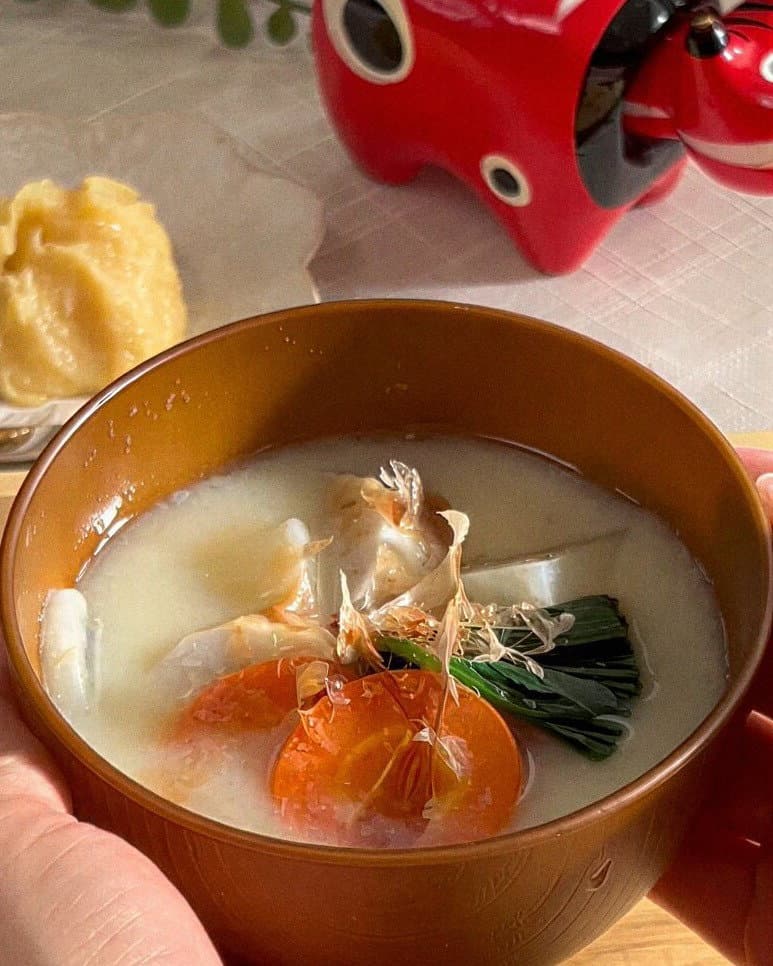
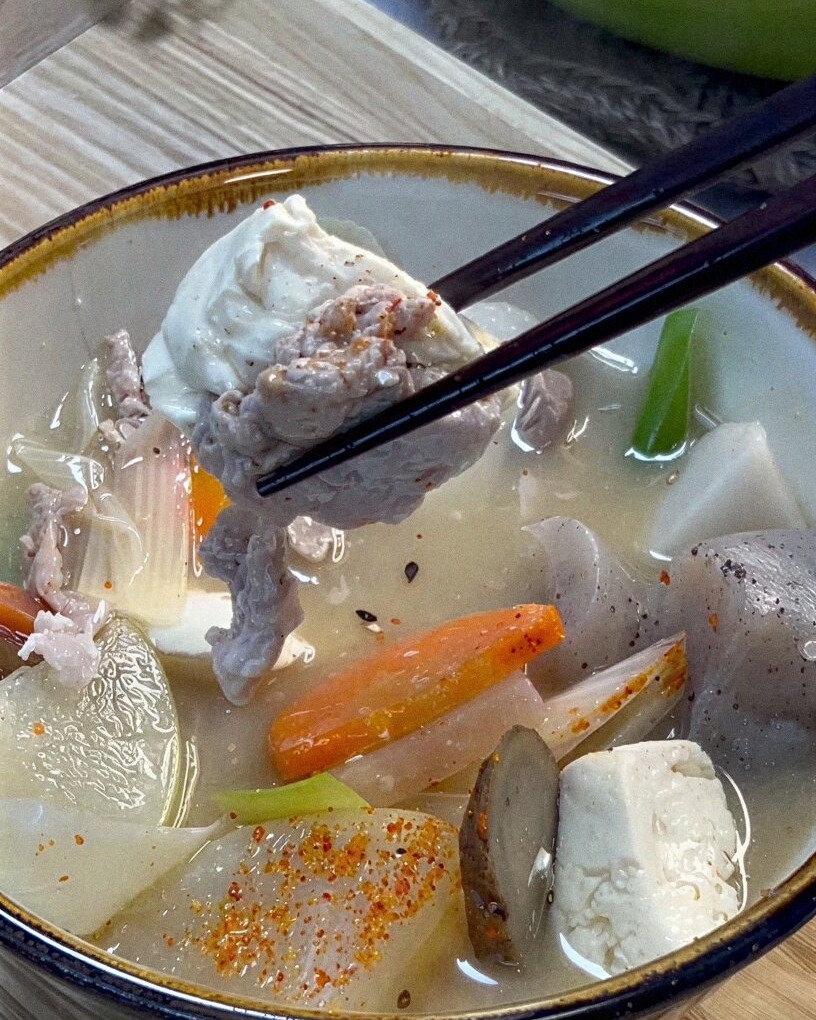
Slice the daikon into quarters. Peel the taro and carrot, then slice into rounds or half-moons if they are large.
Add the dashi to a pot and simmer the vegetables until tender.
In a separate pot, boil the mochi until soft.
Once the vegetables are soft, dissolve the white miso into the soup.

Place the boiled mochi into your bowls and pour the soup over them.


Top with spinach and bonito flakes.
Want to keep this recipe for later? We can email it to you!
Use fresh vegetables for the best flavor and texture.
If you can't find Maru-mochi, substitute with any unsweetened mochi available.
Adjust the amount of white miso to your taste preference.
Can I use square mochi instead of round mochi?
Yes, you can use square mochi if round mochi is unavailable. Just ensure it is unsweetened.
What is the difference between Shiro Miso and other types of miso?
Shiro Miso, also known as Saikyo Miso, is a white miso made with plenty of rice koji, giving it a sweeter and milder flavor compared to other types of miso.
Can I make dashi without kombu?
While kombu is traditional for dashi, you can substitute it with instant dashi powder or use other ingredients like dried shiitake mushrooms for a similar umami flavor.
Can I add other toppings to the soup?
Yes, you can customize the toppings with ingredients like green onions, sesame seeds, or even a soft-boiled egg.
Is this dish suitable for vegetarians?
No, this dish contains katsuobushi (bonito flakes), which are derived from fish. To make it vegetarian, omit the bonito flakes and use a vegetarian dashi.
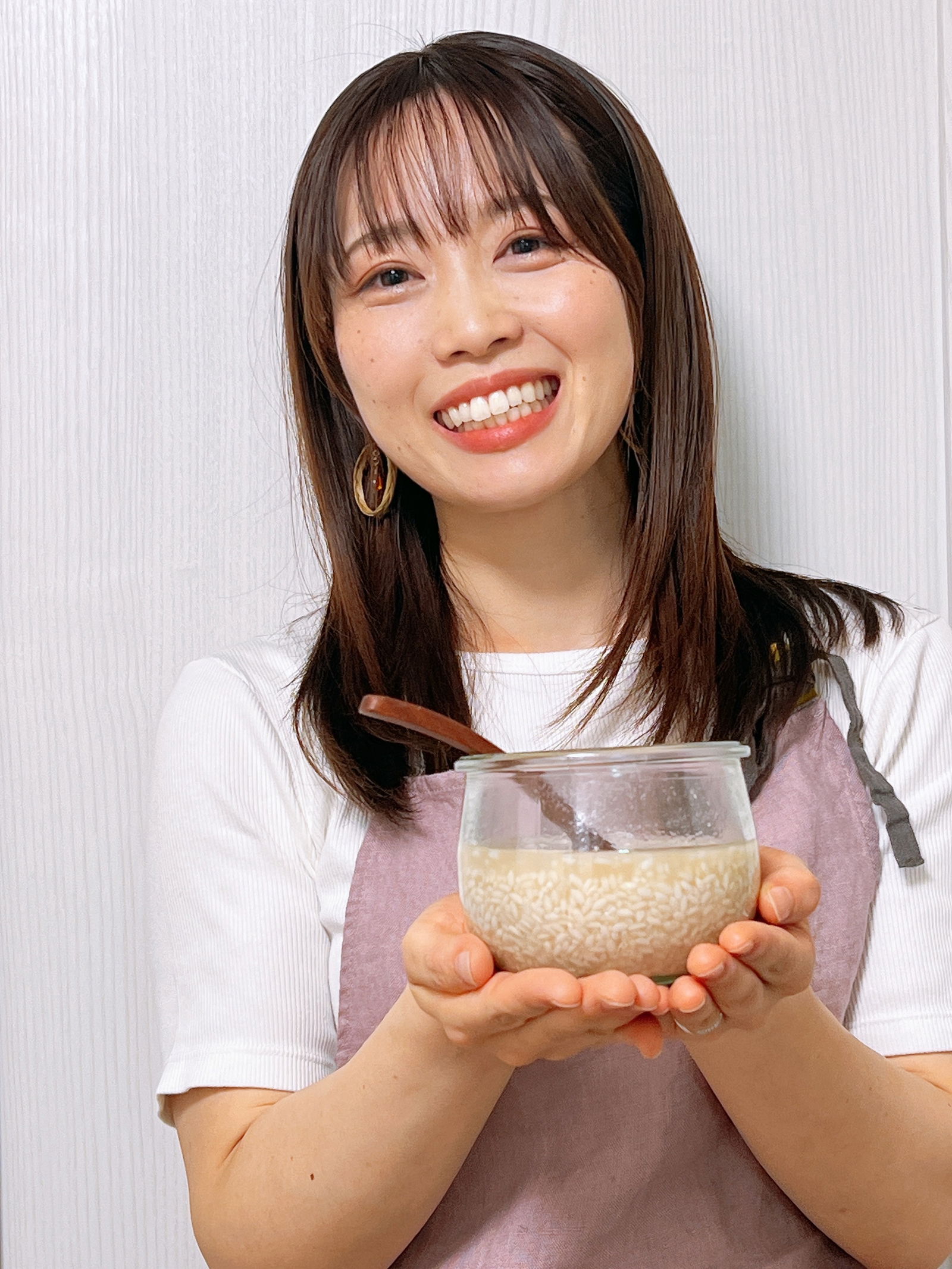
Hi, I'm Yukumi, a home cook from Japan sharing easy, everyday recipes rooted in Japanese fermentation culture. Koji, miso, amazake, and other fermented staples are at the heart of Japanese cooking — full of deep umami, natural nutrients, and centuries of tradition. My recipes make these ingredients simple and approachable, whether you're new to fermentation or looking to bring more Japanese flavors into your kitchen. Here you'll find recipes for gut-friendly miso soups, koji marinades, fermented seasonings, and more — all designed for a natural, balanced way of eating.
...