We use cookies on this website to ensure its proper functioning and to improve the quality of our services. Cookie Policy


Tags and nutritional info are auto-generated and may be inaccurate. Always check the full ingredient list before cooking.
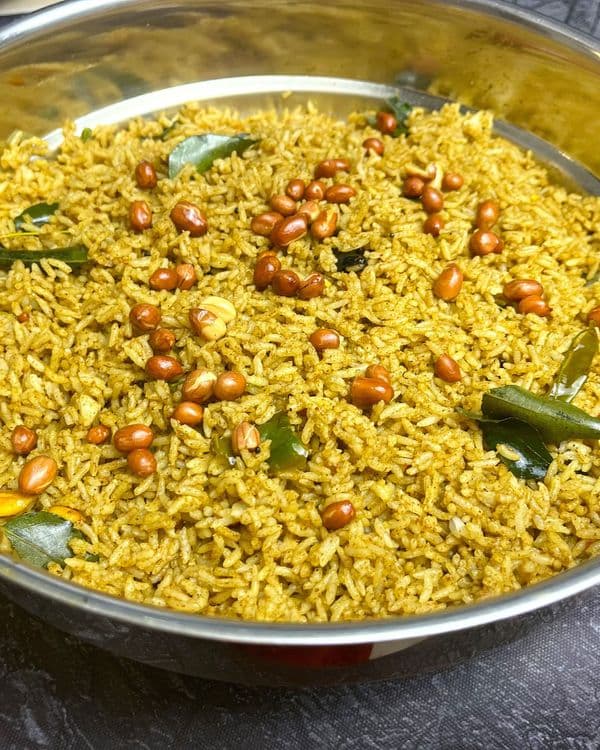
Pulihora (also known as Tamarind Rice) is one of the most loved South Indian temple offerings. This Ayyangar-style prasadam pulihora is tangy, mildly spiced, aromatic, and prepared without onion or garlic — just the way it’s served in traditional temples. Follow this step-by-step recipe to recreate the authentic taste of koil prasadam right in your kitchen.


Want to keep this recipe for later? We can email it to you!
Wash the rice twice to remove excess starch.
In a pressure cooker, add rice, water, salt, and oil.
Close the lid and cook for 2 whistles on medium flame. Let it cool completely.
In a bowl, soak tamarind in hot water for 10–15 minutes.
Mash well, strain, and collect the thick extract. Add more water if needed, but avoid making it watery.
Heat oil in a pan over low flame.
Add pepper, fenugreek seeds, cumin, mustard seeds, and coriander seeds. Sauté gently until fragrant.
Add curry leaves and dried red chillies, roast until aromatic.
Switch off the flame, cool completely, then add turmeric and asafoetida.
Grind into a fine powder to make pulihora podi.
Heat groundnut oil in a pan over low-medium flame.
Add peanuts and fry until golden. Remove and set aside.
In the same oil, add chana dal, urad dal, mustard seeds, and cashews.
When golden, add dried red chillies and curry leaves.
Stir in turmeric and asafoetida. Switch off flame and set aside.
In a small pan, add tamarind extract, salt, turmeric, oil, and slit green chillies.
Boil on low-medium flame for 10 minutes until it thickens and oil starts separating.
Add pulihora podi and tempering. Simmer for another 2 minutes. Switch off and cool.
Spread cooked rice on a large plate to cool slightly. The rice should be warm, not hot.
Add oil and curry leaves.
Pour the prepared tamarind paste over the rice.
Mix gently until all grains are coated.
Add the fried peanuts at the end for crunch.
Let the pulihora rest for 1 hour before serving to allow the spices to soak into the rice.
Want to keep this recipe for later? We can email it to you!
Always keep rice slightly grainy to avoid stickiness.
Use groundnut oil for authentic temple taste.
Use old, dark tamarind for deeper flavor and color.
Pulihora podi can be made in bulk and stored for 1–2 months in an airtight jar.
Tamarind paste can be made the day before to deepen the flavor.
Can I use other types of rice?
Sona Masoori rice is preferred for its texture, but you can use other medium-grain rice varieties.
How long can I store pulihora?
Pulihora stays fresh for up to 2 days at room temperature, making it ideal for travel.
Can I add onions or garlic?
This recipe is satvik and traditionally prepared without onion or garlic, but you can modify it to suit your taste.
What is the best oil for pulihora?
Groundnut oil is recommended for its authentic flavor.
Can I make pulihora podi in advance?
Yes, pulihora podi can be stored in an airtight jar for 1–2 months.

I’m Rajani, a passionate cook with over 15 years of experience creating delicious, approachable dishes. My love for food began in childhood, inspired by watching Sanjeev Kapoor’s Khana Khazana with my mom and helping her in the kitchen. On The Gourmet’s Hut, I share tried-and-tested authentic Indian recipes and quick microwave mug cake recipes perfect for busy days. My goal is to make cooking simple, flavorful, and fun—because food brings people together and every meal should create memories.
...