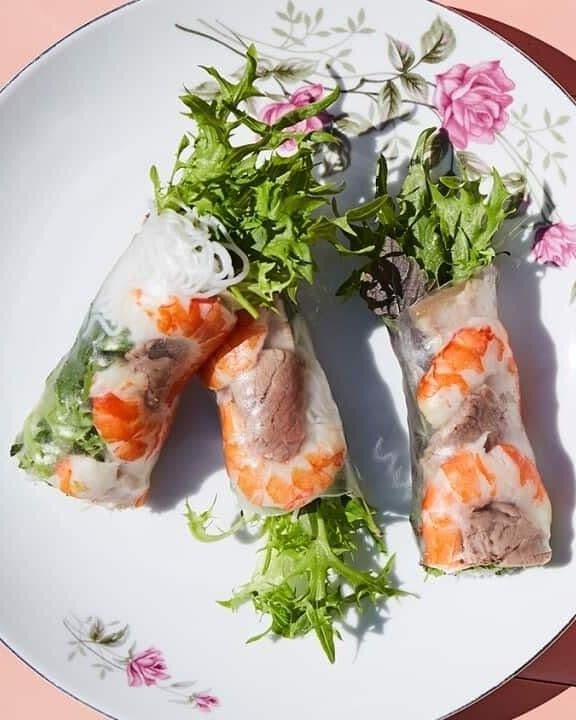
This recipe for Pork and Prawn Rice Paper Rolls is a delightful Vietnamese favorite that combines tender pork belly, fresh herbs, and succulent prawns wrapped in delicate rice paper sheets. Perfect for gatherings or a light meal, these rolls are served with a flavorful hoi sin dipping sauce that adds a touch of sweetness and spice. The preparation process is straightforward, making it a fun and rewarding dish to create.
Chefadora AI has the answer - timers, swaps, step-by-step help.


Preheat the oven to 180°C (350°F).
Place the pork belly in a saucepan and cover with cold water. Add the lemongrass, garlic, and chilli. Bring to the boil, then reduce the heat and simmer for 30 minutes or until the pork is cooked through. Remove the pork from the pan, set aside to cool, then slice into thin pieces.
Cook the noodles according to the packet instructions, then drain and run under cold water until cool. Set aside.
Fill a large bowl with cold water. Lay the rice paper sheets, sliced pork, cooked noodles, herbs, lettuce, and prawns in front of you.
Dip one rice paper sheet in the bowl of water, turning over and making sure that the sheet is completely wet before shaking off any excess water. Lay the rice paper sheet flat on a clean workbench. Starting with the noodles, place a small quantity of each of the filling ingredients along the middle of the rice paper.
Starting with the side nearest to you, carefully lift the rice paper over the filling, then roll away from you to create a tight rice paper roll. Repeat with the remaining ingredients until you have 12 rolls. Cut the rice paper rolls in half, if desired.
Place the hoi sin sauce, coconut cream, and sriracha in a small saucepan over low heat and warm, stirring the ingredients to combine. Remove from the heat and divide the sauce among dipping bowls. Sprinkle the peanuts over the top and serve with the rice paper rolls.
Ensure the rice paper sheets are fully wet before rolling to prevent tearing.
Leave some lettuce poking out the ends for a visually appealing presentation.
Serve the rolls immediately after preparation for the best texture and flavor.
Can I use other types of lettuce?
Yes, you can substitute coral lettuce with other types like butter lettuce or iceberg lettuce.
Can I make the rolls ahead of time?
It's best to prepare the rolls just before serving to maintain their texture, but you can store them covered with a damp cloth for a few hours.
What can I use instead of pork belly?
You can use cooked chicken, tofu, or other protein options as a substitute for pork belly.
Is the hoi sin dipping sauce spicy?
The sauce has a mild spice due to the sriracha, but you can adjust the spice level by adding more or less sriracha.
Can I freeze the rice paper rolls?
Rice paper rolls are not suitable for freezing as the texture of the rice paper will change.
Chef Miška Tolj-Turkić is a Croatian/Australian dual citizen, born in Western Australia, who's families migrated from Croatia in the 1920s. Originally raised in the lush wine growing district of The Swan Valley in Western Australia, he developed his love of cooking while watching his beloved grandmothers (Baba) working their cuisine magic. After a successful career as one of Australia's leading performers in the musical theatre, he retired from acting in 2012 to concentrate on his chosen new career as a chef. He also holds qualifications in Asian Cusine from TAFE NSW.
...