We use cookies on this website to ensure its proper functioning and to improve the quality of our services. Cookie Policy
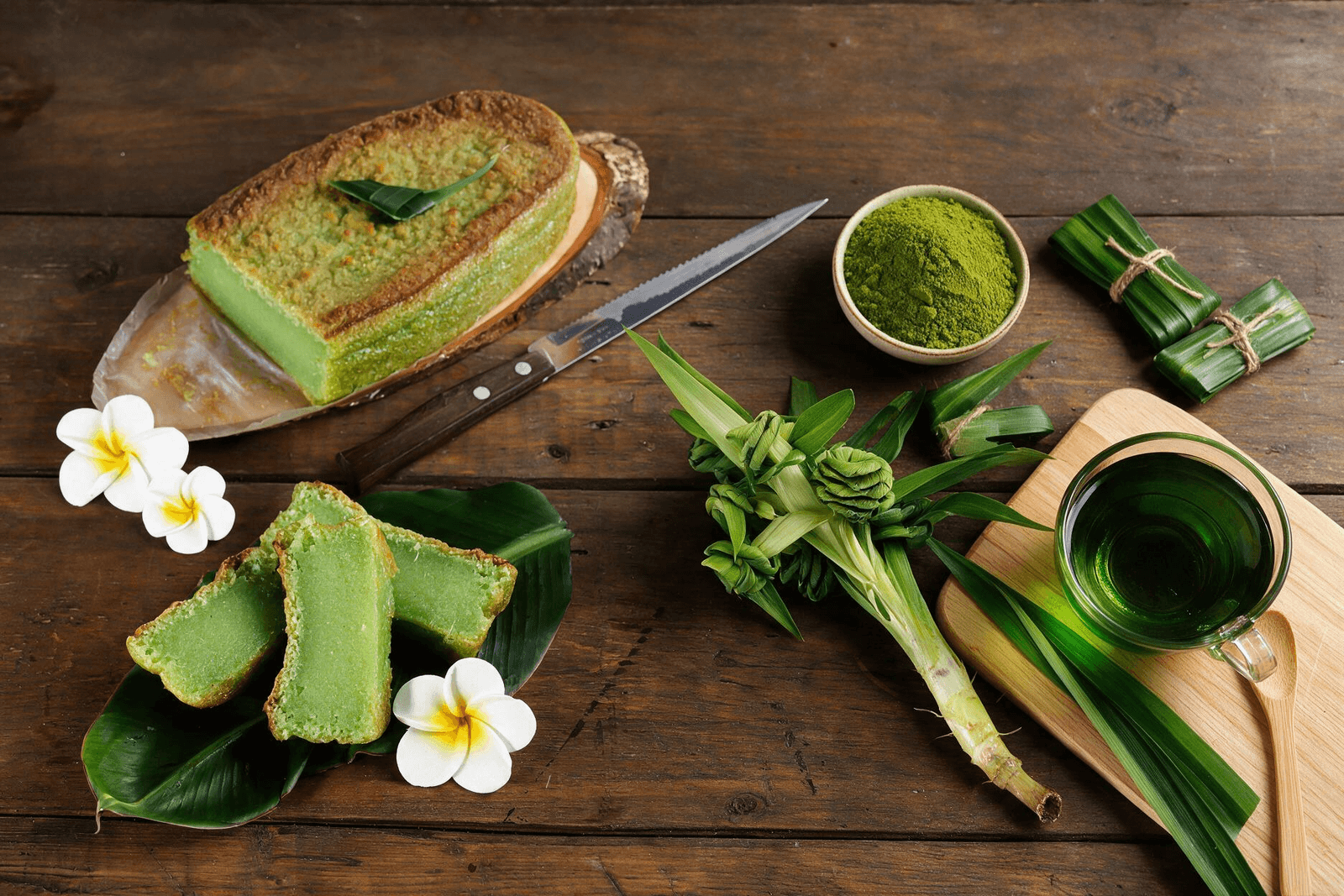
Pandan is a fragrant green leaf from Southeast Asia with a sweet, grassy, coconut-vanilla flavor. Cooks use it in rice, cakes, drinks, and jelly-like desserts, and in 2026 it's turning up on café and dessert menus far outside its home region. Below you'll find what it tastes like, the forms worth knowing, and easy ways to start using it.
Pandan is a long, thin green leaf from a tropical plant sometimes called screwpine. It grows across Southeast Asia and has been a kitchen staple for generations in countries like Thailand, Malaysia, Indonesia, Vietnam, Singapore, and the Philippines.
Cooks there use it the way many kitchens use vanilla: a little goes into rice, sweets, and drinks to add warmth and a soft, sweet smell. The leaf itself isn't usually eaten. Instead, its flavor and color get pulled into a dish and the leaf is taken out, or it's blended and strained into a juice or paste.
If you've had a bright green cake, a jiggly boba-tea topping, or a coconut dessert with a grassy-sweet note, there's a good chance pandan was behind it.
Pandan is sweet, floral, and a little grassy, with hints of coconut and toasted nuts. It's gentle rather than sharp, which is why it works in so many things without taking over.
The flavor also shifts a bit depending on how it's used. Fresh leaves smell green and bright. Once cooked into rice or simmered in coconut milk, pandan turns rounder, warmer, and more dessert-like.
You'll often hear pandan called the "vanilla of Southeast Asia," and it's easy to see why. Both are warm, sweet, and used in similar sweet dishes. But that nickname only tells part of the story.
Pandan has a green, grassy, coconut-like edge that vanilla doesn't have. You can sometimes use it in place of vanilla, but the result will taste clearly different, in a good way.
Pandan and ube get grouped together a lot because both are trending Southeast Asian flavors, and both can look striking on a plate. The taste is where they split.
Ube is a purple yam, so it's earthy, mild, and custard-like. Pandan is greener and more aromatic, closer to a floral herb. Many cooks use them side by side rather than swapping one for the other.
Matcha and pandan share that green look and a loyal following, but they land very differently on the tongue.
Matcha is grassy with a real bitterness. Pandan is grassy too, but sweet and floral instead of bitter, and it has no caffeine.
If you enjoy playing with green flavors, our guide to matcha and a few ways to enjoy it is a nice companion read.
For years, pandan mostly lived in Southeast Asian home kitchens and bakeries. That's been changing fast. Through 2025 and into 2026, it's been showing up on coffee, cocktail, and dessert menus well beyond its home region, from pandan lattes and creamy sodas to flans and layered cakes.
A few things are driving it. Pandan follows a path that flavors like ube and black sesame already walked, moving from "what is that?" to familiar. It's also flexible in a way many trendy flavors aren't, since it works in drinks, baked goods, rice dishes, and even savory cooking. And as more people look for green, natural flavors beyond matcha, pandan is an easy one to fall for.
There's a warmth to the trend, too. So much of pandan's story is about food that brings people together, shared desserts, festival sweets, and drinks passed around a table.
If you want to see where else the year is heading, our roundup of 2026 food trends worth cooking puts pandan in good company.
Pandan comes in a handful of forms, and the one you reach for mostly depends on what you're making and what you can find near you.
Fresh leaves give the purest, most natural flavor and a lovely aroma. They're wonderful for infusing rice and coconut milk. The trade-off is that they don't keep long and can be harder to find outside Asian grocers.
Know more : Pandan Leaf: Benefits & Recipes
Frozen leaves are the practical pick for most home kitchens. They hold their flavor well, last for months, and thaw quickly when you need them. If fresh isn't an option, this is usually the closest thing.
Paste is concentrated and convenient, and it delivers both flavor and a bold green color, which is why it's popular in cakes and layered desserts. A little goes a long way.
More details : Pandan Paste
Extract and fresh juice are great for baking and drinks, where you want the flavor without extra bulk. Juice, in particular, carries that fresh, green character.
Read to know more : Pandan Juice
Powder is a newer format and a handy natural-leaning option for coloring and flavoring bakes. It stores easily and blends well into dry ingredients.
The easiest way to understand pandan is to see where it naturally fits. A few of the most-loved uses:
Pandan and coconut are a classic match, so much so that they're hard to picture apart. If you want to lean into that pairing, our deep dive on coconut and how to enjoy it is a good next stop.
Ready to cook with it? These pandan recipes from Chefadora creators are a lovely place to start:
Light, fluffy, and gently green, this is the pandan bake to start with. It's soft enough to enjoy on its own and pairs beautifully with fresh strawberries or a little coconut cream. A lovely first step into pandan baking.
Prep Time: 15 mins | Cook Time: 45 mins | Total Time: 1 hr
Ingredients:
A fragrant Peranakan classic built on coconut milk and pandan paste. Soft sponge meets a sticky, custardy layer for a dessert that looks as good as it tastes. Perfect for sharing at a gathering.
Prep Time: 20 mins | Cook Time: 30 mins | Total Time: 50 mins
Ingredients:
A traditional steamed treat with striped layers of pandan and mung bean. It takes some patience, since the beans soak overnight, but the soft, chewy result is worth the wait. Beautiful sliced and served cool.
Prep Time: 12 hrs | Cook Time: 1 hr | Total Time: 13 hrs
Ingredients:
Soft, chilled mooncakes with a pandan snow skin and a rich coconut filling. They're served cold, which makes them a refreshing little dessert, and pretty enough for a festive table.
Prep Time: 1 hr | Cook Time: 30 mins | Total Time: 1 hr 30 mins
Ingredients:
Colorful little bites with a sweet palm sugar center that bursts when you bite in. Rolled in grated coconut and made in three natural colors, they're fun to make and even more fun to share.
Prep Time: 30 mins | Cook Time: 20 mins | Total Time: 50 mins
Ingredients:
A fragrant Indonesian coconut rice, Nasi Uduk gets a fresh twist here with pandan juice for a soft green color and gentle floral aroma. Bay leaves and galangal add savory depth, so the rice tastes rich enough to stand beside almost any main. A lovely way to show pandan works beyond dessert.
Prep Time: 15 mins | Cook Time: 30 mins | Total Time: 45 mins
Ingredients:
Pandan plays well with soft, sweet, and tropical flavors. Coconut is the natural partner, along with palm sugar, sticky rice, and tapioca. For brightness, lime and mango are lovely against it. Usually happiest as the star of a dish, so give it room to shine.
If you enjoy meeting a new global ingredient, you might also like what dukkah is and how to use it or the story behind tepache.
Pandan is easiest to find at Asian grocery stores, usually in the fresh or frozen aisle. If there isn't one near you, large online marketplaces and specialty grocery sites carry the frozen leaves, pastes, and extracts too. Frozen leaves are a safe first buy since they keep well and taste close to fresh.
The best part of a trending ingredient is what happens after the trend, when it becomes something you actually cook and share.
If you're gathering pandan recipes to try,find them and you can save them into a collection on Chefadora.com and keep everything in one place, ready for the next family dinner or weekend bake.
Here's how custom recipe collections work and why they're worth building.
And if you're a cook who already has a pandan dish people ask you for, that's a recipe worth sharing. Publishing it on Chefadora puts it in front of people all over the world who are searching for exactly that flavor right now.
A1. Pandan is sweet, floral, and slightly grassy, with soft notes of coconut and toasted nuts. It's gentle rather than sharp, which is why it works in everything from rice to cakes to drinks.
A2. Not quite. Pandan is often called the "vanilla of Southeast Asia" because both are warm and sweet, but pandan has a green, grassy, coconut-like character that vanilla doesn't. You can sometimes use it where you'd use vanilla, though the flavor will be noticeably different.
A3. Yes. Pandan is a plant leaf, so fresh leaves, frozen leaves, and homemade juice or extract are plant-based. With store-bought pastes or extracts, a quick label check is smart in case of added ingredients.
A4. Pandan leaves and juice are naturally gluten-free. Processed products like pastes and powders can vary, so it's worth checking the label if that matters for you.
A5. No, pandan has no caffeine. That's part of why it appeals to people who love a green, matcha-style flavor without the buzz.
A6. The natural green comes from chlorophyll in the leaves. Very bright green pastes often get help from added food coloring, so a vivid shade isn't always all-natural.
A7. They're often mentioned together as trending Southeast Asian flavors, but they taste different. Ube is earthy and custard-like, while pandan is aromatic and floral. Plenty of cooks use both together rather than choosing one.
Posted on 19 Aug 2026
Save recipes from anywhere, and get answers, swaps, and help as you cook.


