We use cookies on this website to ensure its proper functioning and to improve the quality of our services. Cookie Policy
You dip your bread in olive oil. Then you dip it in dukkah. That's breakfast in Egypt, and honestly, it's a better start to the day than most things.
Dukkah (pronounced doo-kah) is an Egyptian spice and nut blend that has been around for centuries. It is crunchy, earthy, a little nutty, and nothing like the spice blends you already have in your pantry. Once you try it, you will be sprinkling it on everything from eggs to roasted vegetables to hummus.
Here is everything you need to know about dukkah, including what it is made of, how it tastes, where to buy it, and why it has nothing to do with zaatar (even though people keep mixing the two up).
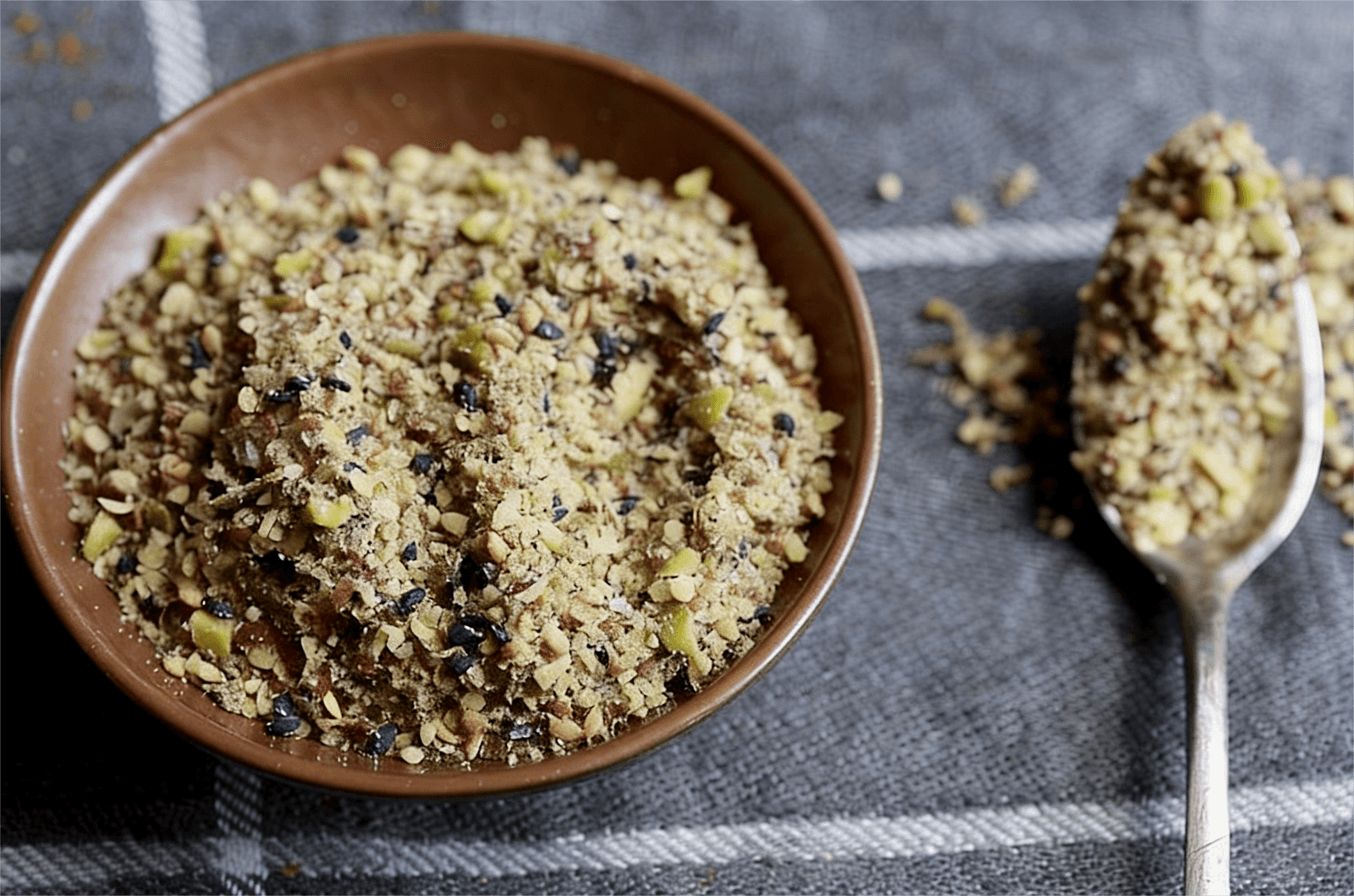
Dukkah is made from three types of ingredients: toasted nuts, seeds, and warm spices. The exact mix varies from cook to cook and region to region, but a few ingredients show up in almost every recipe.
The most common dukkah ingredients include:
Everything gets toasted separately, then pulsed together in a food processor or pounded in a mortar and pestle. You want a coarse, crumbly texture, not a powder. Stop well before it becomes nut butter.
The name "dukkah" comes from the Arabic word for "to pound," which tells you a lot about how it is traditionally made.
There are no hard rules here. Egyptian families each have their own version, and no two blends are identical. Think of it less like a recipe and more like a technique.
Dukkah tastes earthy, nutty, warm, and slightly savory. The toasted nuts give it a rich base. Cumin and coriander add warmth and a faint citrusy edge. Sesame seeds bring a subtle bitterness and crunch.
It is not spicy by default, though some versions include cayenne or chili flakes. It is also not sweet. The flavor sits somewhere between a dry rub and a finishing spice, which is exactly why it works on so many things.
The texture is part of the experience. Unlike a fine spice blend, dukkah stays coarse. That crunch is what makes it so satisfying sprinkled over a soft dip or a jammy egg.
No, dukkah and zaatar are not the same, though they are often confused.
Zaatar is a herb-based blend. It is made from dried thyme or oregano, sumac, sesame seeds, and salt. It has a tangy, herby flavor and a much finer texture.
Dukkah is nut-based. It is coarser, richer, and has a deeper, earthier flavor profile from the toasted nuts and warm spices.
Both come from the Middle East and North Africa. Both get served with bread and olive oil. Both are great on vegetables. But they taste quite different, and you cannot always swap one for the other.
The closest real comparison is that zaatar is bright and tangy, while dukkah is warm and nutty. If you want something with more crunch and depth, use dukkah. If you want something herby and acidic, zaatar is the one.
This is where dukkah really earns its place in your kitchen. It is one of the most versatile condiments you will find.
The classic way: Dip warm bread (pita, sourdough, flatbread) in olive oil, then press it into a small pile of dukkah. The oil helps everything stick. Simple and very good.
On eggs: Sprinkle it over scrambled eggs, a soft-boiled egg cut in half, or avocado toast. Try it on this avocado toast for an easy combination.
On dips: Dukkah over hummus or baba ganoush adds crunch and flavor to something that might otherwise feel flat. Drizzle olive oil over the dip first, then add dukkah on top.
On roasted vegetables: Carrots, cauliflower, butternut squash, and broccoli all work well. Roast them as usual, then finish with a generous sprinkle before serving.
As a crust for meat or fish: Press dukkah onto chicken, salmon, or lamb before cooking. The nuts toast further in the pan and create a crust with real texture and flavor.
On salads: Skip the croutons and add dukkah instead. It gives the same crunch with a lot more flavor.
Dukkah has a genuinely good nutritional profile, especially given that you only use a small amount at a time.
The nuts in dukkah (hazelnuts, almonds) are high in healthy fats, protein, and dietary fiber. They also contain vitamin E and niacin (vitamin B3). Sesame seeds add calcium and iron. Cumin and coriander contribute antioxidants.
Because dukkah is a condiment rather than a main ingredient, you are not eating large quantities at once. But what you do eat is nutrient-dense, not empty calories.
Is dukkah good for diabetics? Nuts and seeds have a low glycemic impact and do not spike blood sugar the way refined carbs do. The spices in dukkah, particularly cumin, have also been studied for their potential to support blood sugar regulation. That said, if you are managing diabetes, talk to a healthcare professional before making significant diet changes.
Yes, Trader Joe's has sold dukkah, and it became quite popular when it first appeared on shelves. It is usually found in the spice aisle. Availability does vary by location and season, so it is worth checking the app or asking in-store before you make the trip.
Other places to find dukkah:
Honest opinion? Homemade dukkah is noticeably better than anything you buy pre-made. The freshly toasted nuts and spices make a real difference. It takes about 15 minutes and the result is not even comparable. If you have time, make your own.
Q1. What spice is similar to dukkah?
A1. Nothing is a perfect match, but za’atar is the closest in terms of how it is used. Ras el hanout and baharat also have a similar warm, nutty Middle Eastern or North African flavor profile, though their texture is quite different.
Q2. Can you replace za’atar with dukkah?
A2. Sometimes, but not always. The flavors are different enough that the swap will noticeably change the dish. If you need the tangy, herby notes of za’atar, dukkah will not be a true substitute. If you simply want a nutty, textured finishing blend, dukkah can work well.
Q3. What is a good replacement for dukkah?
A3. A simple mixture of toasted sesame seeds, cumin, coriander, and chopped nuts makes a good substitute. It will not have the full complexity of traditional dukkah, but the texture and overall flavor profile will be fairly close.
Q4. How long does dukkah last?
A4. Store dukkah in an airtight jar at room temperature for up to two weeks, or in the refrigerator for up to a month. Because it contains nuts, it can go stale or rancid before the spices lose flavor. If it smells flat or off, it is best to make a fresh batch.
Q5. Does dukkah contain gluten?
A5. Traditional dukkah is naturally gluten-free. However, store-bought versions may be processed in facilities that also handle wheat, so it is always a good idea to check the label if gluten is a concern.
If you like exploring condiments and spice blends from around the world, you might also enjoy our deep dives into kai chutney, the red ant chutney from India that Gordon Ramsay called the best in the world, and casu marzu, the Sardinian cheese that takes fermented foods to an entirely different level. Dukkah is considerably less adventurous than either of those, which is part of its appeal. It is a genuinely great condiment. Nutty, crunchy, endlessly versatile, and very easy to make at home. Start with bread and olive oil. Go from there.
Posted on 23 Mar 2026

Save recipes from anywhere, and get answers, swaps, and help as you cook.

