We use cookies on this website to ensure its proper functioning and to improve the quality of our services. Cookie Policy
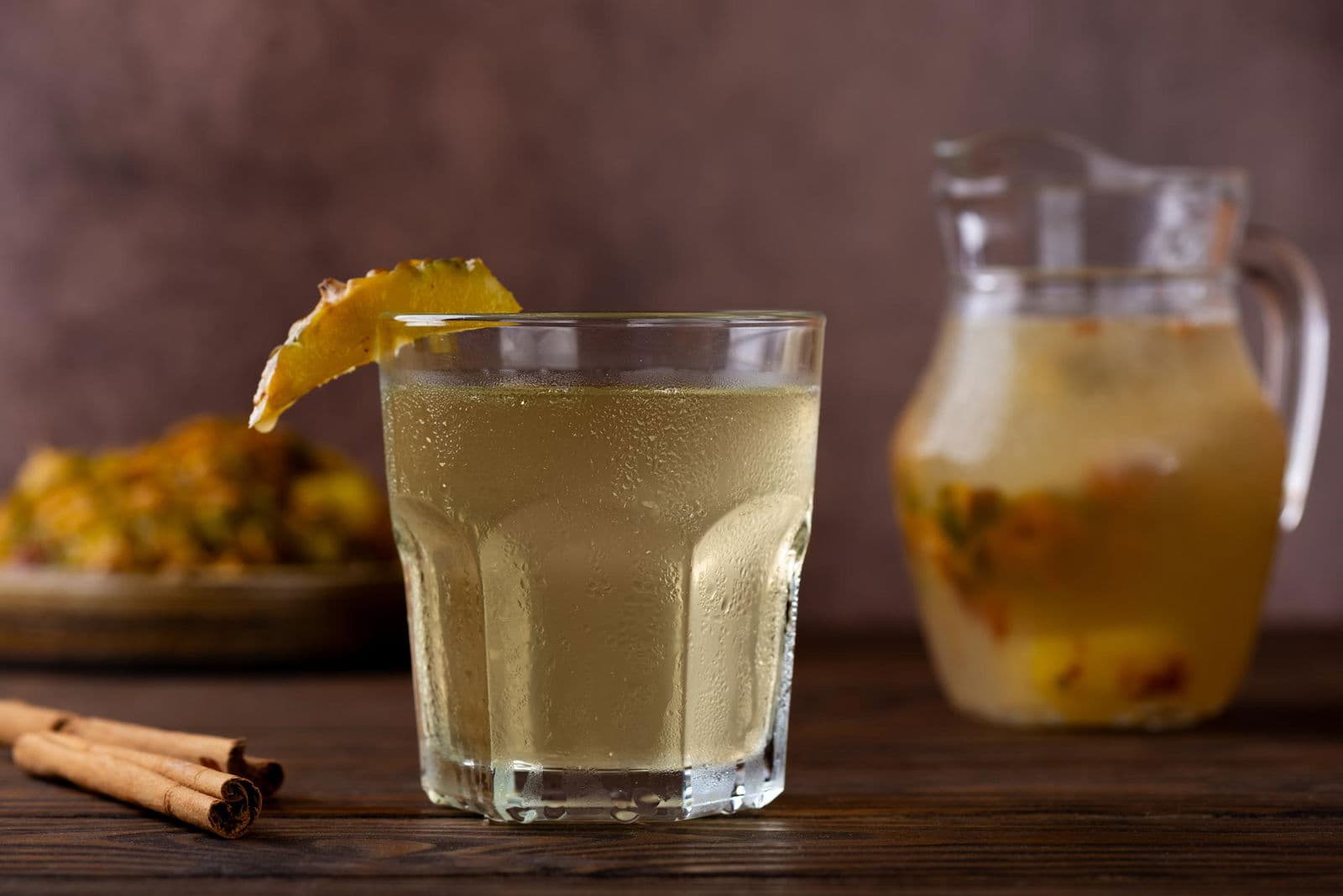
You have probably seen it pop up in health food stores or on your social media feed. Tepache (say it: teh-PAH-cheh) is a fizzy, slightly tangy fermented drink from Mexico, and it is having a major moment right now. It is sweet, refreshing, and made almost entirely from the part of the pineapple most people throw away: the peel.
If you love gut-friendly drinks but find kombucha a little too sour, tepache might be exactly what you have been looking for.
Tepache is a traditional Mexican fermented drink made from pineapple rinds, brown sugar or piloncillo (an unrefined Mexican cane sugar), water, and warming spices like cinnamon and cloves. It is naturally fermented, meaning no special cultures or starters are needed. The wild yeast that already lives on the pineapple skin does all the work.
The drink dates back to Pre-Columbian Mexico, where it was popular among the Nahua people. The word "tepache" comes from the Nahuatl word "tepiātl," which originally meant "drink made from corn." Back then, it was brewed with corn. Over time, pineapple replaced corn as the main ingredient, and the version we know today was born.
In Mexico, tepache is sold by street vendors, often stored in clay mugs or clear plastic bags with a straw. It is cold, refreshing, and deeply tied to Mexican food culture. Today it has traveled far beyond Mexico and is now found in juice bars, specialty stores, and home kitchens all over the US and beyond.
This is one of the most common questions people have about tepache, and the answer is: technically yes, but barely.
Tepache does contain a small amount of alcohol as a natural result of the fermentation process. Yeast consumes the sugar and produces alcohol as a byproduct. After a typical 2 to 3 day ferment, tepache lands somewhere between 1% and 2% ABV (alcohol by volume). For comparison, most regular beers sit at around 5% ABV.
Not really. At 1 to 2% ABV, you would have to drink an extremely large amount for tepache to have any noticeable effect. Most people describe it as similar to drinking a very lightly fizzy juice. The longer it ferments, the more the alcohol content creeps up, but it stays quite low under normal brewing conditions.
Legally and practically, tepache is treated as a very low-alcohol or non-alcoholic drink. Many commercially sold versions are labeled non-alcoholic. That said, the alcohol level is not zero, which brings us to the next question.
Most experts recommend caution when giving tepache to young children, because even a small amount of alcohol is not ideal for kids. If you are making it at home, a shorter fermentation time of 24 to 36 hours keeps the alcohol content even lower. When in doubt, opt for a non-fermented pineapple drink instead.
Ocean Breeze Mocktail is a great kid-friendly option made with pineapple juice, coconut milk, and citrus.
No, they are not. Tepache and kombucha are both fermented drinks with gut health benefits, but they are made very differently and taste quite different too.
Kombucha is made from sweetened black or green tea that is fermented using a SCOBY (a symbiotic culture of bacteria and yeast). It takes much longer to ferment, anywhere from 7 to 30 days, has a more vinegary and complex flavor, and often comes with a much higher price tag.
Tepache is made from pineapple rinds and ferments in just 2 to 3 days using wild yeast. It is sweeter, lighter, and much easier to make at home.
It depends on what you are looking for. Kombucha has a longer fermentation process and more documented research behind its probiotic content. Tepache is simpler, sweeter, cheaper to make, and more approachable for people who are new to fermented drinks.
Both drinks offer gut health benefits. Kombucha tends to have a wider range of documented probiotic strains. Tepache has the added benefit of pineapple's natural vitamin C and bromelain, an enzyme that supports digestion and may reduce inflammation. For more on the rising world of gut-friendly drinks and alcohol-free alternatives, check out our piece on Gen Z's alcohol-free future with kombucha and mocktails.
The healthiest fermented drink is the one you will actually enjoy and drink regularly. Tepache, kombucha, kefir, and fermented foods like natto are all excellent for gut health in their own ways. If you are curious about other fermented superfoods that push boundaries, our blog on natto covers one of the most powerful (and polarizing) fermented foods in the world.
Yes, and here is why. During fermentation, beneficial bacteria like Lactobacillus plantarum and Lactobacillus paracasei develop in tepache. These are the same strains found in many probiotic supplements and yogurts. They help support your digestive system, restore the balance of good bacteria in your gut, and keep things moving smoothly.
Tepache is primarily probiotic, meaning it contains live beneficial bacteria. However, pineapple also contains natural fibers that act as food for those bacteria, which gives tepache some prebiotic quality too. In short, it works on both fronts.
Pineapple contains bromelain, a natural enzyme with well-documented anti-inflammatory properties. While most of the bromelain is found in the flesh and core rather than the rind, some carries through into tepache during fermentation. Combined with the antioxidant power of vitamin C, tepache has a solid anti-inflammatory profile for a refreshing drink.
For most healthy adults, yes. A small glass of tepache each day is a low-risk way to support digestion and get more beneficial bacteria into your diet. Just keep in mind the small alcohol content and be mindful of added sugar, which contributes to the calorie count.
Tepache ferments quickly compared to most other fermented drinks. At room temperature (ideally between 75 and 86 degrees Fahrenheit), a standard batch is ready in 2 to 3 days.
A 2-day ferment gives you a sweeter, milder tepache. A 3-day ferment gives you more tang and fizz. Beyond 5 days, tepache starts to taste more like vinegar, which is still useful in the kitchen but not what most people are going for in a drink.
Look for small bubbles forming on the surface and a light foam gathering at the top. Taste it with a clean spoon. It should be slightly sweet, tangy, a little funky, and just a touch fizzy on your tongue. If it smells pleasantly fruity and fermented, it is ready.
Yes. If tepache ferments too long, it turns into pineapple vinegar. This happens because the bacteria continue working past the point where sugar runs out, producing acetic acid instead. If your tepache smells strongly of vinegar, it has gone too far as a drink. But do not pour it out. Pineapple vinegar makes a lovely base for salad dressings and pickling.
A good rule of thumb is 1 to 2 cups of brown sugar or piloncillo per gallon of water. Start with 1 cup for a lighter, less sweet brew, and go up to 2 cups if you want more sweetness and a slightly more active ferment.
Making tepache at home is one of the easiest fermentation projects you can take on.
Here is what you need:
Add everything to a large glass jar, stir to dissolve the sugar, and cover with a clean cloth secured with a rubber band. Leave at room temperature for 2 to 3 days, stirring once daily. Strain and serve cold over ice.
If you love pineapple-forward drinks with warm spices, you will also enjoy our Zobo Drink recipe, a Nigerian hibiscus drink brewed with pineapple peel, cloves, and ginger that shares a lot of tepache's refreshing, lightly spiced energy.
Q1. Does tepache need to be refrigerated?
A1. Yes. Once Tepache is ready, strain it and store it in a sealed glass container in the refrigerator. It can last up to 2 weeks. Fermentation slows down in the fridge but continues slightly, so the flavor may become more tangy over time.
Q2. Can you use the whole pineapple to make tepache?
A2. Most recipes use only the peel and core, saving the fruit for other uses. However, adding a few chunks of pineapple flesh can speed up fermentation and increase natural sweetness in Tepache.
Q3. What does tepache taste like?
A3. Tepache is lightly fizzy, sweet, and refreshing, with tropical pineapple flavor and warm spice notes from cinnamon. It is less sour than kombucha and has a mild, pleasant fermented “funk.”
Q4. Can tepache be used in cocktails?
A4. Absolutely. Tepache pairs well with tequila, rum, and mezcal. A popular serving style is pouring it over ice and topping it with a chilled Mexican lager.
Q5. Does tepache have any nutrients?
A5. Yes. Tepache contains some vitamin C from pineapple, beneficial bacteria from fermentation, and natural enzymes like bromelain, making it both refreshing and functional.
Tepache is the kind of drink that makes you feel clever for making it at home. It turns kitchen scraps into something genuinely delicious, takes almost no effort, and gives your gut a reason to say thank you. If you have been thinking about getting into fermentation, this is the best place to start.
Posted on 18 Mar 2026
Save recipes from anywhere, and get answers, swaps, and help as you cook.

