We use cookies on this website to ensure its proper functioning and to improve the quality of our services. Cookie Policy

Tags and nutritional info are auto-generated and may be inaccurate. Always check the full ingredient list before cooking.


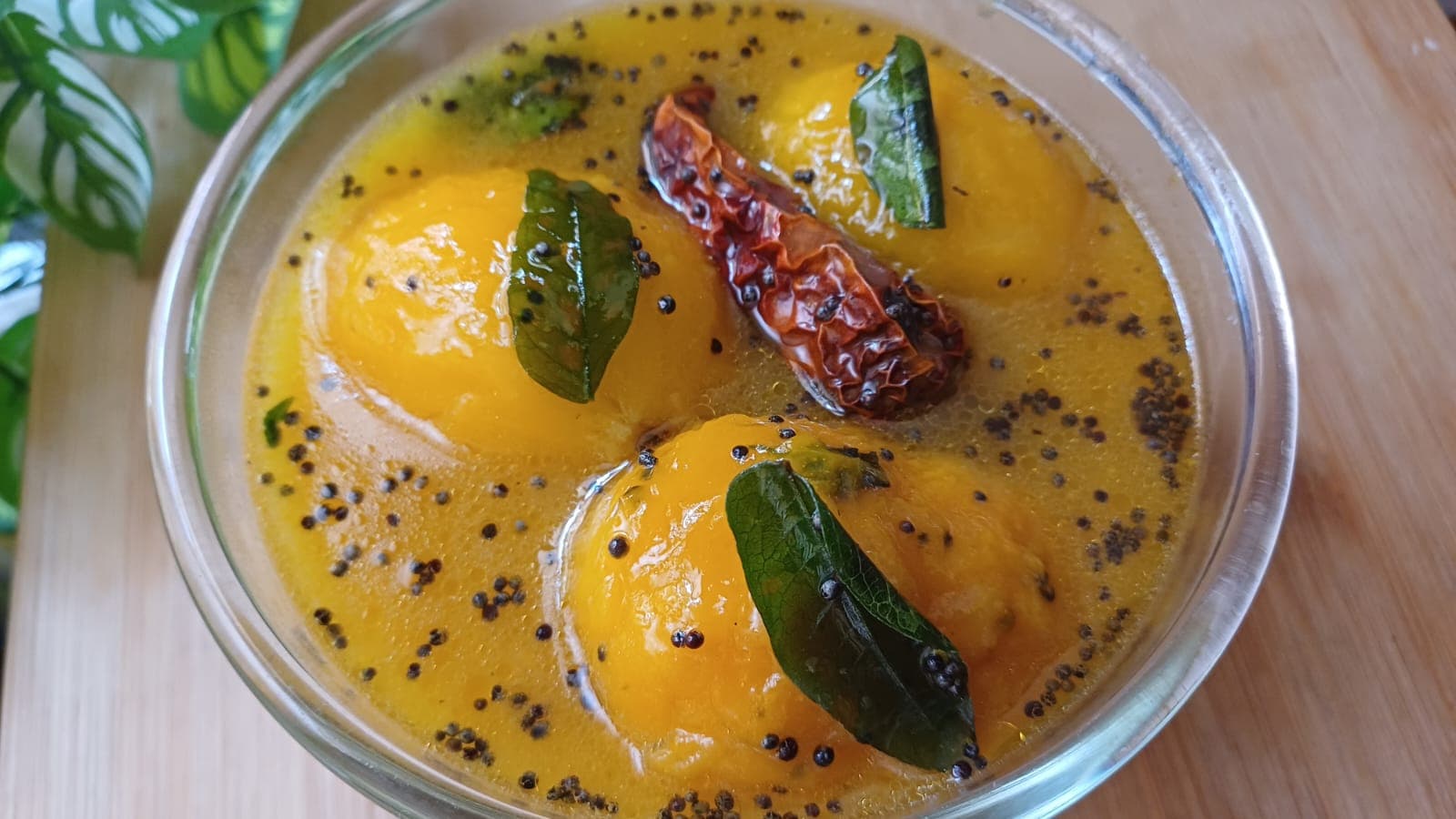
Peel the mangoes and set aside the skins. Strain the stock and add it to the peeled mangoes.


Boil the mangoes with the stock for 10-15 minutes on low flame, keeping it covered. Cook until the mangoes are tender.


Add grated jaggery to the mango mixture and mix well. Sprinkle salt, wheat slurry and cardamom powder, then simmer for 2-3 minutes.


Add grated jaggery to the mango mixture and mix well. Sprinkle salt and cardamom powder, then simmer for 2-3 minutes.


Pour the tempering over the mango curry and cover immediately to let the flavors infuse. Mix after few minutes and serve warm.

Pour the tempering over the mango curry and cover immediately to let the flavors infuse. Serve warm.


Tastes best when served fresh.

Want to keep this recipe for later? We can email it to you!
Use ripe small mangoes. Don't use overiped ones, it may spoil the taste of curry.
Always add wheat slurry at the last because it quickly thickens the curry .
Use yellow jaggery for keeping the colour intact of Ambe Upkari.
Add tempering at the last for proper amalgamation of flavours of asafoetida with mango . Tempering before might change the colour of this dish.
Don't forget to add dry red chillies in the tempering, it adds a spice touch to the curry, thereby giving a spicy tangy sweet taste to the upkari.
Can I use unripe mangoes for this recipe?
No, this recipe is best made with ripe mangoes to achieve the desired sweetness and texture.
What can I substitute for jaggery?
You can use brown sugar or coconut sugar as a substitute, but jaggery provides the authentic colour and flavor.
How long can I store Ambe Upkari?
It is best consumed fresh, but you can store it in the refrigerator for up to 1 day
Can I skip the tempering?
The tempering adds essential flavor and aroma, so it is recommended not to skip it.
Is this dish served as a dessert or a side?
Ambe Upkari is typically served warm as a side dish after lunch or dinner.

Cooking has always been my way of spreading love and warmth. Through this channel, I share recipes close to my heart—some from childhood memories, some from daily life, and some festive treats. It’s my little space to celebrate the joy of homemade food and connect with fellow food lovers.
...