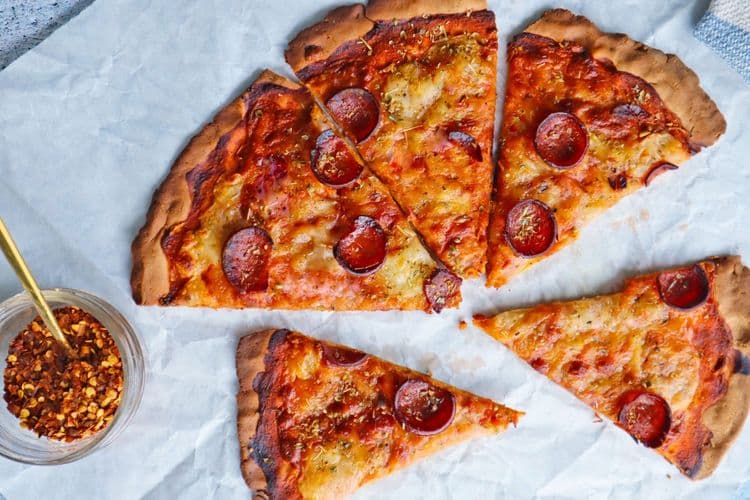
Gluten-free pizza is a staple that should be in every gluten-free kitchen, and it should be a good one. After years of experimentation, I’ve narrowed it down to a recipe that delivers a delicious crust. My journey into gluten-free living began due to health issues, and while the pain persists, avoiding gluten has helped me regain some balance in life. This recipe uses xanthan gum and tapioca flour for texture and elasticity, and an egg...
Chefadora AI has the answer - timers, swaps, step-by-step help.


Combine the flours, xanthan gum, and salt in the bowl of your stand mixer using the paddle attachment.
In a small bowl, combine the yeast and sugar in warm water, and let sit for 10 minutes. If it doesn't look frothy and fluffy after 10 minutes, discard and try again.
Turn the mixer on low and add the yeast mixture, egg, and olive oil to the flour mixture. Mix on low until all ingredients are combined, then mix for 1 minute on medium.
Scrape the sides down using a spatula, then use oiled hands to flip the dough around in the bowl to cover it in oil, forming it into a ball. Cover with a clean kitchen towel and let rest for 30 minutes.
Preheat oven to 450°F (or higher if your oven allows).
Separate the dough in half. Wrap one half and refrigerate unless you're making two pizzas now.
Turn the dough out onto a pizza stone or a half-sheet pan. Spread gently using your fingers or a rolling pin. Push the dough back together if it separates.
Drizzle with a little olive oil and par-bake for 10 minutes, then remove from oven.
Top with sauce, cheese, and toppings, and bake for 10-15 minutes until the cheese has melted and the crust is done.
Use xanthan gum and tapioca flour together for better texture and elasticity.
If you don’t have xanthan gum, corn starch, unflavored gelatin, or arrowroot powder can be good substitutes.
Adding an egg to the dough improves crispness and prevents cracking during baking.
Parbake the crust to ensure it cooks evenly and develops crispy edges.
Don’t worry if the dough separates or has holes; simply press it back together and smooth it out.
Can I substitute xanthan gum?
Yes, you can use corn starch, unflavored gelatin, or arrowroot powder as substitutes.
Why is parbaking necessary?
Parbaking ensures the crust is cooked through and allows longer baking for crispy edges without burning the toppings.
Can I make this dough without an egg?
Yes, but the egg adds elasticity and helps the crust crisp better. Without it, the texture may differ slightly.
What temperature should the water be for the yeast?
The water should be about 110°F to activate the yeast without killing it.
Can I use this dough for other types of pizza?
Absolutely! This dough works well with various toppings and sauces.
A Southern Belle Who's Thinking About What's For Dinner While Eating Lunch