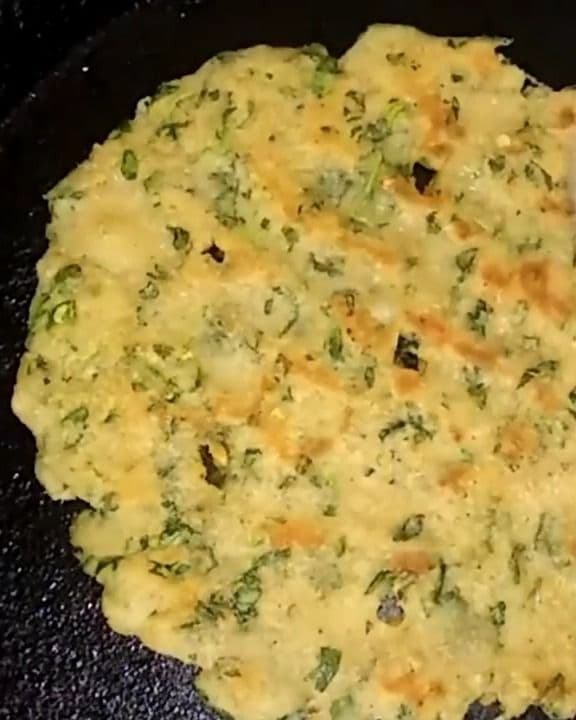
Vrat ka Makhana Thalipeeth is a delicious and wholesome fasting recipe. Made with makhana flour, rajgira atta, and grated dudhi, this dish is perfect for navratri vrat (fasting) days. The process of roasting and kneading brings out a unique flavor, and it pairs beautifully with curd and vrat ki paneer bhurji. A must-try for those observing fasts or looking for a healthy, gluten-free option.
Chefadora AI has the answer - timers, swaps, step-by-step help.


Dry roast the makhana until crisp, then let it cool down and grind into a fine powder.
In a kneading plate or parat, combine the makhana flour, rajgira atta, coriander leaves, cumin powder, green chillies, grated dudhi, and senda namak. No need of water to knead since dudhi itself relesases it's water.
Knead the mixture well for 5-7 minutes, adding ghee or peanut oil as needed to form a soft dough. Cover the dough and let it rest for 10 minutes.
Grease a butter paper or plastic cover with ghee. Take a medium-sized ball of dough and pat it flat using your fingers and palm gently to form a thalipeeth.
Heat a tawa , apply ghee on one side then again in the other side . Roast both the sides on medium flame. This makes the thalipeeth crispy.
Serve hot with curd and vrat ki paneer bhurji.
Ensure the makhana is roasted well to achieve a fine powder consistency.
If the dough feels too dry, add a little water or more grated dudhi to adjust the consistency.
Use a non-stick tava to prevent the thalipeeth from sticking.
Grease your hands lightly with ghee while patting the dough to avoid sticking.
Ghee enhances flavor and gives a nice crisp golden crust, making it more filling for upwas.
Can I use any other flour instead of rajgira atta?
Rajgira atta is traditionally used for fasting recipes, but you can try substituting it with kuttu atta (buckwheat flour) or singhara atta (water chestnut flour) if needed.
Can I skip the grated dudhi?
Grated dudhi adds moisture and softness to the thalipeeth. If you skip it, you may need to add water or another moist ingredient to adjust the dough consistency.
What can I serve with Vrat ka Makhana Thalipeeth?
It pairs well with curd, vrat ki paneer bhurji, or even a simple vrat-friendly chutney.
Can I make this recipe vegan?
Yes, you can use peanut oil instead of ghee to make this recipe vegan.
How do I store leftover thalipeeth?
Store leftover thalipeeth in an airtight container in the refrigerator. Reheat on a tava before serving.
Cooking has always been my way of spreading love and warmth. Through this channel, I share recipes close to my heart—some from childhood memories, some from daily life, and some festive treats. It’s my little space to celebrate the joy of homemade food and connect with fellow food lovers.
...