We use cookies on this website to ensure its proper functioning and to improve the quality of our services. Cookie Policy


Tags and nutritional info are auto-generated and may be inaccurate. Always check the full ingredient list before cooking.


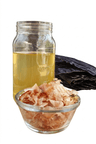

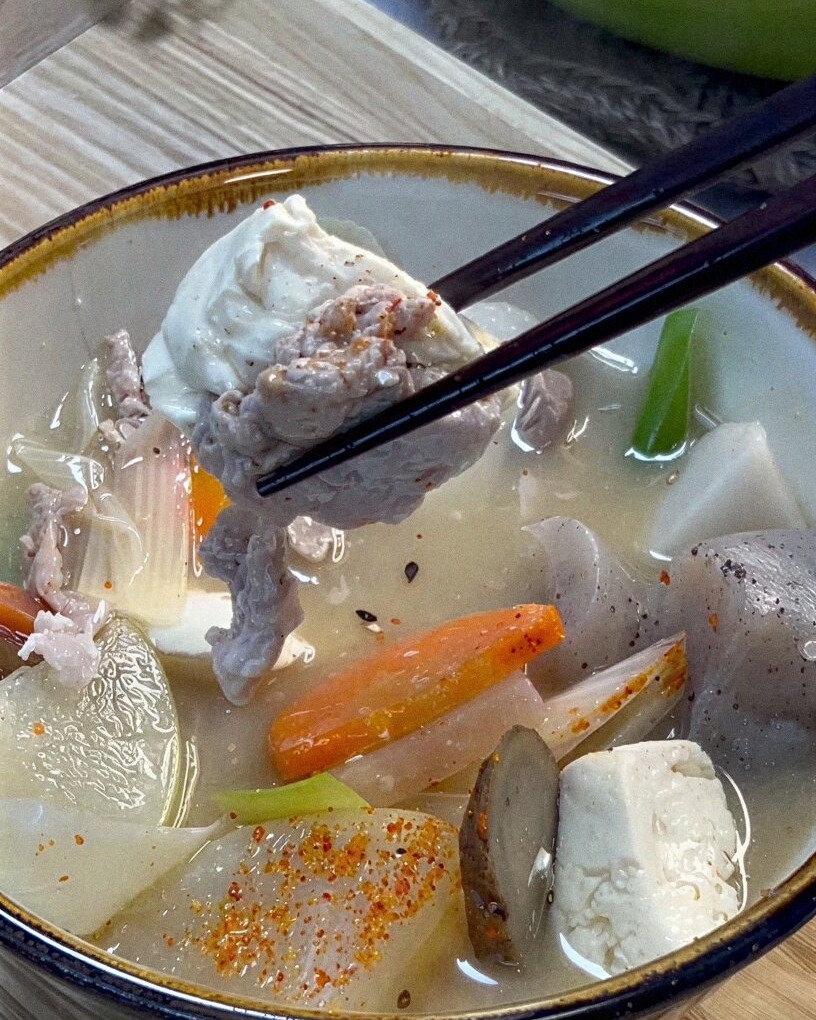
Prepare the ingredients by slicing the daikon radish, gobo, and mushrooms into bite-sized pieces. Cut the tofu into small cubes and slice the aburaage into thin strips.

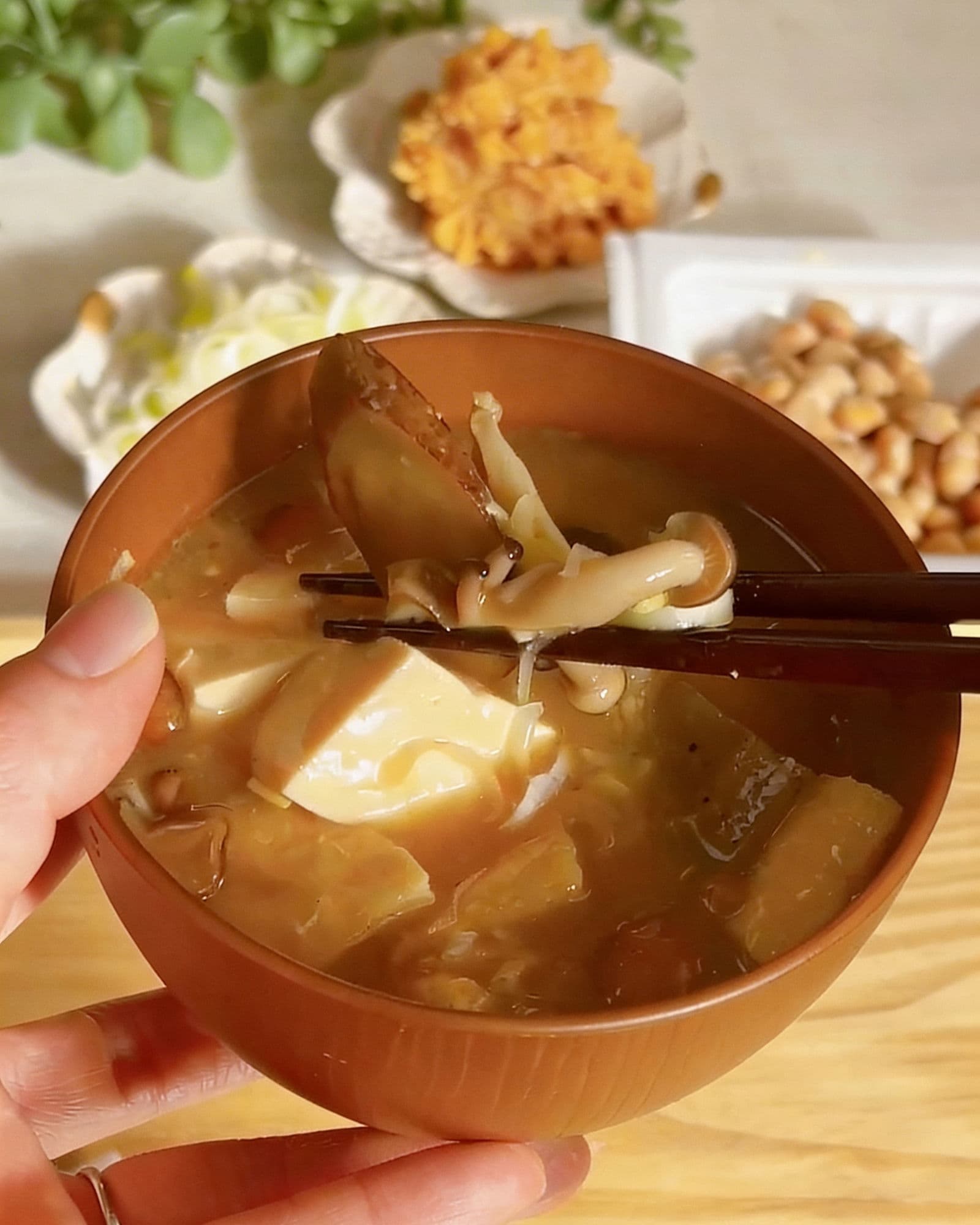
In a pot, bring the dashi to a gentle simmer. Add the daikon radish, gobo, mushrooms, tofu, and aburaage. Cook until the vegetables are tender.

Add the natto to the pot and simmer for a few minutes. This will mellow out its strong smell and stickiness.

Turn off the heat and dissolve the miso into the soup. Stir well to combine.

Serve hot and enjoy this comforting and nutritious soup!

Want to keep this recipe for later? We can email it to you!
If you can't find all the ingredients, it's okay to use natto as the main star of the dish.
Traditionally, this recipe uses 'Imogara' (dried taro stalks), but gobo is a great substitute if you can't find it.
Simmering the natto mellows out its strong smell and stickiness, making it easier to eat.
Can I substitute gobo with another ingredient?
Yes, gobo is used as a substitute for 'Imogara' (dried taro stalks). If you can't find gobo, you can try using another root vegetable like carrot or parsnip.
What is the purpose of simmering natto?
Simmering natto helps to mellow out its strong smell and stickiness, making it more palatable and easier to enjoy.
Can I use instant dashi for this recipe?
Yes, instant dashi works perfectly for this recipe and is a convenient option.
Is this recipe vegetarian?
This recipe can be vegetarian if you use vegetarian dashi made from kombu and shiitake mushrooms instead of traditional dashi, which often contains fish.
What type of miso should I use?
You can use any type of miso you prefer, but white miso or awase miso (a blend of white and red miso) works well for this soup.

Hi, I'm Yukumi, a home cook from Japan sharing easy, everyday recipes rooted in Japanese fermentation culture. Koji, miso, amazake, and other fermented staples are at the heart of Japanese cooking — full of deep umami, natural nutrients, and centuries of tradition. My recipes make these ingredients simple and approachable, whether you're new to fermentation or looking to bring more Japanese flavors into your kitchen. Here you'll find recipes for gut-friendly miso soups, koji marinades, fermented seasonings, and more — all designed for a natural, balanced way of eating.
...