We use cookies on this website to ensure its proper functioning and to improve the quality of our services. Cookie Policy

Tags and nutritional info are auto-generated and may be inaccurate. Always check the full ingredient list before cooking.


Wash the rice until the water runs clear. Soak for 30 minutes, then drain completely.

Heat ghee in a heavy-bottomed pan or kadhai over medium heat.
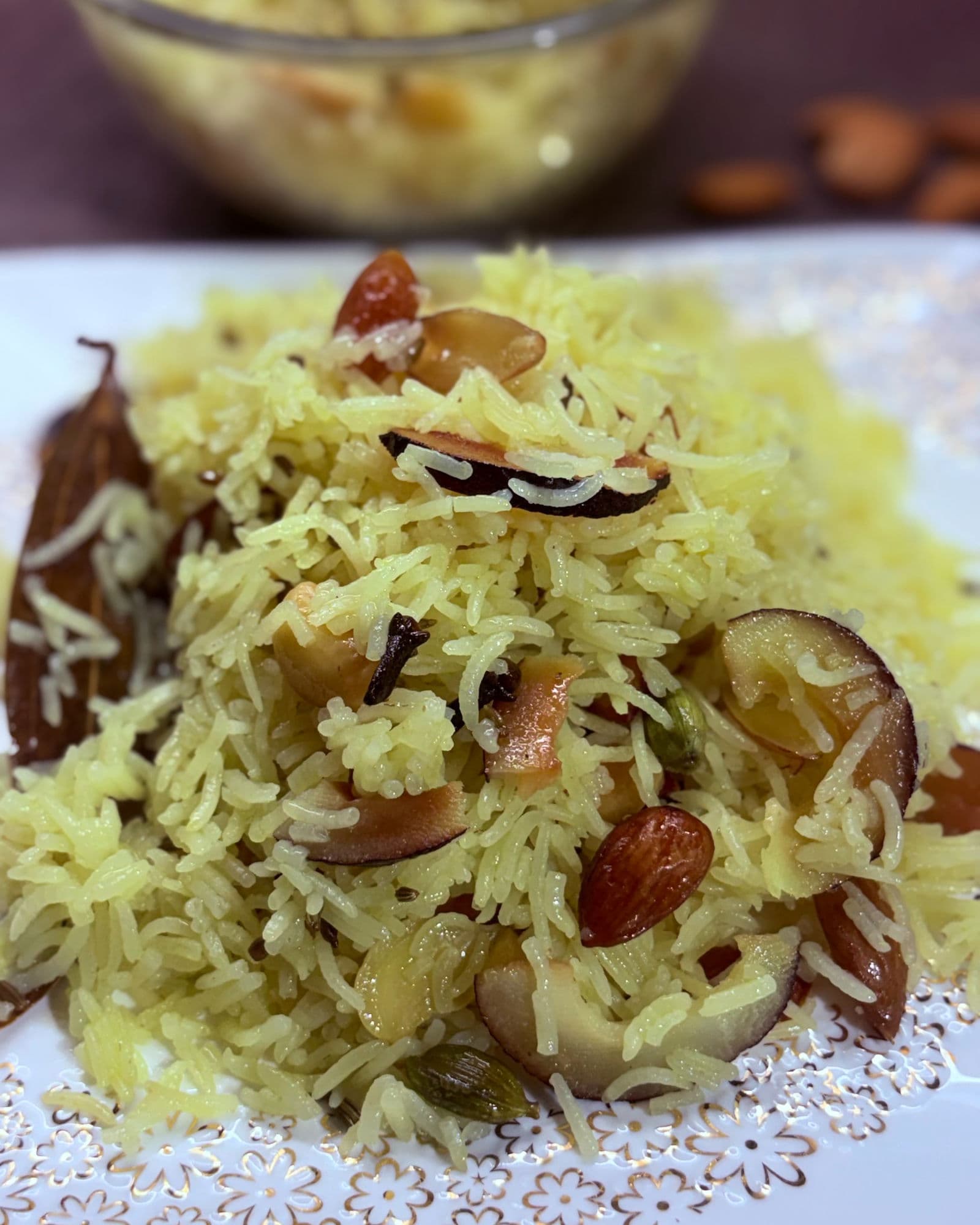
Add the bay leaf, cinnamon, cloves, green cardamom, and saunf. Sauté until they become fragrant.
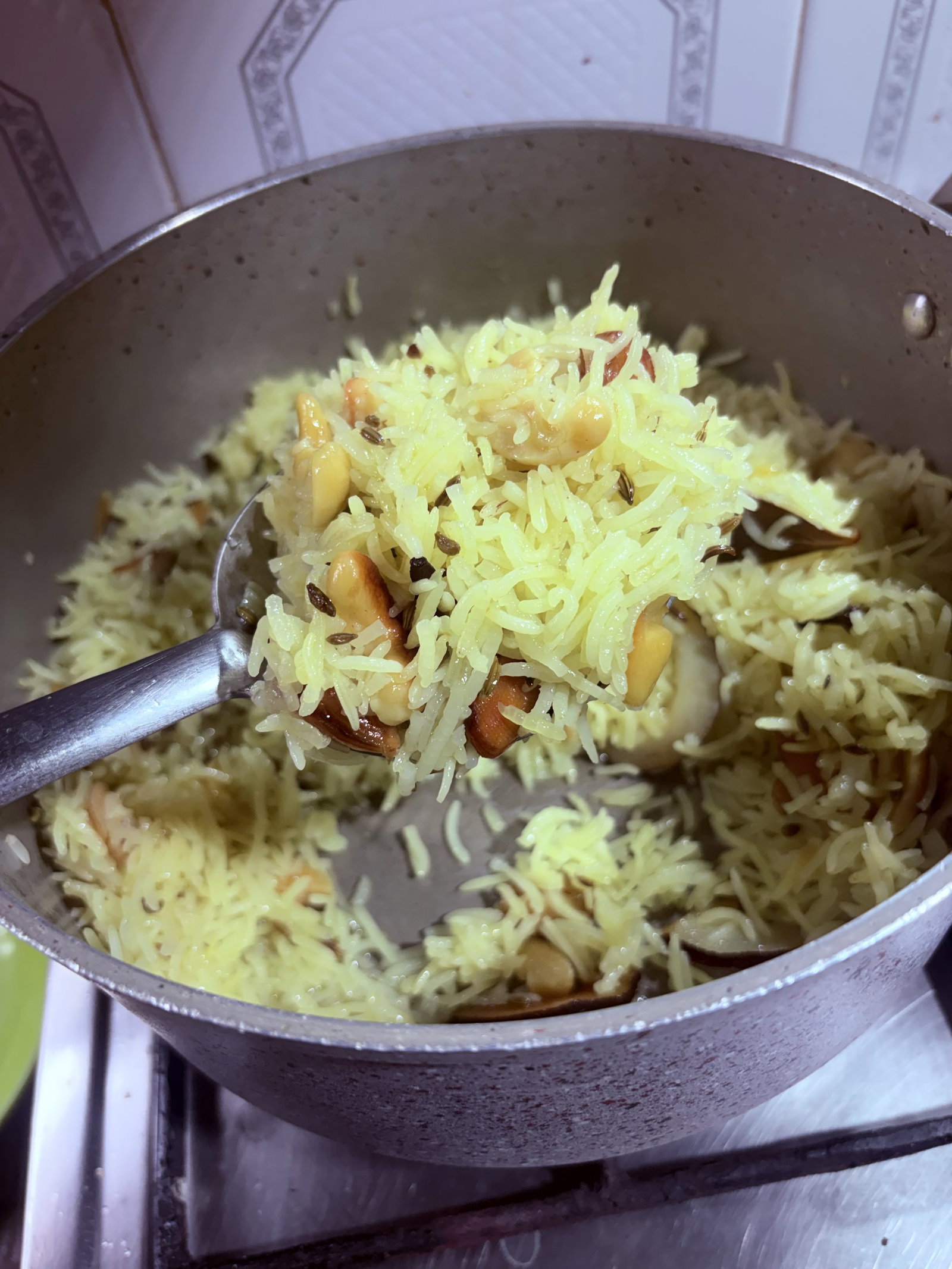
Add the coconut slices, almonds, and cashews to the ghee. Roast on low heat until they turn lightly golden brown.

Add the soaked rice to the pan. Gently stir to coat every grain with the ghee to ensure the rice stays separate and fluffy.
Pour in the water and salt. Dissolve the turmeric in 1 tablespoon of water and add it to the pan. Bring to a boil, then cover and cook on medium-low heat for about 10 minutes until the water is absorbed and the rice is 90% cooked (it should still have a slight bite). .

Sprinkle the sugar evenly over the rice. Fold it in very gently with a light hand to avoid breaking the grains.

Cover and simmer on low heat for 5 minutes until the sugar melts and is fully absorbed.
Turn off the heat. Fluff the rice once with a fork, cover the lid tightly, and let it rest undisturbed for 15-20 minutes.
Serve hot and enjoy the perfect 'khila-khila' texture!
Want to keep this recipe for later? We can email it to you!
Don’t skip the resting step. Resting allows the grains to firm up. If you serve immediately, the rice may feel mushy or sticky.
For extra aroma, add a pinch of saffron soaked in 2 tbsp warm milk along with the sugar.
Never add sugar at the start; it toughens the rice grains and prevents them from cooking through.
Why is my sweet rice mushy?
This usually happens from over-stirring or not letting the rice 'rest' after cooking. Always use a fork to fluff gently.
Is this the same as Zarda?
Yes! While traditional Zarda is often parboiled first, this one-pot version gives the same festive flavour with less effort.
Does the turmeric make the rice taste like curry?
Not at all! In this small amount, it provides a beautiful natural colour without affecting the sweet flavour profile.
Can I make this recipe vegan?
Yes, you can substitute ghee with coconut oil, though you will lose the traditional buttery aroma of the classic recipe.