We use cookies on this website to ensure its proper functioning and to improve the quality of our services. Cookie Policy
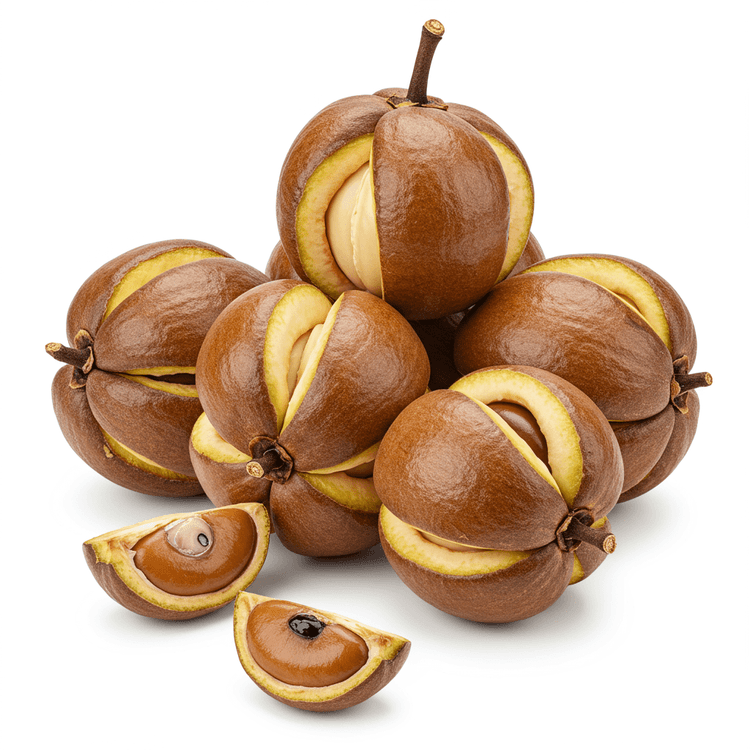
Ackee is a unique and visually striking fruit native to West Africa and now widely cultivated in Jamaica. When ripe, the ackee pod bursts open, revealing fleshy, yellowish-orange arils that are the edible portion. These arils have a mild, slightly nutty flavor and a soft, buttery texture, similar to scrambled eggs. Unripe ackee is toxic, so it's crucial to only consume ackee that has opened naturally on the tree and been properly prepared. It's a key ingredient in Jamaican cuisine, offering a distinctive taste and vibrant color to dishes. Ripe ackee is used as a vegetable

Save recipes from anywhere, and get answers, swaps, and help as you cook.
Fresh ackee is highly perishable and should be used immediately after opening the fruit. If you're not using it right away, cooked ackee can be stored in an airtight container in the refrigerator for up to 2-3 days. Do not freeze raw ackee, as it will become mushy. Canned ackee, once opened, should also be refrigerated in an airtight container and used within a few days. Always inspect ackee for freshness and avoid consuming any that appears discolored or has an off odor.


Available now for early access users.