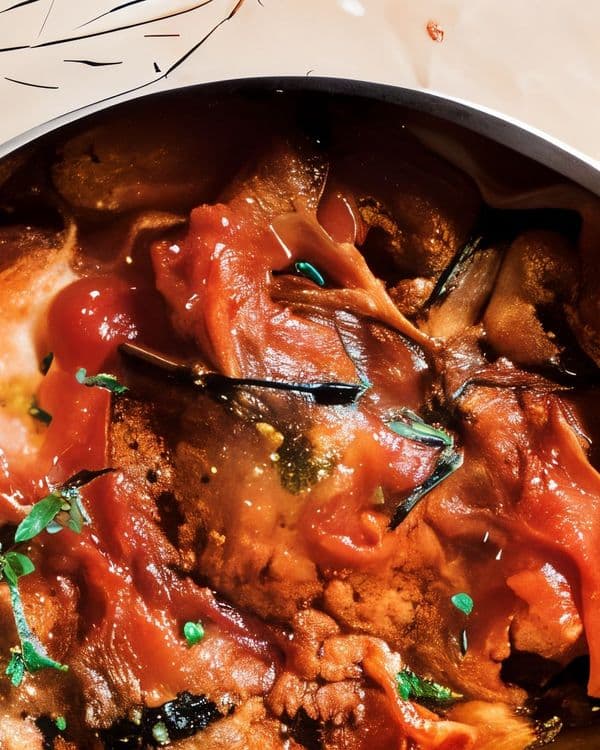
Eggplant Parmigiana is a traditional and flavorful dish from Italian cuisine. Originally from India, eggplant made its way to Europe, including Spain, thanks to the Muslims. Initially cultivated as an ornamental plant, it began to be used in Italian, Greek, and Andalusian kitchens in the 19th century. Eggplant, known for its bitter taste when raw, transforms beautifully when cooked and pairs wonderfully with tomatoes, red peppers, and zucchini. A tip for perfecting eggplant recipes is...
Chefadora AI has the answer - timers, swaps, step-by-step help.


Slice the eggplants into rounds. Place them on a baking tray with olive oil and bake until golden brown.
Slice the mozzarella into rounds and chop the basil.
Arrange the eggplant slices in a baking dish.
Cover the eggplant with basil, mozzarella, tomato sauce, and grated Parmesan cheese. Repeat the layering process.
Bake in the oven until cooked through.
Sauté the minced garlic and onion in a pan with olive oil.
Add the bay leaves and tomato concassé. Deglaze with white wine.
Season with salt, pepper, and cayenne pepper to taste. Let it simmer for approximately 10 minutes.
Slice the eggplant, sprinkle it with salt, and let it rest for an hour to remove excess water and bitterness.
Use fresh basil for a more aromatic flavor.
Ensure the eggplant slices are evenly baked for a consistent texture.
Why should I salt the eggplant before cooking?
Salting the eggplant helps remove excess water and reduces its natural bitterness, improving the overall flavor of the dish.
Can I use regular mozzarella instead of buffalo mozzarella?
Yes, you can substitute regular mozzarella, but buffalo mozzarella provides a creamier texture and richer flavor.
What is tomato concassé?
Tomato concassé refers to peeled, seeded, and chopped tomatoes, often used in sauces for a smoother texture.
Can I make this dish ahead of time?
Yes, you can prepare the layers and refrigerate the dish before baking. Bake it fresh when ready to serve.
Is it necessary to use white wine in the tomato sauce?
White wine adds depth to the sauce, but you can omit it or substitute with vegetable stock if preferred.