We use cookies on this website to ensure its proper functioning and to improve the quality of our services. Cookie Policy
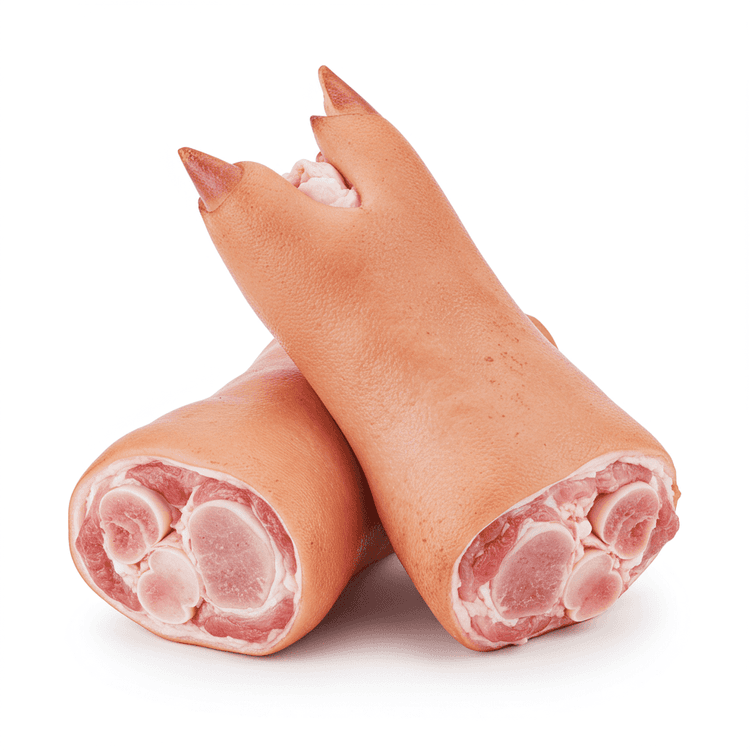
Pork trotters, also known as pig's feet, are a flavorful and gelatin-rich cut of pork that is prized for its tender, succulent texture when slow-cooked. These cuts are typically bone-in and covered with a layer of skin and connective tissue, which breaks down during cooking to create a rich, silky broth or sauce. Pork trotters are a popular ingredient in traditional cuisines around the world, including Asian, European, and Southern American dishes, where they are valued for their ability to add depth and body to soups, stews, and braised dishes.
On their own, trotters don't have much meat — what you're really after is the skin, cartilage, and connective tissue. The taste is mild and porky, almost neutral, which is why cooks lean so hard on aromatics, soy, vinegar, or chili to give them character. What sets them apart is the mouthfeel: after a long, gentle simmer the collagen melts into gelatin, coating your lips in that sticky, lip-smacking way that a good bowl of ramen broth or a proper braise delivers. If you've ever wondered why a stock made with trotters sets firm like jelly in the fridge, that's the collagen doing its work.
They take patience. A trotter rushed on high heat stays rubbery and tough, but given two or three unhurried hours it turns spoon-soft and glossy. Front trotters tend to be a little meatier than the hind ones, though either works. Because they're a humble cut, they're usually inexpensive too, which makes them a favorite for anyone stretching a pot of soup or building a batch of homemade pork stock. You'll find them fresh, frozen, or sometimes split down the middle at butchers and Asian grocers.
Save recipes from anywhere, and get answers, swaps, and help as you cook.


Available now for early access users.