We use cookies on this website to ensure its proper functioning and to improve the quality of our services. Cookie Policy
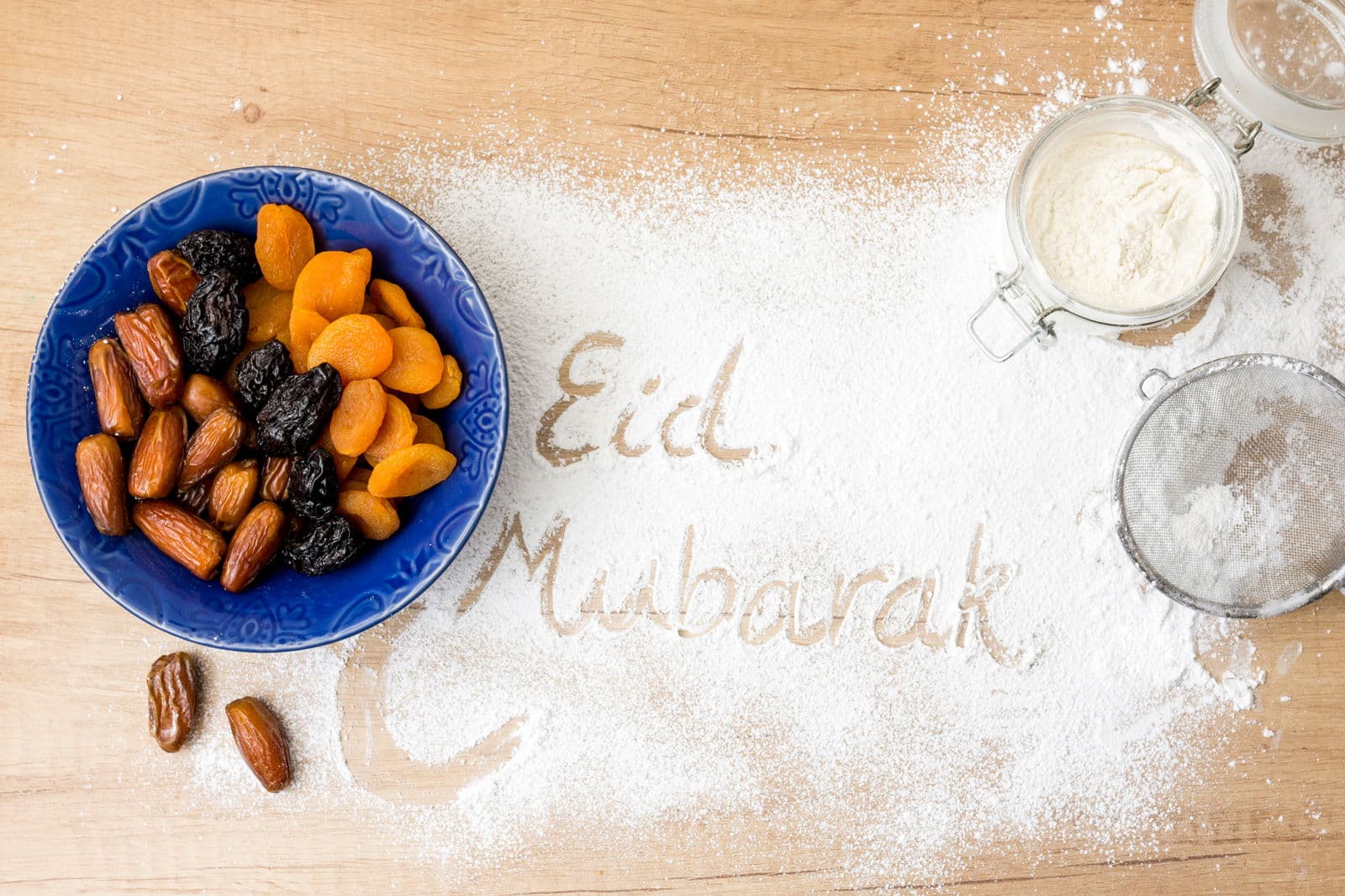
Every year, after a full month of fasting from sunrise to sunset, over two billion Muslims around the world wake up to the most food-filled day of the year. Tables are stacked with sweets. Kitchens smell like cardamom, saffron, and slow-cooked meat. Kids eat before prayer. Neighbors share plates of cookies. That day is Eid al-Fitr, and food is right at the center of it all.
Whether your family celebrates in South Asia, Southeast Asia, the Middle East, or here in the US, the spread looks a little different at every table. But the spirit is always the same: eat, share, and celebrate.
Here is a full look at Eid al-Fitr food traditions from around the world, the dishes that matter most, and what makes this celebration unlike any other feast day on the calendar.
Not exactly. Eid al-Fitr is not part of Ramadan. It is the first day after Ramadan ends.
Ramadan is the ninth month of the Islamic lunar calendar, observed through daily fasting and prayer. The fast officially ends when the new crescent moon is sighted, marking the beginning of a new month called Shawwal. Eid al-Fitr falls on the first of Shawwal and is typically celebrated over three days.
So Eid is the reward that follows Ramadan. And the first thing most Muslims do on Eid morning is eat something sweet before heading to prayer. That first bite, often a date or a spoonful of something sugary, carries a lot of meaning after 30 days of fasting.
Eid al-Fitr is widely known as "Sweet Eid" or "Meethi Eid" because of the heavy emphasis on desserts and sweet dishes during the celebration. Unlike Eid al-Adha, which centers more around meat, Eid al-Fitr food traditions lean sweet across almost every region.
This is not just about taste. It is symbolic. Sweets mark the joy of completing Ramadan, the sweetness of gratitude, and the warmth of coming together as a family after a month of discipline.
From vermicelli pudding in South Asia to date-filled cookies in the Middle East to layered cakes in Malaysia, sweet dishes are the signature of every Eid al-Fitr table worldwide.
What food is eaten on Eid al-Fitr depends heavily on where you are in the world. The holiday is celebrated across 50-plus countries spanning South Asia, Southeast Asia, Africa, the Middle East, Central Asia, and increasingly, the US and UK. That means the Eid table looks completely different from one household to the next.
Here is a regional breakdown of the most beloved Eid al-Fitr foods:
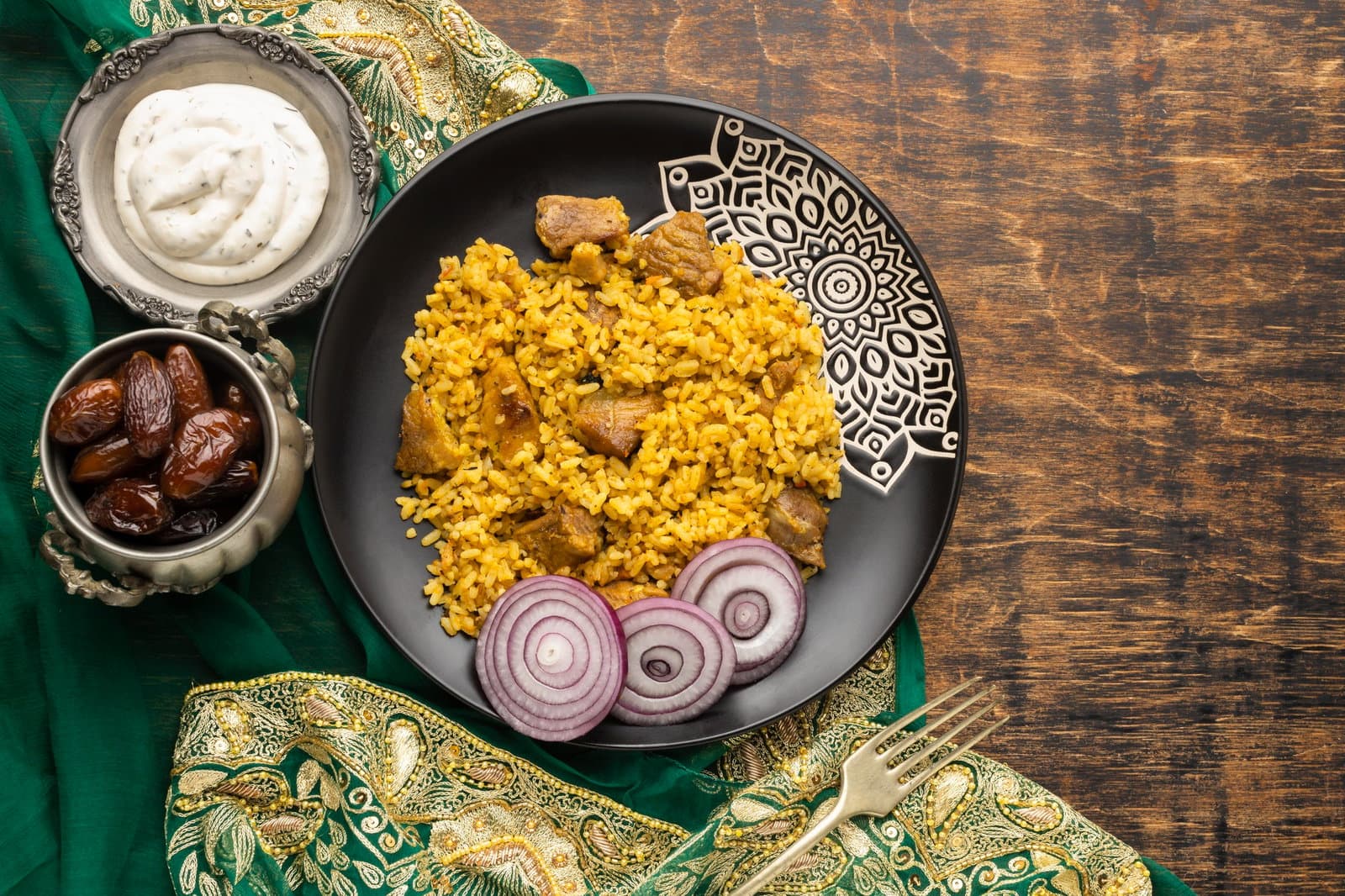
In India, Pakistan, and Bangladesh, Eid al-Fitr food traditions are some of the most elaborate and festive in the world.
The morning starts with Sheer Khurma, a creamy vermicelli pudding made with full-fat milk, dates, dry fruits, cardamom, and saffron. The name means "milk with dates" in Persian. It is eaten before prayer, often in small bowls passed around while everyone is still dressed in their best clothes. This dish is so tied to Eid that many families refuse to eat it at any other time of year.
Want to make a version at home? Try this Traditional Sweet Seviyan or this chilled Nawabi Seviyan that sets beautifully in the fridge.
For a fruity take that is perfect for summer celebrations, the Seviyan Fruit Custard is refreshing, creamy, and great to make ahead.
For lunch, biryani takes center stage. Fragrant basmati rice layered with spiced chicken or mutton, slow-cooked to a perfect steam, is the crown jewel of the Eid feast in most South Asian homes.
A Karachi-style biryani with its signature tangy masala is another classic Eid option. No South Asian Eid table is complete without a slow-cooked korma, either. This Lucknowi Mutton Korma from the royal kitchens of Awadh is exactly what a festive spread calls for:
Other popular dishes include haleem (a hearty wheat and meat stew), nihari (a slow-cooked beef or lamb shank stew eaten with naan), kebabs, and zarda (sweet saffron rice garnished with nuts and raisins).
For dessert, gulab jamun (soft milk-solid dumplings soaked in rose-scented syrup) is a staple across the subcontinent:
Across the Middle East, Eid al-Fitr food centers on pastries, cookies, and sweet breads that take days to prepare.
Maamoul is the most iconic Eid cookie of the Arab world. These buttery, crumbly shortbread cookies are molded by hand and filled with dates, walnuts, or pistachios, then dusted with powdered sugar. They go by different names depending on the country: kahk in Egypt, klaicha in Iraq, ghraybeh in Lebanon. Every family has their own recipe passed down through generations.
Baklava, layers of flaky phyllo pastry filled with chopped nuts and soaked in honey syrup, is eaten widely from Turkey to Lebanon to Iran. It is both a home dessert and a gifting staple, often boxed up beautifully and delivered to neighbors.
In Saudi Arabia and Yemen, dates are eaten first thing in the morning, before any other food. Bint al-Sahn from Yemen is a paper-thin layered sweet bread drizzled with honey and sprinkled with black seeds, served at breakfast. In Lebanon and Palestine, families prepare kanafeh, a shredded wheat pastry soaked in syrup and filled with stretchy sweet cheese.
For the main meal, dishes like lamb tagine, mansaf (lamb cooked in fermented dried yogurt, served over rice), and grilled kebabs are popular at lunch gatherings.
In Malaysia, Indonesia, Singapore, and Brunei, Eid al-Fitr (known locally as Hari Raya) is celebrated with a distinct blend of spicy mains and sweet bite-sized treats.
Rendang is the showpiece dish. It is a deeply spiced, slow-cooked dry curry made with beef or chicken, coconut milk, and a complex paste of lemongrass, galangal, chili, and turmeric. It is rich, aromatic, and genuinely worth the hours it takes to make. Rendang originated with the Minangkabau people of Sumatra but has become a staple on Eid tables across the entire region.
Alongside rendang, families serve ketupat (rice cakes wrapped in woven coconut leaves), lemang (glutinous rice cooked in bamboo), and opor ayam (chicken in coconut milk).
The cookie culture in this region is extraordinary. Eid cookies called kuih are baked by the dozens in the weeks before Eid and displayed in decorative tins for guests.
Baking enthusiast Farah Sooji shares some stunning Malaysian Eid bakes on Chefadora, including these melt-in-your-mouth Biskut Suji (semolina ghee cookies that are perfect for Eid tins) and these classic Coconut Tarts, which are a Hari Raya staple.
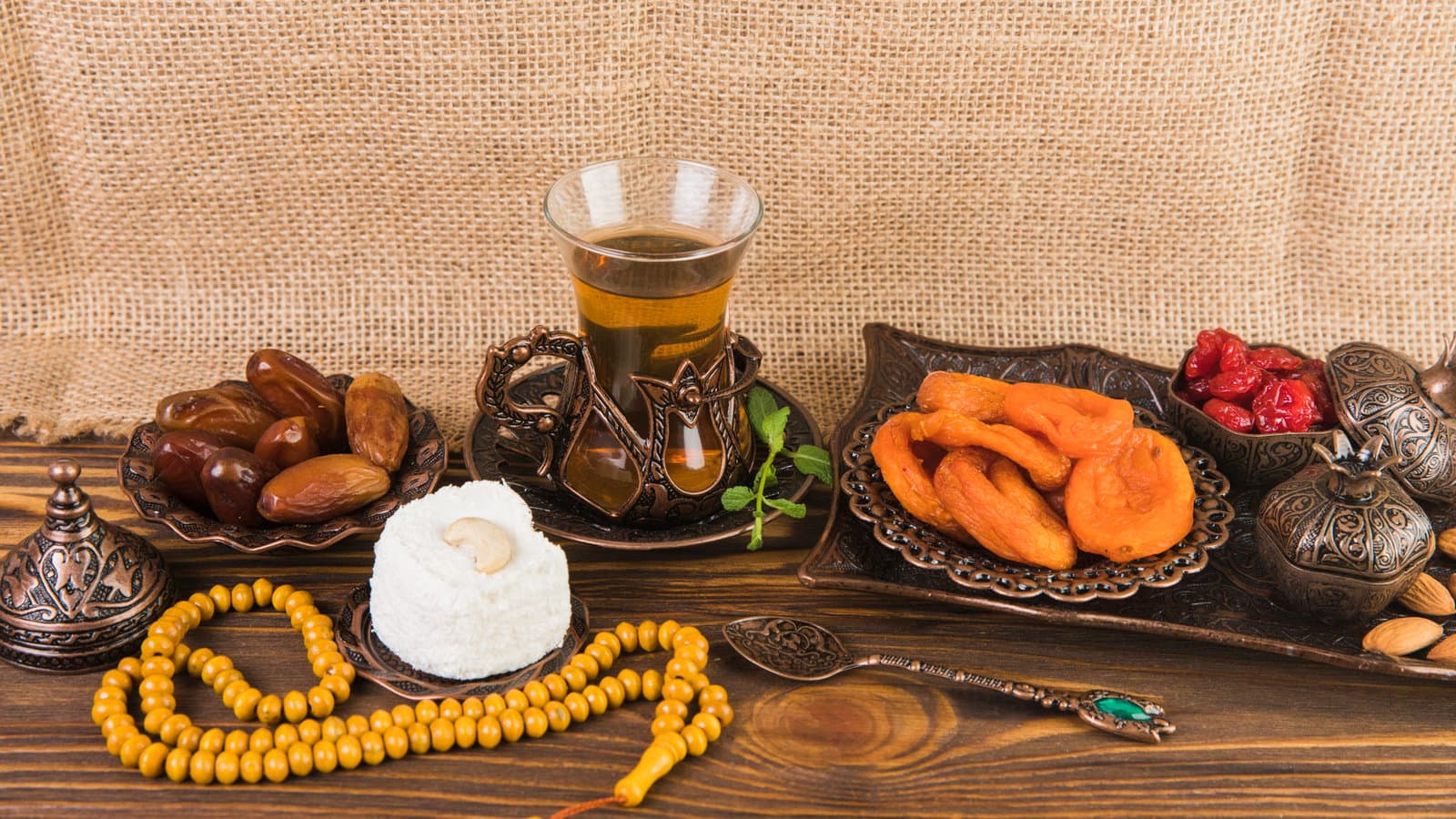
Across North and East Africa, Eid al-Fitr food reflects each country's unique culinary identity.
In Morocco, the morning starts with laasida, a warm sweet porridge of couscous, butter, and honey. By midday, families gather for tagine (slow-braised meat with vegetables and dried fruits) and fragrant couscous served with lamb or chicken. Traditional sweets like kaab el ghazal (crescent-shaped almond pastries) and fekkas (twice-baked cookies) fill every tray.
In Somalia, the Eid breakfast dish is cambaabur, a sweet spiced flatbread served with yogurt and sugar. In Egypt, kahk cookies filled with honey and nuts are baked in large batches and gifted throughout the three-day celebration. In East Africa, Eid tables often feature pilau rice, a spiced rice cooked in a rich meat broth.
Since Eid is an Islamic celebration, all food served follows halal guidelines. This means no pork and no alcohol in any form, including in cooking or desserts. Alcohol-based vanilla or food flavorings are often swapped out for alternatives like lemon extract or rose water.
For US Muslims celebrating Eid, finding halal ingredients has become much easier, with halal butchers, online delivery, and specialty grocery stores now widely accessible.
In the United States, Eid al-Fitr is celebrated by an estimated 3.5 million Muslim Americans. The celebration blends heritage food traditions with locally available ingredients.
You will find South Asian families making biryani and sheer khurma in suburban kitchens, Arab American families setting out trays of baklava and maamoul, Somali communities gathering for cambaabur and pilau, and Malaysian families baking tray after tray of festive cookies.
Many mosques in the US host large Eid community events with potluck-style food, creating a genuinely global feast in one room.
If you are cooking for Eid or just curious to explore these flavors, here are some Chefadora recipes worth bookmarking:
Q1. What is the most popular Eid al-Fitr food?
A1. Sheer Khurma—a sweet vermicelli pudding made with milk and dates—is widely considered the most iconic food of Eid al-Fitr across South Asia. In other regions, sweets such as Baklava and Maamoul are also closely associated with the celebration.
Q2. What food is eaten for Eid breakfast?
A2. Most Muslims eat something sweet before the Eid prayer. In South Asia, this is usually Sheer Khurma or Seviyan. In Morocco, people often eat Laasida. In the Middle East, dates and pastries are common, while in Somalia the traditional Eid breakfast bread is Cambaabur.
Q3. Why is Eid al-Fitr called Sweet Eid?
A3. Eid al-Fitr is often called “Sweet Eid” because the celebration features an abundance of desserts and sweet dishes. After a month of fasting during Ramadan, sweets symbolize joy, gratitude, and the reward of completing the fast.
Q4. What do Muslims eat on Eid in America?
A4. American Muslims usually celebrate with dishes from their cultural backgrounds. South Asian families often prepare Biryani, Korma, and Sheer Khurma, while Arab American families commonly serve Maamoul and Baklava. Community potlucks frequently feature dishes from many different countries.
Q5. Can you eat whatever you want on Eid?
A5. Yes, as long as the food follows halal dietary guidelines. On Eid al-Fitr there is no fasting—fasting on Eid day is actually not permitted. The day is meant for feasting, celebration, and sharing food with family, neighbors, and people in need.
Q6. What sweets are made for Eid al-Fitr?
A6. Many cultures have their own traditional Eid sweets. Popular examples include Sheer Khurma, Maamoul, Baklava, Gulab Jamun, Zarda, coconut tarts and semolina cookies in Malaysia, Kahk in Egypt, and Laasida in Morocco.
Updated on 16 Mar 2026
Save recipes from anywhere, and get answers, swaps, and help as you cook.

