We use cookies on this website to ensure its proper functioning and to improve the quality of our services. Cookie Policy
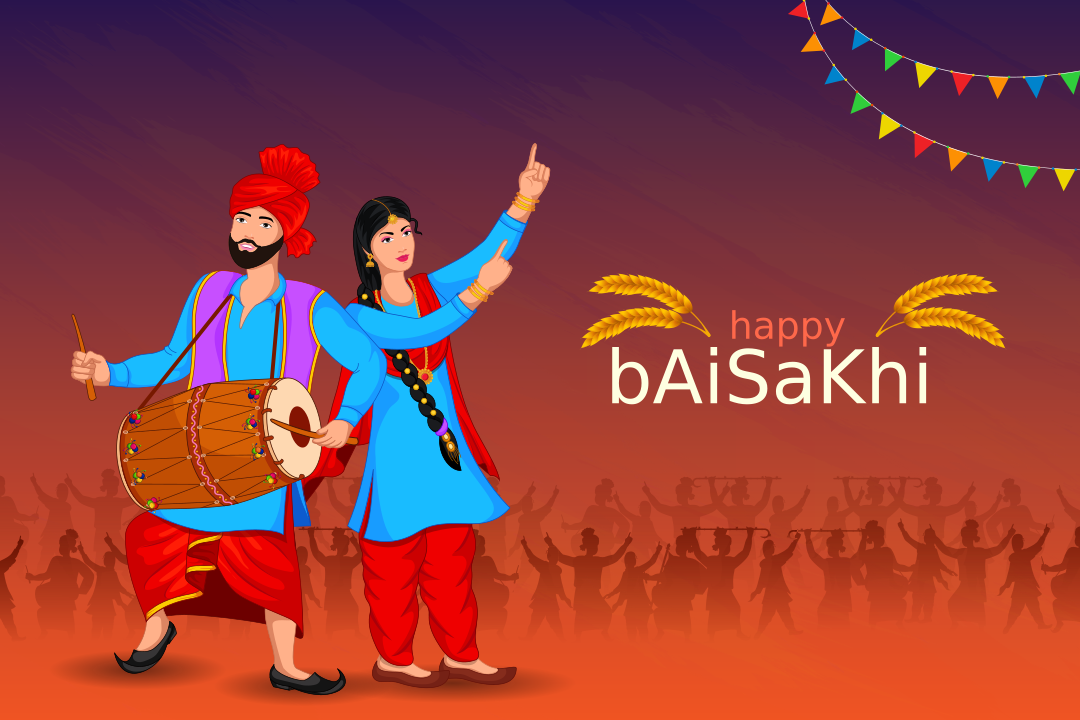
Baisakhi (or Vaisakhi) stands as one of India’s most vibrant and soulful festivals. While its roots run deepest in the soil of Punjab, its spirit radiates across the globe, uniting Indian communities in a shared celebration of renewal. Falling on April 14, 2026, Baisakhi marks both the peak of the harvest season and the dawn of the Sikh New Year - a beautiful intersection of faith, farming, and gratitude.
As the mid-April sun warms the fertile plains, a transformation occurs: the emerald fields of winter ripen into a shimmering sea of gold. This is the heartbeat of Baisakhi—a season of abundance and Chardi Kala (eternal optimism). For food creators, it is the ultimate sensory tribute to the Earth’s bounty, where the hard labour of the Rabi harvest finally meets the plate in flavours as bold as the beat of a dhol.
To truly cook for Baisakhi, one must appreciate the dual legacy of this day:
At its core, Baisakhi is an ancient harvest festival. After months of tending to the wheat—the lifeline of North India—farmers offer their first bounty to the Divine. It is a time to pray for future prosperity and celebrate the cycle of life.
For the Sikh community, the day holds profound spiritual weight. In 1699, Guru Gobind Singh Ji established the Khalsa Panth, gifting Sikhs a distinct identity rooted in equality, courage, and selfless service.
While Punjab is the epicentre, this spirit of renewal is mirrored across India through various regional harvest festivals (like Poila Baisakh in Bengal or Vishu in Kerala), showcasing a beautiful tapestry of cultural unity.
Baisakhi is a whirlwind of devotion and colour. The day begins with early morning prayers at Gurudwaras and vibrant Nagar Kirtans (street processions). The air vibrates with the energy of Bhangra and Gidda dances, while the tradition of Langar; the community kitchen reminds us that the most sacred meals are those shared with others, regardless of status or background.
A Global Langar: Today, the spirit of Baisakhi travels far beyond the fields of Punjab. From the streets of Southall to the suburbs of Toronto, the beauty of the Langar tradition lies in its radical equality where people from all walks of life sit side by side to share a blessed meal.
The food of Baisakhi is a mirror of the landscape. The palette is dominated by yellow and orange, symbolising ripe wheat and the saffron robes of the Panj Pyare. Expect dishes rich with fresh grains, creamy dairy, and the unmistakable aroma of desi ghee.
Soak your saffron strands in warm milk for 30 minutes before adding them to the pot to achieve a yellow colour.without artificial additives.
A Baisakhi Mela (fair) is a feast for the senses with irresistible aromas:
Baisakhi reminds us that food is a sacred cycle: from the soil to the grain, and finally to our shared tables. It teaches us to honour the hands that feed us and to find joy in community living. Whether you are preparing a simple bowl of Meethe Chawal or hosting a grand festive brunch, cook with the same gratitude the farmers feel when they see their first harvest. Through prayer, dance, and shared meals, Baisakhi spreads a message of hope and positivity that lasts all year long. Happy Baisakhi to you and your kitchen! 🌾✨
Updated on 11 Mar 2026
Save recipes from anywhere, and get answers, swaps, and help as you cook.

