We use cookies on this website to ensure its proper functioning and to improve the quality of our services. Cookie Policy
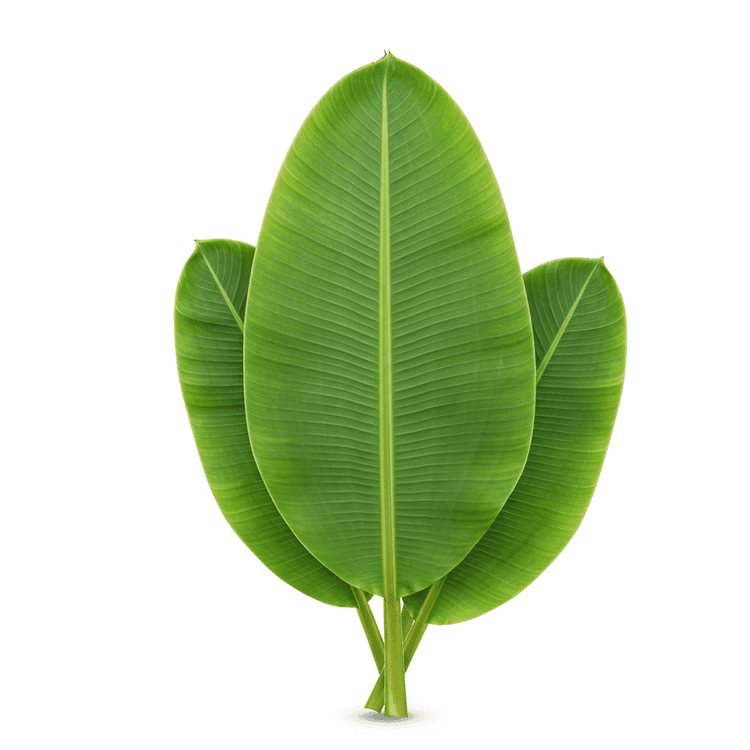
Banana leaves are large, flexible, and waterproof leaves from the banana plant. They're a vibrant, glossy green when fresh, turning brown or golden as they age or meet heat. You'll mostly see them used for wrapping and steaming, where they lend food a subtle, sweet, grassy aroma. The surface is smooth and lightly waxy, which is exactly why nothing sticks to it, and it makes a naturally biodegradable wrapper for both cooking and serving. Cooking in banana leaves is one of those old, sustainable habits that also happens to make food taste better, sealing in moisture and fragrance as the parcel heats through.
If you've never worked with one, the first thing to know is that a raw leaf is stiff and cracks along its central rib if you fold it cold. The fix is heat: pass the leaf over an open flame or dip it in hot water for a few seconds and it turns supple and deep green, ready to fold and tie without tearing. That quick warming also releases more of its tea-like scent, which is where a lot of that signature flavor comes from.
Think of banana leaves less as an ingredient you eat and more as a cooking vessel that seasons what's inside. They show up across South Indian, Southeast Asian, Filipino, Mexican, and Caribbean kitchens, from a full sadya feast served straight on the leaf to little steamed parcels of fish and rice. Cultures far apart landed on the same idea for good reason, and once you've tasted rice or fish cooked this way, foil feels like a downgrade.
Save recipes from anywhere, and get answers, swaps, and help as you cook.

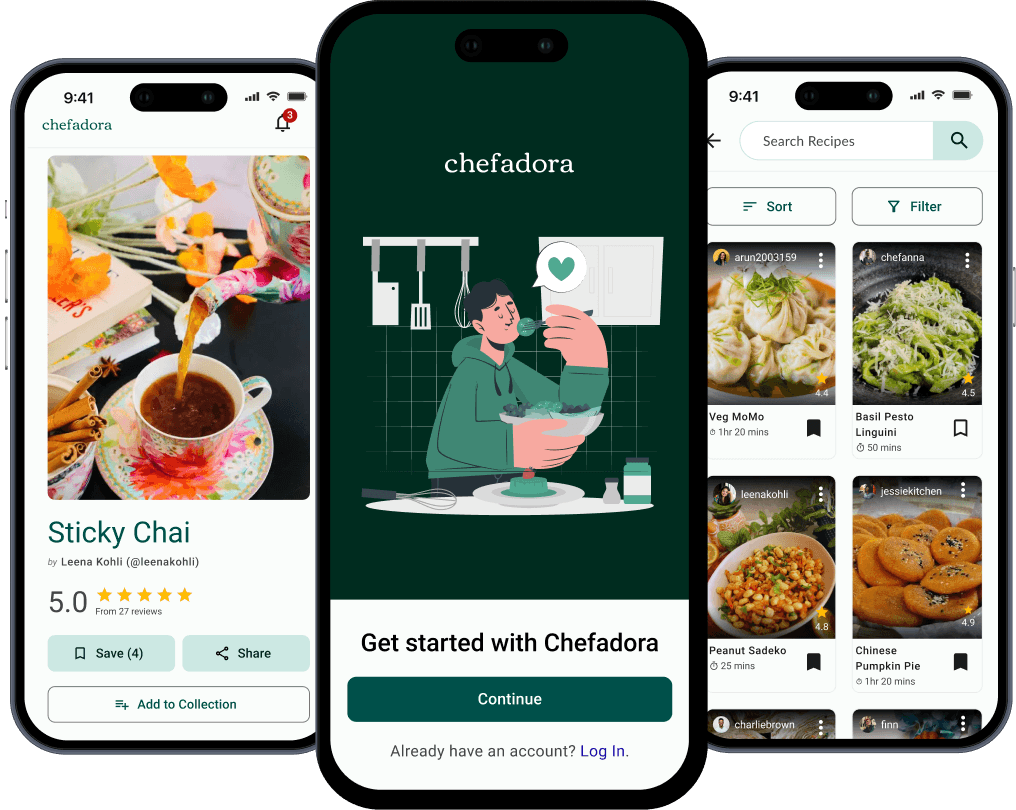
Available now for early access users.