We use cookies on this website to ensure its proper functioning and to improve the quality of our services. Cookie Policy
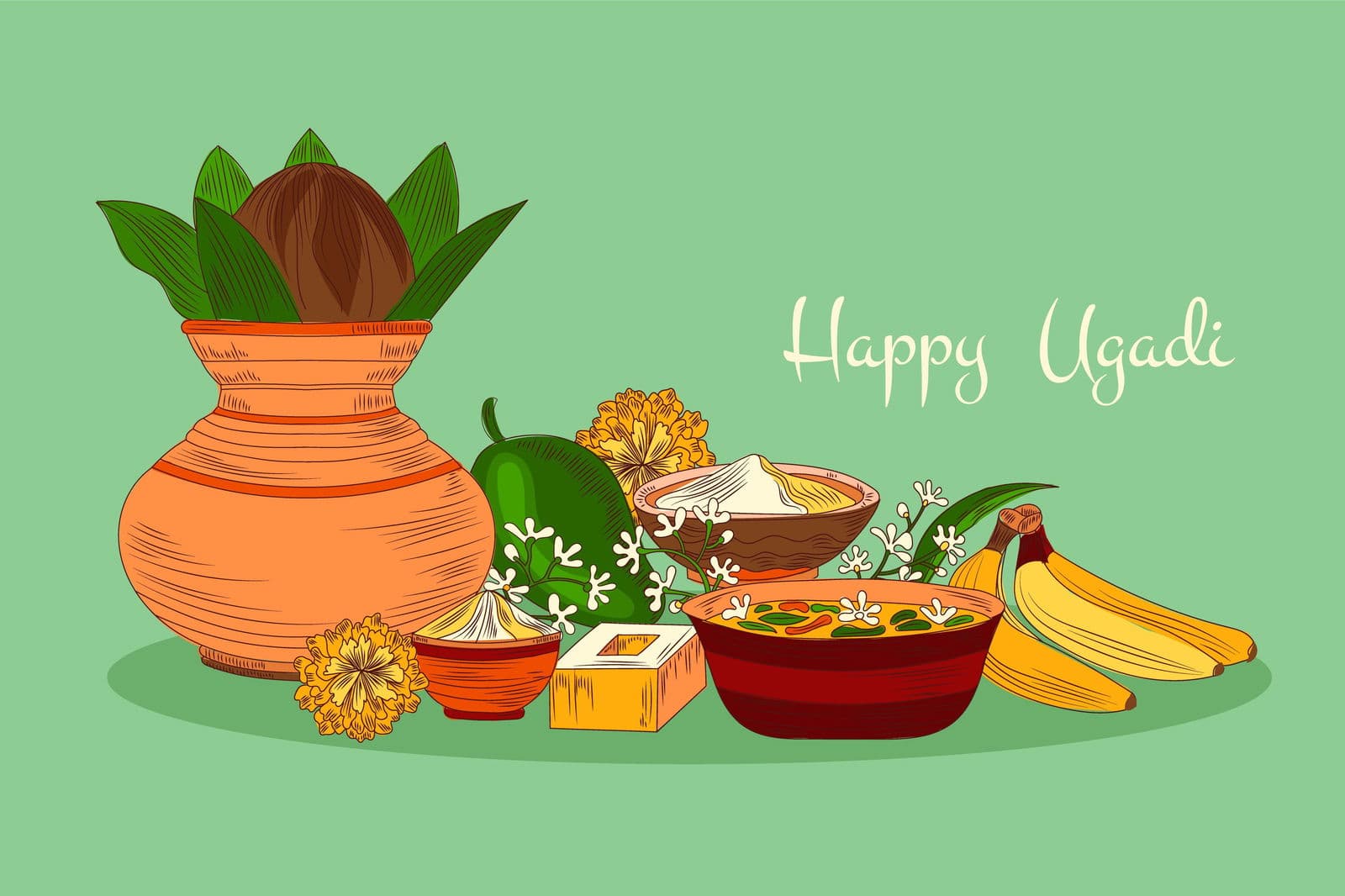
Ugadi 2026 falls on Thursday, March 19. If you have never cooked for this festival before, or you just want to understand why the food matters so much, this guide breaks it all down. From the iconic Ugadi Pachadi to the full feast, you will find everything you need to know about Ugadi food and the traditions behind it.
Ugadi, also spelled Yugadi, is the Telugu and Kannada New Year. The name comes from two Sanskrit words: "Yuga," meaning era, and "Adi," meaning beginning. Ugadi literally means the start of a new age.
The festival is mainly celebrated in Andhra Pradesh, Telangana, and Karnataka. It falls on the first day of the Hindu lunar month of Chaitra, which lands in late March or early April each year. The Telugu New Year name for 2026 is Vishwavasu.
What makes Ugadi different from most New Year celebrations is how food is used. Every dish at the table carries meaning. The flavors are not picked for taste alone. They are chosen to reflect real life, including the hard parts.
Ugadi starts before sunrise with a ritual oil bath, prayers, and the lighting of diyas. After that, the first food of the year is served. The day continues with a full traditional meal shared with family.
Here is what a typical Ugadi food spread looks like.
The most important Ugadi food is Ugadi Pachadi. This dish is eaten first, before anything else. It is offered to the gods as naivedyam and then served to every member of the family, usually in a small cup or on the palm of the hand.
Ugadi Pachadi is not a curry, not a dessert, and not quite a chutney. It is a small, intentional mix of six ingredients that each bring a different taste. The idea behind the dish is that by tasting all six flavors at the start of the new year, you are accepting that the coming year will hold all kinds of experiences, good and difficult, sweet and bitter.
No other New Year food tradition in the world is quite like this. Most cultures celebrate with sweets and abundance. Ugadi Pachadi builds the difficulty in on purpose.
The full recipe and process are covered below in the "What Are the 5 Items in Ugadi Pachadi?" section.
Beyond the Pachadi, the Ugadi feast is a full South Indian spread. Here is what makes the table:
The six flavors of Ugadi are called Shadruchulu in Telugu. "Shadru" means six, and "chulu" means tastes. These six tastes are the foundation of Ugadi Pachadi and the entire food philosophy of the festival.
Here is what each flavor stands for:
The meal on Ugadi is saying: this year will have all of these. Eat them all. Be ready.
People often ask about "5 items in Ugadi Pachadi," but there are actually 6 core ingredients, one for each of the Shadruchulu. The confusion likely comes from some regional recipes that combine or skip one of the flavors.
Here are the six ingredients:
Some families also add banana, sugar cane pieces, or coconut. These are family-specific additions, not replacements.
Ugadi Pachadi is a no-cook recipe that takes about 5 minutes to prepare. The key is using fresh ingredients on the morning of Ugadi.
Ingredients:
Method: Squeeze the soaked tamarind to extract the juice. Combine the tamarind juice and jaggery water in a bowl. Add the raw mango, neem flowers, salt, and pepper. Stir well and serve immediately in small cups.
Tradition tip: The Pachadi is served by the oldest family member, who stirs the bowl well and spoons a portion into each person's cupped palm without looking at which ingredients go in. This is intentional. You are not supposed to pick your flavors for the new year.
The Ugadi Pachadi is consistent across all three states. The full feast is where you see regional differences.
Andhra Pradesh and Telangana tend to serve a larger, more elaborate spread. Pulihora, Garelu, Bobbatlu, Payasam, Perugu Charu, and various raw mango dishes are all common. For non-vegetarian households, the evening meal often includes a full rice and curry spread. An Andhra Style Chicken Curry with steamed rice is a popular choice for the evening.
Karnataka, where the festival is called Yugadi, has its own version of the bitter-sweet ritual called Bevu Bella. This is a simpler mix of just neem and jaggery, eaten before the full meal. The main sweet is Obbattu (Holige), and the rice dish is usually Puliyogare (very similar to Pulihora). A light salad called Kosambari, made with soaked moong dal, cucumber, and coconut, is also a Yugadi staple.
The morning meal in both regions is always satvik, meaning fully vegetarian and made without onion or garlic. This is because the food is offered to the gods first.
Q1. What do you do on Ugadi?
A1. The day begins before sunrise with a ritual oil bath using sesame oil, believed to purify the body and mind. Homes are cleaned and decorated with fresh mango leaf garlands (torana) and rangoli at the entrance. After prayers, families eat Ugadi Pachadi together as the first food of the new year. An elder or priest then reads the Panchanga Sravanam, the Hindu almanac for the coming year, followed by a festive meal.
Q2. Which god is associated with Ugadi?
A2. Ugadi is closely associated with Brahma, who in Hindu mythology is believed to have begun creating the universe on this day. Vishnu is also widely worshipped during the festival, and many households offer prayers to both.
Q3. What are the 6 ruchulu?
A3. “Ruchulu” means “tastes” in Telugu. The six ruchulu are teepi (sweet), pulupu (sour), chedu (bitter), uppu (salty), karam (spicy), and vagaru (pungent). These correspond to the six ingredients traditionally used in Ugadi Pachadi.
Q4. Can I make Ugadi Pachadi without neem flowers?
A4. Yes. If neem flowers are unavailable, a small amount of roasted fenugreek seeds (methi) can provide the bitter element. The taste will differ slightly, but the symbolic balance of the six flavors remains.
Q5. What is the main fruit used in Ugadi Pachadi?
A5. Raw, unripe mango is the main fruit. It contributes the astringent and slightly pungent flavor known as “vagaru.” A tender mango is traditionally preferred, though any firm raw mango works well.
Q6. When is Ugadi 2026?
A6. Ugadi in 2026 falls on Thursday, March 19. The new year name for this cycle is Vishwavasu.
Q7. Is Ugadi the same as Gudi Padwa?
A7. Ugadi and Gudi Padwa occur on the same day but are celebrated differently. Gudi Padwa in Maharashtra features raising a decorated bamboo pole outside the home, while Ugadi celebrations in Telugu and Kannada traditions center on Ugadi Pachadi, Panchanga readings, and a festive meal.
Posted on 16 Mar 2026
Save recipes from anywhere, and get answers, swaps, and help as you cook.

