We use cookies on this website to ensure its proper functioning and to improve the quality of our services. Cookie Policy
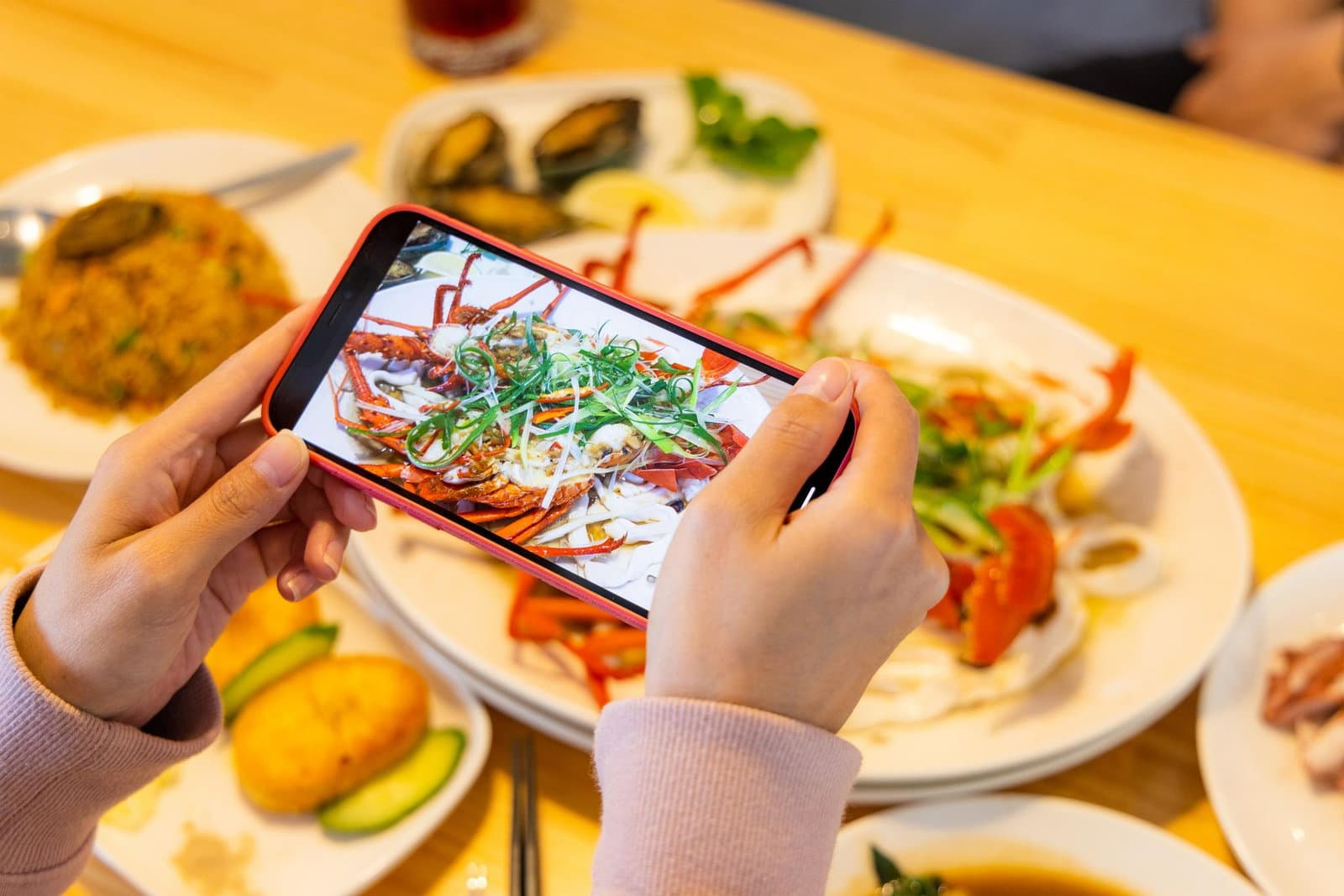
Food bloggers make money through ad revenue, affiliate marketing, brand deals, and digital products. Most of that income comes from recipe views - and you don't need a blog to get them. On Chefadora, you can publish recipes, grow an audience, earn 55% of ad revenue from your views, and add affiliate links to your recipes - all without building a website, paying for hosting, or knowing anything about SEO plugins.
There's a version of this story that gets told a lot: someone starts a food blog, builds it for years, and eventually makes a living from it. That version is real. Pinch of Yum reportedly earned over $95,000 a month by 2017. Tiffy Cooks hit five-figure months within 14 months of starting.
But what that story skips is the part before the income - the months or years of paying for hosting, writing posts, figuring out SEO, and waiting for traffic to build before a single dollar comes in.
Most food bloggers earn money through four main routes:
Ad revenue. When people visit a recipe page, ads show up. The blogger earns a share of what those ads generate. The more views, the more money. This is the most common income stream for established recipe creators.
Affiliate marketing. Creators link to products inside their recipes - a specific pan, a pantry ingredient, a cookbook. When a reader clicks and buys, the creator earns a commission. It doesn't change anything about the recipe. The links are just there.
Brand deals and sponsorships. Companies pay creators to develop recipes featuring their products. This tends to come later, once a creator has an audience. It's not a starting point.
Digital products. Cookbooks, meal plans, recipe guides sold directly to readers. Works well for creators with a loyal, engaged following who already trust their recipes.
The first two - ad revenue and affiliate marketing - are where most beginner and mid-level creators start. They require no upfront cost and no existing audience to set up.
Yes. The reason most recipe income guides focus on blogs is that, until recently, a blog was the only practical way to publish recipes and earn from them. You needed a website to host your content, run ads, and make affiliate links work.
That's changed.
Recipe platforms now give creators all of the same infrastructure - structured recipe pages, ad revenue, affiliate link support, SEO optimisation, an audience - without the cost or technical work of running your own site.
If you know how to cook and you can write down a recipe, you can publish on a platform and start building toward an income. You don't need to know what a plugin is. You don't need to pay for hosting. You don't need to wait 18 months to qualify for a premium ad network.
The gap between "home cook who makes great food" and "recipe creator who earns from their content" is much smaller now.
Read our guide on the Best Platforms to Share Homemade Recipes - a breakdown of what each platform is actually built for and what it pays.
Chefadora is a recipe publishing platform built for creators. Think of it as your own personal food website - but Chefadora builds it for you, handles all the tech, and gets your content found on Google.
Here's what you get when you join, completely free:
You don't need a domain name. You don't need to pay for hosting. You don't need to know anything about code or SEO. Chefadora handles all of that for you.
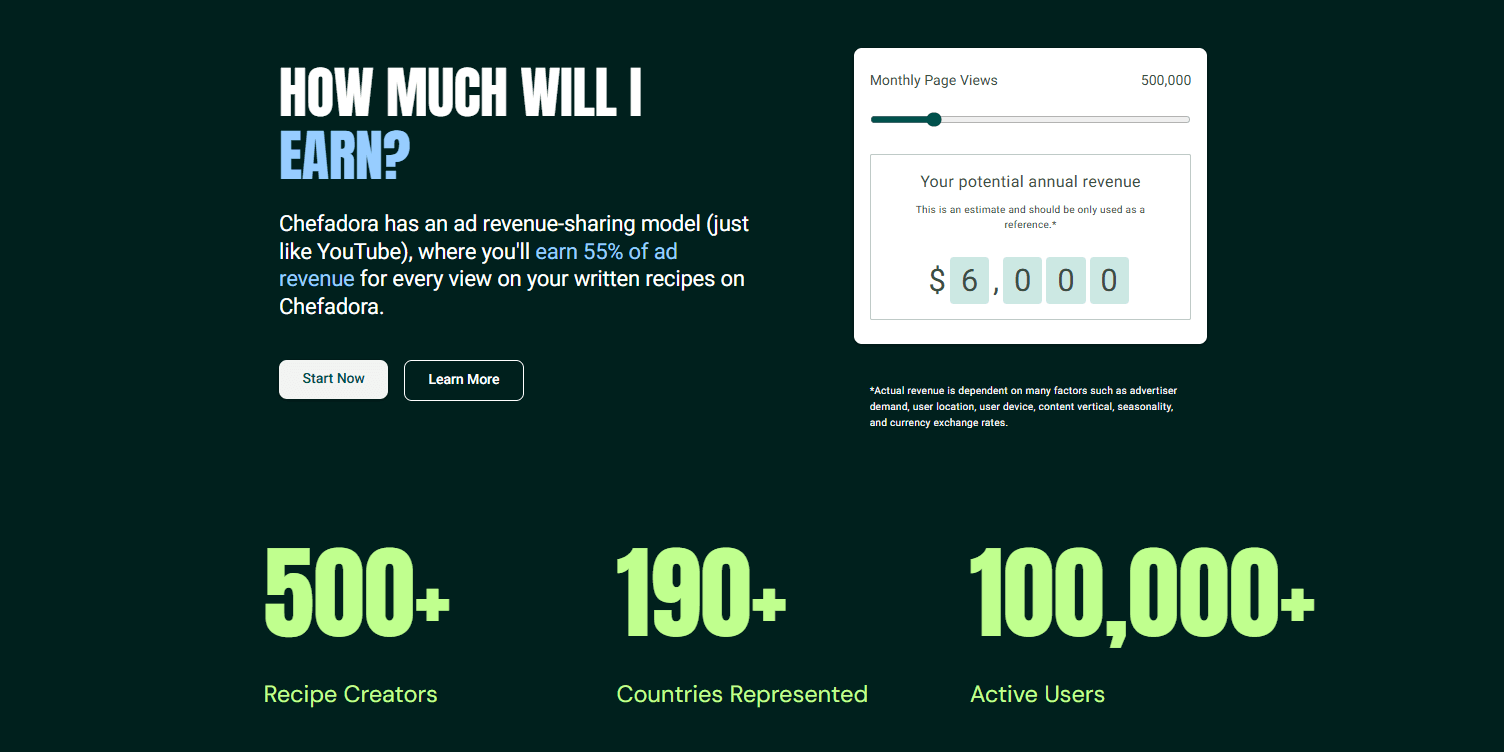
Chefadora.com pays food creators through its Earn Programme. Your earnings are based on how many people view and engage with your published recipes. The more people find your recipes - through Google, through the Chefadora platform, or through your social channels - the more you earn.
Ad revenue sharing is the main stream. Once your recipes reach 10,000 total views across everything you've published and you have at least 10 recipes live, you can apply for the Standard Earn Programme. Once approved - a process that takes around a month - you earn 55% of all ad revenue generated from your recipe pages. Every view on every recipe counts. It runs passively while you cook, sleep, or publish your next recipe.
There's also the Chefadora Partner Programme for creators who already have an engaged following on social media, a food blog, or another platform. Partners earn from day one with no minimum view threshold, still receive 55% ad revenue, and keep 100% of affiliate commissions. You can apply through Chefadora's contact page if you think you qualify.
Affiliate marketing is the second stream - and it's available from your very first recipe, no view threshold needed. Add affiliate links directly to your recipes on Chefadora. Link to the pan you used, the spice blend in your ingredient list, the cookbook that inspired the dish. Sign up for an affiliate programme separately - Amazon Associates is the most common starting point - get your tracking links, and embed them in your recipe content. You keep 100% of any commissions you earn. These sit completely separate from your ad revenue.
Beyond the two income streams, Chefadora also gives creators an analytics dashboard to track views, saves, and engagement across all recipes. This tells you which recipes are pulling traffic, which collections are being shared, and where to focus your publishing effort to hit milestones faster.
Already publishing recipes elsewhere? Free recipe import means your existing content moves to Chefadora, gets formatted automatically by Recipe Genie, and starts counting toward your view total from the moment it goes live.
A collection built around a specific theme makes affiliate links land more naturally too. A "Japanese Home Cooking" collection is a credible place for a soy sauce or rice cooker affiliate link. The collection earns the trust; the link is just useful.
Join Chefadora and start publishing your recipes →
Views come before income. The creators who reach milestones fastest published consistently, tagged their content well, and made their recipes easy to find. Here's what the path looks like:
Use Recipe Genie to get your first recipes live. Complete recipe pages with proper tags are more discoverable than incomplete ones.
Group your published recipes by theme. Name collections around what people actually search for. "High Protein Meal Prep" or "Easy Nigerian Weeknight Dinners" are searchable. "My Recipes" isn't.
You don't need 10,000 views to start earning affiliate commissions. That income starts from your first click.
Every public collection has its own shareable link. Post it. The more your collections circulate, the faster your view count grows.
None of these steps require a food blog, a social media following, or any technical knowledge.
No - and this is one of the biggest misconceptions about recipe monetisation.
Social media can drive traffic, but it's not the source of income. Ad revenue comes from recipe page views. Those views can come from Google search, from collections being shared, or from people finding your profile on Chefadora directly.
A creator with 500 Instagram followers and 25 well-written, well-tagged recipes on Chefadora can hit 10,000 total views faster than a creator with 5,000 followers and 3 recipes.
The Partner Programme is where the following helps - it's one of the signals Chefadora looks at when evaluating partner applications. But the Standard Earn Programme has no following requirement. It's based on total views, and total views come from publishing good recipes that people find and read.
Food bloggers spend months building a website before they see a cent. You don't have to take that route.
Chefadora.com gives you the recipe pages, the SEO, the ad revenue structure, and the affiliate link support - all free. You publish recipes, build collections, grow your view count, and earn from the platform while it does the infrastructure work for you.
Home cooks, food creators, recipe developers, nutritionists - if you make recipes, Chefadora is built to receive them and help you earn from them.
Join Chefadora and start publishing your recipes →
Q1. How do food bloggers make money from recipes?
A1. The main income streams are ad revenue, affiliate marketing, brand deals, and digital products like cookbooks. Ad revenue and affiliate marketing are where most creators start because they require no upfront cost and no existing audience to set up.
Q2. Can you make money from recipes without a food blog?
A2. Yes. Platforms like Chefadora give creators structured recipe pages, ad revenue sharing, affiliate link support, and SEO optimization without the need to build or pay for a website. You publish your recipes, build your view count, and earn through the platform's Earn Programme - no hosting, no plugins, no setup.
Q3. How many views do you need to earn ad revenue on Chefadora?
A3. 10,000 total views across all your published recipes to apply for the Standard Earn Programme. Combined total - not 10,000 per recipe. The more recipes you publish, the faster the total grows.
Q4. Do you need a social media following to earn on Chefadora?
A4. No. The Standard Earn Programme is based on total recipe views, not followers. Views come from search, collections being shared, and people finding your Chefadora profile. A following helps with the Partner Programme application but is not required for standard ad revenue.
Q5. How long does it take to start earning from recipes on Chefadora?
A5. Affiliate commissions can start from your first recipe and first click. Ad revenue requires reaching 10,000 total views and completing the review process, which typically takes around a month. Publishing consistently, tagging recipes accurately, and building public collections that get shared is the fastest route.
Posted on 26 Jun 2026
Save recipes from anywhere, and get answers, swaps, and help as you cook.

