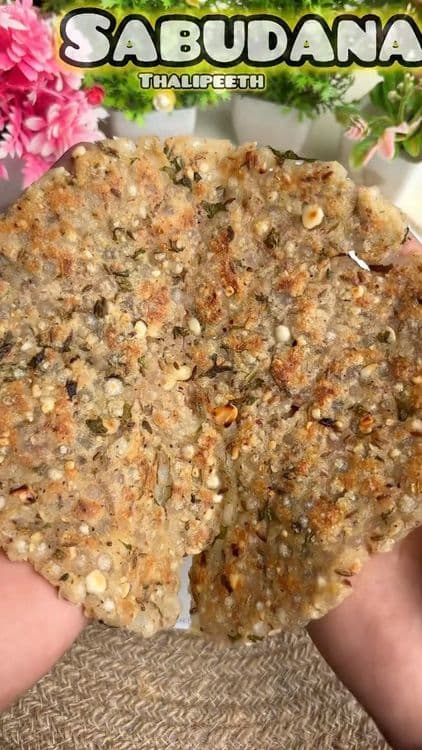
Sabudana Thalipeeth is a delicious and crispy flatbread made with soaked sabudana, boiled potatoes, and a mix of flavorful ingredients. Perfect for fasting days, this recipe is light yet filling. The addition of roasted peanut powder and a hint of lemon juice makes it irresistibly tasty. Do try this out for your next upwas or vrat!
Chefadora AI has the answer - timers, swaps, step-by-step help.


Mash the boiled potatoes in a mixing bowl until smooth.
Add the soaked sabudana, cumin seeds, finely chopped green chilies, coriander leaves, roasted peanut powder, rajgira, salt, and lemon juice to the mashed potatoes.
Mix everything thoroughly to form a dough-like consistency.
Divide the mixture into equal portions and flatten each portion into a round thalipeeth shape.
Heat a non-stick pan and cook the thalipeeth on medium heat until golden brown on both sides.
Serve hot with yogurt or chutney of your choice.
Ensure the sabudana is soaked properly and is soft before mixing it into the dough.
Use a plastic sheet or parchment paper to shape the thalipeeth easily without sticking.
Cook on medium heat to ensure the thalipeeth is cooked evenly and becomes crispy.
Can I use any other flour instead of rajgira?
Yes, you can use singhara or kuttu flour as an alternative to rajgira for fasting recipes.
How long should I soak the sabudana?
Soak the sabudana for 4-6 hours or overnight until it becomes soft and non-sticky.
Can I skip the roasted peanut powder?
Roasted peanut powder adds flavor and binds the mixture, but you can skip it if you have a peanut allergy.
What can I serve with Sabudana Thalipeeth?
Sabudana Thalipeeth pairs well with yogurt, green chutney, or a sweetened curd for fasting days.
Can I store the dough for later use?
It is best to prepare and cook the thalipeeth fresh, but you can refrigerate the dough for up to a day.
Cooking | Collaborations | Content Mumbai, India 100+ Brand Collaborations & Counting