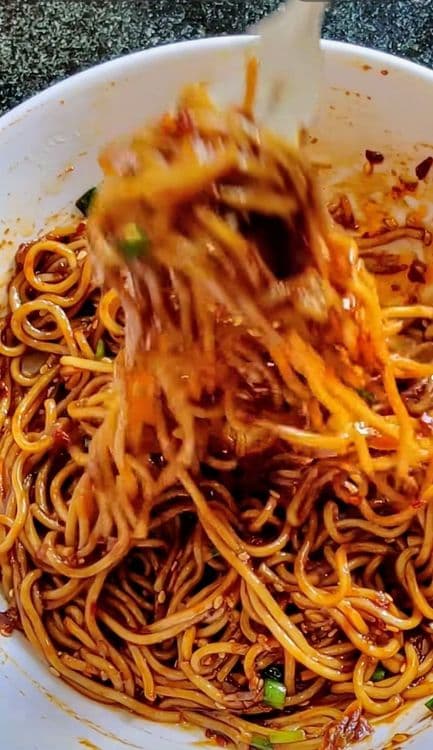
Chili Oil Noodles, or You Po Mian (油泼面), are a classic and incredibly satisfying Chinese noodle dish known for their fiery kick, aromatic flavor, and satisfying chew. The magic happens when sizzling hot oil is poured over a bowl of fresh aromatics and seasonings, creating an instant, fragrant sauce that coats every strand of noodle. While traditionally made with handmade biang biang noodles, this recipe can be adapted for easier home cooking with readily available...
Chefadora AI has the answer - timers, swaps, step-by-step help.


Bring a large pot of water to a rolling boil. If using dried noodles, add a pinch of salt to the water.
Cook the noodles according to package directions until al dente or just cooked through.
If using green vegetables, add them to the boiling water during the last minute of noodle cooking to blanch them.
Drain the noodles and vegetables thoroughly and immediately transfer them to a large, heat-proof serving bowl. Do not rinse the noodles if you want them warm.
Arrange the minced garlic, chili flakes, white and light green parts of the sliced green onions, light soy sauce, Chinese black vinegar, sugar, and salt (or chicken bouillon powder, and Sichuan peppercorn powder if using) directly on top of the cooked noodles in the bowl.
Pile the garlic and chili flakes in a small mound on top of the noodles.
In a small saucepan or ladle, heat the neutral oil over medium-high heat until it's shimmering hot and just begins to smoke lightly. Be careful not to burn the oil.
Carefully pour the sizzling hot oil directly over the mound of garlic and chili flakes on the noodles. You should hear a satisfying sizzle, and the aromatics will instantly cook and release their fragrance.
Immediately toss everything together thoroughly, ensuring the noodles are evenly coated with the fragrant chili oil and seasonings.
Garnish with the reserved green tops of the green onions and a sprinkle of toasted sesame seeds if desired.
Serve hot and enjoy.
While handmade biang biang noodles are authentic, good quality thick wheat noodles are a great substitute. The wider the noodle, the more surface area for the sauce to cling to.
Adjust the amount of chili flakes to your desired spice level. For a deeper flavor, you can use a mix of coarse and fine chili flakes.
The oil needs to be hot enough to sizzle the aromatics but not so hot that it burns them. Shimmering and a slight wisp of smoke are good indicators.
Always use a heat-proof bowl for mixing to avoid any mishaps with the hot oil.
Feel free to add other ingredients like a fried egg, shredded cucumber, or a dash of black sesame paste for added flavor and texture.
Can I use other types of noodles?
Yes, while handmade biang biang noodles are traditional, you can use thick wheat noodles, knife-cut noodles, or even fettuccine as a substitute.
How spicy is this dish?
The spice level depends on the amount and type of chili flakes used. You can adjust it to your preference.
What can I use instead of Chinese black vinegar?
You can substitute Chinese black vinegar with balsamic vinegar for a similar tangy flavor.
Can I make this dish ahead of time?
It's best served fresh, but you can prepare the chili oil and sauce ingredients in advance. Cook the noodles and assemble just before serving.
Is this dish vegetarian or vegan?
Yes, this dish is vegetarian and can be made vegan by ensuring the soy sauce and other ingredients are vegan-friendly.
Explore Iorjia - Good Food! Find Awesome meals, healthy options, tasty snacks & refreshing drinks.