We use cookies on this website to ensure its proper functioning and to improve the quality of our services. Cookie Policy
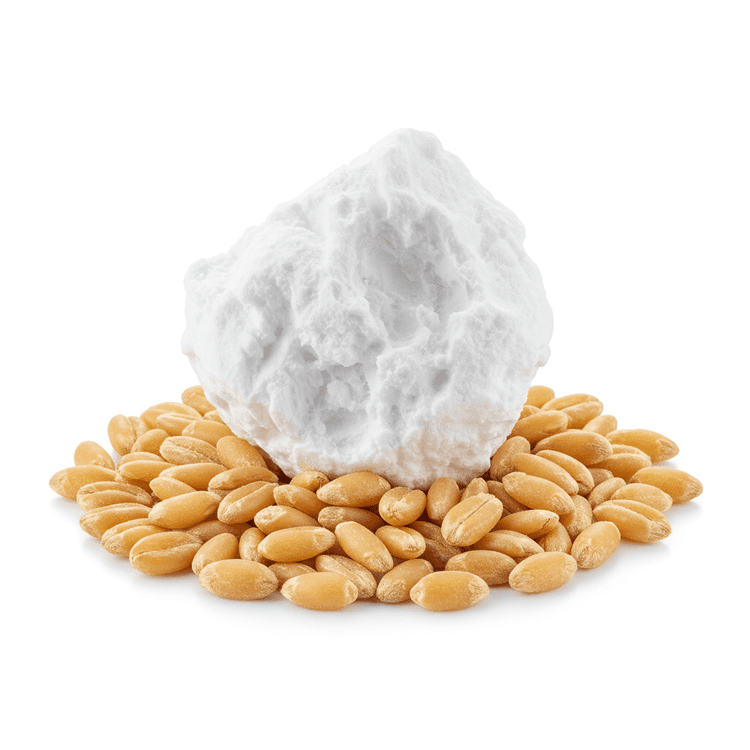
Wheat starch is a fine, white powder made by washing the gluten proteins out of wheat flour, leaving behind almost pure starch. It's virtually flavorless and odorless, which is exactly what makes it so useful — it thickens, binds, and crisps without ever getting in the way of the flavors you actually want to taste. As a thickening agent it gives sauces, gravies, and puddings a smooth, glossy, slightly translucent finish, and it turns cloudy or gluey where flour would leave things heavy. You'll usually find it in the baking aisle or the Asian grocery, sometimes labeled "wheat starch" and sometimes as the key ingredient in har gow (crystal shrimp dumpling) wrappers.
In the kitchen it behaves a lot like cornstarch but with its own personality. Cooked on its own, it sets into a soft, stretchy, almost translucent gel — which is why it's the backbone of those see-through dumpling skins and chewy rice-noodle-style wrappers. Mixed into gluten-free bakes, it lends structure and a delicate, tender crumb that other gluten-free starches often can't manage on their own. It also soaks up moisture readily, so a light dusting helps doughs and batters hold together and gives fried food an extra-crisp shell.
One thing worth flagging: despite the gluten being washed out, wheat starch is made from wheat and almost always contains tiny traces of gluten, so it is not automatically safe for anyone with celiac disease unless the package is specifically certified gluten-free. It sits alongside other pantry thickeners like cornstarch, tapioca, and arrowroot — you can explore more starch options if you're looking for a fully grain-free swap.
Save recipes from anywhere, and get answers, swaps, and help as you cook.


Available now for early access users.