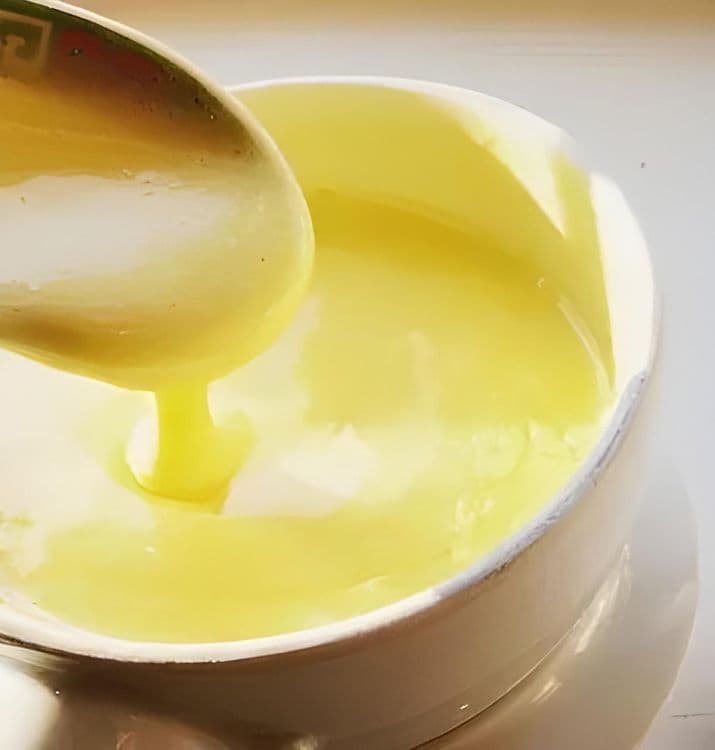
This classic Hollandaise Sauce recipe is a step-by-step guide to creating a rich, creamy, and perfectly emulsified sauce. It's a delicate process, but with patience and attention to detail, you'll achieve a luxurious sauce that's perfect for eggs Benedict, steamed vegetables, or grilled fish. Let me know how it turns out!
Chefadora AI has the answer - timers, swaps, step-by-step help.


In a heavy-bottomed saucepan, whisk the egg yolks together with water, seasoned with salt, pepper, and lemon juice.
Place the saucepan over very low heat and continue whisking until you achieve a sabayon (a light, airy mixture) and the temperature reaches 60°C to 62°C.
Gradually emulsify the mixture with the clarified butter while maintaining the temperature.
Ensure the sauce never exceeds 62°C, as overheating can cause it to separate.
Use a thermometer to monitor the temperature closely to prevent the sauce from separating.
If the sauce starts to separate, whisk in a teaspoon of cold water to bring it back together.
Clarified butter is essential for a smooth emulsion, so ensure it's properly prepared before starting.
What is the ideal temperature for Hollandaise sauce?
The ideal temperature for Hollandaise sauce is between 60°C to 62°C. Exceeding this can cause the sauce to separate.
Can I use regular butter instead of clarified butter?
Clarified butter is recommended for a smooth emulsion, but you can use regular butter if you melt it and remove the milk solids.
What should I do if my Hollandaise sauce separates?
If your sauce separates, whisk in a teaspoon of cold water to bring it back together.
Can I make Hollandaise sauce ahead of time?
Hollandaise sauce is best served fresh, but you can keep it warm for a short time over a double boiler. Avoid reheating as it may separate.
What dishes pair well with Hollandaise sauce?
Hollandaise sauce pairs well with eggs Benedict, steamed asparagus, grilled fish, and roasted potatoes.