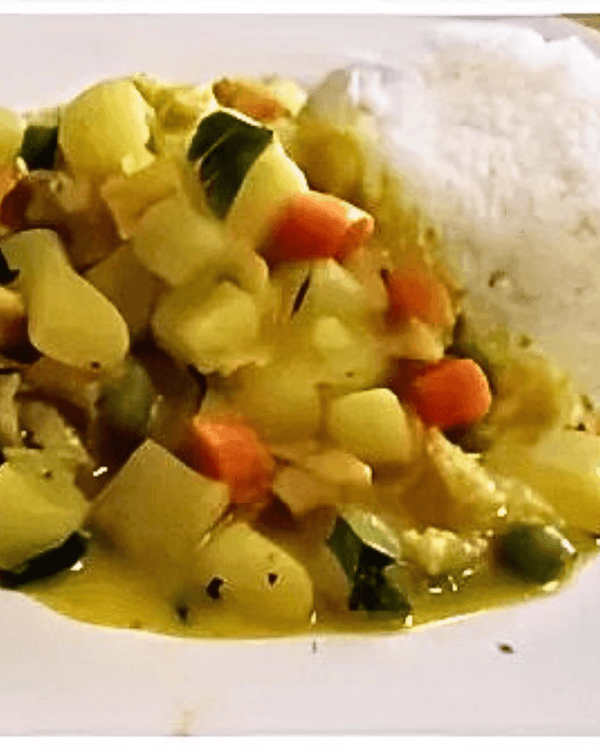
Originating from Afro-Peruvian and Creole culinary traditions, Cau Cau is believed to have been created by enslaved African communities in colonial Peru, who transformed inexpensive ingredients into deeply satisfying meals. Over time, it became a staple in Peruvian households, especially in Lima. Often served with white rice, Cau Cau is cherished for its bold, comforting flavors and is commonly enjoyed as a hearty lunch or Sunday family meal.
Chefadora AI has the answer - timers, swaps, step-by-step help.


Thoroughly wash the tripe and place it in a large pot. Cover with water and add the mint sprig.
Boil the tripe until it becomes tender.
Remove from the water, cut into small squares, and set aside.
In a separate pan, heat a little oil. Sauté the chopped onion and garlic, then stir in the ground yellow chili pepper.
Season with salt, pepper, and cumin. Cook over low heat for 2 minutes.
Add the chopped tripe, potatoes, and carrots to the pan.
Pour in ½ cup of water and simmer over low heat until the potatoes are fully cooked.
Add the peas and cook for an additional 5 minutes. Remove from heat.
Serve hot, garnished with chopped mint. Optionally, accompany with cooked white rice.
Boil tripe long enough until it's very tender; undercooked tripe can be chewy.
Sauté spices and onion well before adding other ingredients to deepen the flavor.
What is tripe and how do I clean it?
Tripe is the edible lining of a cow's stomach. It must be thoroughly washed and boiled to soften before use.
Can I substitute tripe with another meat?
Yes, chicken or beef chunks can be used, but it won’t be traditional Cau Cau.
What is ají amarillo and can I replace it?
Ají amarillo is a Peruvian yellow chili pepper. You can substitute with mild yellow peppers or chili paste, but flavor will vary.
How spicy is Cau Cau?
It has mild heat, but you can adjust the amount of chili pepper based on your preference.
Can I freeze Cau Cau?
Yes, it stores well in the freezer for up to 2 months. Reheat gently on the stove.