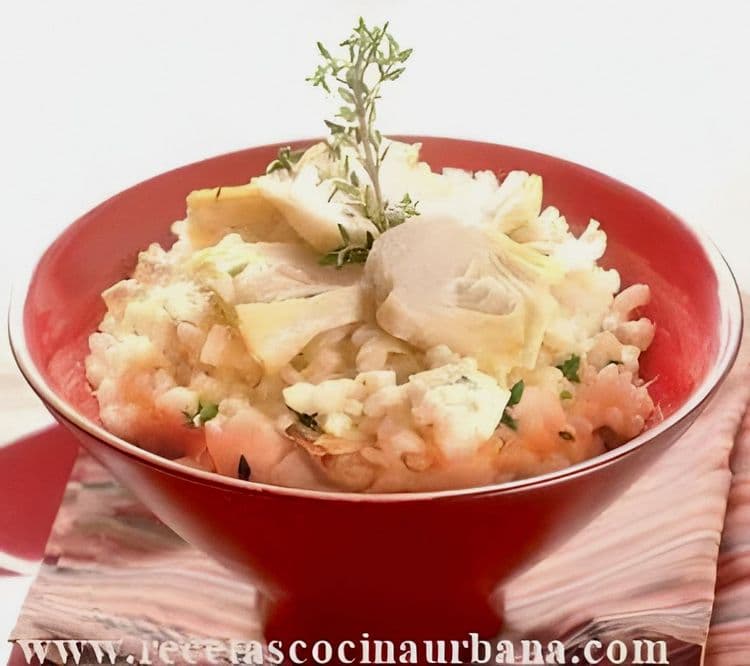
With the arrival of colder days, traditional recipes like stews, casseroles, and hearty dishes make their way into the kitchen, including a classic favorite: risotto. Today’s recipe is a delicious artichoke heart risotto, a variation of the traditional Italian dish that not only enhances its flavor but also makes it a complete and highly nutritious meal. The artichoke hearts can be fresh and cooked in salted water or the packaged ones available at the supermarket,...
Chefadora AI has the answer - timers, swaps, step-by-step help.


In a saucepan, heat the olive oil and butter. Once hot, sauté the chopped onion and garlic.
Add the rice, stir, and cook for 3 minutes.
Pour in the white wine, one cup of hot vegetable broth, and season with salt and pepper.
As the rice absorbs the broth, gradually add more broth, always cooking over low heat, until the rice is cooked al dente.
Remove the pan from the heat and stir in the tablespoon of butter, a pinch of nutmeg, and the grated Parmesan cheese.
Adjust seasoning with pepper if needed.
Use fresh artichoke hearts for a more authentic flavor, but packaged ones work just as well for convenience.
Ensure the vegetable broth is hot before adding it to the risotto to maintain the cooking temperature.
Stir the risotto frequently to achieve a creamy texture.
Serve immediately after cooking for the best taste and texture.
Can I use a different type of cheese instead of Parmesan?
Yes, you can use Pecorino Romano or Grana Padano as alternatives, but Parmesan is recommended for its authentic flavor.
Can I make this risotto vegan?
Yes, substitute the butter with vegan butter or olive oil and use a vegan cheese alternative.
What type of rice is best for risotto?
Arborio, Carnaroli, or Vialone Nano rice are the best options for risotto due to their high starch content.
Can I prepare the artichoke hearts in advance?
Yes, you can cook and cube the artichoke hearts ahead of time and store them in the refrigerator until ready to use.
How do I know when the risotto is done?
The risotto is done when the rice is al dente, meaning it is tender but still has a slight bite to it.