We use cookies on this website to ensure its proper functioning and to improve the quality of our services. Cookie Policy
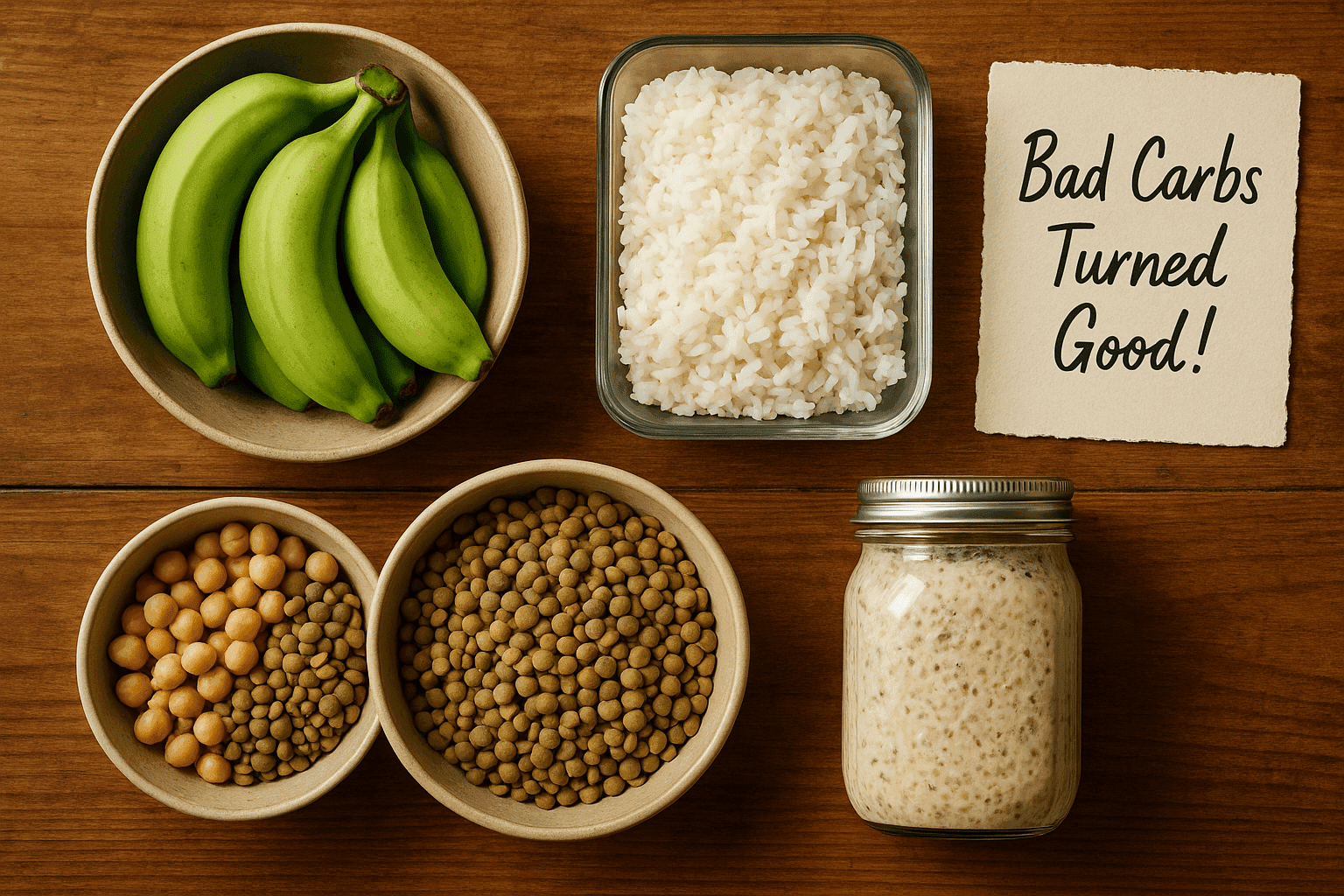
White rice, pasta, and potatoes have long been labeled as “bad carbs” and blamed for sugar spikes and weight gain. But what if you could flip the script on these so-called villains and make them work for your health instead of against it?
Say hi to your gut’s new best friend, resistant starch, a powerful, fiber-like carb that transforms ordinary meals into gut-nourishing, blood sugar-friendly superfoods. In this article, we’ll spill the beans (literally) on what resistant starch is, why it’s kind of a big deal, who should maybe swipe left on it, and how you can unlock its magical powers right in your kitchen.
White carbs refer to refined or processed carbohydrates that have had the bran and germ removed, leaving behind only the starchy endosperm. This process strips the grain of much of its fiber, vitamins, and minerals, making it less nutritious than whole grains. Common examples of white carbs include:
White rice
White bread
Regular pasta made from refined wheat
Pastries, cakes, and cookies
Sugary breakfast cereals
White flour and foods made with it
Resistant starch is a type of carbohydrate that resists digestion in the small intestine. Unlike regular starch, it reaches the colon intact and there it ferments, feeding beneficial gut bacteria. This process produces short-chain fatty acids like butyrate, which support colon health and help reduce inflammation.
Feed good bacteria in the gut
Improve insulin sensitivity
Lower inflammation
Regulate blood sugar levels
It may help regulate weight
Resistant starch forms when certain foods that contain starch undergo a physical or chemical change that makes their starch resist digestion in the small intestine. Instead of breaking down into glucose, resistant starch ferments in the large intestine, where it acts like fiber and feeds beneficial gut bacteria.
Resistant starch is generated by a process of Cooking and Cooling (Retrogradation)
So, when you cook starchy foods like white rice, potatoes, or pasta, their starch becomes gelatinized and digestible.
During the cooling down process (in the fridge for at least 6–12 hours), some of the digestible starch recrystallizes into a form that resists digestion.
Resistant starch is beneficial for most, but not ideal for everyone. People with IBS (Irritable Bowel Syndrome), IBD (Inflammatory Bowel Disease), SIBO (Small Intestinal Bacterial Overgrowth), and gut dysbiosis may experience bloating, gas, or cramps due to resistant starch fermentation. While RS supports colon health by feeding good bacteria and producing butyrate, it can trigger symptoms in those with digestive issues.
1. Green Bananas - Unripe bananas are rich in resistant starch. As they ripen, the starch turns into sugar, so choose firm, green ones. Why not try this yummy green banana recipe?
2. Cooked and Cooled White Rice - Cooking and then cooling white rice overnight converts digestible starch into resistant starch. You can reheat them gently, either in the microwave or with a light stir-fry, before consuming.
3. Legumes (Beans, Lentils, Chickpeas) - Even when warm, legumes are naturally high in resistant starch.
4. Oats - Steel-cut oats and rolled oats, when soaked overnight, retain more resistant starch. Try this delicious Overnight Oats Recipe.
Resistant starch is a unique type of carbohydrate that acts a lot like fiber—it skips digestion and goes straight to feeding the good bacteria in your gut. You’ll find it in foods like cooled rice, green bananas, legumes, and oats. That said, if you have IBS or other gut sensitivities, it’s a good idea to ease into it. Otherwise, it might throw a little digestive tantrum.
Updated on 24 Jul 2025
Save recipes from anywhere, and get answers, swaps, and help as you cook.

