We use cookies on this website to ensure its proper functioning and to improve the quality of our services. Cookie Policy

Are you thinking about doing a 7-day water fast? You’re not alone. Water fasting, a practice where you consume only water for a set period of time, has gained popularity for its supposed health benefits, ranging from weight loss to detoxification. But what really happens inside your body during or after fasting for a week?
In this article, we break down the science-backed benefits, potential dangers, what your body goes through day by day during a 7-day water fast, and what happens after that.
A water fast is a short-term practice where you consume only water, no food, supplements, or calorie-containing drinks, for a set period, often ranging from 24 hours to 72 hours.
Many people turn to water fasting for potential health benefits, such as:
Weight loss and fat-burning
Improved insulin sensitivity
Digestive system reset
Cellular repair through autophagy
Enhanced mental clarity and focus
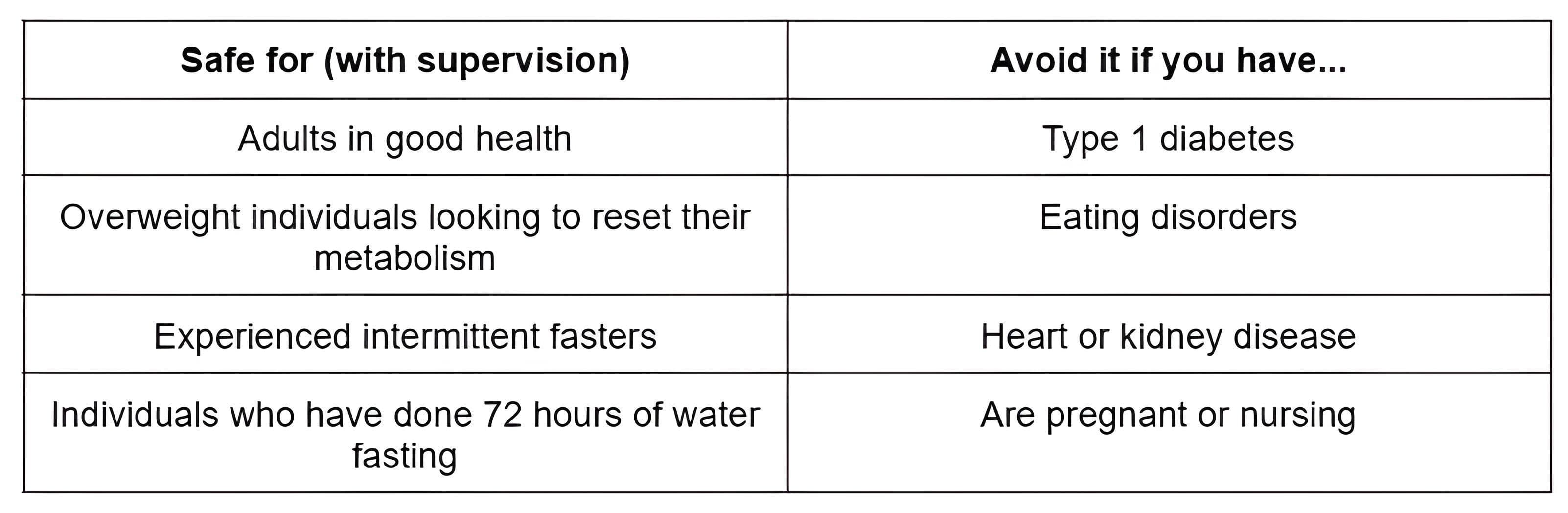
However, extended water fasting should always be supervised by a healthcare provider, especially when you are planning to do it for more than 3 days.
Here’s a breakdown of what happens internally during each stage of a 7-day water fast:
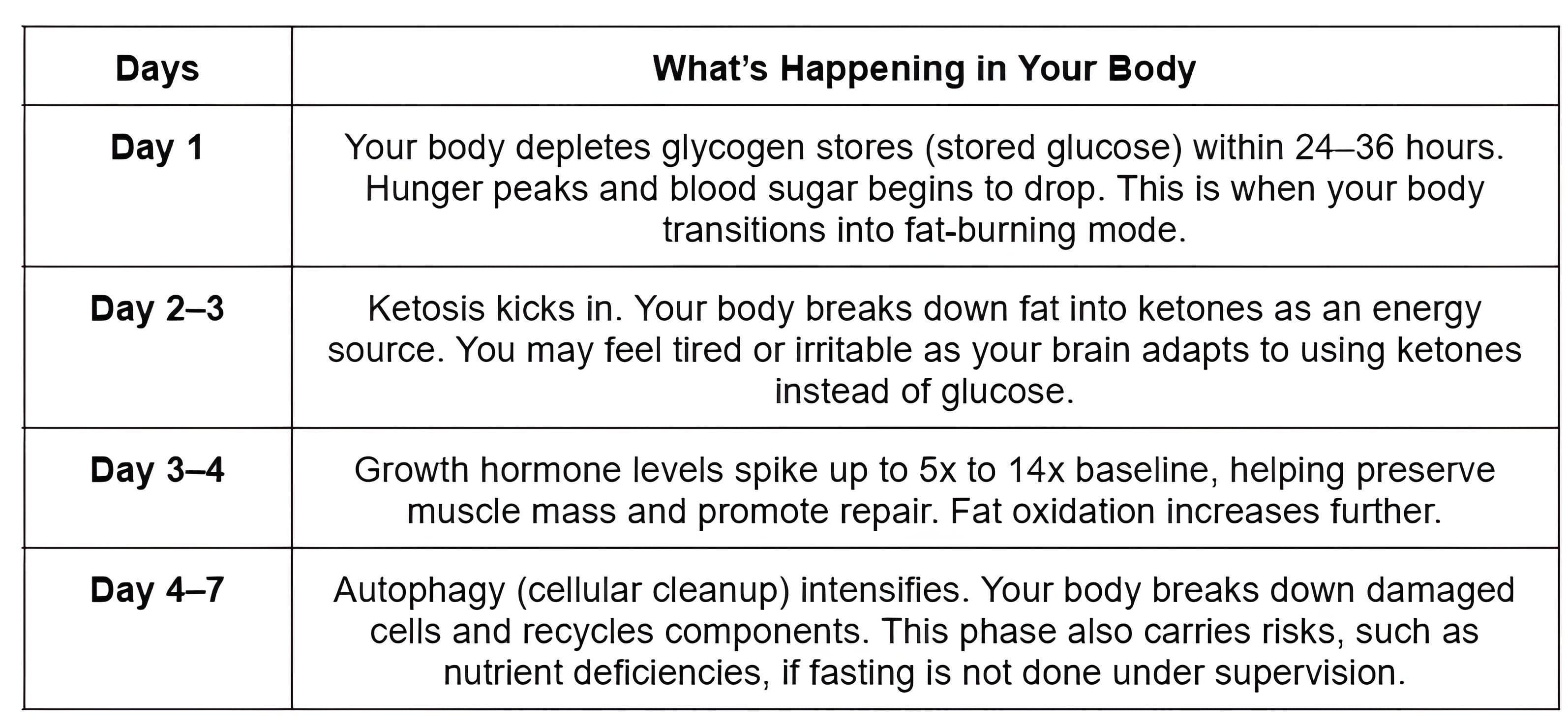
Research suggests short-term fasting can offer real health benefits, but most studies focus on intermittent fasting or medically supervised fasting. Here's what the science says:
Fasting forces your body to burn fat for fuel. People typically lose 5–10 pounds during a 7-day fast, depending on their initial weight and hydration levels.
A 2018 study in Obesity found that extended fasting reduces body weight and improves insulin sensitivity.
Once ketosis begins (usually after day 2), many people feel sharper mentally due to stable blood sugar and increased production of brain-boosting ketones.
Ketosis is a natural metabolic state your body enters when it runs low on glucose (sugar) from food and starts burning fat for fuel instead.
After 4–5 days, your body enters autophagy, a natural process that clears out damaged cells and regenerates new ones. Autophagy has been linked to a reduced risk of age-related diseases and cancer, according to a study.

Water fasting can help reset your body’s insulin response, improving blood sugar control, which is especially beneficial for individuals with prediabetes.
While a 7-day water fast may offer some health benefits, it also poses significant risks, especially when undertaken without medical guidance. Here are the most common side effects and dangers to be aware of:
Going without food for several days can lead to deficiencies in essential vitamins and minerals, including potassium, sodium, magnesium, and B vitamins. This may cause fatigue, dizziness, or even irregular heartbeats.
Without regular food intake, your blood sugar can drop too low, leading to symptoms like shakiness, confusion, sweating, or fainting, especially in people with diabetes or insulin sensitivity.
During extended fasting, your body may begin to break down muscle tissue for energy, particularly if you're not getting enough protein or fasting too frequently.
Ironically, many people forget to drink enough water during a water fast. Without food (which contains water), it's easier to become dehydrated, leading to dry mouth, headaches, and sluggishness.
One of the most serious dangers of doing water fasting is electrolyte imbalance, which can cause weakness, nausea, cramping, and, in extreme cases, heart complications or seizures.
Some people experience orthostatic hypotension (dizziness upon standing), making it unsafe to drive, operate machinery, or exercise.
Not everyone experiences clarity after water fasting. Some people feel irritable, anxious, or mentally drained due to a lack of calories and nutrients.

Don’t rush to celebrate with a giant meal just yet. What you eat after the fast is just as essential as the fast itself. Reintroducing food too quickly can shock your system and lead to serious health issues like refeeding syndrome, a potentially life-threatening condition.
Here’s what you should do.
Take it slow. Your digestive system has been on pause, so start with hydrating, nutrient-rich liquids:
Light bone broth (diluted if needed)
Fresh watermelon or cucumber juice
Clear vegetable soup or light herbal teas
If you’re feeling good, you can gently add soft, easy-to-digest foods:
Steamed veggies (zucchini, carrots, squash)
Fresh fruit like bananas or berries
Soft proteins like eggs, tofu, or baked fish
Avoid anything heavy, fried, or processed. Your body isn’t ready for pizza or burgers just yet.
A 7-day water fast isn’t something to jump into lightly. While it can offer benefits like weight loss, it also comes with risks, especially if done without proper preparation or guidance.
If you're new to water fasting, start small. Try intermittent fasting or a 24–48 hour water fast first to see how your body responds. And most importantly, consult a healthcare professional before starting any extended fast.
Updated on 10 Dec 2025
Save recipes from anywhere, and get answers, swaps, and help as you cook.

