We use cookies on this website to ensure its proper functioning and to improve the quality of our services. Cookie Policy
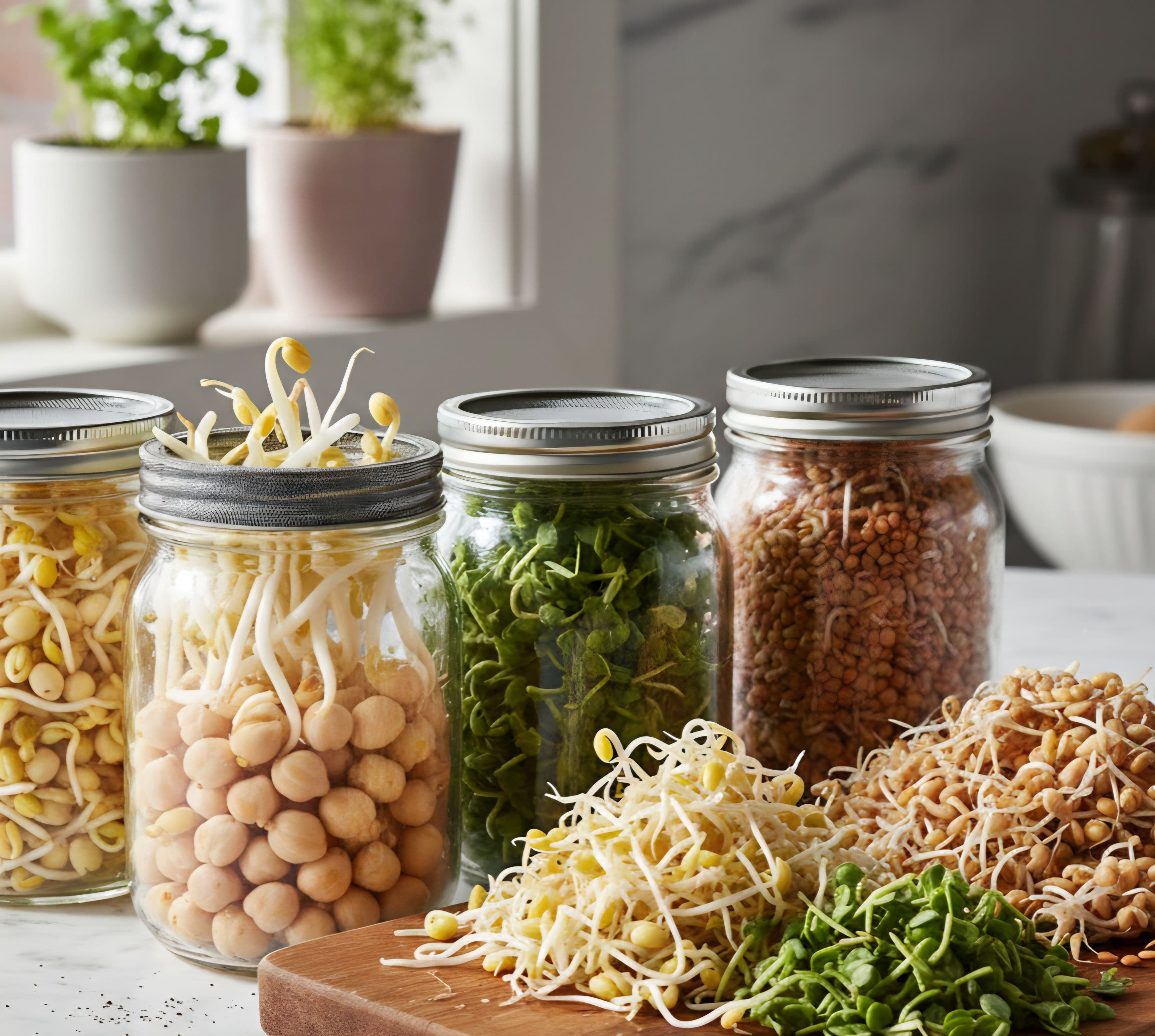
One of my absolute favorite hobbies and one that consistently surprises my friends when they visit is growing sprouts at home. There is a quiet magic in it. You start with a handful of hard, unassuming dried seeds, and within a few days, you have a jar overflowing with crunchy, enzyme-rich life.
They are incredibly easy to grow, ridiculously nutritious, and honestly, they’re just plain fun. Whether you’re tossing them into a crisp summer salad, throwing a handful into a late-night stir-fry, or just grabbing a pinch to snack on while you cook, there are endless ways to consume these little superfoods. They are affordable, sustainable, and add an immense amount of value to your health without breaking the bank. Here are some delicious sprout salads for you to try out.
You might wonder: why not just eat the beans? While cooked beans are great, sprouting unlocks a hidden vault of nutrition.
Think of a seed as a tiny fortress. It carries all the blueprint instructions to become a massive plant, but it stays locked away behind "anti-nutrients" like phytic acid.
These protect the seed until conditions are perfect for growth. When we soak them, we give the seed a "wake-up call." The seed thinks, "It’s time to grow!" and begins to convert its starches into simple sugars and its proteins into easily digestible amino acids. You aren't just eating a seed anymore, you’re eating a living plant at its peak nutritional intensity.
My personal favorites to grow are lentils, mung beans, chickpeas, and peas. They each have their own personality: mung beans are the classic "crunch," lentils are earthy and peppery, and chickpea sprouts have a rich, nutty flavor that is far superior to the canned version.
If you’re looking for a natural way to boost your vitality, look no further than these points:
The best part? You don’t need an expensive "sprouting kit" or a green thumb. All you need is a few old coffee jars, your dry seeds, and fresh water.
Take a clean glass jar and fill it about one-quarter full with your chosen seeds. Don't be tempted to add more! These little guys expand significantly, and they need room to breathe. Fill the jar halfway with room-temperature water.
Now, cover the mouth of the jar with a piece of muslin cloth (or cheesecloth) and secure it tightly with an elastic band. This is crucial: it allows oxygen to flow in while keeping pesky fruit flies out. Place the jar in a dark cupboard. Most seeds like a "nap" in the dark for about 8 to 12 hours (overnight is perfect).
The next morning, drain the water out through the muslin cloth and rinse the seeds with fresh water. Drain them again thoroughly. Put them back in the dark cupboard.
Rinse them twice a day. By day 3, you’ll start seeing the magic happen: tiny white "tails" will emerge. You’ll also notice the seeds expanding, filling up the jar. It’s a bit like watching a slow-motion explosion of life!
After day 3, give them a really good rinse. Now, instead of putting them back in the cupboard upright, place the jar upside down at a 45-degree angle in a bowl. Keep the muslin cloth on. This ensures that every last drop of excess water drains out rot prevention, while still allowing air to circulate.
For the next 4–5 days, continue to rinse and drain the sprouts three times daily. This keeps them hydrated and clean. If you like them a bit greener, you can move them out of the cupboard and into indirect sunlight for the final day to let them develop a bit of chlorophyll.
Once your sprouts have reached your desired length (usually about a cm for mung beans, or just a small tail for chickpeas), they are ready!
To keep them fresh, place them in a container lined with a clean kitchen towel to absorb excess moisture. Even better, use a lid with a few small breathing holes. Pop them in the refrigerator, and they will stay crisp and delicious for up to a week.
Apart from the health benefits, sprouting is a lovely hobby that actually holds the potential for a fantastic side hustle business.
Think about it: the "raw materials" (dried beans and seeds) are incredibly cheap when bought in bulk. The "equipment" is recycled glassware. Yet, if you go to a high-end grocery store or a health food shop, a tiny punnet of fresh sprouts can be quite expensive.
Because sprouts grow so fast, going from seed to saleable product in about 6 days you have a very quick turnover. If you have a local farmer's market or a small neighborhood cafe nearby, you could easily supply them with ultra-fresh, locally grown "micro-greens" and sprouts. The profit margins are remarkably high because you are essentially selling "value-added water and light!"
Updated on 06 Jan 2026

Save recipes from anywhere, and get answers, swaps, and help as you cook.

