We use cookies on this website to ensure its proper functioning and to improve the quality of our services. Cookie Policy
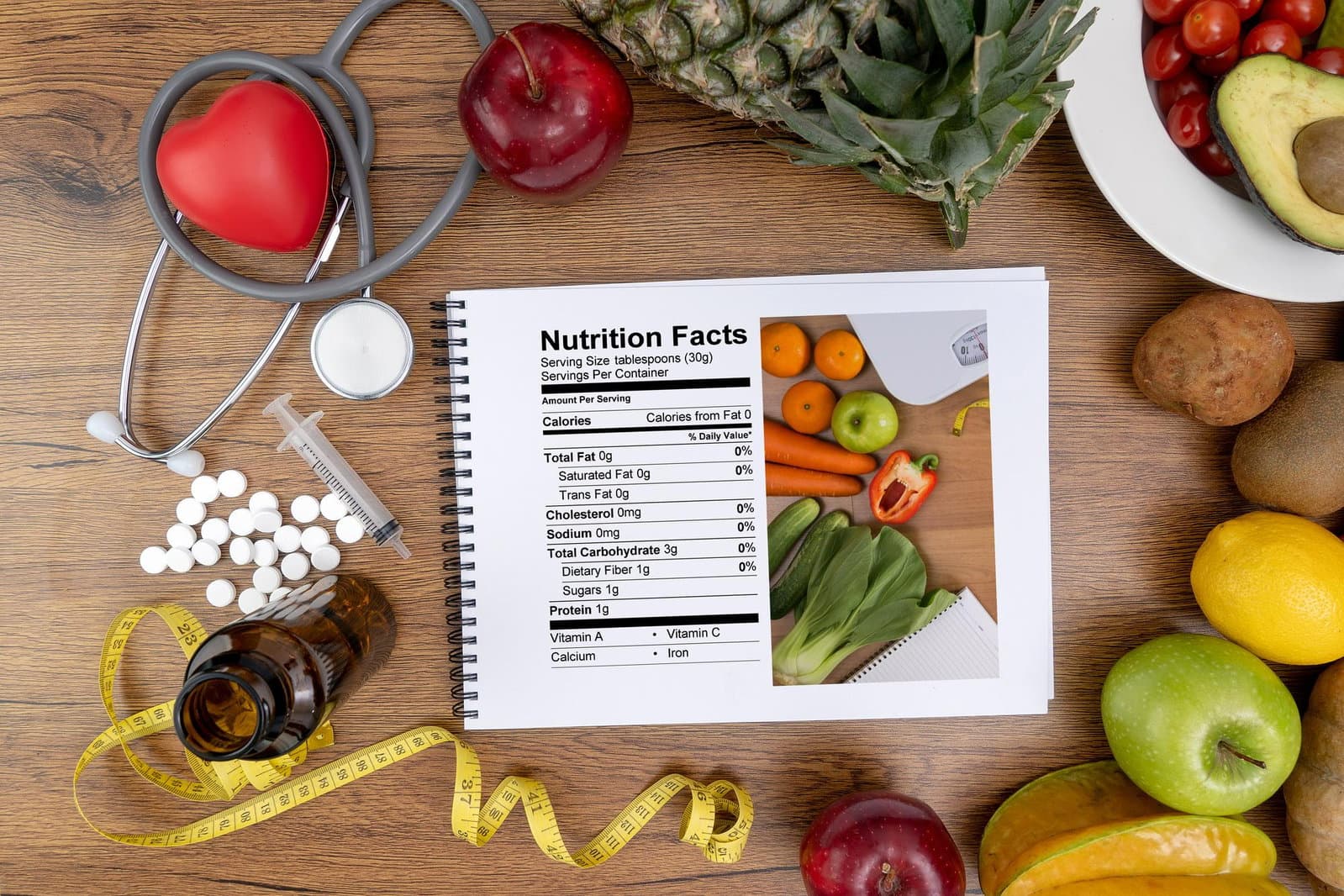
Nutritional information in a recipe isn't mandatory for creators but it changes who can actually use what you publish. People cook around dietary restrictions for all kinds of reasons: personal choice, lifestyle, religious practice, food intolerances, and specific conditions like PMOS (PCOS), diabetes, and IBS that shape what goes on the plate. Chefadora's Recipe Genie auto-generates nutritional info, dietary tags, prep time, ingredient lists, and step-by-step instructions the moment a creator uploads their recipe so none of that work falls on you.
No - and for most recipe creators publishing online, there's no requirement to include it. But ask a different question: does including it make your recipe more useful? The answer there is yes, almost every time.
The cooks searching for recipes today aren't a monolith. Some are tracking macros. Some are cooking for a child with a food allergy. Some are managing a condition where what they eat genuinely matters - PMOS (PCOS), type 2 diabetes, IBS, coeliac disease, hypertension. Others are simply following a lifestyle choice: vegan, keto, plant-based, low-sodium.
Without nutritional information, your recipe might be exactly what that person is looking for and they'd have no way to know. With it, they can make an informed decision in seconds. That's the practical case, and it's a stronger one than any compliance argument.
This is a lot to format manually, recipe by recipe. Most creators either skip parts of it or end up with inconsistent cards across their published work.
Chefadora.com handles this differently.
Recipe Genie is Chefadora's AI-powered creation tool. Give it your recipe - rough notes, a draft, even a basic list of ingredients and steps and it builds the full recipe page. Every field, automatically.
What a Chefadora recipe page includes by default:
Nutritional information per serving - calories, protein, carbohydrates, sugars, healthy fat, and unhealthy fat, all calculated from the ingredient list. No separate calculator. No extra step.
Dietary and allergen tags - auto-generated based on what's in the recipe. A vegan, gluten-free, nut-free recipe gets tagged as exactly that. Tags like Gluten-Free, Dairy-Free, Nut-Free, Soy-Free, Peanut-Free, Sesame-Free, Vegetarian, and more appear automatically on the recipe page, and they're what cooks use to filter and find your recipe.
Cuisine and meal type classification - whether it's a breakfast dish, a dinner main, a snack, or an appetiser, and what cuisine it belongs to.
Prep time, cook time, total time - structured and visible at the top of every recipe page.
Ingredient list with quantities - formatted and ready, with each ingredient linked to Chefadora's ingredient pages where cooks can find nutrition facts, storage tips, and substitutes.
Step-by-step method - numbered, clear, formatted for someone actually cooking from it.
The recipe page that comes out is complete. A cook landing on it has every piece of information they need - not because the creator built it all by hand, but because Recipe Genie does the work at the point of creation.
Start sharing your recipes on Chefadora →
Yes - and here's the part that tends to convince people who were on the fence: it's not extra work anymore.
Nutritional data on a recipe changes who it's accessible to. It's the difference between a cook with diabetes clicking away because there's no carb count and staying because there is. It's the difference between someone managing PMOS (PCOS) finding your low-sugar recipe or missing it entirely because it wasn't tagged.
It also matters for how your recipe shows up in search. Google's Recipe schema supports nutritional data, and recipes with it are eligible for richer search results - ones that display calories alongside cook time and ratings before anyone clicks. AI tools including Perplexity, ChatGPT, and Gemini also pull from structured, clearly labelled content. A recipe with per-serving macros and dietary tags is far more likely to be cited when someone asks for a "high protein gluten-free dinner" than an untagged recipe with nothing attached.
On Chefadora.com, because Recipe Genie calculates this automatically from your ingredient list, the barrier to having all of this in place is essentially zero.
People cook around dietary needs for a wide range of reasons and the audience doing it is bigger than most creators expect.
Conditions like PMOS (PCOS), type 2 diabetes, IBS, coeliac disease, hypertension, and kidney disease all involve specific dietary considerations that affect what a person can or wants to cook. Someone managing PMOS (PCOS) might be looking for low-glycaemic, anti-inflammatory recipes. Someone with IBS might be following a low-FODMAP approach. Someone with coeliac disease needs recipes that are genuinely free of gluten - not just ones that happen to have no wheat in the main ingredients, but ones where the creator has thought through the whole ingredient list.
Beyond specific conditions, there are lifestyle and ethical choices - veganism, vegetarianism, keto, plant-based eating, religious dietary practice - that mean a significant portion of the people searching for recipes are filtering by more than just what sounds good.
Recipe creators who build content around these needs aren't serving a niche. They're building a library that's useful to a substantial, consistently searching audience. And on Chefadora, that content doesn't just exist - it gets tagged, categorised, and surfaced to the cooks who are specifically looking for it.
When a recipe is published on Chefadora.com, Recipe Genie auto-generates dietary tags based on the ingredient list. These tags aren't just labels - they're how cooks find recipes on the platform.
Chefadora's dietary and lifestyle categories include: Vegan, Vegetarian, Gluten-Free, Dairy-Free, Non-Vegetarian, Seafood, Nut-Free, and more granular tags like Peanut-Free, Soy-Free, Sesame-Free, Jain, and No Onion No Garlic.
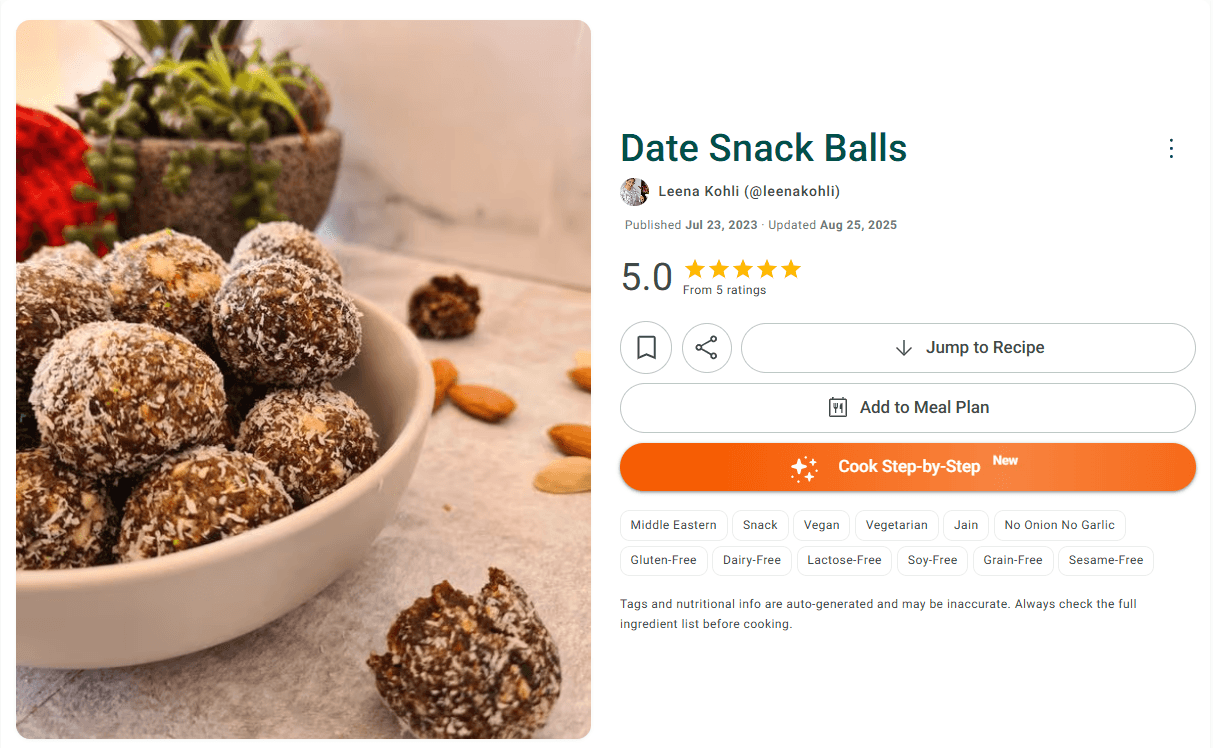
On top of dietary tags, every recipe is also categorised by meal type - Main Course, Dinner, Lunch, Breakfast, Snack, Dessert, Appetiser, Sides, Brunch, Condiments - and by cuisine, covering everything from Indian and Nigerian to Spanish, Nepalese, and Australian.
A cook filtering for vegan snacks on Chefadora lands on a specific category. A cook searching for gluten-free Australian recipes gets a filtered result. Your recipe shows up where it's relevant, not buried in a general feed.
Chefadora.com is a global recipe community operating across 190+ countries. The platform already has creators publishing recipes specifically for dietary needs - from high-protein vegan dinners to gluten-free baked goods to low-sodium cooking - and a cook base actively searching within those categories.
If you cook for dietary restrictions - whether that's PMOS (PCOS)-friendly meals, coeliac-safe baking, diabetic-friendly dinners, or vegan cooking built around a specific nutritional goal - Chefadora is built to take that content and put it in front of the people searching for it.
Recipe Genie handles the structure: the nutritional breakdown, the dietary tags, the ingredient list, the step-by-step format, the cook time. You bring the recipe. The platform does the rest.
Chefadora operates across 190+ countries. The cooks looking for what you make are already here.
Start sharing your recipes on Chefadora →
Q1. Do recipes need to include nutritional information?
A1. There's no universal requirement for online recipe creators. Including it is optional - but it significantly expands who can use your recipe. Cooks managing specific conditions or dietary goals need that information to make your recipe work for them. On Chefadora, Recipe Genie calculates it automatically from your ingredient list, so there's no extra work involved.
Q2. What conditions do people commonly cook around that recipe creators can speak to?
A2. Common ones include PMOS (PCOS), type 2 diabetes, IBS and other digestive conditions, coeliac disease, hypertension, kidney conditions, and food allergies. Lifestyle-based restrictions include veganism, vegetarianism, keto, low-FODMAP, and various religious dietary practices. Chefadora's creator community already spans many of these - and there's consistent demand for more.
Q3. What nutritional information does Chefadora include on every recipe page?
A3. Every Chefadora recipe page shows calories, protein, carbohydrates, sugars, healthy fat, and unhealthy fat per serving. These are calculated automatically by Recipe Genie when a recipe is created. Creators can also view the full nutrient breakdown.
Q4. What dietary tags does Chefadora use?
A4. Chefadora auto-generates dietary tags including Vegan, Vegetarian, Gluten-Free, Dairy-Free, Nut-Free, Peanut-Free, Soy-Free, Sesame-Free, Non-Vegetarian, Seafood, Jain, No Onion No Garlic, and more. Tags are generated from the recipe's ingredient list and used by cooks to filter and find relevant recipes on the platform.
Q5. Can recipe creators on Chefadora reach cooks who cook around specific conditions like PMOS (PCOS) or diabetes?
A5. Yes. Cooks managing dietary conditions search on Chefadora using dietary filters and specific ingredient or recipe queries. Recipes tagged accurately with the relevant dietary categories - gluten-free, low-sugar, dairy-free - surface in these searches. The nutritional information on each recipe page also helps cooks decide whether a recipe fits their requirements.
Updated on 24 Jun 2026
Save recipes from anywhere, and get answers, swaps, and help as you cook.

