We use cookies on this website to ensure its proper functioning and to improve the quality of our services. Cookie Policy
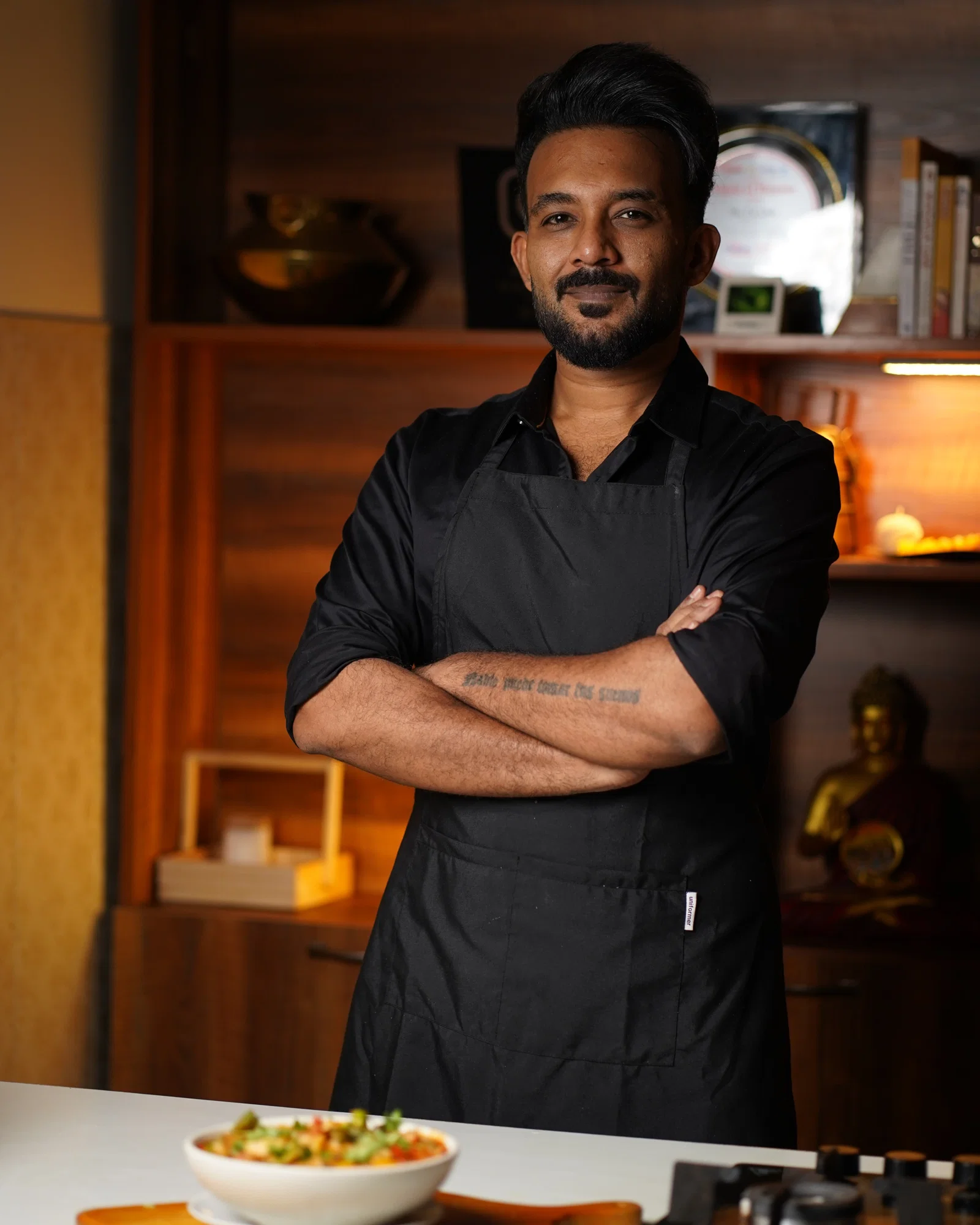
Parichay Sharma is the cook behind @bhukkadintown, a page that began in 2016 as a food review account and gradually became something else entirely. He was born and raised in Kathmandu, spent his teenage years in Pune, and moved to Chandigarh at 20, where he now develops recipes, runs a Mumbai street food counter with a business partner, and posts regional Indian food to an audience that grew slowly for eight years and then all at once. Ask him what people come for and he will tell you it is not the recipes.
Parichay traces his relationship with food back to before he can properly remember it. Family lore has it that as a three or four year old, he had one recurring question, asked in Nepali and repeated often enough that everyone remembers it: "Aaba K khane?" which meant what are we eating next?
The family did not eat out much. What they had instead was a mother who kept trying to make things she had never made before. Pasta and pizza were not common in Nepal or India at the time, and she found ways to produce them anyway. He still eats the dishes she worked out back then.
His brother loved food too. Cooking at home was not a hobby in that house so much as the only route to variety. When Parichay eventually moved out and living on his own meant going out was no longer an option, the same logic applied. If he wanted to eat something, he had to make it.
The internet had been on his mind since around 2010. He knew he wanted to do something online, mostly because he suspected it could earn him money, but he had no idea what that something was. Then he came across a local food page in Chandigarh, a friend pointed out that he had a phone and an Instagram account and no reason to wait, and Bhukkad in Town started in 2016 as a food review page.
It did not hold. He found himself lost in a space where every reviewer was declaring every restaurant the best in the city, and Chandigarh, in his assessment, simply did not have that much to review. Around the same time Instagram made it clear that photos were losing to video. Both pressures pushed him back toward the kitchen.
"Cooking food was basically because I really love eating food. And now I think I enjoy cooking and serving food more than anything else in this world."
What makes him happiest, he adds, is making something good and then watching people enjoy it.
Asked to pick one dish for the rest of his life, he does not take long. Chicken and rice, in a fixed portion, lunch and dinner, most days. A comforting home-style chicken curry with rice and he would not ask for anything more.
It doubles as the anchor of a personal fitness routine that his audience has noticed and started asking him about, which has quietly changed what he cooks on camera.
There is an irony in where he ended up. The earliest part of his food memory is of not wanting to eat Indian food, because Indian food was everywhere and everyone was eating it. Then he started understanding texture, flavor, and spice, and the scale of what was in front of him became obvious.
He leans toward South Indian flavors, which he considers unusually well supplied with spice, but the interest is broader than any one region. He wants to learn about regional Indian food, create it, and keep the range of it visible.
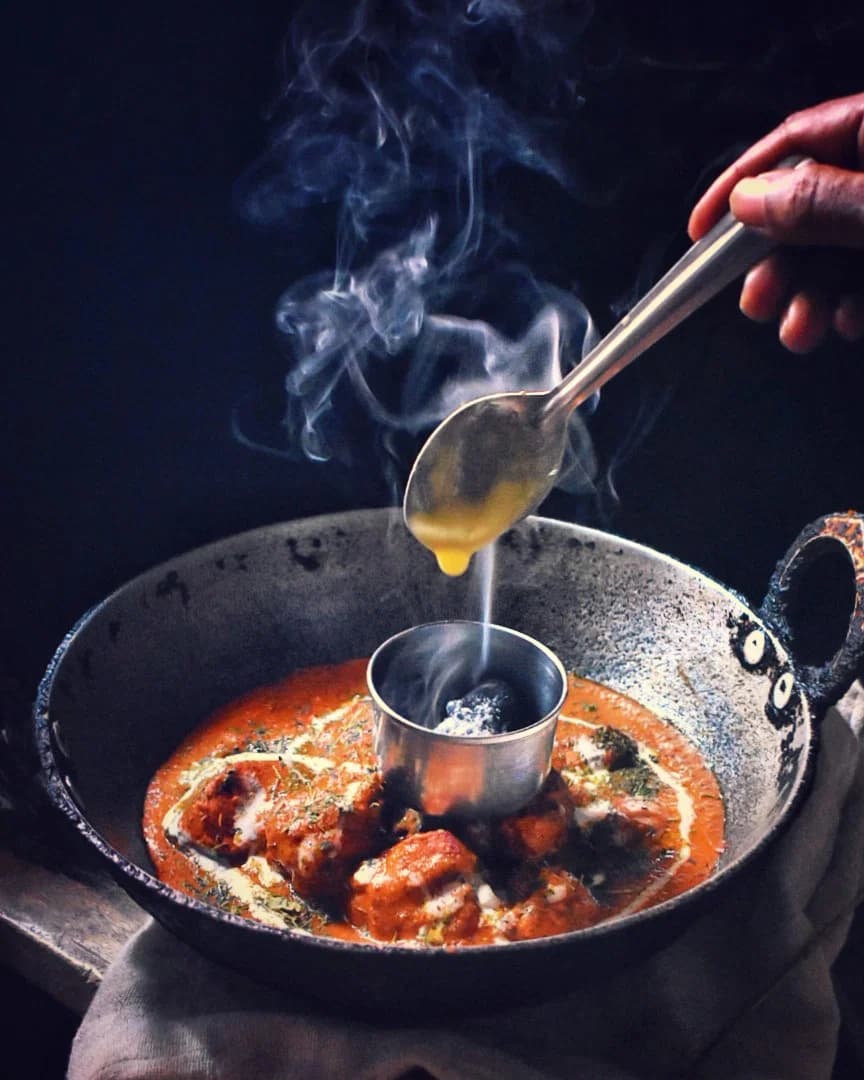
He is also unusually blunt about what his recipes are. Home cooked does not automatically mean healthy, and much of what he makes is rich, fat-heavy food built on nuts and cream rather than everyday cooking. He describes eating a dish recently with no onion, tomato, or garlic, just chicken in a gravy of cashew and almond, and knowing immediately that he would not be making it again soon. It was comforting. It was not a weeknight meal. He would rather say so than pretend otherwise.
That honesty is partly why his audience has started asking for high protein recipes that are still worth eating, which happens to be the food he cooks for himself when the camera is off.
During the Chandigarh lockdown, Parichay ran what he called a special kitchen. He would post a menu on Monday, whatever he felt like making, and deliver on Friday. The first menu was vada pav, priced far above what the same thing costs on a Mumbai street. People bought it anyway. He kept it going for roughly six months, pulling 30 to 40 orders at a time, and drew the obvious conclusion: the city did not have good vada pav and clearly wanted it.
The restaurant, Ashthavinayak Pav Wale, came out of a conversation over a cricket match. His friend and landlord had spotted a space in Sector 34 and asked if he wanted to experiment. The planning took about ten days.
The division of labor was settled from the start. His partner had eaten enough of his cooking to trust it, and Parichay was clear about his own limits. He knew food. He did not understand business. Two years in, the counter has been listed among the city's top vada pav spots on Zomato, and the menu still revolves entirely around Mumbai's pav culture.
He carries the cultural weight of three cities. Kathmandu is his birthplace, though he left too young to hold much detail. Pune is where his family still lives and where, by his own account, the foodie in him woke up.
Pune snacks constantly. Poha in the morning, options at every hour, South Indian and North Indian and Gujarati influences layered on top of each other, and Mumbai close enough to pull its food culture inland. He is not a main course person. Given a menu, he skips past it to the fried and snacky end, and Pune obliges at 3am as readily as at 3pm.
It was also cheap. He remembers buying vada pav for one and a half rupees as a child, his mother handing him three rupees, and two vada pav being enough to make the day good. He rates the hygiene of the street food he grew up on highly, on the reasoning that anyone who wants to feed people generally intends to do it properly.
Chandigarh, he says plainly, does not have the same food culture. He misses Pune's variety and notices something new every time he visits.
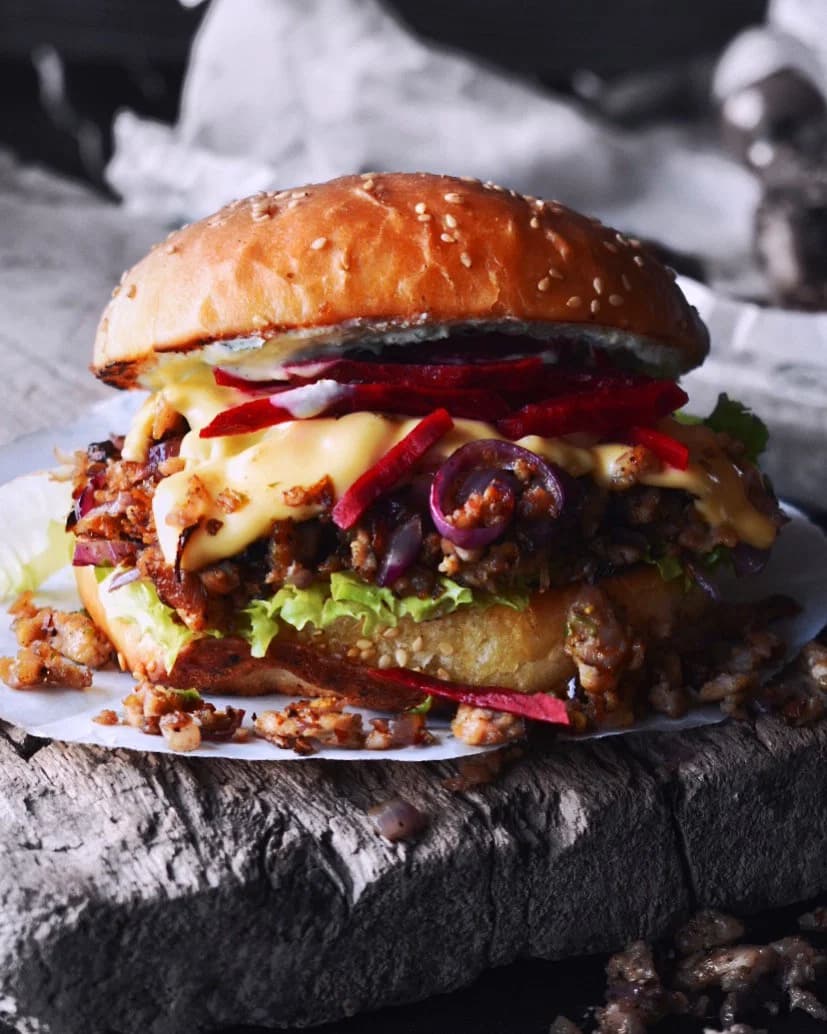
The starting point for most of what he cooks is a craving. He wakes up and asks himself what he wants to eat, or a friend requests something, and the recipe follows from there. That is beginning to shift now as he factors in what his audience wants, including festive food he does not usually make. Ukadiche modak is the example he reaches for, where working the rice flour dough and steaming each one is enough of a process that plenty of people never attempt it. He is trying to find a route to the same flavor and texture without the hassle.
The constraint he sets himself is firm. Everything should be replicable at home, using ingredients already in the average kitchen. He grew up in a house where not everything was available, and living in Chandigarh has not given him access to a wide range of specialty ingredients either. He would rather combine familiar things well than complicate a recipe into something nobody attempts.
"It's like art, right? You have seven colors, but with that seven colors, you can do a lot of things."
Parichay started in 2016. His first viral moment came in 2024. For most of the eight years in between, he had stopped measuring himself against anyone.
"If it has to work, it would work. If it does not work, I still love cooking and creating, so I'll do it."
It took an agency, brought in to manage his work, to point out what was actually happening. The food was fine, but everyone was making food. What set his content apart was the story he told over it, and the audio backstory attached to each recipe was doing the work he had not realized he was doing.
"It is not just food. I think food is very secondary to my account. It is majorly about the stories."
That has created its own problem. Some days he has a story with no dish attached, other days a strong recipe with nothing to say over it, and the balance is the hardest part of the job. His coping method is simple: once a post is up, he forgets about it. If it works, good. If it does not, tomorrow is another post, and things sometimes pick up months later anyway.
For a long time the page was food and a voice, nothing else. Viewers got a good recipe and a good story without ever meeting the person telling it. Then opportunities started arriving that required him to be on camera, and he discovered that this was a separate skill he had not developed.
He is candid about why. He describes himself as having been deeply insecure, and says that even two or three years ago he would have switched off his camera rather than do an interview like this one. The fix, in his telling, is repetition rather than confidence. The first attempt is never good, nobody likes watching themselves at the start, and it becomes a habit only by doing it repeatedly.
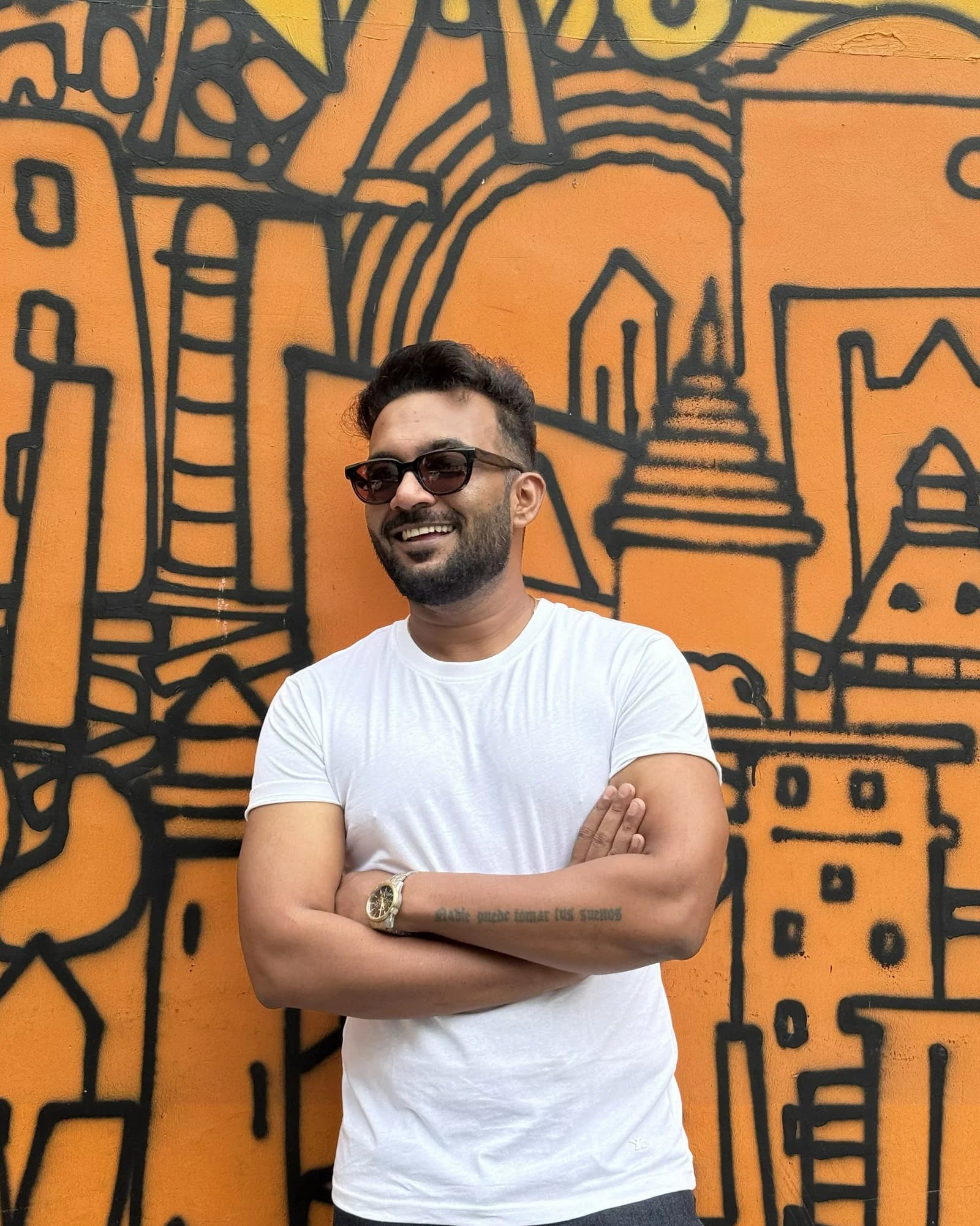
He now considers it close to essential for anyone building anything online, whether a business, a community, or a name. You never know who is watching.
Asked what inspires him, Parichay hesitates. He is not sure the question has a clean answer for someone raised the way he was, where working hard was less a value than an assumption.
What he had instead was a direction: do something big, do not settle, and get his family out of the difficulties his parents had been through. There was no plan attached to it. He worked in cafes and in call centers and moved between odd jobs while food sat in the background as a passion that kept growing.
"The only inspiration was I had to work hard. That was the inspiration."
He watched Anthony Bourdain, Lonely Planet, and Discovery, and he had started a mass communication degree he did not finish, with the vague intention of getting into travel journalism so he could learn about cultures and food. Looking at where he is now, he suspects the 13 year old version of himself would recognize most of it.
The cookbook is the one he keeps returning to. He wants to start with an ebook and work toward a physical copy, partly because having something of his own on a shelf is a genuine ambition, and partly because he thinks Indian regional cooking deserves more airtime than butter chicken and chicken tikka masala have given it globally.
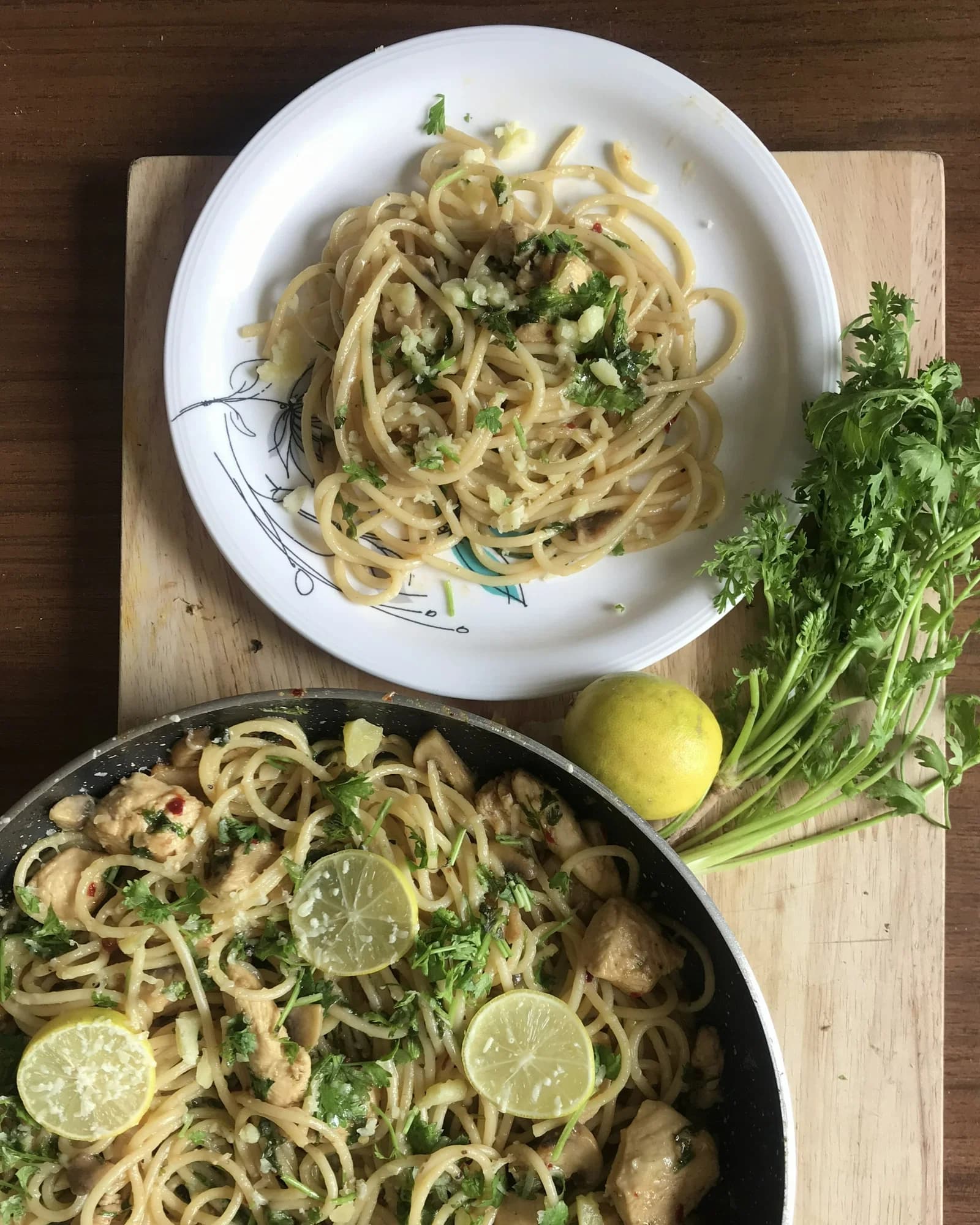
He is specific about what it should not be. Not a compilation of recipes with ingredient lists and steps, because in his view that will not get anyone to the dish he actually made. He already builds detailed PDFs for his more involved recipes, delivered through Instagram automation when someone comments a keyword, and he wants a book that works the same way: the story, then the detail, then enough understanding of the cooking itself that it turns out right.
Beyond that there is YouTube, a travel show that goes past food into culture, and eventually products, possibly appliances or spices. All of it needs capital, and he is looking for creative partners rather than doing it alone. He is straightforward about the logic. He has an audience that trusts him, and he would rather build something of his own than keep pointing it at other people's products.
His message, when asked for one, is not complicated, which is the point.
"Believe in yourself. Do not complicate things. Do not see into the other's garden."
He took ten years to get here, and people laughed along the way and told him to focus on his career instead. He did both. Not every journey moves at the same pace, he says, and life will always have something working against it, but that is usually for the better in the end. Do what you love and you will find your space somewhere down the line.
Parichay Sharma's page is the product of a Kathmandu childhood spent asking what came next, a mother who cooked things she had no business knowing how to cook, eight quiet years of posting into the void, and a storytelling instinct he did not know he had. The recipes are built to be made, the ingredients are the ones already in your kitchen, and the memory attached to each dish is the reason anyone stays.
Explore Parichay's recipes on Chefadora at chefadora.com/@parichaysharma and follow his journey on Instagram at @bhukkadintown, where he shares regional Indian recipes with the stories behind them. Chefadora is proud to spotlight creators like Parichay who are keeping regional food traditions in circulation and making them possible to cook at home.
Updated on 29 Sept 2026
Save recipes from anywhere, and get answers, swaps, and help as you cook.

