We use cookies on this website to ensure its proper functioning and to improve the quality of our services. Cookie Policy
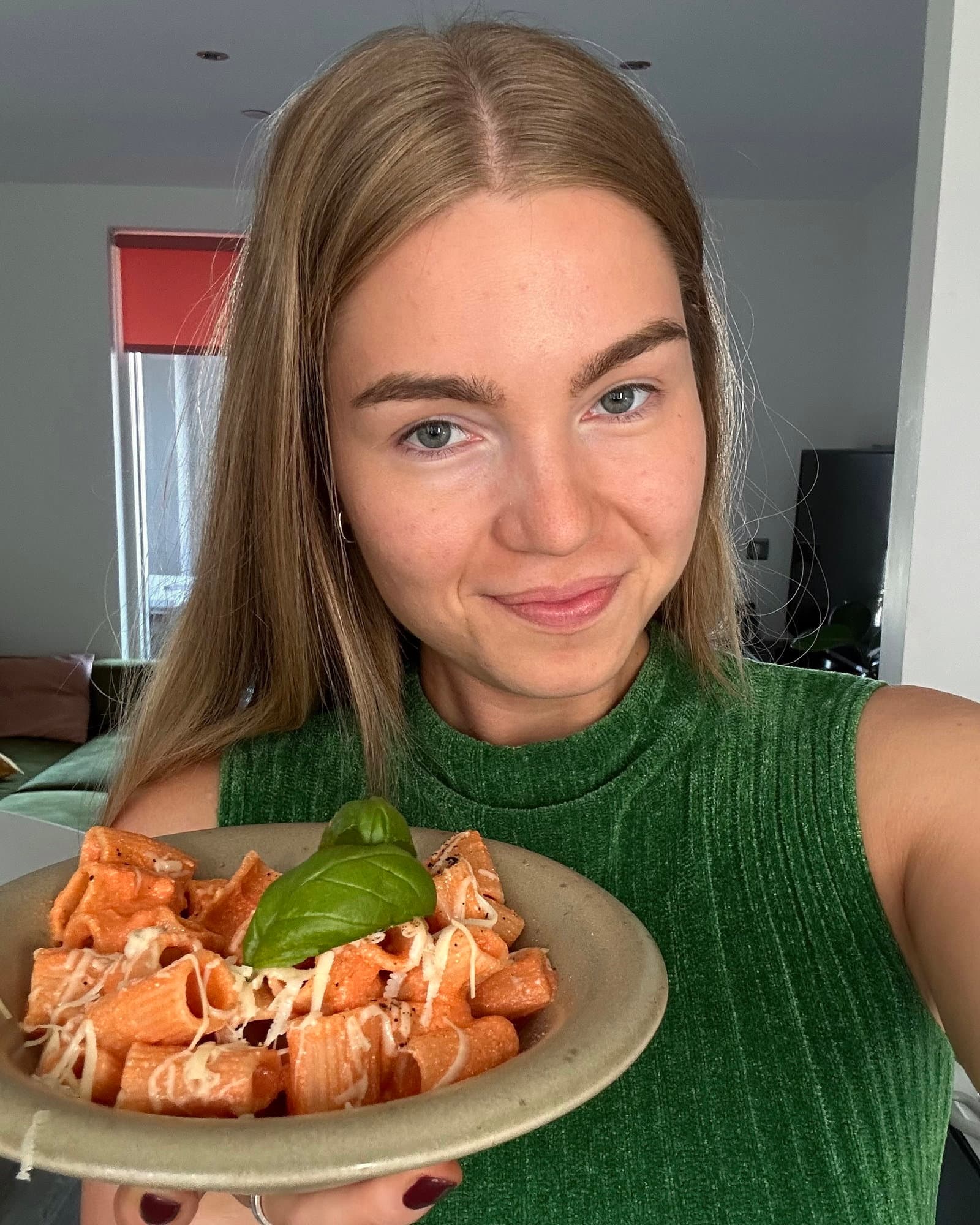
Katrina Volkova is the creator behind @katsbalancedlife, a London-based food page rooted in Eastern European tradition, balanced eating, and a deep connection to the woman who first showed her what a kitchen could be. Half Belarusian and half Russian,
Katrina works as a freelance creative for food and drinks brands and brings the same eye for detail to her own page. Her recipes are nostalgic without being heavy, healthy without being restrictive, and built around a simple philosophy: cook things that taste good, feel good, and remind you of home.
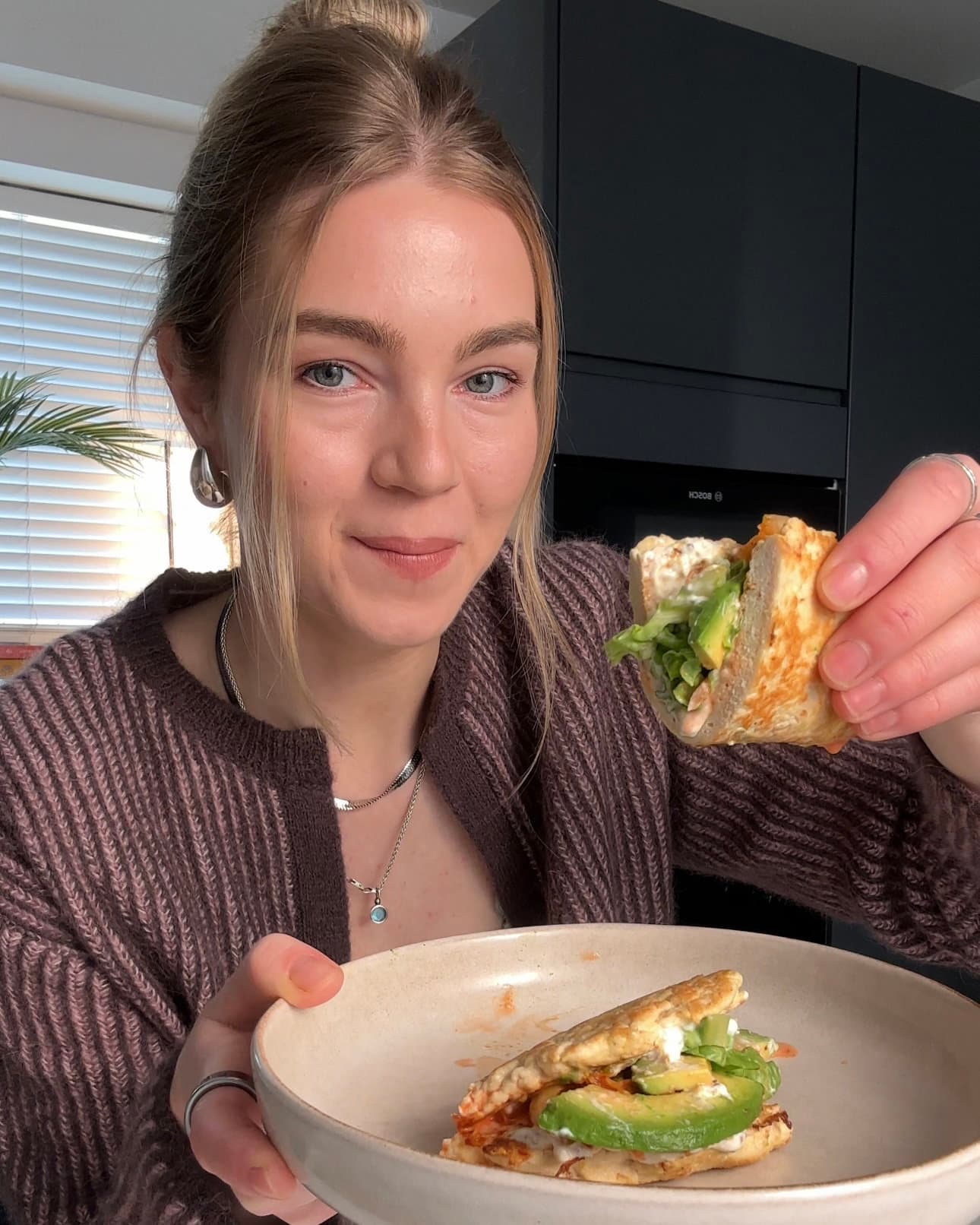
Katrina did not grow up cooking. She grew up watching. Her grandmother was the one in the kitchen, surrounded by pots, pans, and steam, with a garden out back where she grew her own food. Katrina would sit beside her, often playing chess between stairs, while her grandmother turned around to interact with her between tasks. She was admiring, eating, and absorbing without realizing it. The actual cooking part of her was, as she puts it, asleep.
It stayed that way through her move to the United Kingdom and into her early adult life. Her job was intense, and she did not have time for hobbies. The pull toward cooking was always there, but she never found the entry point.
"I was always drawn to it, but I just didn't know where to start," she says.
The shift came in 2020. When her work paused during COVID, Katrina suddenly had time, and the only place she could really go was the supermarket. She started cooking. Living far from home and missing the food she had grown up eating, she tried to recreate her grandmother's dishes from memory, supplementing what she could not remember with research.
It worked. Not always perfectly, but it worked enough to keep her going. She has not stopped since.
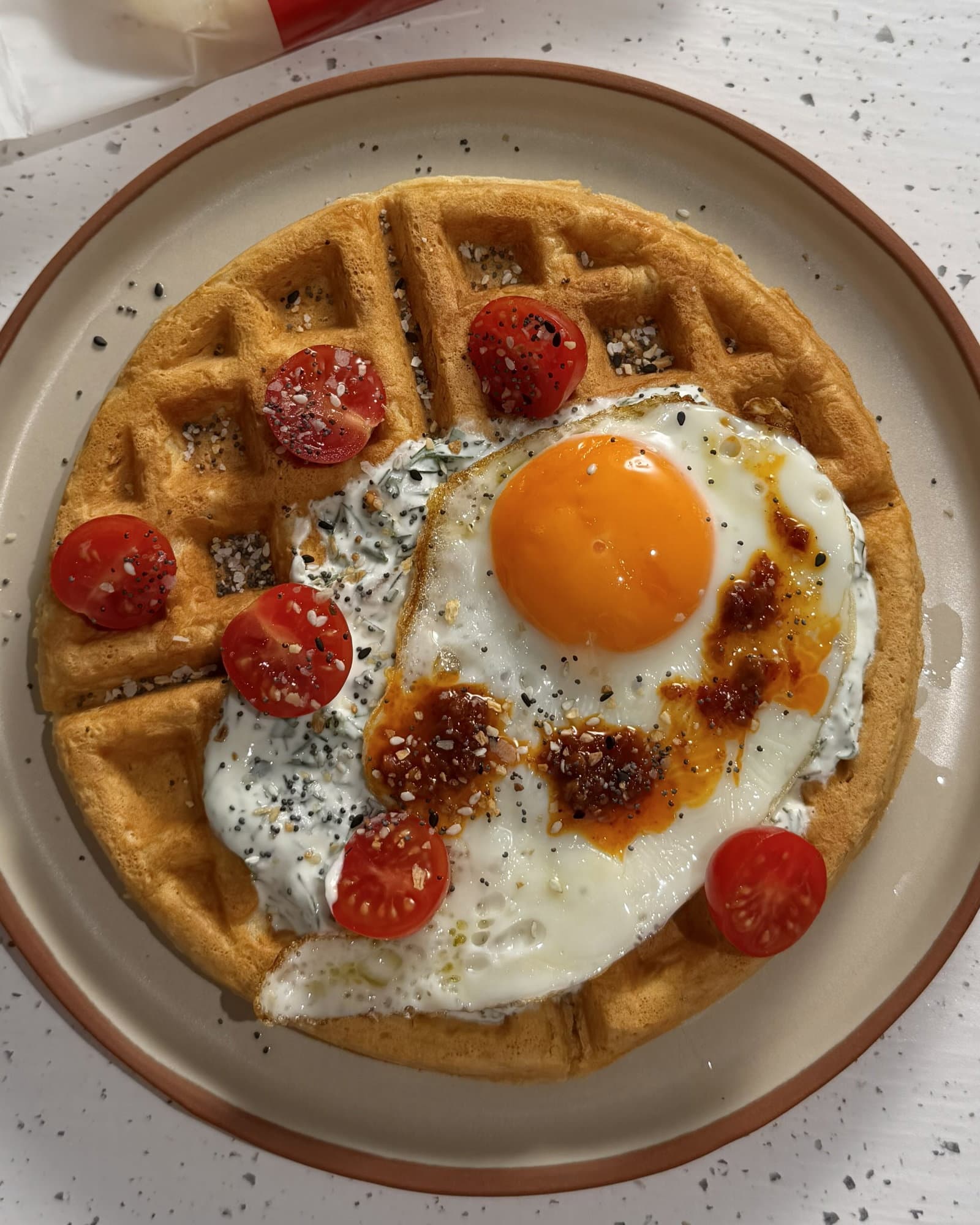
"I always experiment, I always learn. I just can't stop. It's my biggest passion, I think," she says.
The skill she had been quietly absorbing for years finally had something to do.
She kept it private at first. It was only about two years ago that she started sharing what she was making online, posting regularly under the name @katsbalancedlife.
Katrina's recipe development process is shaped almost entirely by her childhood. She thinks back to her grandmother's hands and tries to remember small details: the way she folded an ingredient, the way she shaped a dough, the specific motion behind a dish.
"It's so weird, but I would, like, sit sometimes and try to see what my grandma was doing," she says. Her viral video came directly from one of those memories: a moment of recalling, then trying, then experimenting until the dish came together.
Her grandmother is no longer alive, which makes the work both harder and more meaningful. There are recipes Katrina is still trying to perfect, dishes she remembers tasting but cannot fully reproduce because she cannot ask anymore. Her dream is to write a cookbook of her grandmother's recipes, a tribute and a record at once.
The name Kat's Balanced Life reflects Katrina's actual approach to food. She is not chasing strict health content, and she is not chasing pure indulgence. Her recipes split into two natural categories: nostalgic comfort food rooted in her childhood, and nutritional everyday meals that are simple enough to actually make on a regular weeknight.
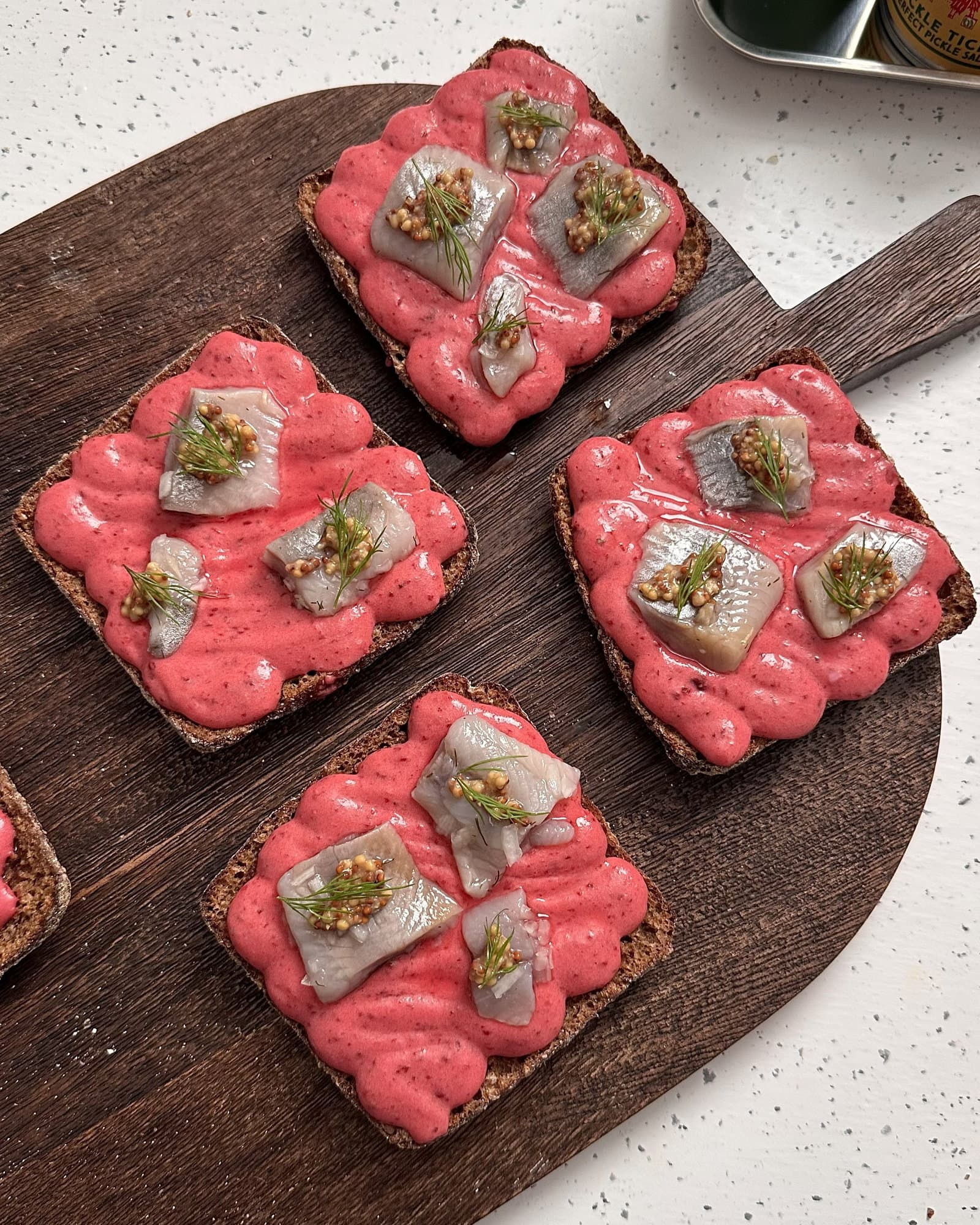
She gravitates toward dishes that are not too complicated, that lean on whole ingredients, and that fit into a real life. Her go-to meal, if forced to choose, would involve potatoes (which she calls the most versatile ingredient), some kind of roast, vegetables, plenty of dill, and pickles. "Potato is the main ingredient," she says, listing the variations: mashed, fried, with mushrooms, with chicken. The combinations are nearly endless.
Her viral beetroot cutlet recipe is a good example of the way she combines tradition with curiosity. It uses a base familiar to anyone with Eastern European roots and adds her own creative additions to make it feel new.
Living in London for ten years, Katrina admits she lost touch with her Eastern European roots for a stretch. She is now actively reconnecting with that food culture, exploring how the same dish (a beetroot soup, a fermented vegetable, a stuffed dumpling) shows up with small tweaks across Belarus, Russia, Poland, Romania, Ukraine, and beyond.
She loves the warmth of the cuisine, much of which she attributes to the climate. Comfort dishes, fermented things, beetroot, pickles, sauerkraut. She also loves the social culture around the food, particularly the long, communal tables that come out for celebrations. Birthdays, neighbors gathered, massive salads, hours of eating and drinking together. It is a feeling she carries with her, even far from home.
London itself has shaped her palate too. She talks about the city as one of the most versatile food scenes in the world, full of small independent restaurants where families have started little businesses. A tiny Nepalese spot near her flat that serves momos by hand is one of her favorites. She prefers those small, personal places to the bigger, polished restaurants that dominate the chain landscape.
Katrina runs two creative careers in parallel. Her main work is freelance, photographing and filming chefs and food brands. That gives her professional skills she now applies to her own content, including the transition from large cameras to phone-based filming. Her food page is the side that fills her time outside of paid work, though she struggles to keep up consistently with multiple platforms.
She is currently trying to expand into long-form YouTube, which she finds challenging because the format is so different from short reels. Time is the biggest constraint. When her main job has a busy stretch, content creation gets pushed back. She sometimes films a recipe and then loses interest in it weeks later, which she attributes to her perfectionist tendencies. Working in advance is hard for her because she keeps wanting to redo things.
But the algorithm itself she does not worry about.
"I do it for myself, mostly because I really enjoy not losing my recipes and I want to have them somewhere available," she says.
Katrina is clear about her long-term goals. A cookbook is her biggest one. Beyond that, she wants to keep learning, attend cooking schools in different countries, meet more people in the food industry, and travel widely. "I'm like that person who, even when I have a really good skill, I want to keep learning always," she says. "That's where inspiration comes from."
Katrina's advice to anyone hesitant to start cooking is simple.
"A lot of people struggle to start cooking. They're scared of, you know, they have to follow the recipes," she says. "If you just start doing that and you do it for a little bit, then you need to follow the recipe breaks. And then you can feel more confident, and you start experimenting more, and then you feel so much more free."
She knows the pattern firsthand. She has been there. And she points to her own mother, who is still nervous in the kitchen, as proof that the fear can persist for years if you let it. The fix is just doing it.
Katrina Volkova's food page is part personal archive, part tribute, and part ongoing experiment. She is rebuilding the recipes of a woman who is no longer here, sharing them with a community that finds something familiar in them, and slowly working toward a cookbook that will preserve the whole story. The work is rooted in memory but always reaching forward.
Follow Katrina on Instagram at @katsbalancedlife, where she shares Eastern European recipes, balanced everyday meals, and the kind of cooking that feels like coming home. Chefadora is proud to spotlight creators like Katrina who are bridging cultures through food and keeping family recipes alive for the next generation.
Updated on 14 May 2026
Save recipes from anywhere, and get answers, swaps, and help as you cook.

